
Probate disputes can tear families apart when emotions run high and disagreements over assets or will interpretation create tension. We at Family, Estate & Mediation Law understand that litigation often makes these conflicts worse, draining time, money, and relationships.
Mediation in probate offers a different path-one where families work toward solutions together rather than fighting in court. This approach preserves what matters most while resolving disagreements fairly and confidentially.
What Causes Probate Conflicts
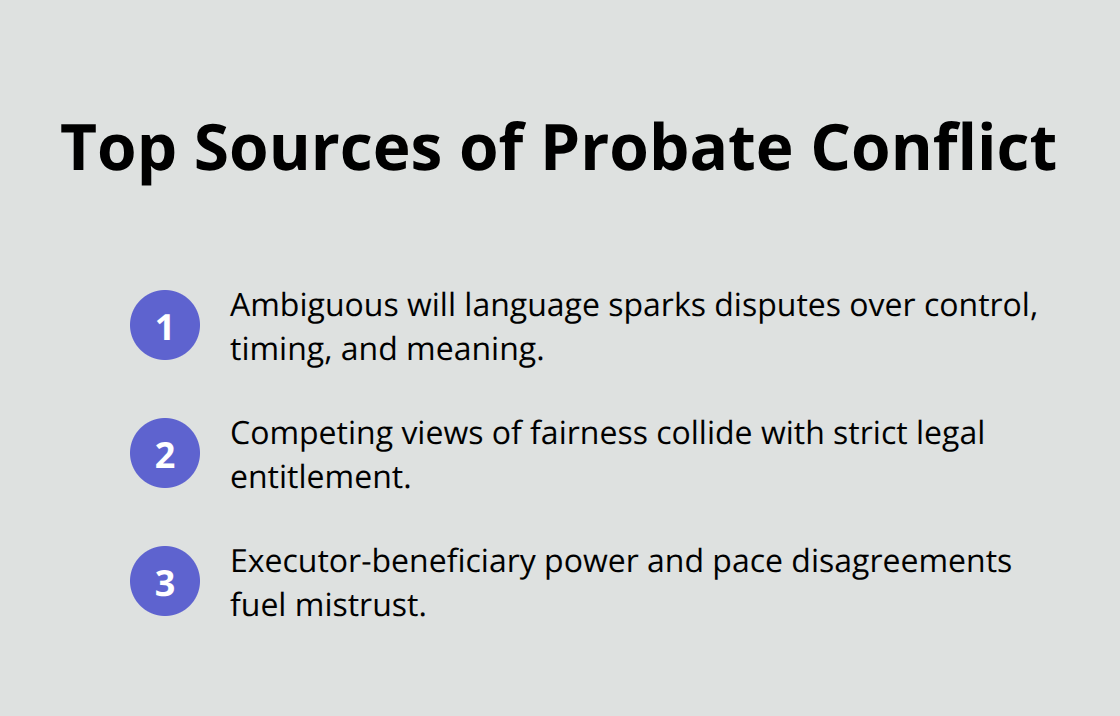
Probate disputes emerge from three core problems that families face when someone passes away. Wills often contain ambiguous language that creates immediate friction about who controls assets and when. Emotional decisions about fairness clash with legal entitlement, and executors and beneficiaries frequently disagree over decision-making authority and speed.
Why Wills Create Conflict
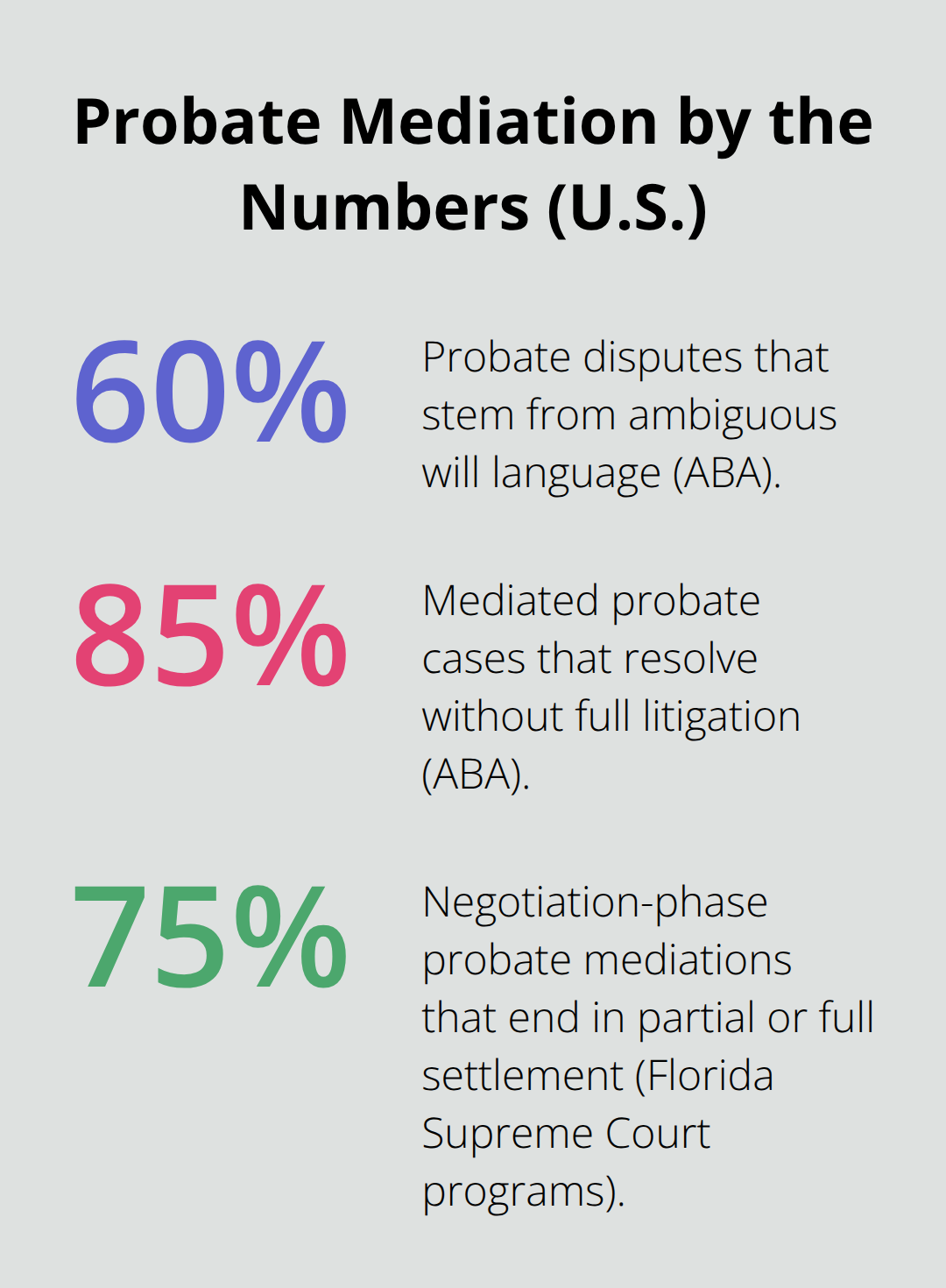
Unclear language in wills causes real problems. A will that states “distribute assets fairly among children” lacks specificity about what fair means. Does it mean equal shares, or does it account for previous gifts or loans? Does it consider one child’s greater financial need? Families become deadlocked over these interpretations for months. The American Bar Association reports that approximately 60% of probate disputes stem from ambiguous will language rather than intentional disagreement. When a will leaves room for interpretation, beneficiaries naturally fill that gap with their own assumptions, and conflict follows quickly.
Asset Division and Family Tension
Money reveals what families think is fair, and probate forces that conversation immediately after loss. A house worth $400,000 cannot split three ways without someone taking less or selling. Retirement accounts, business interests, and personal property each trigger questions about value and distribution. Some families argue that one beneficiary already received help during the parent’s lifetime, so they should receive less now. Others believe inheritance should remain equal regardless of prior support. These disagreements intensify because probate timelines create pressure, and beneficiaries feel they cannot afford to wait while lawyers debate interpretations.
Executor and Beneficiary Friction
Executors hold significant power, and beneficiaries watch closely. An executor might sell assets quickly to settle debts, making decisions without consulting beneficiaries first. Beneficiaries question whether the executor pays themselves reasonable compensation or oversteps authority. Executors feel pressured to move fast and become defensive when questioned. This dynamic creates adversarial positions even when no one intends harm. The executor sees themselves as protecting the estate’s interests, while beneficiaries see a conflict between the executor’s fees and their inheritance size.
These three sources of conflict-unclear wills, competing fairness standards, and power imbalances between executors and beneficiaries-explain why probate disputes escalate so quickly. Understanding what triggers these conflicts matters because it points toward solutions that address root causes rather than symptoms. Mediation works precisely because it tackles these underlying tensions directly.
Why Mediation Stops Probate Conflicts From Destroying Families
How Mediation Shifts Families From Opposition to Collaboration
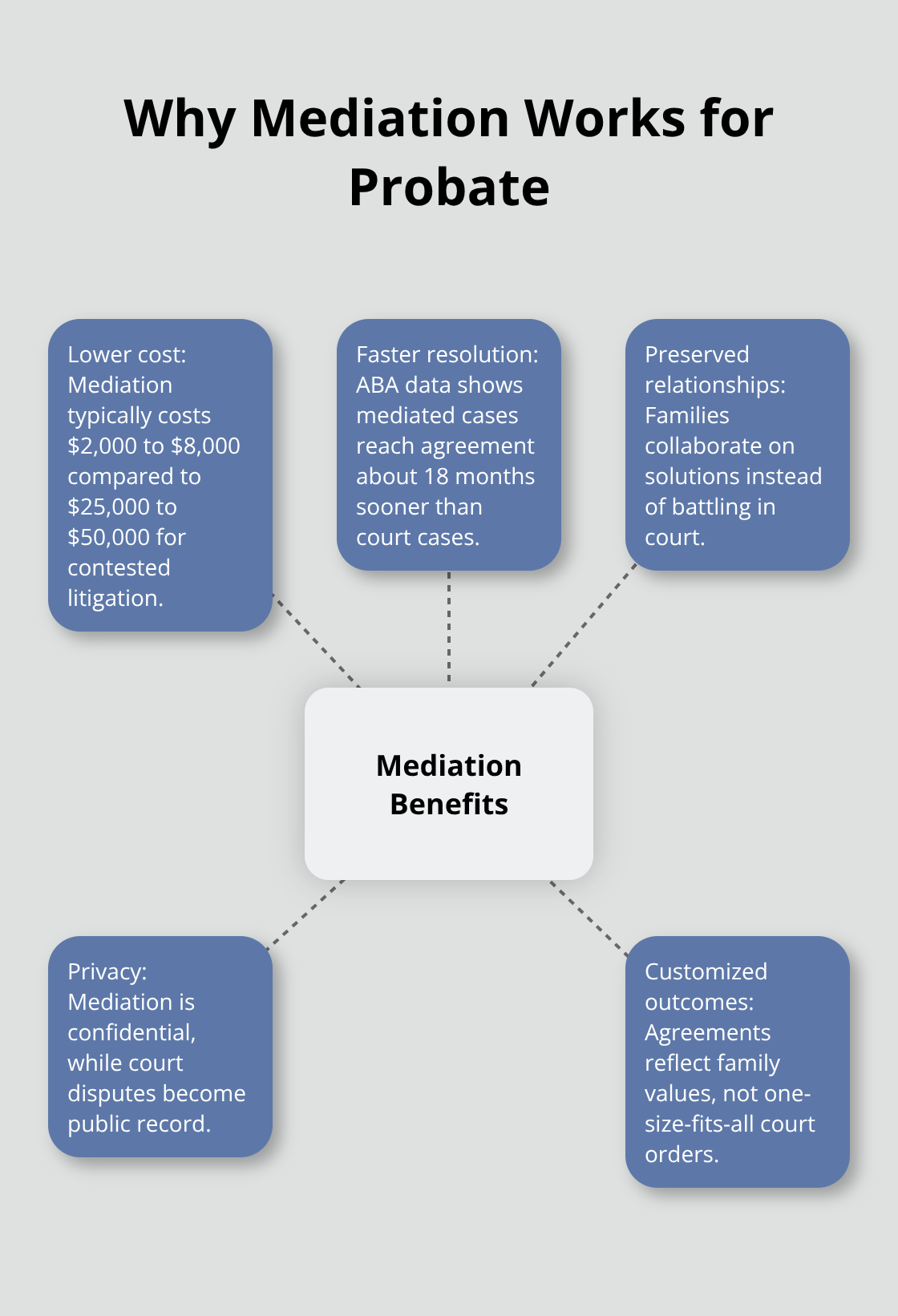
Mediation addresses the root causes of probate disputes without forcing winners and losers. When families sit down with a neutral mediator, they move away from the adversarial positions that litigation creates. The mediator helps executors explain their decisions and allows beneficiaries to voice concerns about fairness directly, rather than through lawyers. This conversation-based approach works because it tackles the real problem: families lack a structured way to discuss money and power after someone dies. According to the American Bar Association, mediated probate cases resolve 85% of the time without escalating to full litigation, and those that do settle reach agreement an average of 18 months faster than court-litigated cases.
An executor who explains their reasoning to beneficiaries face-to-face often discovers that beneficiaries simply wanted transparency, not conflict. Beneficiaries who understand the executor’s constraints and timeline become allies rather than adversaries. This shift from opposition to collaboration happens naturally when families communicate directly about ambiguous will language or competing fairness standards.
The Financial Reality of Mediation Versus Litigation
The cost difference between mediation and litigation proves dramatic. A contested probate case in Florida can easily exceed $25,000 to $50,000 in legal fees alone, while mediation typically costs $2,000 to $8,000 total. Families preserve relationships because they control the outcome instead of accepting a judge’s decision. They avoid months of depositions, motions, and court appearances that drain both bank accounts and emotional reserves.
Why Privacy Matters in Probate Resolution
Mediation protects privacy in ways litigation cannot. Court records for probate disputes become public documents, meaning family disagreements, financial details, and personal conflicts appear in searchable court files indefinitely. A beneficiary might not want neighbors or business associates knowing about inheritance disputes or the family’s financial situation. Mediation keeps these conversations confidential, with no public record created.
Creating Solutions That Fit Your Family’s Needs
The mediator helps families find solutions that reflect their values rather than legal precedent. If one beneficiary needs liquidity while another wants to keep the family home, mediation allows creative solutions like buy-sell agreements or delayed distributions. Litigation forces a one-size-fits-all approach based on statute. Families walk away from mediation with agreements they designed themselves, not orders imposed by someone unfamiliar with their situation.
These advantages-lower costs, faster resolution, preserved relationships, and customized outcomes-explain why mediation works so well for probate conflicts. Yet families often wonder what actually happens inside a mediation session and whether their specific situation qualifies for this approach.
Understanding the mediation process itself removes uncertainty and helps families move forward with confidence.
How Probate Mediation Actually Works
The Initial Assessment Phase
Probate mediation starts with the mediator meeting each party separately to understand their concerns, priorities, and positions on specific issues. This confidential initial conversation typically lasts 30 to 60 minutes per person and reveals what matters most-whether that’s keeping the family home, understanding the executor’s decisions, or simply being heard. The mediator then identifies common ground and areas of genuine disagreement, setting realistic goals for what mediation can accomplish. Most families complete this assessment phase within one or two sessions, giving everyone clarity about whether resolution is possible and what timeline to expect.
Structured Negotiation Sessions
Once initial goals are established, negotiation sessions bring the family together in a structured setting where the mediator controls the conversation flow. The mediator prevents arguments from escalating by keeping discussions focused on specific issues rather than allowing emotions to dominate. If tensions rise, the mediator separates parties into different rooms and shuttles proposals back and forth, a technique called caucusing that keeps dialogue productive. Research from the Florida Supreme Court’s mediation programs shows that 75% of probate mediations that reach the negotiation phase result in partial or complete settlement.
Timeline and Complexity
Families typically need two to four negotiation sessions spanning a few weeks to resolve most disputes, though complex estates with multiple beneficiaries may require more time. The mediator helps translate ambiguous will language into clear agreements, creates asset distribution formulas that reflect fairness standards all parties accept, and establishes timelines that reduce executor and beneficiary tension. These structured conversations address the specific friction points that cause probate conflicts to escalate.
Reaching and Documenting Agreement
When agreement emerges, the mediator drafts settlement terms that become binding once all parties sign, often preventing costly legal disputes months later when misunderstandings surface about what was actually agreed upon. This documentation step transforms verbal agreements into concrete terms that all parties understand identically, eliminating the ambiguity that frequently triggers post-settlement conflict.
Final Thoughts
Mediation in probate disputes offers families a realistic alternative to courtroom battles that drain finances and relationships. The approach works because it addresses what actually causes probate conflicts-unclear will language, competing fairness standards, and power imbalances between executors and beneficiaries. Rather than forcing a winner-take-all outcome, mediation lets families design solutions that reflect their values and circumstances.
The financial advantage alone justifies considering mediation first. Litigation costs $25,000 to $50,000 or more in legal fees, while mediation typically runs $2,000 to $8,000 total. Families also avoid the months of depositions and court appearances that drain emotional reserves during an already difficult time. The American Bar Association data shows 85% of mediated probate cases resolve without escalating to full litigation, and those that settle reach agreement roughly 18 months faster than court cases.
If your family faces probate conflict, mediation in probate makes practical sense because the process typically requires two to four sessions over a few weeks, with a neutral mediator helping parties move from opposition to collaboration. Court records become public documents where family disagreements and financial details live indefinitely in searchable files, while mediation keeps these conversations confidential and lets families maintain relationships by controlling outcomes instead of accepting a judge’s decision. We at Family, Estate & Mediation Law can help you explore whether mediation fits your situation-contact us to take the first step toward resolving your probate dispute with confidence.