You create a trust, but then what? Many families in St. Augustine and Palatka, FL set up trusts only to leave them unfunded-which defeats the entire purpose.
Trust funding for families is where the real work happens. Without it, your assets won’t transfer the way you intended, and your family could face unnecessary delays and costs. We at Family, Estate & Mediation Law walk families through this process to make sure nothing falls through the cracks.
What Trust Funding Actually Means
The Container and Its Contents
Trust funding transfers ownership of your assets into your trust’s name. Without this step, your trust sits empty-a legal document with no practical value. Many families in St. Augustine and Palatka, FL create a trust thinking the work is done, only to discover years later that their assets never made it into the trust. The result is probate, delays, and costs that could have been avoided.
A trust only controls what sits inside it. If you die with assets still titled in your personal name, those assets bypass the trust entirely and go through probate. In Florida, probate takes an average of 6 to 12 months and costs 3 to 7 percent of the estate’s value. For a $500,000 estate, that means $15,000 to $35,000 in unnecessary expenses.
Trust Versus Will: Two Different Tools
A will and a trust serve different functions. A will tells the court how you want your assets distributed, but it doesn’t prevent probate-it actually requires it. A properly funded trust transfers assets directly to your beneficiaries without court involvement, avoiding public records, reducing timelines, and protecting privacy. The trust acts as a container, and funding fills that container. The trust document holds no power without assets in it.
What Actually Needs Funding
Many people mistakenly believe that creating a trust automatically protects their assets or that the trust controls everything they own. That’s not how it works. A trust only manages what you deliberately place into it. Real estate must be deeded to the trust. Bank accounts need retitling. Investment accounts require new registrations with your broker. Vehicles must be registered in the trust’s name at your county clerk’s office.
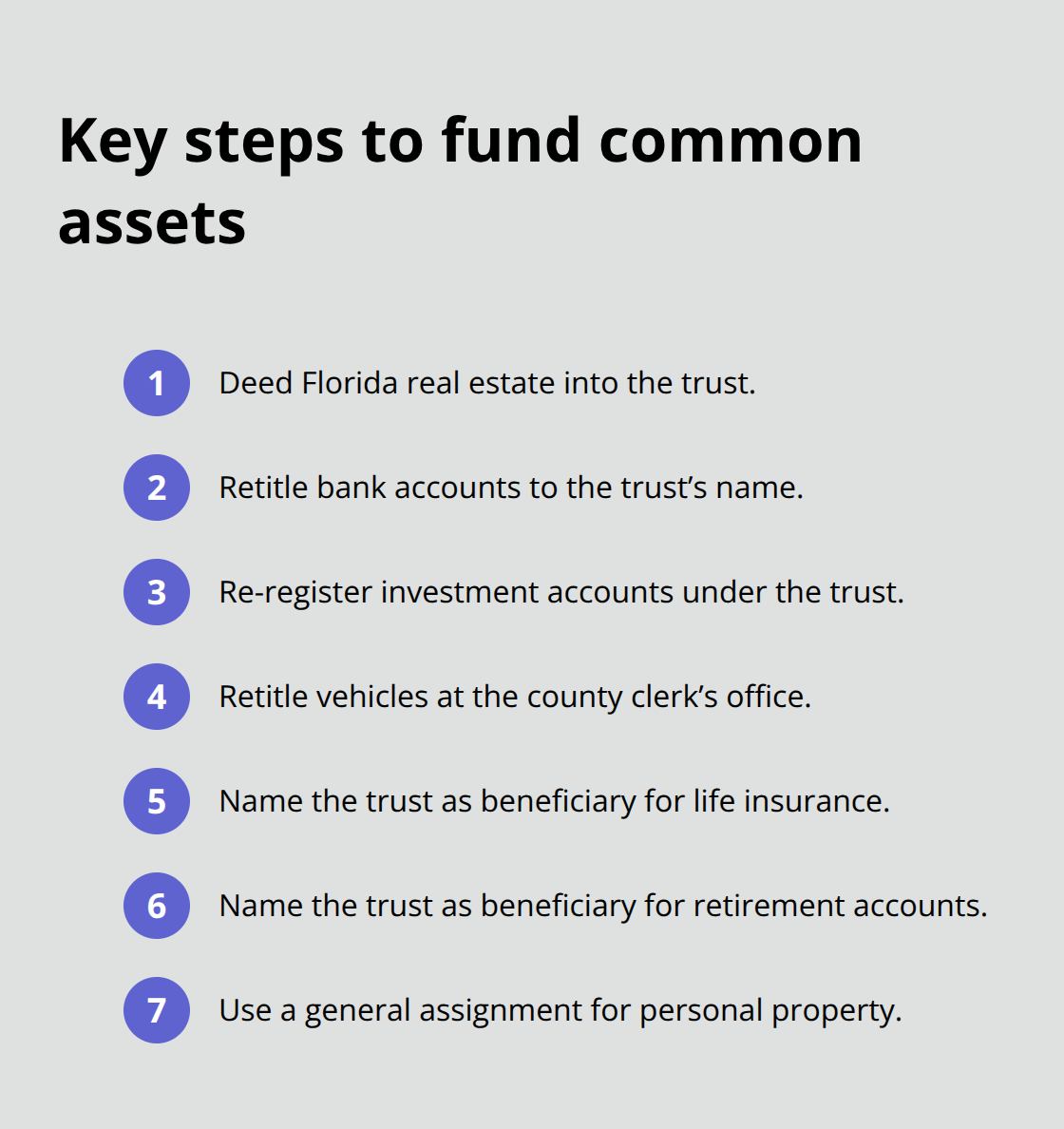
Life insurance and retirement accounts require the trust to be named as a beneficiary. Each asset type has specific requirements, and missing even one creates problems.
The Cost of Incomplete Funding
If your home is your largest asset and you fail to deed it to the trust, it will enter probate after your death (exposing the property to public records and costing your family thousands in probate fees and delays). The common misconception that a trust handles everything automatically has trapped countless families into thinking they’re protected when they’re actually not. The specific steps you take to fund each asset determine whether your family avoids probate or faces it. Understanding which assets require what actions is the foundation of effective trust planning, and the next section walks through exactly how to identify and transfer each type of asset.
Funding Your Trust: The Asset-by-Asset Roadmap
Real Estate: Your Largest Asset Requires Immediate Action
Real estate tops the list of assets families fail to fund into their trusts, and it’s also the costliest mistake. In Florida, a home that bypasses a funded trust enters probate, exposing it to public court records and costing your family 3 to 7 percent of the property’s value in fees and court costs. For a $600,000 home, that translates to $18,000 to $42,000 in unnecessary expenses. To fund real estate in Florida, you must deed the property to the trust by recording a new deed at your county clerk’s office. The deed needs the exact legal description from your current title, your trust’s full legal name, your signature, a notary seal, and proper recording. Missing any of these elements invalidates the transfer and leaves the property outside your trust.
Bank and Investment Accounts: Straightforward Retitling
Bank accounts and investment accounts require a different approach than real estate. Contact your bank or brokerage and request to retitle the account in the trust’s name. Most institutions provide a simple form, though some ask for a copy of your trust document or a Certification of Trust to verify your authority. This step is straightforward but often stalls because families delay initiating the conversation with their financial institutions. Investment accounts held in brokerage firms must be retitled to the trust’s name, just like bank accounts. Your broker will require documentation, but the process typically takes two to three weeks.
Vehicles and Personal Property: Don’t Overlook These Assets
Vehicles registered in Florida must be retitled at your county clerk’s office with the original title, proof of insurance, and a completed application. Without this step, the vehicle enters probate and delays distribution to your beneficiaries. Personal property like jewelry, art, and collectibles can be assigned to the trust through a general assignment document, though high-value items should be listed with updated insurance coverage under the trust’s name.
Life Insurance and Retirement Accounts: Special Beneficiary Rules Apply
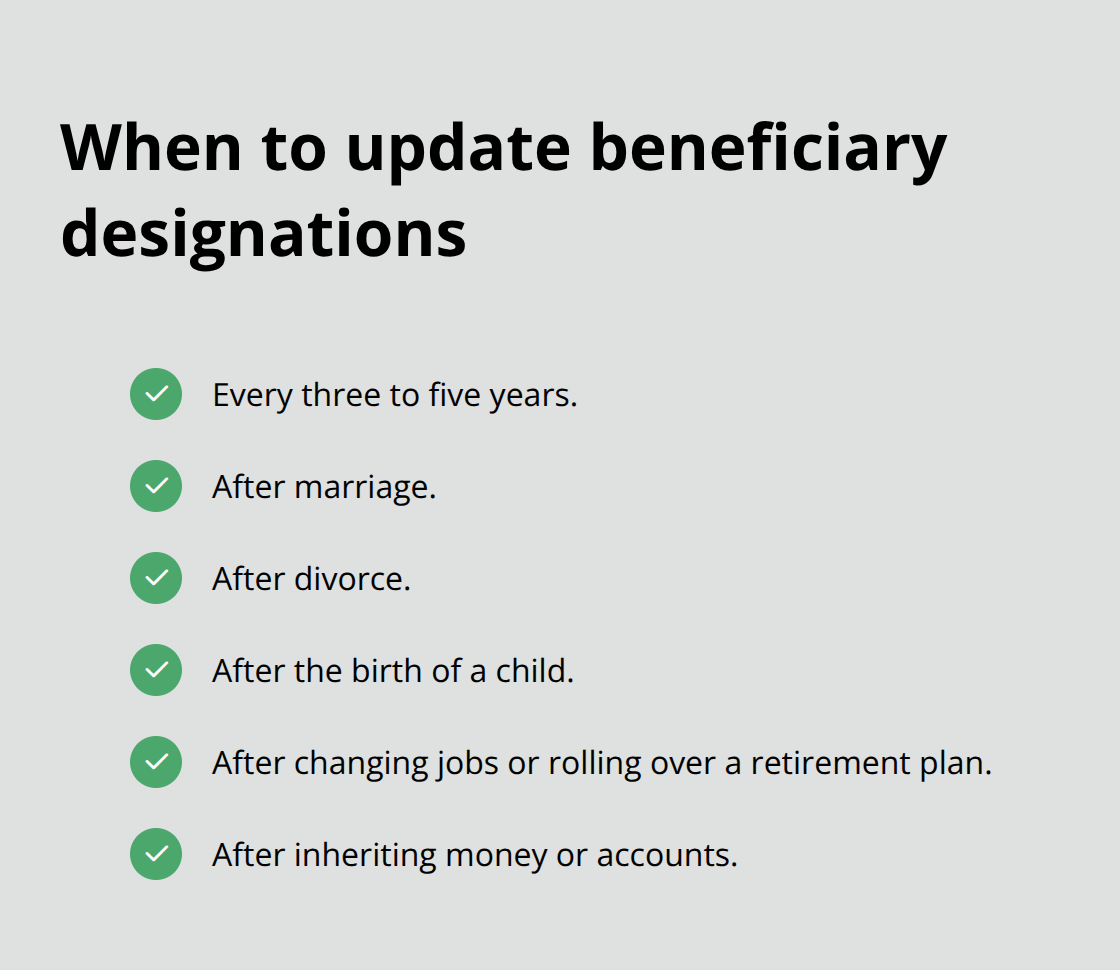
Life insurance and retirement accounts operate under different rules that trip up many families. You cannot own a life insurance policy or retirement account directly in your trust’s name during your lifetime-the IRS and plan custodians prohibit it. Instead, name your trust as the beneficiary on these accounts. This designation overrides your will and trust document, so it must be updated separately with your insurance company and plan administrator. Many families discover this mistake only after death, when the proceeds go to an outdated beneficiary or to a deceased person’s estate. Review beneficiary designations every three to five years, especially after major life changes like marriage, divorce, or the birth of a child.
The Ownership Principle That Determines Control
The key principle across all asset types is this: if ownership doesn’t reflect the trust’s name, the asset won’t be controlled by the trust after your death. Each asset type has specific requirements, and missing even one creates problems. The steps you take to fund each asset determine whether your family avoids probate or faces it. Understanding which assets require what actions sets the foundation for effective trust planning-and identifying these gaps early prevents costly mistakes later.
Avoiding Common Trust Funding Mistakes in St. Augustine and Palatka, FL
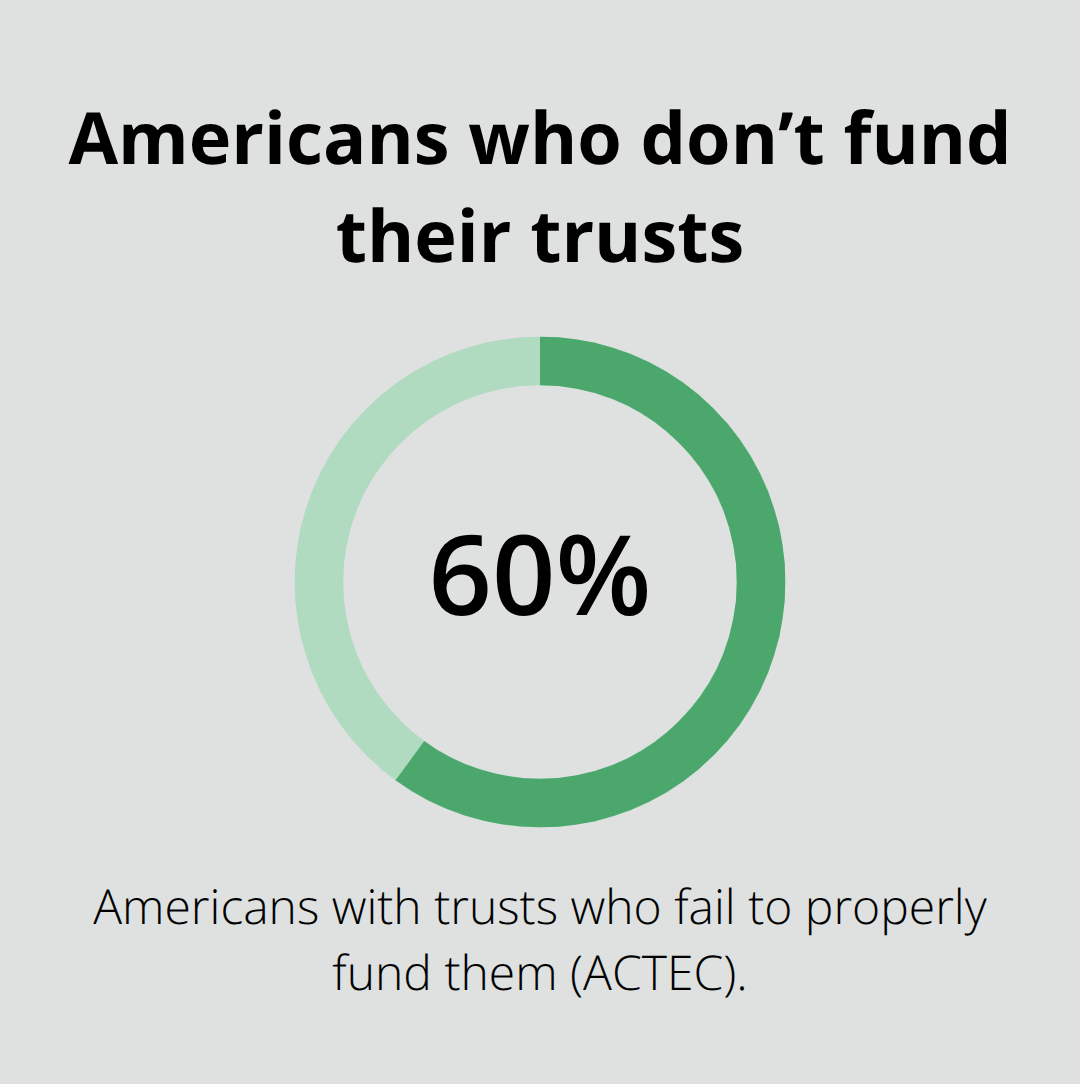
The moment you sign your trust document, the hard part starts. Families in St. Augustine and Palatka, FL often walk out of an attorney’s office thinking the work is finished, only to realize months or years later that their trust sits completely empty. This happens because the trust document itself is just paper without assets inside it. The trust only controls what you place into it, and if nothing gets placed into it, probate still happens. Approximately 60 percent of Americans with trusts fail to properly fund them, according to the American College of Trust and Estate Counsel, leaving their families exposed to exactly the delays and costs they created the trust to avoid.
The mistake is not a one-time oversight either. Families change jobs, buy new properties, inherit money, and experience divorces or remarriages. When these life events occur, most people never revisit their trust to update titles and beneficiary designations. A person remarries and acquires a second home but never deeds that property to the trust. Someone inherits investment accounts and leaves them titled in their personal name instead of moving them into the trust. A child is born, but the trust document and beneficiary designations remain unchanged. Each of these situations creates a gap between what the family thinks their trust controls and what it actually controls.
Partial Funding Creates False Security
Partial funding destroys trust plans because it creates the false sense of security that masks the real problem. A family deeds their home to the trust but leaves their investment accounts in personal name. When they die, the home transfers smoothly to beneficiaries without probate, but the investment accounts get tied up in probate court for 6 to 12 months while Florida processes the estate. The beneficiaries see that some assets moved quickly and assume the trust worked perfectly, not realizing that their parents failed to complete the job.
The costs compound when you consider that investment accounts often represent significant wealth. A $300,000 portfolio left outside a funded trust costs the family 3 to 7 percent in probate fees, meaning $9,000 to $21,000 disappears into court costs and attorney fees. Real estate creates even larger problems. If your primary residence never gets deeded to the trust, it enters probate no matter how thorough you were with other assets. The property becomes part of public court records, and creditors or distant relatives sometimes surface with claims. Your family cannot sell or refinance the property during probate without court approval, and title complications may arise later when beneficiaries try to sell.
Beneficiary Designations Operate Outside Your Trust
This mistake catches families completely off guard because they think naming the trust as beneficiary on life insurance or retirement accounts happens automatically. It does not. You must contact your insurance company and plan custodian separately to update beneficiary designations. Many families discover this mistake only after death, when a $500,000 life insurance policy goes to an ex-spouse because the old beneficiary designation was never changed, or when it goes to a deceased beneficiary’s estate instead of flowing into the trust as intended.
The IRS requires that beneficiary designations on retirement accounts be reviewed every three to five years, particularly after marriage, divorce, or the birth of a child. A person turns 65, retires, and rolls their 401k into an IRA but forgets to update the beneficiary designation on the new account. They die, and the IRA passes to whoever was listed as beneficiary on the old plan, not to their current spouse or trust. These documents override your will and your trust, meaning a single overlooked form can redirect thousands or hundreds of thousands of dollars away from your intended plan.
Life Changes Require Immediate Trust Updates
When major life events occur, most people update their will but never touch their trust. They get divorced and change their will to remove their ex-spouse, but the ex-spouse’s name remains on the deed to the home because the trust was never updated. They remarry and add their new spouse to their will but forget to add the new spouse to their trust or update beneficiary designations on retirement accounts. A child is born, and the will is amended to include the new child, but the trust distribution language remains unchanged and the new child receives nothing.
These gaps between what your will says and what your trust controls create conflict and confusion for your family. In Florida, if your trust document does not clearly address a new child born after the trust was created, that child may have grounds to contest the trust or claim a portion of the estate. The cost of updating titles and beneficiary designations immediately is minimal compared to the cost of fixing these problems after death. Schedule a trust review within 30 days of any major life change-do not wait.
Final Thoughts
Proper trust funding for families makes the difference between a smooth asset transition and years of probate delays that drain your estate. A trust document sitting empty offers your family no protection whatsoever-the real protection comes from transferring ownership of your real estate, bank accounts, investment accounts, and vehicles into the trust’s name, plus updating beneficiary designations on life insurance and retirement accounts. When you complete these steps correctly, your family avoids probate, maintains privacy, and receives their inheritance without court involvement or unnecessary costs.
The cost of getting this right is minimal compared to the cost of incomplete funding. Families facing 6 to 12 months of probate delays lose 3 to 7 percent of their estate’s value in fees and court costs-a $500,000 estate can lose $15,000 to $35,000 to probate expenses alone. More importantly, your family loses time, privacy, and peace of mind during an already difficult period.
We at Family, Estate & Mediation Law help families in St. Augustine and Palatka, FL complete this process correctly. Contact us at femlg.com to schedule a consultation and get your trust funded correctly today.