
You’ve created a trust, but if you haven’t funded it properly, it won’t protect your assets the way you intended. Many people miss this critical step and end up leaving their families to navigate probate court anyway.
At Family, Estate & Mediation Law, we see this problem regularly. The good news is that trust funding strategies are straightforward once you know what to do.
Why Your Trust Only Works When It’s Funded
An unfunded trust is essentially a document sitting in a drawer. Without assets actually transferred into it, your trust provides almost no protection. This reality shows up repeatedly in estate planning-families spend time and money creating a trust, only to end up in probate court anyway. The difference between a trust that works and one that doesn’t comes down to one word: funding. When you fund your trust properly, your assets bypass probate entirely, your family avoids court delays that can stretch months or even years, and your estate plan actually delivers on its promises. Without funding, you’re left with a plan that exists only on paper.
Probate Costs Money and Exposes Your Privacy
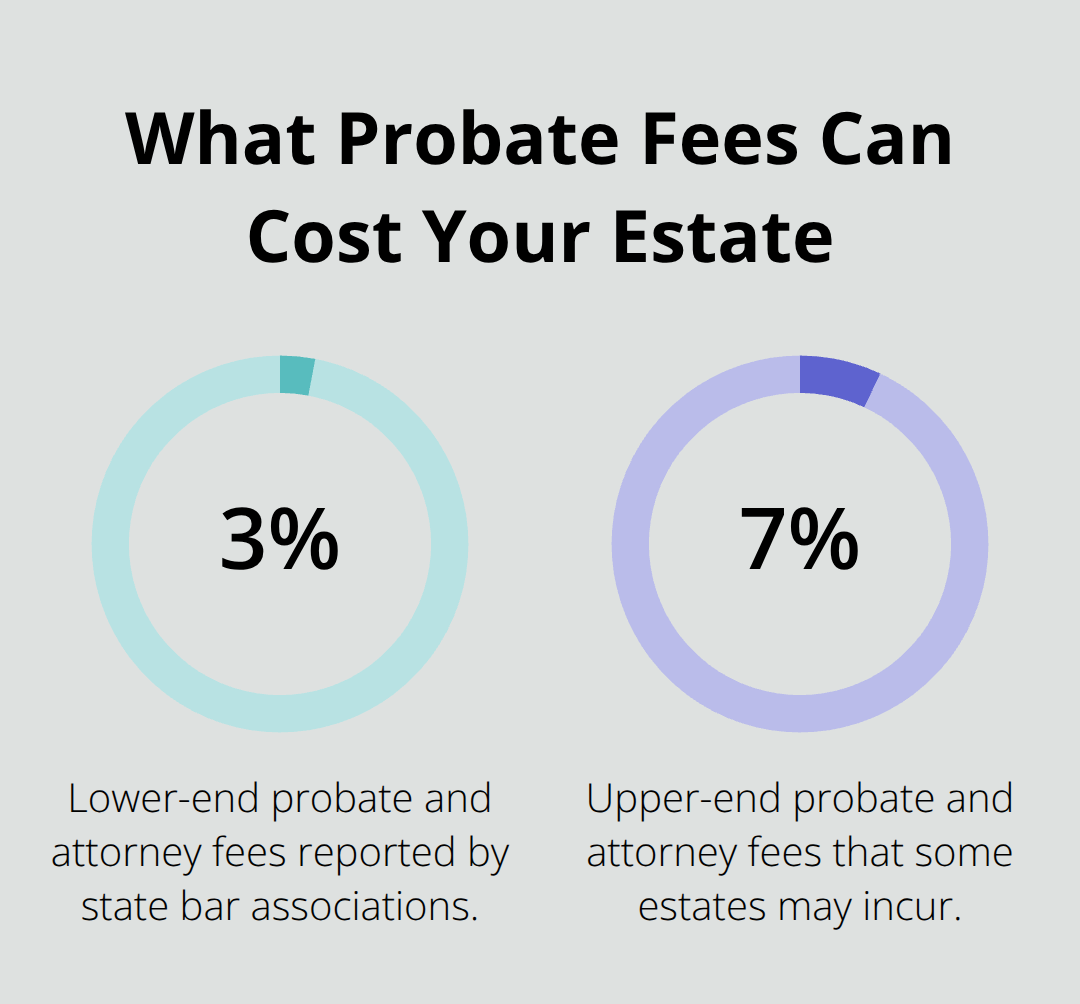
Probate drains your estate’s value before your beneficiaries receive anything. Court and attorney fees typically consume between 3% and 7% of your estate’s value according to various state bar associations. For a $500,000 estate, that means $15,000 to $35,000 in fees disappear before distribution happens.
Beyond the cost, probate exposes your family’s financial information to the public. Court documents, asset inventories, and beneficiary information become part of the public record. Anyone can walk into a courthouse and see what you owned, who inherited it, and how much it was worth.
Funded trusts keep these details private. Your family’s financial information stays confidential, and the distribution of your assets happens outside the public eye. This privacy matters especially when dealing with significant assets or complex family situations.
Tax Efficiency Requires Proper Asset Titling
Irrevocable trusts remove assets from your taxable estate, which can reduce federal estate taxes for larger estates. However, this benefit only applies to assets actually titled in the trust’s name. A revocable living trust won’t reduce estate taxes while you’re alive, but it gives you complete control over how and when your beneficiaries receive distributions-something a will alone cannot do.
You can specify that distributions happen gradually instead of all at once, protecting beneficiaries from poor financial decisions. You can also set conditions on when and how beneficiaries receive funds, such as requiring a beneficiary to reach a certain age or complete education before receiving funds. These controls require proper funding to have any effect. An unfunded trust is just instructions with no assets to manage.
The Funding Step Separates Plans That Work From Plans That Don’t
Creating a trust document and actually funding it are two separate actions. Many people complete the first step and assume the second will happen automatically-it won’t. Assets don’t transfer themselves into a trust. You must actively retitle real estate, bank accounts, investment accounts, and other property in the trust’s name. This is where the real work happens, and this is where most trust plans fail.
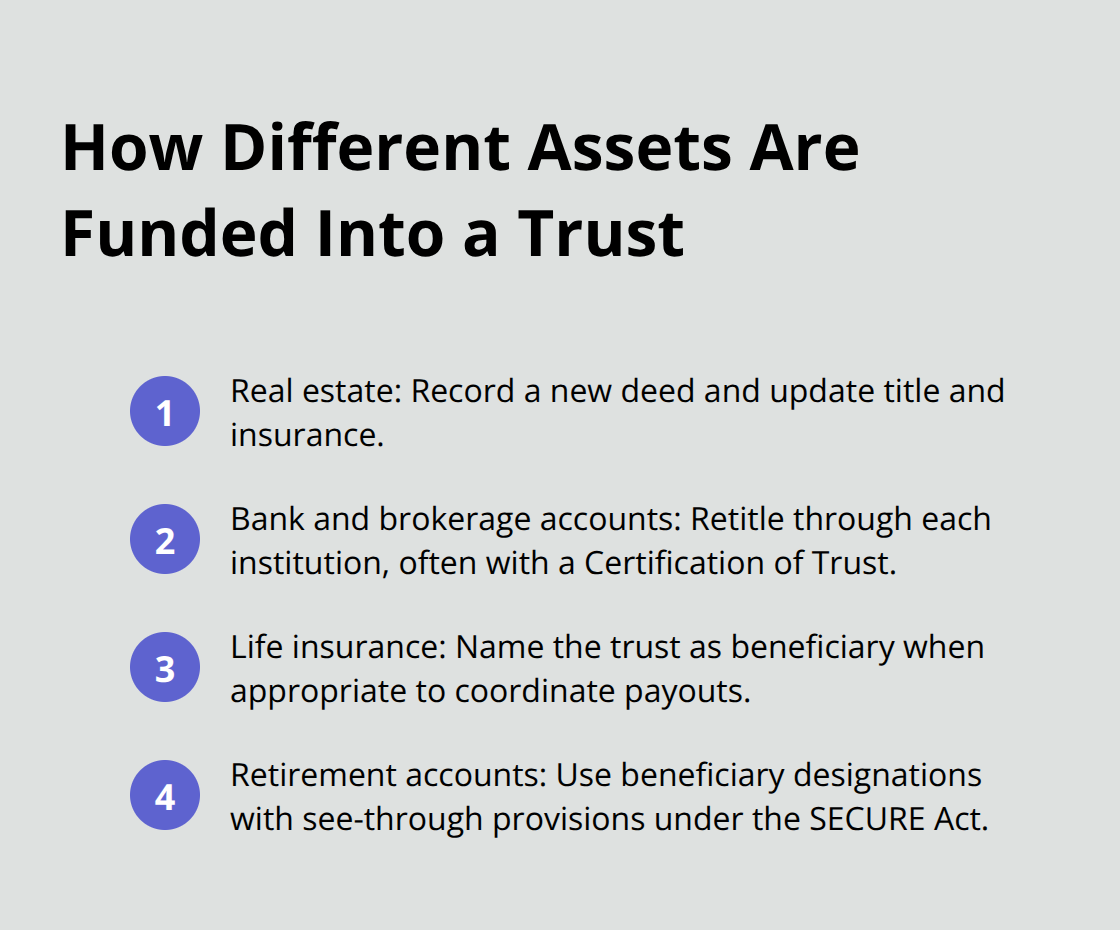
The strategies for funding different asset types vary significantly. Real estate requires deed transfers and title updates. Bank and brokerage accounts need retitling through your financial institutions. Life insurance and retirement accounts typically pass through beneficiary designations rather than direct trust ownership.
Each asset type has its own process, and missing even one can undermine your entire plan. Understanding these specific strategies determines whether your trust actually protects your family or leaves them facing the same probate problems you tried to avoid.
How to Fund the Three Main Asset Categories
Real Estate Transfers Demand Careful Attention to Detail
Real estate funding requires the most attention because property transfers involve multiple steps and state-specific rules. You must obtain a new deed that transfers the property from your name into your trust’s name. This deed needs preparation to meet legal standards and recording with your county clerk’s office, which typically costs between $50 and $200 depending on your location. After recording, you notify your homeowners insurance company and your mortgage lender. Some mortgages contain due-on-sale clauses that technically trigger when you transfer property, though many lenders don’t enforce these clauses for revocable living trusts. Verify your specific mortgage terms before transferring. You also want to update your title insurance, as some policies need endorsements to reflect the trust ownership. Skip any of these steps and you risk complications later-incomplete transfers can force your family back into probate court for that property alone.
Bank and Brokerage Accounts Transfer Smoothly With the Right Process
Bank and brokerage accounts transfer more smoothly than real estate. Contact each financial institution and ask for their trust account retitling process. Most banks require a Certification of Trust, which is a shorter document than the full trust agreement and protects your privacy without disclosing all trust terms to the bank. Retitling typically takes two to four weeks. One critical detail: monitor FDIC insurance coverage limits, which currently sit at $250,000 per person per institution per ownership category. If you have $400,000 in savings at one bank, only $250,000 receives FDIC protection in a revocable trust, so splitting accounts across institutions may make sense for larger balances.
Life Insurance and Retirement Accounts Follow Beneficiary Designation Rules
Life insurance and retirement accounts follow a different path entirely. These assets pass through beneficiary designations, not through direct trust ownership. Name your trust as the beneficiary on life insurance policies and retirement accounts rather than transferring them into the trust itself. This approach preserves the tax advantages these accounts offer and avoids unnecessary complications. When naming a trust as beneficiary on retirement accounts, you must include see-through provisions that allow required minimum distributions to be calculated based on your beneficiaries’ life expectancies-this matters significantly under SECURE Act rules that changed distribution timelines for non-spouse beneficiaries. Missing this detail can accelerate tax liability for your heirs substantially. These specific funding decisions for each asset category set the stage for what happens next: coordinating all your assets with the right professionals who can catch gaps in your overall plan.
Where Trust Plans Actually Fall Apart
The Unfunded Trust Trap
The gap between creating a trust and funding it is where most estate plans fail silently. You draft a solid trust document, but months or years pass without actually transferring assets into it. Life gets busy. You assume the funding will happen eventually. Then something happens-an accident, sudden illness, or death-and your family discovers the trust sits empty. At that point, the assets your trust was supposed to protect go through probate anyway, defeating the entire purpose. We at Family, Estate & Mediation Law see this repeatedly. The trust document exists, the intentions were good, but the execution never happened. This mistake costs families thousands in unnecessary probate fees and exposes their financial details to public scrutiny when privacy was the goal.
Missing Assets Create Dangerous Gaps
The second major mistake is leaving specific assets out of the trust plan entirely. You fund your home, your bank accounts, and your investment portfolio into the trust, but you never address your life insurance policy or your IRA. These assets then pass outside your trust through beneficiary designations, potentially creating gaps in your overall strategy. This matters especially when those assets represent significant portions of your estate. Cerulli Associates projects roughly $105 trillion will transfer to heirs through 2048, and improper asset titling undermines careful planning for that wealth transfer.
Outdated Beneficiary Designations Override Your Trust
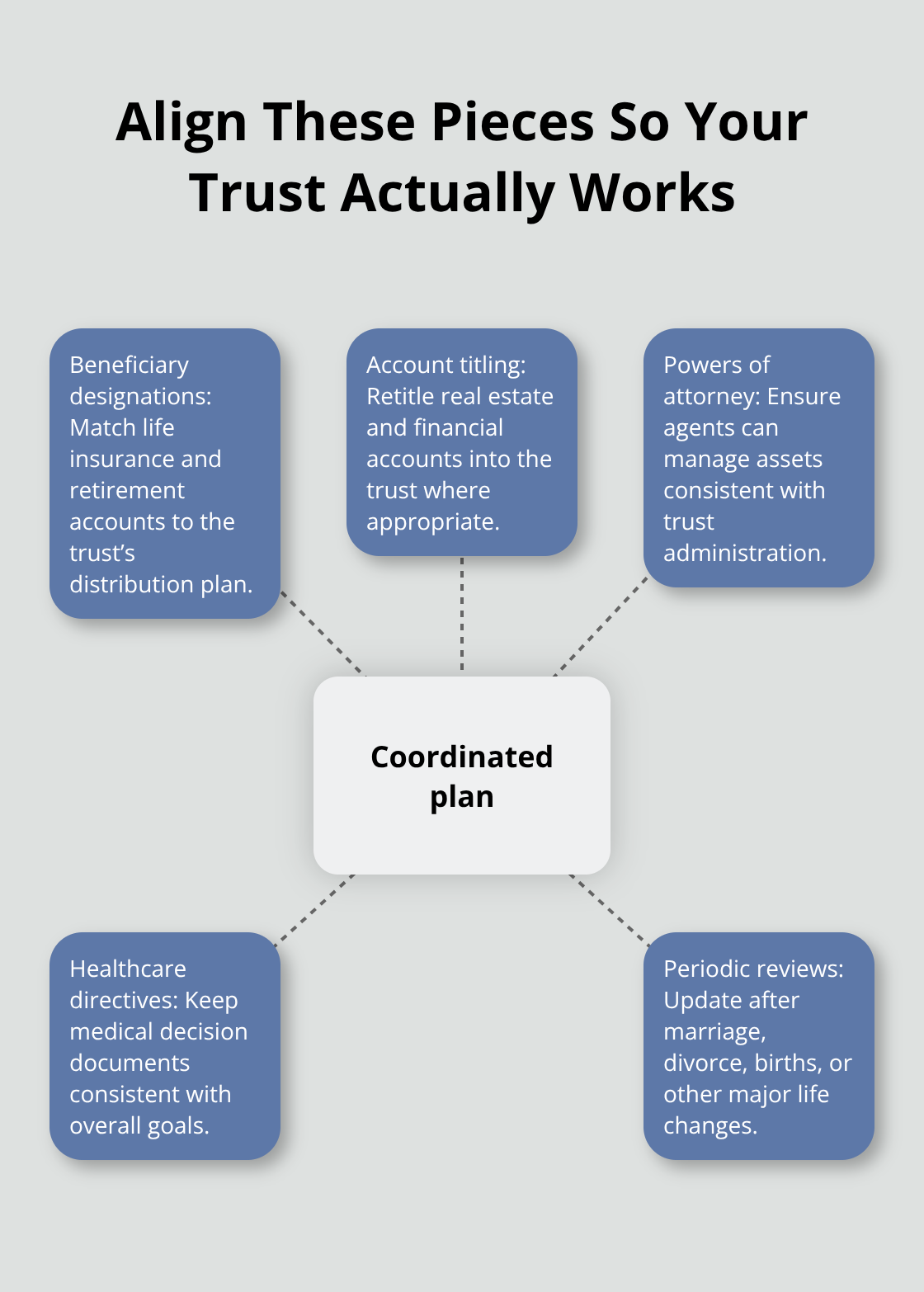
You might have named your adult child as the direct beneficiary on your life insurance policy years ago, before you had grandchildren or before your family situation changed. That outdated designation overrides your trust instructions, and your policy pays directly to your child instead of into your trust where it could be managed more carefully. Similarly, failing to update beneficiary designations on retirement accounts after major life events-marriage, divorce, the birth of children-creates conflicts between what your trust says should happen and what your beneficiary designations actually direct.
Coordination Failures Undermine Your Entire Plan
Your trust might specify that distributions go to your spouse first, then to your children, but your 401(k) names your ex-spouse as beneficiary. Your spouse receives nothing from that account while your ex-spouse collects funds your trust never controlled. These coordination failures happen because people treat the trust as a standalone document rather than one piece of a larger plan that includes beneficiary designations, powers of attorney, and healthcare directives all working together.
Final Thoughts
Your trust only protects your legacy when you actually fund it. The document itself means nothing without assets transferred into it, and we at Family, Estate & Mediation Law see families struggle with this disconnect regularly. A properly funded trust keeps your estate out of probate court, saves your family thousands in unnecessary fees, and maintains the privacy you deserve.
Trust funding strategies work because they address each asset type with the specific process it requires-real estate needs deed transfers and title updates, bank accounts need retitling through your financial institutions, and life insurance and retirement accounts need beneficiary designations that coordinate with your overall plan. Start with your most valuable assets, typically your home and your largest financial accounts, then work through each asset category systematically. Update beneficiary designations on life insurance and retirement accounts to align with your trust instructions, and verify that everything either sits in the trust or passes through coordinated beneficiary designations.
Professional guidance matters here because the cost of fixing a poorly funded trust far exceeds the cost of getting it right from the start. An attorney can identify which assets belong in your trust, catch coordination failures between your trust and other documents, and verify that your state’s specific requirements are met for real estate transfers and account retitling. Contact us to review your trust funding strategy and make sure your assets move smoothly to the people you care about.