
Most people put off estate planning because wills and trusts seem complicated. We at Family, Estate & Mediation Law know that understanding these two documents is the first step toward protecting your family’s future.
This guide breaks down wills and trusts explained in plain language, showing you how each works and which option fits your situation best.
What a Will Actually Does
The Core Purpose of a Will
A will is a legal document that takes effect only after you die. It tells the probate court who receives your assets, who manages the process (your executor), and who cares for your minor children. Nothing in a will happens while you’re alive-it remains dormant until your death activates it. According to LegalZoom, only 24% of U.S. adults have a will, which means three-quarters of people leave their family’s inheritance decisions to state law instead of their own preferences. That gap matters significantly because without a will, a judge decides who inherits your money, house, and possessions based on intestacy laws that rarely match what families actually want.
The Essential Components of a Valid Will
A valid will requires several key elements that work together. You must name an executor-the person responsible for collecting assets, paying debts, and distributing what remains to your beneficiaries. You identify who receives what, whether that’s your spouse, children, charitable organizations, or anyone else. If you have minor children, you name a guardian in the will; this is one of the few things a will accomplishes that a trust cannot. You must sign the will in front of witnesses (state requirements vary, but typically two witnesses are needed), and most states require notarization. The cost is reasonable-a simple will typically runs $15 to $1,500 depending on complexity and whether you use an online service versus an attorney.
The Real Cost: Probate Expenses and Delays
The true expense arrives later through probate, which commonly costs 3% to 8% of your estate’s value. Probate is the court-supervised process where a judge validates your will, authorizes your executor, and oversees asset distribution. This process is public-your will becomes a public record-and it consumes time. Expect six months to several years for probate to complete, meaning beneficiaries wait months or longer to access their inheritance. That delay frustrates families and ties up assets when they’re needed most. The probate court charges filing fees, and your executor may need to hire an attorney to navigate the process, adding hundreds or thousands in costs.
When a Will Works-and When It Falls Short
For straightforward estates without complex family situations, a will works adequately. But if you want faster distributions, privacy, or control over how beneficiaries receive money (for example, giving a child their inheritance at age 30 instead of age 18), a will alone falls short. This is where trusts enter the picture and offer solutions that wills simply cannot provide.
How Trusts Work and Why They Solve Will Problems
A trust is a legal arrangement where you transfer ownership of your assets to a trustee, who then holds and manages those assets for your beneficiaries according to your instructions. Unlike a will, a trust operates during your lifetime and continues after your death without court involvement. You remain in control while alive-in a revocable living trust, you act as your own trustee and can modify or cancel the trust at any time. The moment you pass away, your successor trustee steps in and distributes assets directly to beneficiaries without waiting for probate approval. This speed matters tremendously: while probate cases drag on for six months to several years, trust distributions often happen within weeks. Properly funded revocable living trusts provide privacy and faster asset transfer compared to wills that must go through the public probate process.
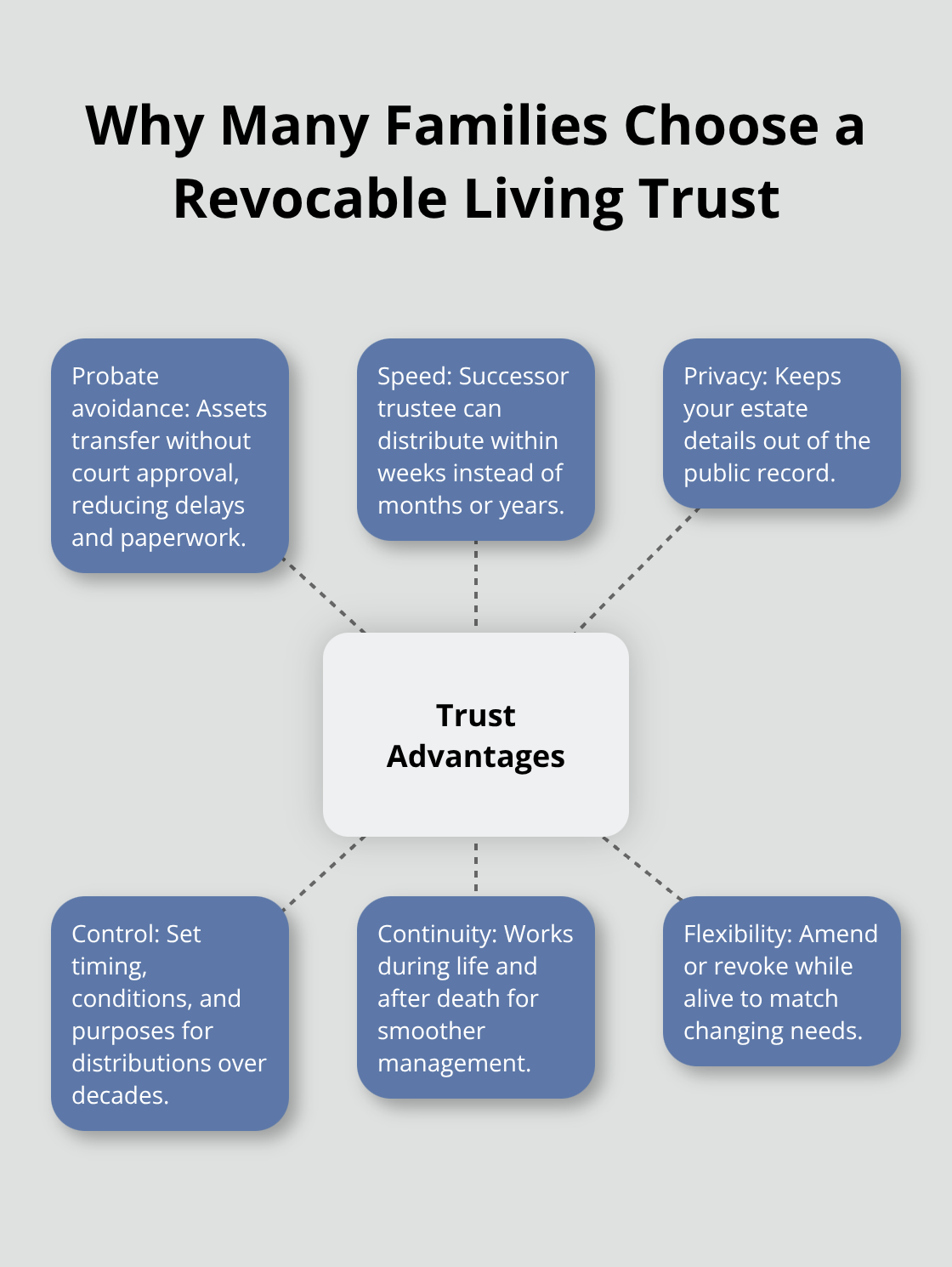
The privacy advantage alone justifies a trust for many families-your trust document remains completely private, so nobody learns what you owned or who received it.
The Funding Reality That Most People Miss
Creating a trust means nothing unless you fund it properly. Funding requires you to retitle your assets into the trust’s name so the trust actually owns them rather than you personally. If you create a trust but leave your house, brokerage account, and bank savings in your individual name, those assets still go through probate when you die because the trust doesn’t own them. You must fund a revocable living trust to achieve probate avoidance and smoother asset management. Many people spend money on a trust document, feel accomplished, and then never complete the funding step-a critical mistake that defeats the entire purpose. Your trustee cannot distribute what the trust doesn’t legally own. This is why working with an attorney matters more than using a DIY online service; an attorney reviews your assets and ensures everything transfers into the trust’s name, while online services often leave you responsible for figuring out the funding details yourself. Professional guidance on funding is essential to avoid costly mistakes.
Different Trusts for Different Situations
A revocable living trust works best for most people because you maintain complete control and can change it whenever your circumstances shift. An irrevocable trust, by contrast, cannot be easily modified after creation and serves specific tax benefits, asset protection, or Medicaid planning purposes. Irrevocable trusts are powerful tools but require careful planning because you lose control once the trust is established. Special needs trusts protect beneficiaries with disabilities by providing funds without disqualifying them from government programs like Medicaid or SSI-a vital consideration for families with disabled members. Testamentary trusts are created within your will and only take effect after death, useful for managing inheritances for minor children or imposing conditions on distributions. The type you need depends entirely on your family structure, asset complexity, and specific goals.
Matching Your Trust to Your Family’s Needs
A family with minor children and a moderate estate typically needs only a revocable living trust paired with a pour-over will. A blended family with significant assets or a beneficiary with special needs usually requires more sophisticated planning that may involve multiple trust types working together. The decisions you make now about trust structure directly affect how smoothly your successor trustee can distribute assets and how well your plan protects your family’s interests. Understanding which trust type fits your situation sets the stage for the next critical comparison: how wills and trusts stack up against each other in cost, privacy, and tax efficiency.
Wills vs Trusts: Which Costs Less and Delivers More Control
The True Cost: Probate Expenses Outweigh Initial Savings
The upfront cost difference between wills and trusts misleads most people. A simple will costs $15 to $1,500 depending on whether you use an online service or hire an attorney, while a basic revocable living trust runs $1,000 to $4,000. On the surface, a will appears cheaper, but this comparison ignores the real expense: probate. When you die with only a will, your estate pays probate costs ranging from 3% to 8% of the total value. For a $500,000 estate, that means $15,000 to $40,000 in court fees, executor compensation, and legal expenses before beneficiaries receive anything. A trust funded properly avoids probate entirely, eliminating those costs completely. The math shifts dramatically once you account for probate-a $3,000 trust investment saves $15,000 to $40,000 in probate fees on a moderate estate.
NerdWallet reports that 63% of estate planning attorneys offer free 30 to 60 minute consultations, giving you a low-cost way to determine whether probate avoidance justifies a trust in your specific situation. The real question is not which document costs less initially but which approach costs less overall when probate expenses enter the calculation.
Privacy and Control: Two Separate Advantages
Privacy and control operate as completely separate advantages that matter intensely to different families. A will becomes public record through probate, meaning anyone can view what you owned, who inherited it, and what you left to each person-a reality that troubles families wanting discretion about their financial affairs. A trust remains entirely private; your document never enters the public record, and nobody outside your family learns the details of your estate unless you choose to tell them. For business owners, families with significant wealth, or anyone uncomfortable with public disclosure, this privacy difference alone justifies choosing a trust.
Control differences are equally striking. A will distributes assets outright, giving beneficiaries complete access to their inheritance immediately-which creates problems when beneficiaries are young, irresponsible, or unable to manage money wisely. A trust allows you to control distributions across decades, specifying that a child receives $10,000 annually until age 30, then the remainder at 35, or that distributions happen only for education and housing expenses. You can impose conditions, protect assets from a beneficiary’s creditors or ex-spouse, and ensure money serves your actual intentions rather than disappearing through poor decisions. Wills offer zero control over post-distribution management; trusts offer unlimited control structured exactly as you design it.
Asset Protection and Tax Efficiency
Tax implications and asset protection distinguish trusts from wills in ways that affect your family’s financial outcome. A revocable living trust provides no tax advantages during your lifetime-assets in a revocable trust remain part of your taxable estate. However, an irrevocable trust removes assets from your taxable estate permanently, potentially reducing or eliminating federal estate taxes for high-net-worth families. This matters significantly because federal estate tax applies to estates exceeding $13.61 million in 2024, and some states impose additional estate taxes at lower thresholds. Irrevocable trusts require careful planning because you lose control of the assets once transferred, but for families with substantial wealth, the tax savings justify the trade-off.
Asset protection functions differently between documents. A will offers no protection from creditors-after your death, creditors can claim against your estate before beneficiaries receive distributions. A trust, particularly an irrevocable trust, shields assets from creditors and protects beneficiaries who face lawsuits or financial claims. For business owners, professionals in high-liability fields, or anyone concerned about creditor claims, this protection is invaluable.
Combining Both Documents for Maximum Protection
Many families benefit from combining both documents strategically: a revocable living trust handles major assets to avoid probate and maintain privacy, while a pour-over will catches any remaining assets and addresses guardianship for minor children. This dual approach costs more initially than a will alone but delivers probate avoidance, privacy, control, and potential asset protection that a single document cannot provide.
Final Thoughts
Wills and trusts explained reveals that one document rarely solves every estate planning challenge. A will handles guardianship for minor children and directs asset distribution, but it forces your estate through probate, exposes your financial details publicly, and offers no control over how beneficiaries use their inheritance. A revocable living trust avoids probate, maintains privacy, and lets you structure distributions across years or decades, but it cannot name guardians for children and requires proper funding to work effectively.
The strongest approach combines both documents. Your revocable living trust manages your major assets, bypasses probate, and keeps your estate private while your successor trustee distributes assets quickly to beneficiaries. Your pour-over will catches any assets accidentally left outside the trust and names guardians for your minor children, addressing the one critical function a trust cannot perform. Together, these documents eliminate probate costs, protect your family’s privacy, and ensure your wishes control how your estate is managed rather than leaving those decisions to state law or the probate court.
Starting this process feels overwhelming, but it becomes manageable once you understand what each document accomplishes. The real barrier is not complexity but inaction-only 24% of American adults have a will, meaning most families leave their estate planning to chance. Contact us at Family, Estate & Mediation Law to discuss which combination of documents fits your family’s needs and begin protecting what matters most.