When you pass away, your digital life doesn’t disappear. Your email accounts, social media profiles, cryptocurrency wallets, and cloud storage contain valuable information and assets that your family will need to access.
Digital assets planning isn’t optional anymore. Here at Family, Estate & Mediation Law, we help families in St. Augustine and Palatka protect what matters most by creating a clear roadmap for their online and offline legacies.
What Counts as Your Digital Life
Digital Assets Span Far Beyond Cryptocurrency
Digital assets extend well beyond cryptocurrency and social media accounts. According to Bryn Mawr Trust’s 2024 Digital Assets Survey, the average American holds nearly $200,000 in digital assets, yet fewer than 15% of people include them in their estate plans.
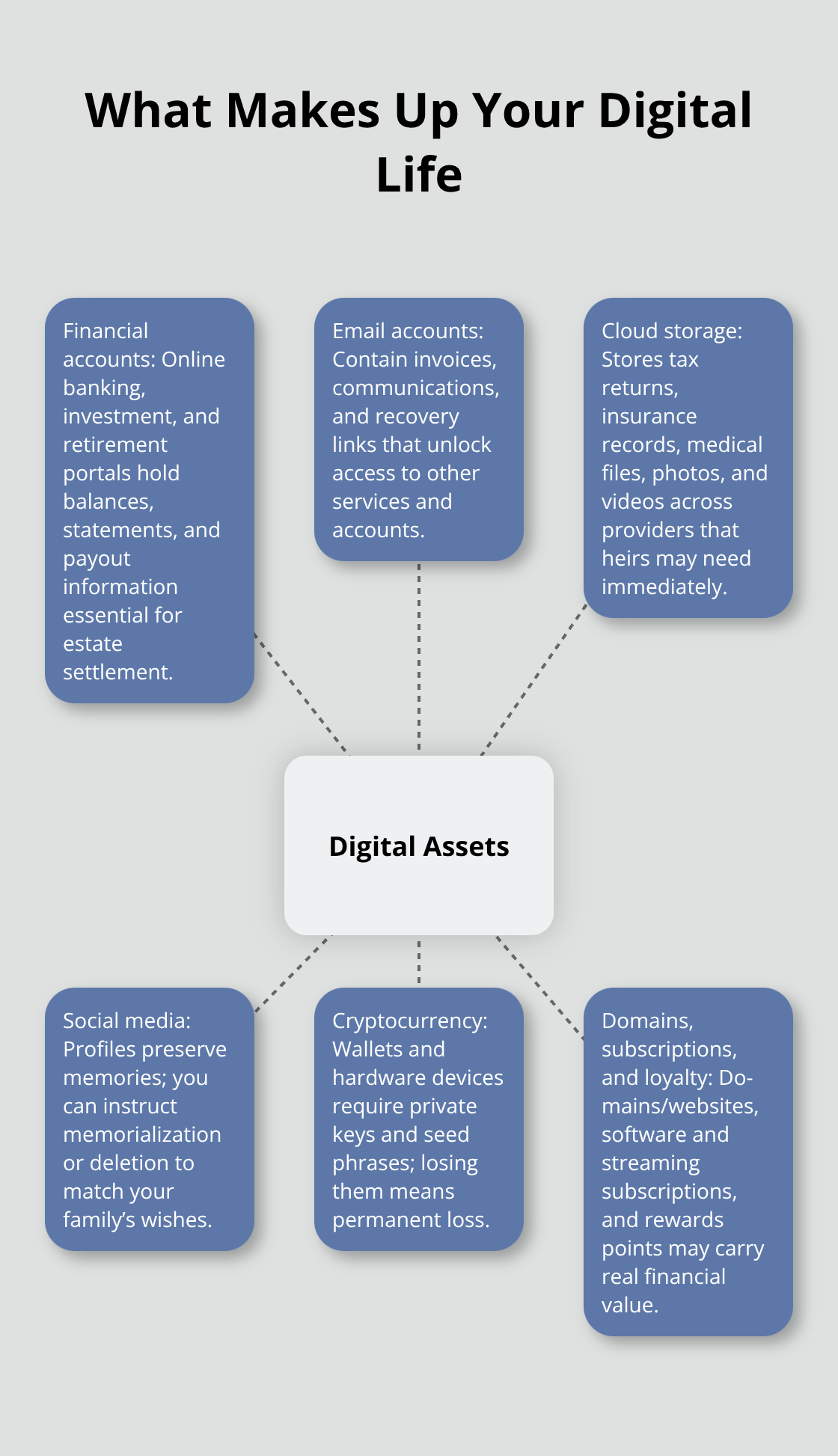
Your digital life encompasses financial accounts like online banking portals and investment platforms, email accounts that contain sensitive correspondence and account recovery links, cloud storage services holding family photos and documents, social media profiles with years of memories, cryptocurrency wallets and hardware devices, domain names and websites generating income, subscription services like streaming platforms and software licenses, loyalty programs with accumulated points and rewards, and digital files such as videos, music, and documents stored across multiple platforms.
Why Families in St. Augustine and Palatka Miss These Assets
Many families overlook these assets entirely because they focus only on tangible property like homes and vehicles. The reality is that someone in your family will need access to these accounts after you’re gone, whether to settle your financial affairs, preserve family memories, or continue a business that operates online. Without planning, your heirs face locked accounts, frozen assets, and the loss of irreplaceable digital memories.
The Urgency of Digital Asset Planning Today
Modern life happens online, which intensifies the urgency of digital asset planning. Financial institutions now operate primarily through digital portals, making online banking access essential for settling estates. Cloud storage holds critical documents-tax returns, insurance policies, medical records-that executors need to locate immediately. Social media accounts contain family photos and messages that relatives want to preserve, yet platform terms of service typically prohibit account access by anyone other than the account holder.
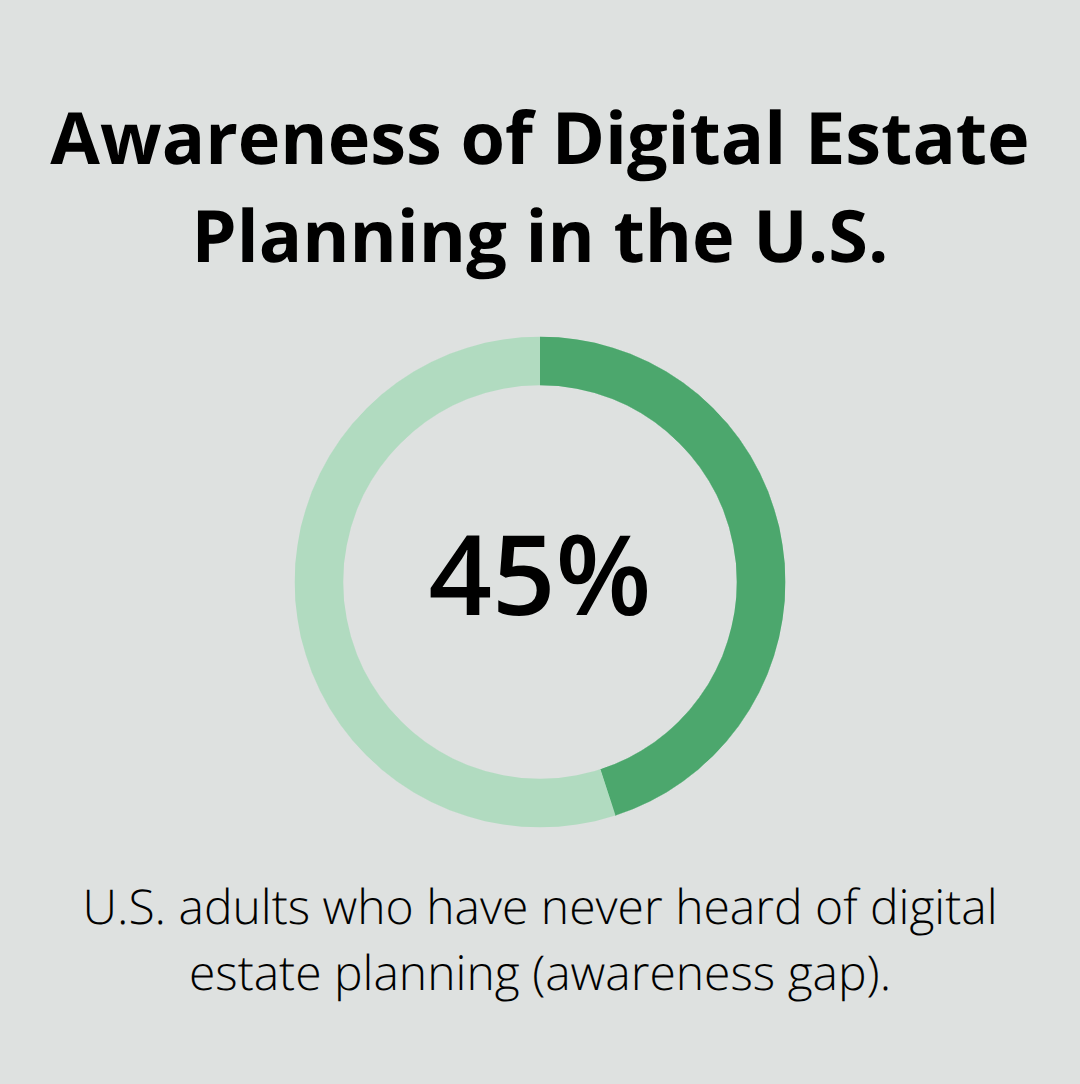
About 45% of Americans have never heard of digital estate planning. When asked why they omit digital assets from their plans, the most common response is simply that they never considered it.
This gap creates real problems: a family business operating entirely through email and online banking can grind to a halt if the owner dies and no one can access the accounts. Cryptocurrency holdings become permanently inaccessible if private keys aren’t stored where heirs can find them.
Florida Law Provides Tools-But Only With Proper Planning
Florida’s Revised Uniform Fiduciary Access to Digital Assets Act provides legal tools to address these challenges, but only if your will or trust explicitly authorizes your fiduciaries to access digital accounts. The law requires specific language (generic wording like “all my property” won’t work). Without proper planning, your family faces delays, frustration, and potential financial loss. Understanding what digital assets you own and how Florida law protects them is the first step toward safeguarding your legacy.
Build Your Digital Assets Inventory Now
Start With a Complete Account List
The first step toward protecting your digital legacy is acknowledging what you actually own online. Most people in St. Augustine and Palatka maintain far more accounts than they realize, and few know where their passwords live. List every online account you use regularly: banking platforms, investment accounts, email services, cloud storage providers like Google Drive or Dropbox, social media profiles, cryptocurrency exchanges, domain names, subscription services, and loyalty programs. Don’t skip the small accounts-that streaming service or online retailer holds payment information and account history that matters. A centralized password manager like LastPass or Dashlane lets you document each account with the username, password, and recovery email in one secure location. This digital inventory becomes your digital roadmap and solves the problem of passwords stored in notebooks or browser autofill, which disappear when you die.
Document Financial and Cryptocurrency Holdings
For financial accounts, record the institution name, account number, login credentials, and account type (checking, savings, investment, retirement). Note any accounts that generate income or hold significant value, like rental property management platforms or online businesses. Include the recovery phone number and backup authentication methods for each account, since platforms increasingly require two-factor verification.
Cryptocurrency demands special attention and separate handling. Your private keys and seed phrases must live apart from your regular password manager and be documented in a way your fiduciary can access them. Losing this information means losing access permanently, with no recovery option available. Store these critical details securely and inform your executor or trustee of their location.
Protect Your Cloud Storage and Social Media
Cloud storage often holds irreplaceable documents and memories-tax returns, insurance policies, medical records, family photos, and videos. Identify which cloud services you use and catalog what critical information lives in each one. For social media accounts, list each platform, your username, and decide what should happen after you’re gone (some families want accounts memorialized, others prefer deletion).
Keep Your Inventory Current and Accessible
Update your inventory twice yearly to reflect new accounts and changes to existing ones. Inform your executor or trustee where to find this inventory and how to access it when needed. Your fiduciary cannot protect what they don’t know exists, so clarity about your digital assets becomes the foundation for everything that follows.
With your inventory complete, the next critical step involves understanding how Florida law authorizes your fiduciaries to actually access these accounts and what legal language your will or trust must contain.
How Florida Law Authorizes Digital Asset Access
Understanding RUFADAA and What It Requires
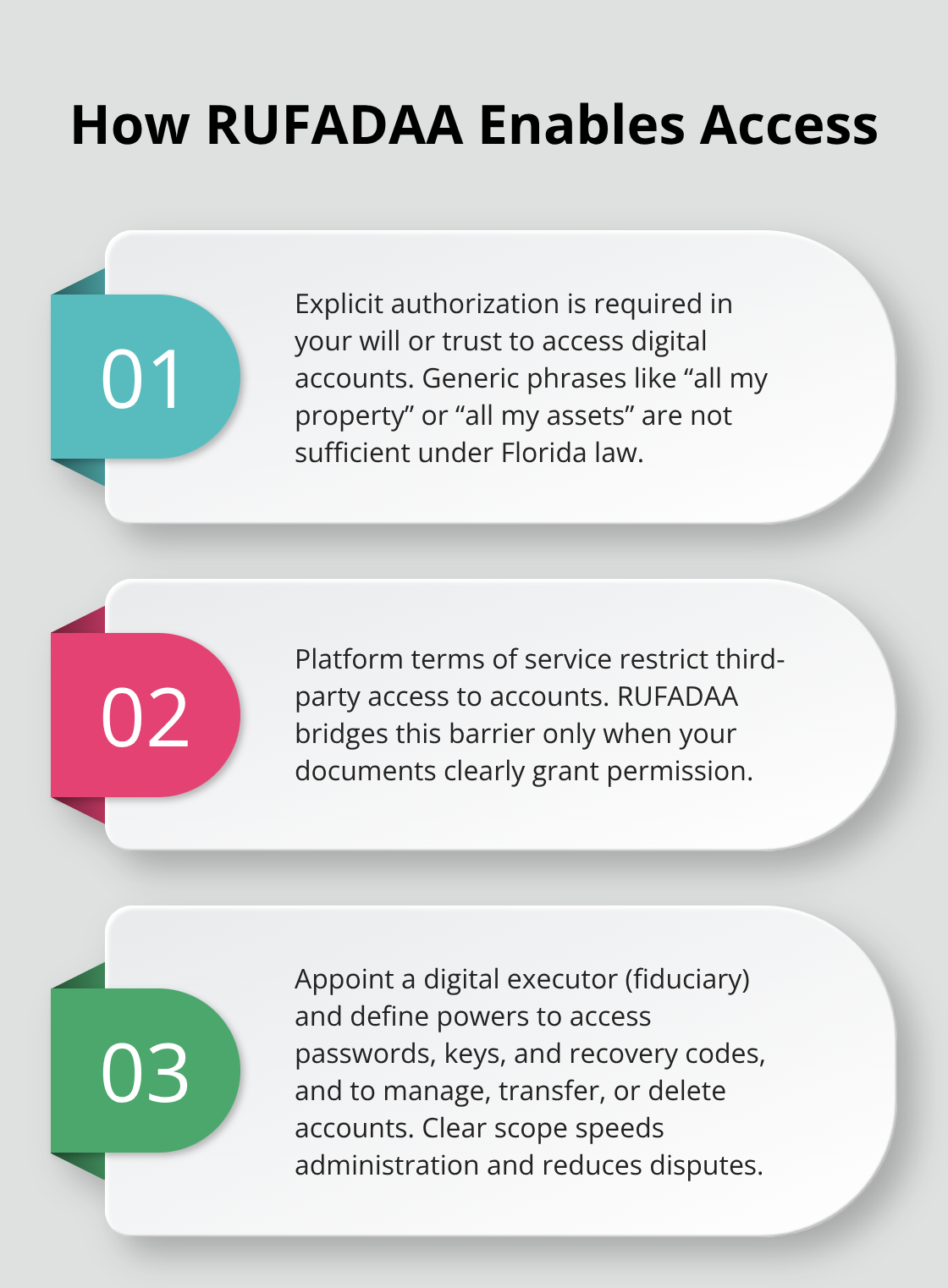
Florida’s Revised Uniform Fiduciary Access to Digital Assets Act (RUFADAA) provides the legal framework that allows your executor or trustee to access your digital accounts after you pass away or become incapacitated. However, this law only works if your will or trust contains explicit authorization language. Generic wording like “all my property” or “all my assets” will not suffice. Florida courts interpret RUFADAA strictly, meaning your fiduciary needs specific permission to access online banking, email, cryptocurrency, and social media accounts. Without this language, platform providers like Google, Facebook, and financial institutions can legally refuse access, even when your fiduciary has a death certificate or court order.
Why Platform Terms of Service Create Barriers
Most digital services operate under terms of service that prohibit account access by anyone other than the account holder. RUFADAA bridges this gap, but only when your estate planning documents explicitly grant that authority. Many families in St. Augustine and Palatka discover this problem too late, after a loved one dies and accounts become permanently locked. The distinction matters because platforms enforce these restrictions consistently, regardless of your family’s circumstances or needs.
Designating Your Digital Executor
Your will or trust should designate a digital executor or digital asset fiduciary-someone with the technical knowledge and responsibility to manage your online accounts according to your instructions. This person may be your primary executor, or you may appoint someone with stronger tech skills to handle digital matters specifically. Your documents must also authorize this fiduciary to access passwords, private keys, recovery codes, and account information stored in your password manager or digital vault. Include language that permits your fiduciary to download, transfer, delete, or memorialize accounts as you direct.
Handling Cryptocurrency and Blockchain Assets
Cryptocurrency holdings require explicit authorization in your trust. Your documents should authorize your fiduciary to access hardware wallets and transfer digital currencies to beneficiaries, since blockchain assets follow different rules than traditional accounts. Losing access to private keys and seed phrases means losing those assets permanently, with no recovery option available. Your fiduciary cannot protect what they cannot access.
Planning for Social Media and Legacy Contacts
Decisions about social media matter significantly. Some families want accounts memorialized on Facebook or Instagram to preserve memories and honor the deceased, while others prefer deletion. Your estate plan should state your preference clearly. Set up legacy contacts on social media platforms now (Facebook and Google both offer this feature) so your designated person can manage the account immediately without waiting for probate or trust administration to begin. This parallel planning approach prevents delays and avoids the frustration of locked accounts that cannot be accessed even with proper legal authority.
Final Thoughts
Digital assets planning protects your family from financial loss, locked accounts, and the disappearance of irreplaceable memories. When you inventory your online accounts, document your passwords securely, and authorize your fiduciaries through proper legal language, you eliminate the chaos your loved ones would otherwise face. The families in St. Augustine and Palatka who plan ahead avoid probate delays, prevent cryptocurrency from becoming permanently inaccessible, and preserve the digital memories that tell your family’s story.
Start today by listing every online account you maintain, from banking platforms to social media profiles to cryptocurrency wallets. Store your passwords and recovery codes in a secure password manager and update this inventory twice yearly as your digital life changes. Designate a digital executor who understands technology and can manage your accounts according to your wishes. Work with an attorney to add explicit digital asset authorization language to your will or trust, since Florida law requires specific wording to give your fiduciaries the legal power to access accounts after you’re gone.
We at Family, Estate & Mediation Law Group understand that your digital life matters as much as your physical assets. With over 50 years of combined experience serving Northeast Florida families, we help you integrate digital assets into a comprehensive estate plan that protects everything you’ve built. Contact us today to schedule a consultation and take control of your digital legacy-visit Family, Estate & Mediation Law Group to learn more about how we can help.