Most people in St. Augustine and Palatka, FL put off estate planning because it feels overwhelming. The truth is, estate planning basics don’t have to be complicated.
We at Family, Estate & Mediation Law help families create clear, practical plans that protect what matters most. This guide walks you through the documents you need, the mistakes to avoid, and how to get started today.
Why Estate Planning Matters in St. Augustine and Palatka, FL
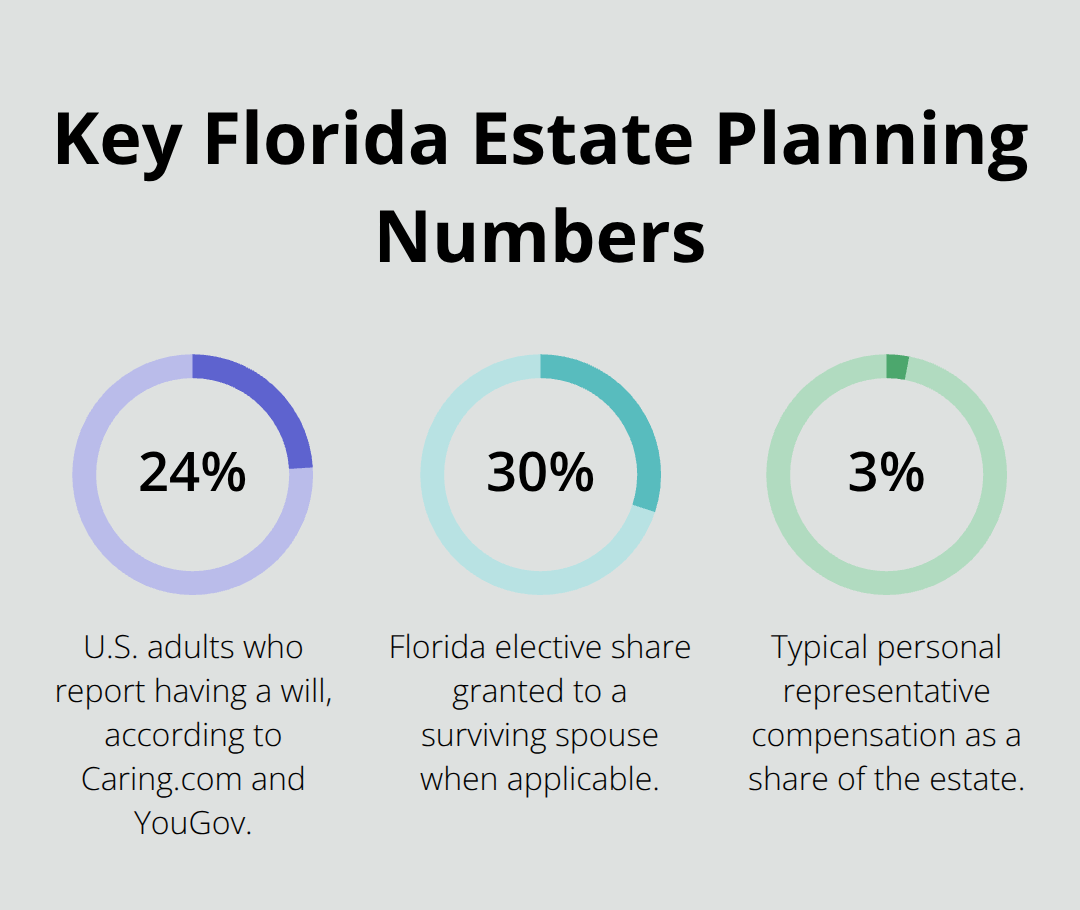
Without an estate plan, your family faces a harsh reality. In Florida, when someone dies without a will or trust, the state decides who gets what through probate-a court process that typically takes six months to two years and costs between 3% and 7% of your estate’s value. A Caring.com and YouGov survey found that only 24% of adults aged 18 to 55 and older have a will, leaving millions of families vulnerable to delays, disputes, and unnecessary expenses. For residents of St. Augustine and Palatka, this means your assets could be frozen in court while your loved ones struggle financially.
Court Decisions Replace Your Wishes
When you don’t document your intentions, Florida law steps in and makes decisions for you. If you have minor children, the court appoints a guardian-possibly someone you wouldn’t have chosen. If you have a spouse and children from a previous relationship, Florida’s elective share law gives your surviving spouse 30% of your estate, regardless of what you wanted for your children. Your digital assets, business interests, and personal property get distributed according to a formula, not your values.
A clear estate plan prevents this outcome. Trusts, wills, and powers of attorney let you control who manages your finances, who makes medical decisions if you become incapacitated, and exactly how your assets transfer to your family.
Probate Fees Consume Your Legacy
Probate fees in Florida include court filing fees, personal representative compensation (typically 3% of the estate), attorney fees, and appraisal costs. A $500,000 estate can easily lose $25,000 to $35,000 in probate alone-money that should go to your family. Beyond costs, probate is public. Anyone can access court documents showing what you owned, who you owed money to, and how assets were distributed.
A revocable living trust avoids probate entirely. Assets held in a trust transfer directly to beneficiaries without court involvement, protecting privacy and preserving your legacy. This approach also eliminates months of waiting and keeps your financial information confidential.
What Happens Next
The documents you need to build this protection are simpler than you think. Understanding wills, trusts, and powers of attorney gives you the foundation to move forward with confidence.
Building Your Estate Plan with Core Documents
A will alone won’t protect your family or avoid probate. Many St. Augustine and Palatka residents draft a will and assume they’ve completed their estate plan. The reality is that a will only addresses property in your name alone and passes through probate, meaning court involvement, public disclosure, and months of delay. To actually protect your family and control what happens to your assets, you need a combination of documents working together.
How Revocable Living Trusts Control Your Legacy
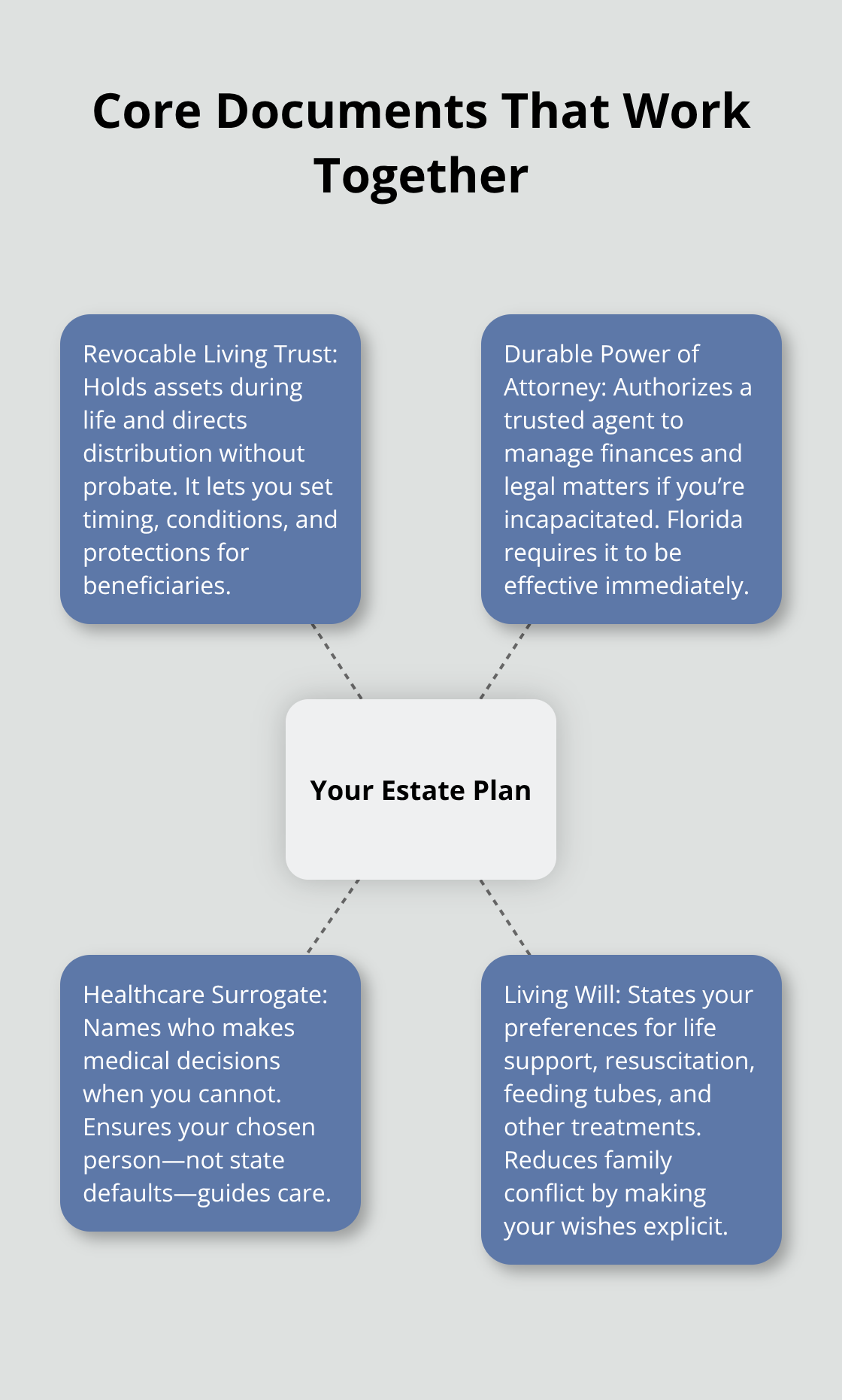
A revocable living trust holds your property during your lifetime and transfers it to beneficiaries immediately after death without court oversight. You retain full control while living and can modify or revoke the trust at any time. The trust document specifies exactly when and how beneficiaries receive assets-whether immediately, in stages, or only when they reach a certain age or meet specific conditions. For St. Augustine and Palatka families, this control matters enormously, especially with blended families or minor children.
Florida law allows you to fund a trust with real estate, bank accounts, investment accounts, and personal property by retitling these assets in the trust’s name. This funding step is where most DIY estate plans fail. People create a trust document but never transfer their assets into it, leaving everything to pass through probate anyway. Proper funding transforms your trust from a piece of paper into an actual protection mechanism.
Powers of Attorney Keep Decisions in Your Hands
A durable power of attorney for finances designates someone you trust to handle your financial and legal matters if you become incapacitated. Without this document, your family must petition the court for a guardianship to manage your affairs, a process that costs $2,000 to $5,000 and takes weeks or months. Florida requires your power of attorney to take effect immediately, not at some future date, so your agent can act right away if needed.
Choose your agent carefully because they have broad authority over your bank accounts, investments, and property. A separate healthcare surrogate document names the person who makes medical decisions when you cannot and should be paired with a living will that documents your treatment preferences. These documents prevent family disputes over medical choices and keep your wishes front and center when doctors need direction.
Living Wills and Healthcare Directives Guide Medical Care
The living will addresses resuscitation, life support, feeding tubes, and organ donation with your explicit instructions, removing guesswork and emotional burden from your loved ones. Without these healthcare documents, hospitals may turn to Florida’s default hierarchy, which can place decision-making authority with people you didn’t choose. Your healthcare surrogate and living will work together to ensure your medical preferences control the outcome, not state law or family disagreement.
The combination of these documents-trust, power of attorney, healthcare surrogate, and living will-creates a comprehensive safety net. Each document serves a specific purpose, and together they address what happens to your finances, your medical care, and your assets. The next section examines the mistakes that undermine even well-intentioned plans and how to avoid them.
Common Estate Planning Mistakes to Avoid
Life Changes Demand Document Updates
Most St. Augustine and Palatka families treat estate planning as a one-time event rather than a living document. You draft a will or trust, file it away, and assume the job is finished. Then life happens. You remarry, have children, sell property, relocate, or experience significant changes in your wealth. Your estate plan becomes obsolete within months, yet it remains legally binding. Marriage alone invalidates previous wills in Florida unless the new spouse is named or the will explicitly states it was drafted in contemplation of the marriage. Divorce automatically revokes provisions benefiting your ex-spouse, but this revocation is incomplete and can create ambiguity about your true intentions.
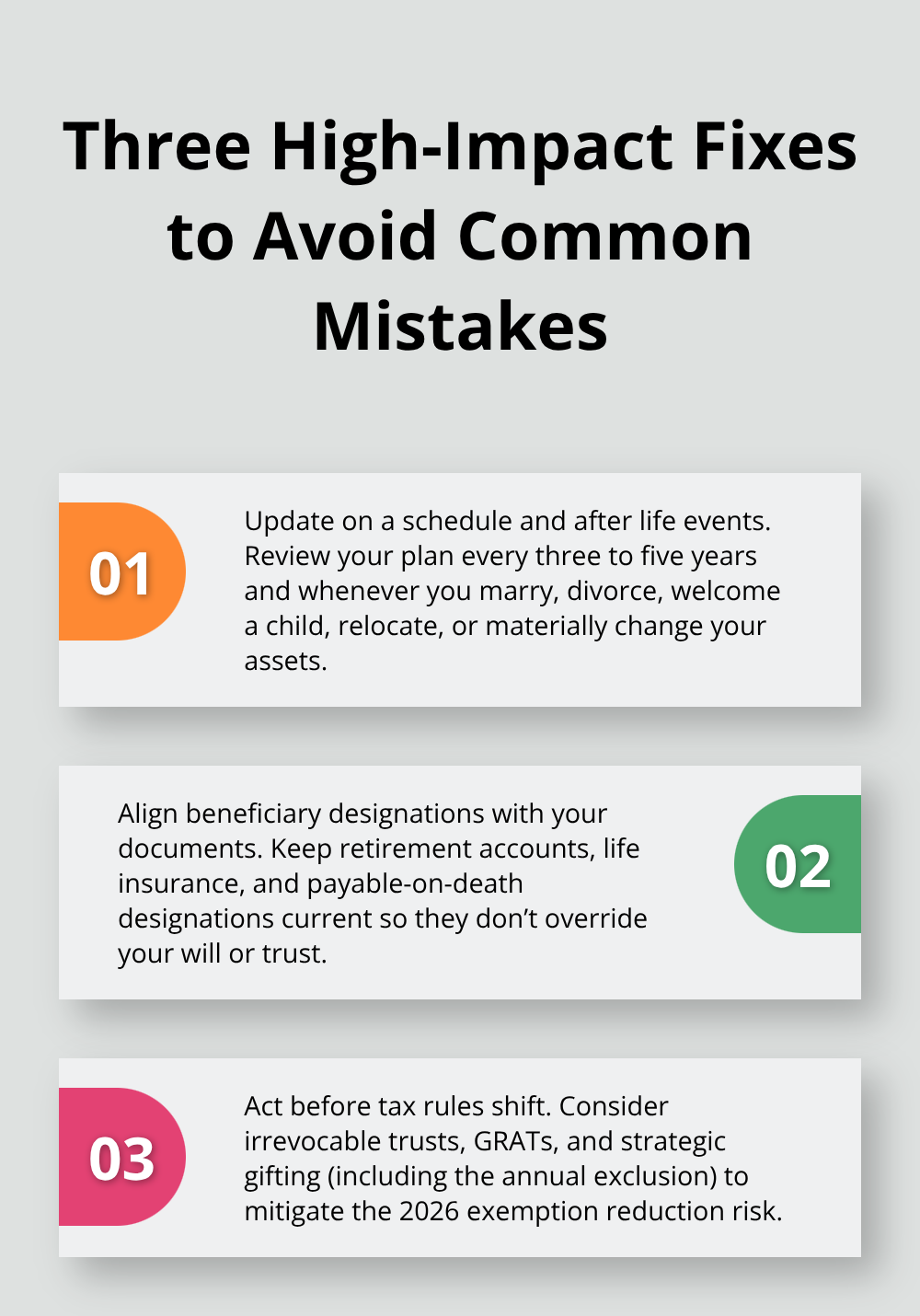
The National Council on Aging reports that life changes warrant updating your plan every three to five years, yet most people never revisit their documents after the initial signing. This gap between reality and documentation is where disputes flourish and your actual wishes get ignored.
Beneficiary Designations Override Your Will
Beneficiary designations on retirement accounts, life insurance policies, and payable-on-death bank accounts override whatever your will or trust states. If you divorce and remarry but fail to update your life insurance beneficiary, your ex-spouse receives the death benefit instead of your current family. A $250,000 policy that should fund your children’s education goes to someone you no longer want in your life. Similarly, naming the wrong guardian for minor children leaves them in the care of someone you would never have chosen.
Without explicit documentation, courts appoint guardians based on what they believe serves the child’s best interest, which may conflict with your values and family structure. This mismatch between your intentions and legal reality creates lasting harm for the people you meant to protect.
Tax Planning Protects Substantial Wealth
Tax planning represents a major oversight, particularly for St. Augustine and Palatka residents with substantial assets or business interests. The 2025 federal estate tax exemption is $13.99 million per individual, scheduled to drop to approximately $7 million in 2026 unless Congress acts. This cliff creates urgency for high-net-worth families. A revocable living trust provides no tax benefit, but irrevocable trusts, grantor retained annuity trusts, and strategic gifting can preserve hundreds of thousands of dollars.
The annual gift exclusion of $19,000 per beneficiary in 2025 allows you to transfer wealth tax-free during your lifetime, yet most families ignore this opportunity. Without proactive tax planning, your estate loses value that proper structuring could have protected.
Final Thoughts
Estate planning basics protect your family from court decisions, probate delays, and financial loss. A revocable living trust, durable power of attorney, healthcare surrogate, and living will work together to control what happens to your assets and medical care when you cannot act. Without these documents, Florida law makes decisions for you, and probate consumes 3% to 7% of your estate’s value while your family waits months for access to funds.
Start your plan today by inventorying your assets and identifying who you trust to manage your finances and medical decisions. Update your beneficiary designations on retirement accounts and life insurance policies to match your current intentions, and review your plan every three to five years or after major life changes like marriage, divorce, or relocation. The cost of creating a solid plan now is far less than the expense and heartache your family faces without one.
We at Family, Estate & Mediation Law Group help families across Northeast Florida build practical estate plans that preserve relationships and legacies. Contact our St. Augustine and Palatka offices to discuss your estate plan and take the next step toward protecting what matters most.