
Family conflicts don’t have to end in court. When disagreements arise over custody, property, or inheritance, Northeast Florida mediation services offer a calmer path forward that keeps families connected.
At Family, Estate & Mediation Law, we’ve seen how mediation transforms disputes that seemed impossible to resolve. This guide walks you through when mediation makes sense, how it works differently than litigation, and how to find the right mediator for your situation.
When Mediation Makes Sense for Your Family
High-Conflict Divorce and Custody Situations
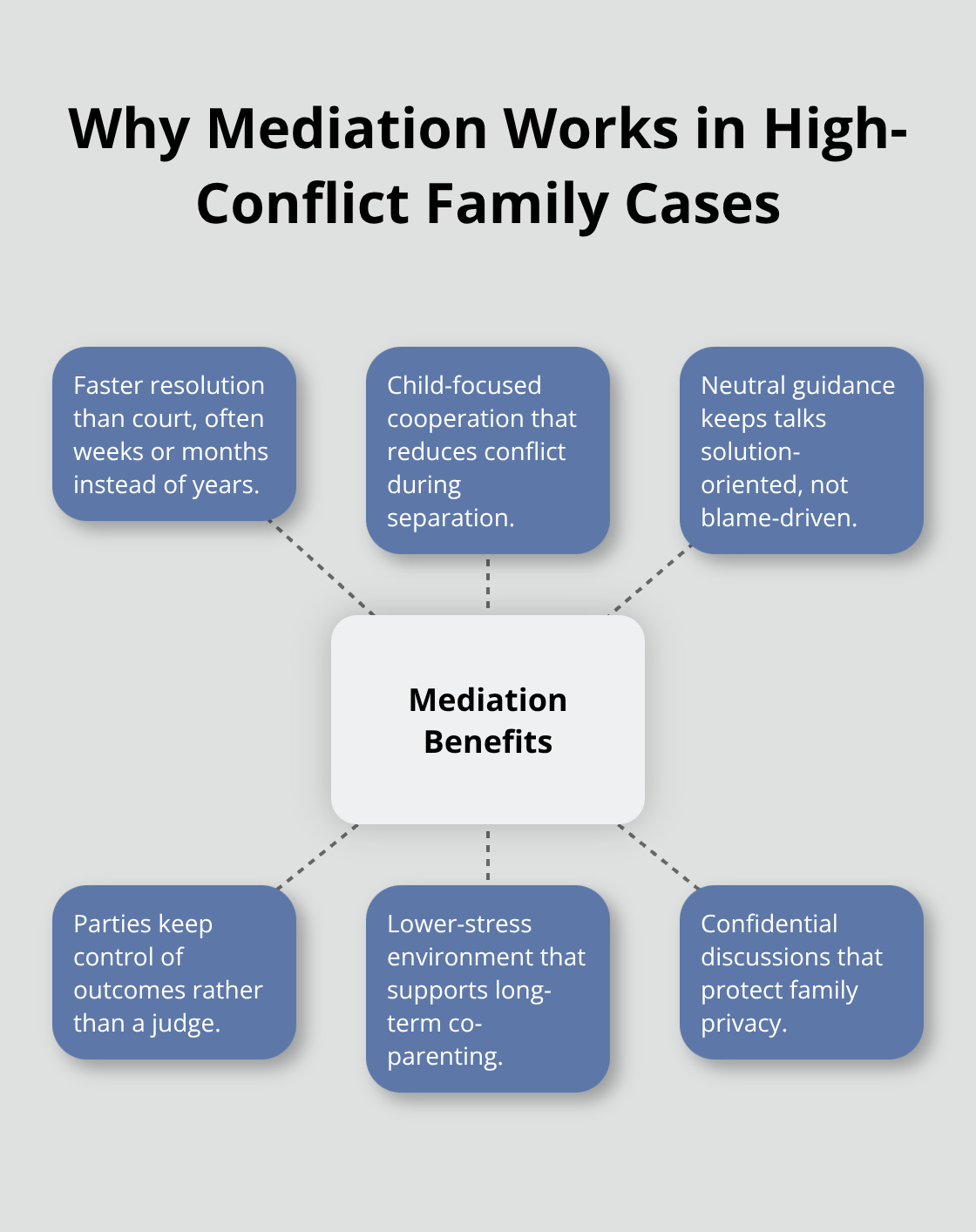
Mediation works best when emotions run high but both parties genuinely want to avoid court. In high-conflict divorce and custody cases, mediation gives you control over outcomes instead of handing decisions to a judge who knows nothing about your family’s dynamics. Court battles over custody drag on for years-the American Academy of Matrimonial Lawyers reports that contested custody litigation averages 18 to 24 months-while mediation typically resolves in weeks or months. You sit in a calm environment with a neutral mediator who keeps conversations focused on solutions rather than blame. This matters enormously when children are involved, because research from the Journal of Divorce and Remarriage shows that children fare better when parents cooperate during separation, even if the relationship itself is fractured.
Property Division and Financial Disagreements
If you have significant assets or retirement accounts to divide, mediation prevents the astronomical costs of discovery battles. Forensic accountants, depositions, and expert witnesses can easily push litigation costs above $50,000 per side in property-heavy divorces. Mediation sidesteps most of this expense while still ensuring fair division. You control the timeline, the location, and the final agreement-judges do not. This autonomy matters most when your family’s specific circumstances don’t fit standard legal templates. Custody arrangements that work for blended families, property divisions that account for inheritances or family businesses, and support agreements that reflect actual financial capacity all emerge more naturally through mediation than through litigation.
Parent-Adult Child and Inheritance Conflicts
Parent-adult child conflicts and inheritance disputes often poison family relationships permanently, yet they rarely need courtroom resolution. When an adult child feels excluded from a parent’s will or when siblings clash over estate administration, a mediator helps clarify expectations and resentments in a structured setting. These conversations frequently reveal that the real issue isn’t money-it’s feeling heard and valued. Mediation also preserves your privacy; court filings become public record, but mediation remains confidential. This protects your family’s sensitive details from public scrutiny and keeps negotiation positions private.
When Mediation Fits Your Situation
The strongest cases for mediation share one common thread: both sides prefer resolution over prolonged conflict. If one party is genuinely unwilling to negotiate or has a history of domestic abuse, mediation may not be appropriate. Courts in Northeast Florida often order mediation before trial anyway, so choosing it early means you shape the process rather than being forced into it later. If you’re facing any family dispute where maintaining some level of relationship matters-whether with an ex-partner, adult children, or siblings-mediation gives you the tools to move forward without scorched-earth litigation.
Understanding when mediation fits your situation sets the stage for exploring how the process actually works and why it produces such different results than traditional litigation.
How Mediation Differs From Litigation
The Mediator’s Role Versus a Judge’s Authority
Mediation and court litigation operate on completely different foundations. In court, a judge makes binding decisions based on legal arguments and evidence presented by attorneys. You have minimal control over the outcome, the timeline, or how your family’s private matters get handled. Mediation reverses this dynamic. A neutral mediator-trained in family law and certified by Florida Supreme Court standards-facilitates conversation between you and the other party without imposing decisions. The mediator clarifies positions, identifies common ground, and guides you toward solutions you both accept. You retain complete control over any agreement that emerges.
Cost Differences That Add Up Quickly
Litigation in contested family matters costs between $15,000 and $50,000 per side or more when property division, custody battles, or forensic accounting enters the picture. Mediation typically runs $2,000 to $5,000 total for both parties combined, depending on complexity and session length. The American Bar Association data shows mediated family cases resolve in an average of 4 to 8 weeks, while contested litigation stretches 18 to 24 months or longer.
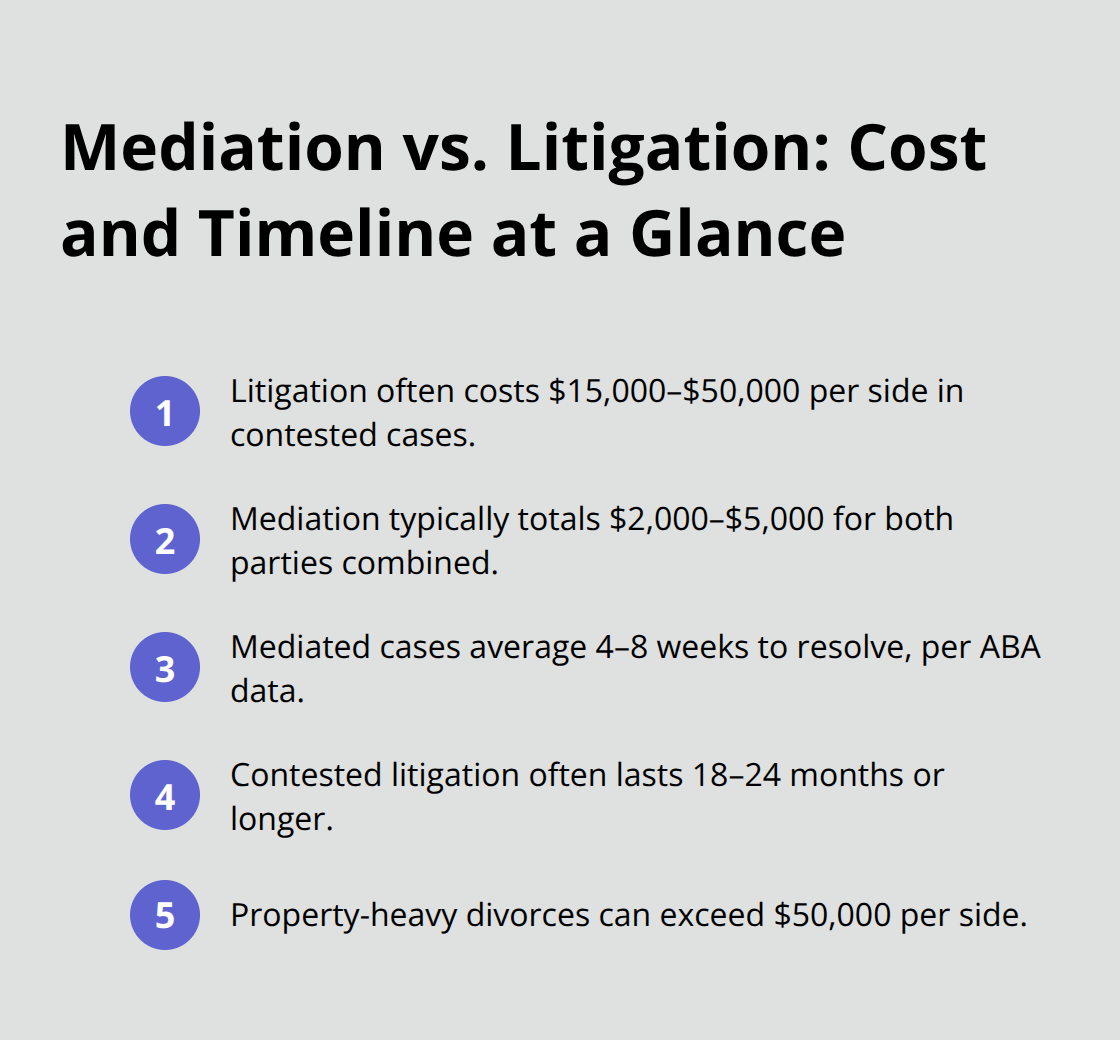
Those months accumulate attorney fees, court filing costs, and expert witness charges that compound rapidly.
Timeline and Resolution Speed
The speed difference matters enormously for your family’s stability. Mediation typically resolves in weeks or months, while contested litigation drags on for years. This acceleration reduces the emotional toll on everyone involved, particularly children who benefit from faster closure and reduced parental conflict.
Confidentiality and Privacy Protection
Your conversations stay confidential in mediation; nothing said in sessions becomes public record or gets used against you later. Court filings, by contrast, expose sensitive financial details, parenting concerns, and personal information permanently. If you have a family business, significant assets, or custody arrangements that don’t fit standard templates, mediation gives you space to craft creative solutions that address your actual circumstances rather than forcing your situation into courtroom categories.
Building Cooperation Instead of Adversarial Positioning
Mediation preserves relationships in ways court cannot. When you litigate, adversarial positioning hardens stances and creates lasting resentment-particularly damaging when children are involved or when you’ll maintain contact with the other party after settlement. Research from the Journal of Divorce and Remarriage confirms that children show better long-term adjustment when parents cooperate during separation, even if the marriage itself failed. Mediation actively builds that cooperation because both parties work toward mutual solutions rather than winning against each other. A mediator helps you think through what actually matters (school stability for children, fair asset division that accounts for your specific circumstances, support arrangements reflecting real financial capacity) rather than fighting over legal positions.
Understanding these fundamental differences between mediation and litigation clarifies why the process itself produces such different outcomes. The next section walks you through what actually happens inside a mediation session and how a qualified mediator guides families toward resolution.
Selecting a Mediator Who Understands Your Family
Florida Supreme Court Certification and What It Means
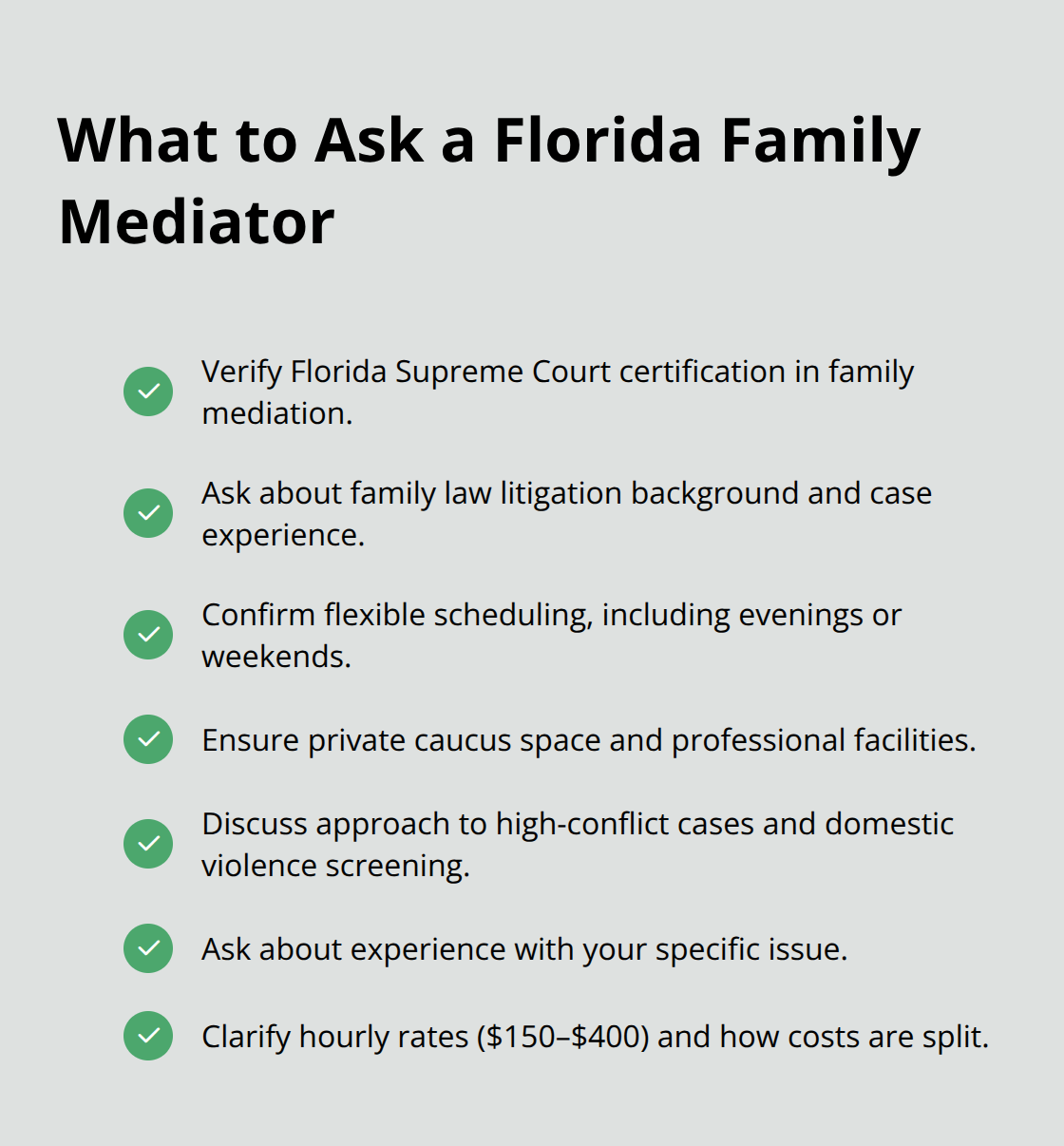
Florida Supreme Court certification matters far more than most families realize when selecting a mediator. Certified mediators complete rigorous training, demonstrate competency through examination, and commit to ethical standards that protect your confidentiality and impartiality. In Northeast Florida, look specifically for mediators certified in family law mediation by the Florida Supreme Court-this signals they understand custody disputes, property division, and support arrangements rather than general civil conflicts. Beyond certification, ask directly about the mediator’s background in family law litigation. A mediator who spent years representing both plaintiffs and defendants brings invaluable perspective on what judges typically decide and where negotiations can realistically land. This experience helps them guide you toward settlements that actually hold up rather than agreements that unravel because one party later regrets the terms.
Practical Considerations When Evaluating Mediators
Check whether the mediator offers flexible scheduling, including evening or weekend sessions, since arranging time away from work or children creates real hardship for many families. Some mediators operate from professional office spaces with separate waiting areas and breakout rooms, which matters because it allows each party privacy during caucus sessions where the mediator meets with you alone to discuss sensitive concerns. Ask specifically about their approach to high-conflict situations and whether they have experience with domestic violence screening, since mediation is inappropriate when one party has intimidated or harmed the other.
Experience With Your Specific Situation
When contacting any mediator in Northeast Florida, request their experience handling your specific issue-whether that’s custody modification, inheritance disputes, or property division in a remarriage situation. Ask about their success rate in reaching settlement, though understand that some mediators measure success differently based on whether the goal was full resolution or simply moving parties closer to agreement. Verify their fee structure upfront. Most mediators charge hourly rates ranging from $150 to $400 per hour depending on their background and location, with costs typically split between both parties.
Building Trust With Your Mediator
Request references from attorneys who regularly refer clients to them, since lawyers working in family law know which mediators actually move cases forward versus those who simply facilitate conversation without driving toward solutions. The mediator you select should feel comfortable with you asking tough questions about their process, their experience with situations like yours, and their philosophy on what makes mediation succeed. This conversation itself reveals whether they listen carefully, respect your concerns, and approach your family’s conflict with the seriousness it deserves. Family, Estate & Mediation Law Group operates from offices in St Augustine and Palatka with over 50 years of combined experience handling family disputes, offering both in-person and remote mediation options to accommodate your schedule.
Final Thoughts
Mediation offers families a genuine alternative to courtroom battles that drain resources and damage relationships. When custody, property, or inheritance disputes arise, you don’t have to accept prolonged conflict as inevitable. The process works because it shifts control back to you and the other party, guided by someone trained to help you both see past positions toward solutions that actually fit your circumstances.
Starting mediation early gives you several advantages: you shape the process rather than facing a court order, you avoid mounting litigation costs that exceed $50,000 per side, and you preserve privacy instead of exposing family details in public filings. Most importantly, you create space for cooperation that matters enormously when children are involved or when you’ll maintain contact with the other party after settlement. Identifying what you’re trying to resolve-whether that’s custody modification, property division, or an inheritance dispute-clarifies your next steps.
Contact a Florida Supreme Court certified mediator in your area and ask directly about their experience with situations like yours. We at Family, Estate & Mediation Law Group stand ready to help you explore whether Northeast Florida mediation services fit your family’s needs, and our mediators bring extensive litigation backgrounds that help move cases toward realistic, sustainable settlements.