When someone passes away in St. Augustine or Palatka, their family often faces probate-a legal process that can feel overwhelming without proper guidance. Understanding Northeast Florida probate basics helps you make informed decisions about your estate and your loved ones’ future.
We at Family, Estate & Mediation Law help families navigate this process and explore ways to protect their assets. This guide covers what probate involves, how to potentially avoid it, and the steps involved if your estate goes through the court system.
What Probate Actually Does in St. Augustine and Palatka
The Core Purpose of Probate
Probate is the court process that settles an estate when someone dies. In Northeast Florida, it handles three core tasks: identifying all assets the deceased left behind, paying any outstanding debts and taxes, and distributing what remains to the rightful heirs. Florida Statutes Chapters 731–735 govern this process statewide, but each county adds its own procedures. In Putnam County, where Palatka sits, Judge K. Mark Johnson oversees probate matters in Division 25/51, and most uncontested hearings happen via Zoom, which means you typically don’t need to travel to the courthouse. The process starts when someone files a probate petition with the local clerk-in Putnam County, that’s the Palatka Clerk at 410 St. Johns Ave-and the court then appoints a personal representative (usually named in the will) to manage the estate.
Creditor Claims and Timeline Considerations
Florida law gives creditors up to two years to file claims against an estate, though proper notice can shorten this period to 90 days. This timeline matters because assets cannot move to heirs until creditor claims are resolved and debts are paid. The personal representative must track all deadlines and communicate with creditors throughout the process.
Three Types of Probate in Florida
Three main probate types exist in Florida, and the type your estate falls into directly affects cost and timeline. Formal Administration applies to estates exceeding $75,000 and requires full court supervision, with 2026 filing fees at $400. Summary Administration handles smaller estates under $75,000 or cases where more than two years have passed since death, costing $345 to file in 2026.
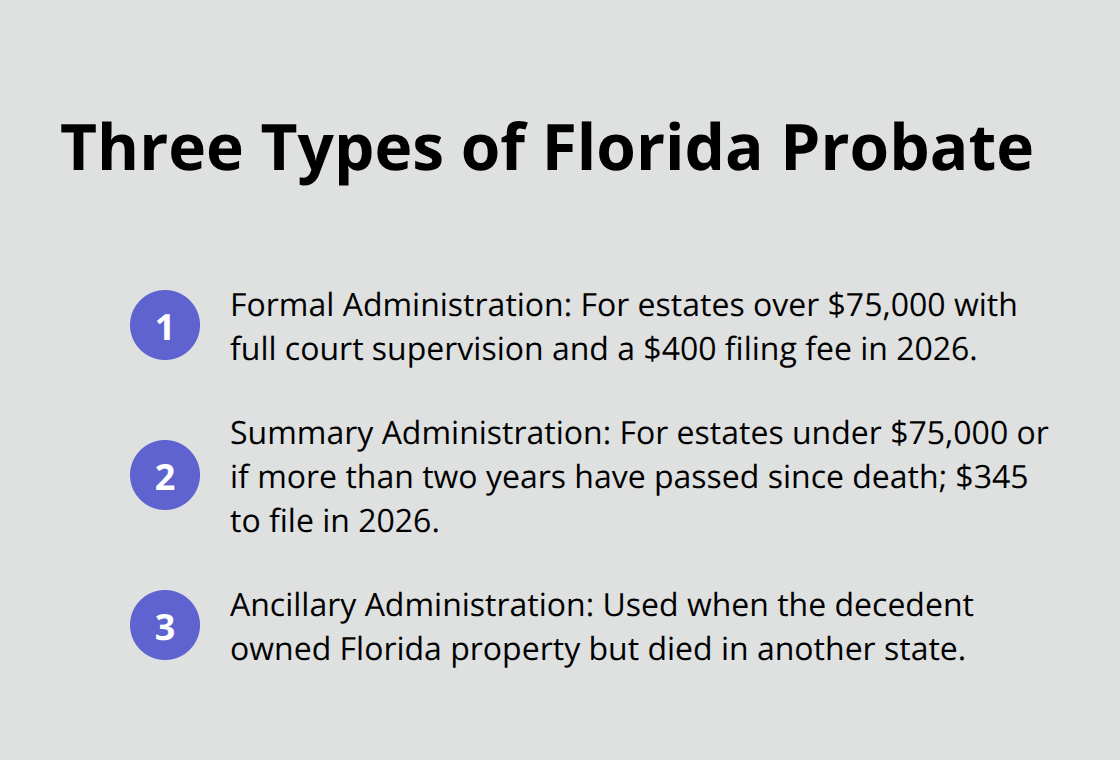
Ancillary Administration applies when the deceased owned Florida property but died in another state. Many families in rural Putnam County qualify for Summary Administration because homestead properties and certain assets are excluded from the $150,000 asset limit.
The Personal Representative’s Role
The personal representative bears significant responsibility: they gather assets, pay debts and taxes, communicate with beneficiaries and creditors, and distribute property according to the will or Florida intestacy laws if no will exists. This role demands attention to detail and understanding of state requirements. The court-supervised process protects heirs by verifying that debts are legitimate and distributions are legal, which prevents disputes later.
How Assets Can Bypass Probate
Families often worry probate will drain the estate with court costs and delays, but the reality depends heavily on how the estate is structured. If assets are titled in a living trust or have payable-on-death designations, they bypass probate entirely. Understanding which assets require probate and which ones don’t sets the stage for exploring alternatives that can save time and money for your family.
How to Keep Your Estate Out of Probate Court
Living Trusts: The Most Effective Probate Alternative
Probate doesn’t have to be your family’s path forward. Many St. Augustine and Palatka families structure their estates to sidestep the court process entirely, saving months of waiting and thousands in fees. A living trust holds your assets during your lifetime and transfers them directly to beneficiaries after you die without court involvement. Unlike a will, a trust remains private-probate records are public, but trust documents stay confidential. You must fund the trust properly by retitling property, bank accounts, and investments in the trust’s name; an unfunded trust is essentially worthless.
Automatic Asset Transfers: Joint Ownership and Beneficiary Designations
Joint ownership and payable-on-death beneficiary designations work differently but achieve similar results. If you own property jointly with right of survivorship, that asset passes automatically to the surviving owner outside probate. Bank accounts, investment accounts, and retirement funds with named beneficiaries bypass the court entirely-when you die, those assets go straight to whoever you named. The key is aligning all your assets with one of these mechanisms so probate becomes unnecessary.
Summary Administration: A Faster Court Option
Florida’s Summary Administration process offers a simpler court path for smaller estates, costing $345 to file in 2026 compared to $400 for full Formal Administration. You qualify if the estate is under $75,000 or if more than two years have passed since death, regardless of size. In Putnam County, homestead properties and certain assets are excluded from the asset calculation, meaning many rural families qualify even with substantial estates.
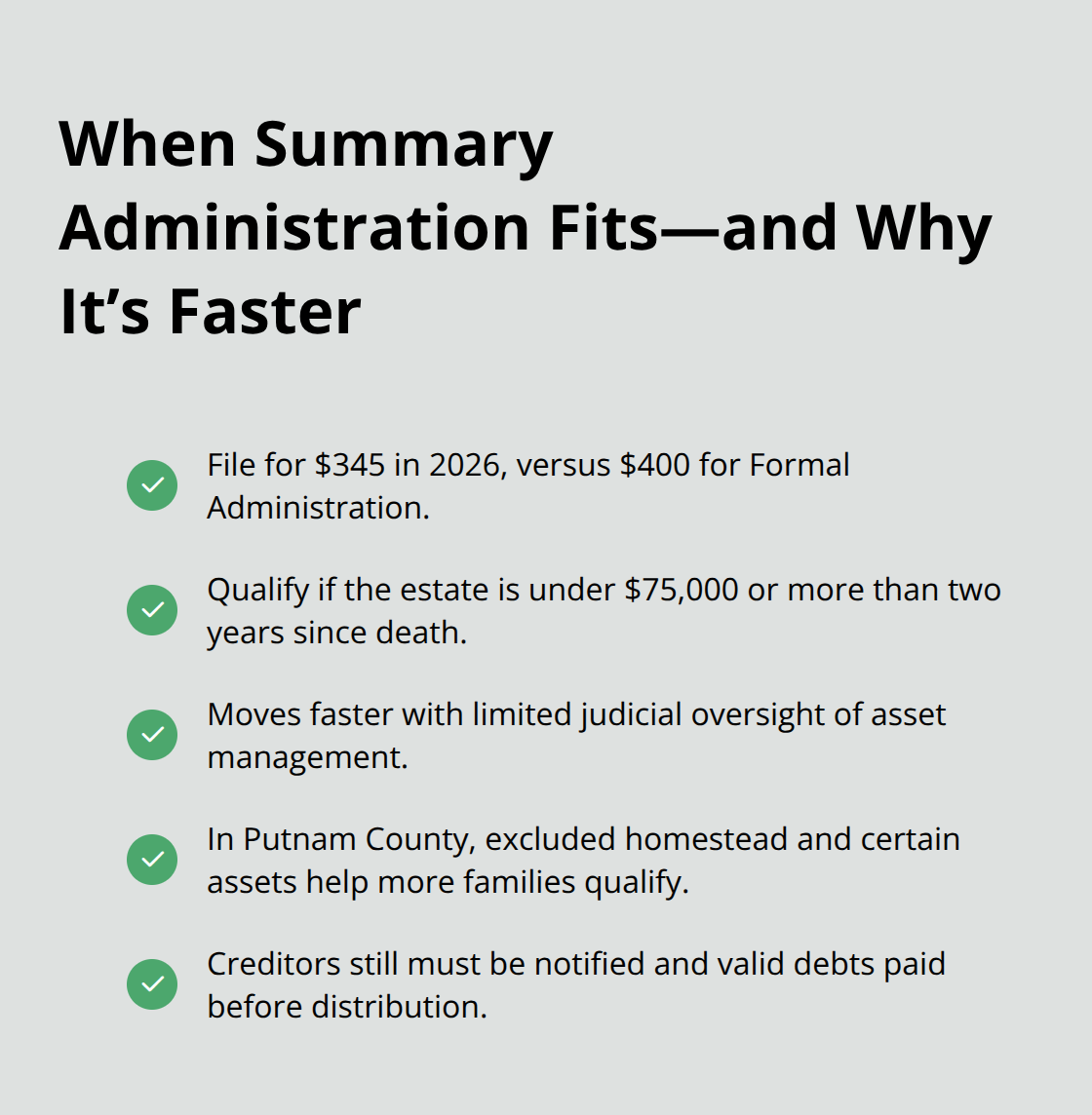
This process still requires court approval but moves faster because the judge doesn’t oversee every detail of asset management. However, creditors must still be notified and debts paid before distribution.
Taking Action Now Prevents Problems Later
If your estate qualifies for Summary Administration and you haven’t structured it with a trust, this streamlined option beats full probate. Reviewing your current asset titles and beneficiary designations now-this 30-minute conversation prevents far larger headaches later and ensures your family avoids unnecessary court delays and expense. Once you understand which assets need probate and which ones don’t, you’re ready to explore probate avoidance strategies when it does apply to your estate.
What Happens After You File Your Probate Petition
The Will Deposit Rule and Initial Asset Identification
Once the probate petition reaches the Palatka Clerk at 410 St. Johns Ave, the personal representative must file the original will within 10 days of receiving notice of death under the 2026 Will Deposit Rule, or the estate faces delays that stretch the entire timeline. Within the first month, the personal representative identifies every asset the deceased owned-real estate, bank accounts, investment portfolios, vehicles, and personal property. In Putnam County, most of these assets require appraisals or valuations to establish their fair market value on the date of death, which affects both tax liability and what heirs ultimately receive.
Notifying Creditors and Beneficiaries
The personal representative then notifies all known creditors and beneficiaries; creditors have 90 days from proper notice to file claims, though they technically have two years under Florida law. This notification step matters enormously because any creditor claims filed outside the notice period are barred, which protects the estate from surprise debts surfacing years later.
The Payment Hierarchy and Filing Costs
Debts are paid in strict order: probate administration costs come first, then funeral expenses, then outstanding debts, and finally distributions to heirs. In 2026, Formal Administration costs $400 to file and Summary Administration costs $345, but the total estate expense includes attorney fees, appraisals, court costs, and accountant fees if needed. The personal representative cannot distribute a single dollar to beneficiaries until every legitimate debt is paid and taxes are filed.
Timeline and Court Procedures in Putnam County
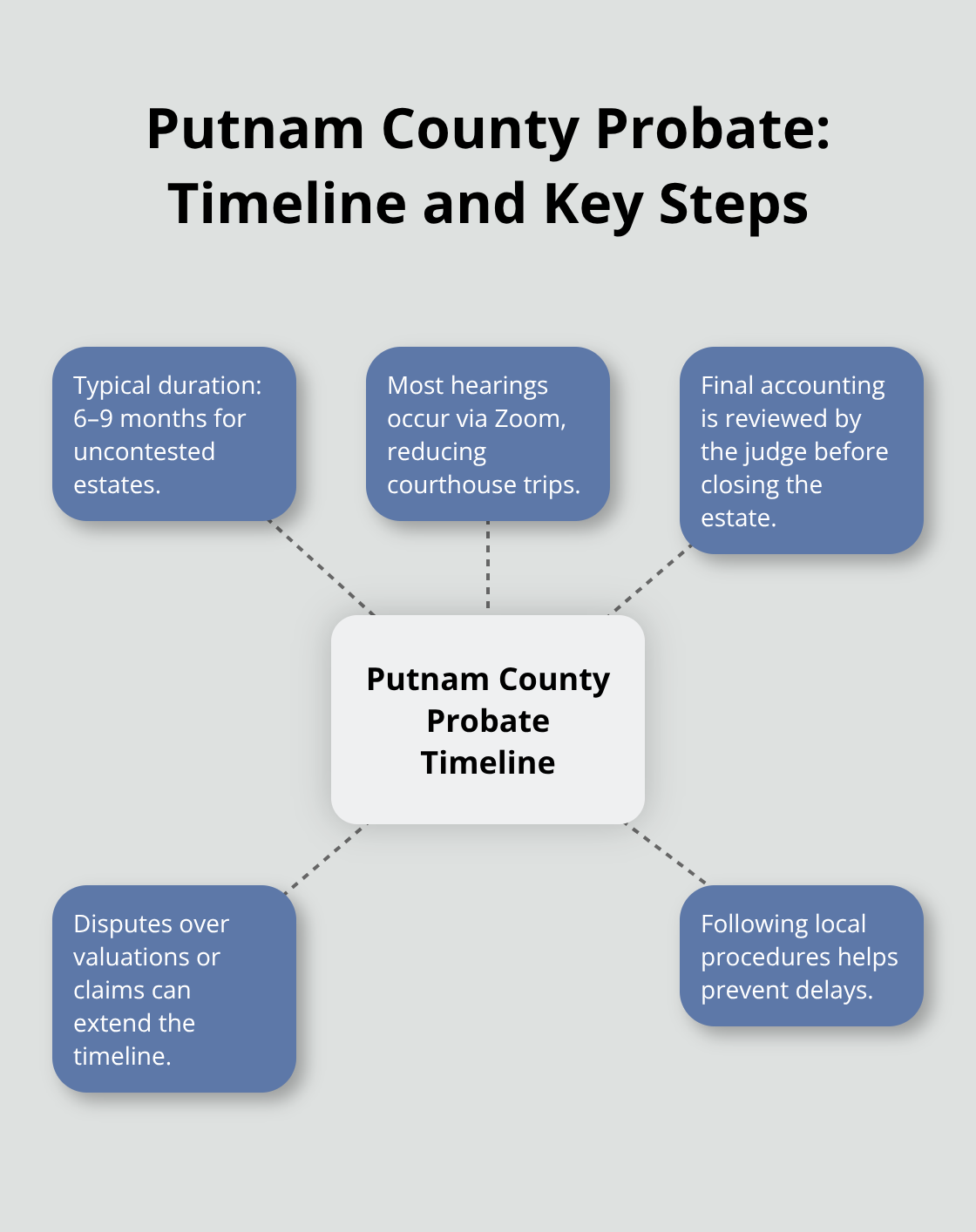
This process typically takes six to nine months for uncontested estates in Putnam County, where Judge K. Mark Johnson handles probate matters and most hearings occur via Zoom, which eliminates the need for in-person courthouse visits. The personal representative files a final accounting showing all assets collected, all expenses paid, and all distributions made, which the judge reviews before officially closing the estate. Any dispute over asset valuations, creditor claims, or distribution amounts can extend this timeline significantly, which is why having someone manage the process who understands Putnam County procedures prevents unnecessary delays.
Final Thoughts
Navigating Northeast Florida probate basics doesn’t require you to handle the process alone. We at Family, Estate & Mediation Law Group understand that when your family is grieving and facing tight deadlines, the right guidance transforms confusion into clarity. Whether your estate qualifies for Summary Administration, requires full Formal Administration, or can sidestep probate entirely through a living trust, we help you move forward with confidence.
Our team manages probate administration from start to finish, handling paperwork with the Palatka Clerk and coordinating virtual hearings with Judge K. Mark Johnson’s office. We also work with families before probate becomes necessary, creating estate plans that protect assets and avoid court involvement altogether. Many families come to us after realizing their assets weren’t structured properly or their beneficiary designations were outdated, and we help you identify gaps and implement solutions that reflect your actual wishes.
Contact Family, Estate & Mediation Law Group in St. Augustine or Palatka to discuss your estate and explore how we can help you avoid probate complications or guide your family through the process with confidence.