
Many families struggle with deciding between a will and a trust, unsure which tool fits their situation best. A wills and trusts comparison reveals that each serves different purposes and offers distinct advantages depending on your estate’s complexity and your family’s needs.
At Family, Estate & Mediation Law, we help families navigate this decision by explaining how these documents work differently and when each one makes sense for your circumstances.
How Wills and Trusts Handle Your Assets Differently
Wills Take Effect After Death Through Probate
A will is a legal document that takes effect only after you die. Under Florida Statutes 732.502, your will must be in writing, signed by you, and witnessed by at least two people to be valid. Once filed with the probate court in your county, the will becomes a public record that anyone can access. The probate process then validates your will, identifies and appraises your assets, pays debts and taxes, and distributes what remains to your beneficiaries. This entire process typically takes several months to over a year depending on estate size and complexity.
Trusts Work During Your Lifetime and Beyond
A trust takes effect while you’re alive. You transfer assets into the trust during your lifetime, and the trust document specifies how those assets are managed and distributed both before and after your death. A revocable living trust allows you to modify or revoke it at any time, giving you complete flexibility to adjust your plan as circumstances change. Once you pass away, the trust becomes irrevocable, but it avoids probate entirely because the trust itself owns the assets, not your individual name.
Probate Costs and Timeline Differences
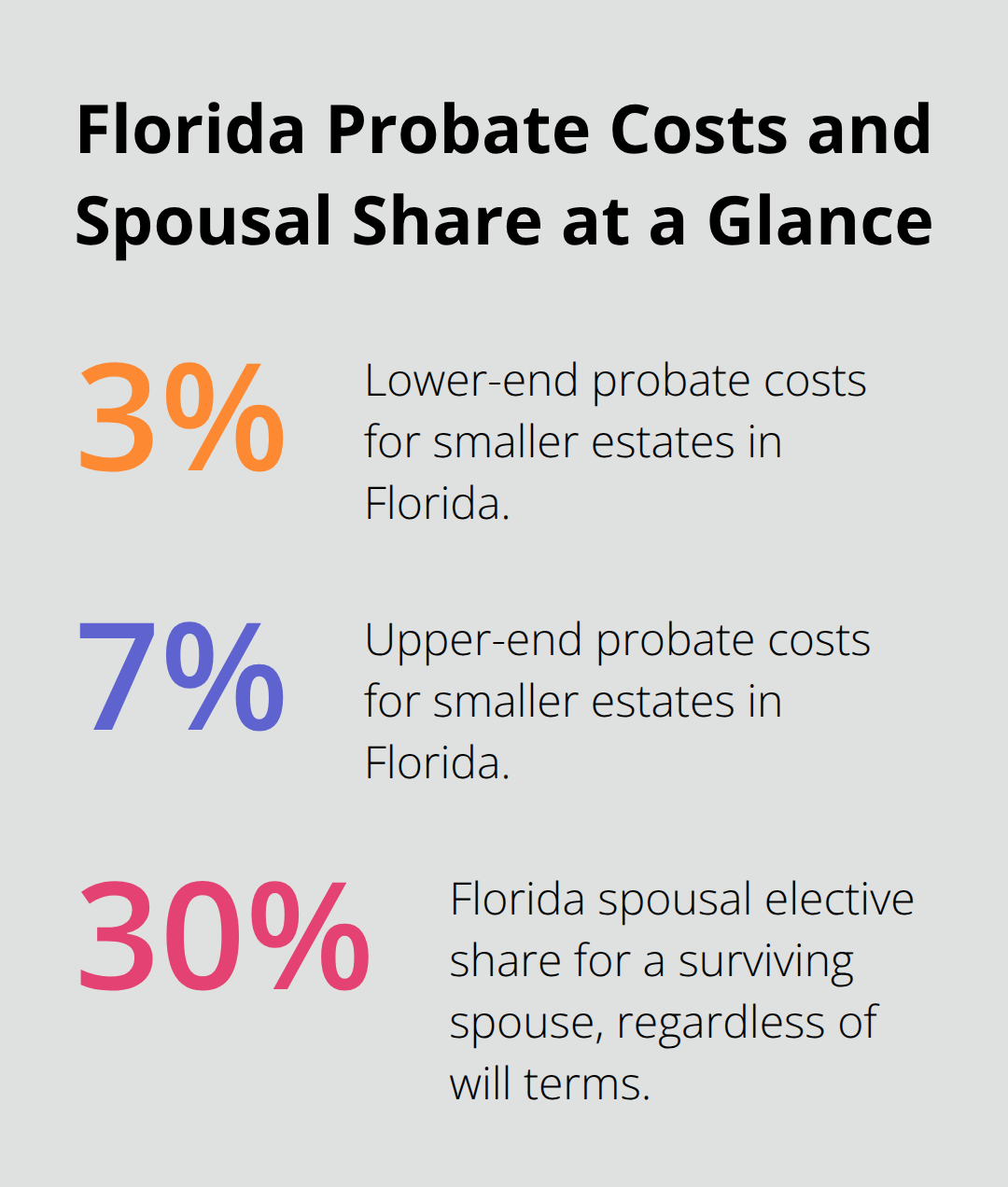
With a will, your estate goes through probate court, which means delays, public disclosure of your financial details, and legal fees that typically include court filing costs, attorney fees, and executor compensation. Florida probate costs vary widely but can consume 3 to 7 percent of smaller estates due to fixed filing fees and administrative expenses. A trust bypasses this entirely, transferring assets directly to beneficiaries without court involvement or public record.
Privacy and Control Advantages of Trusts
Privacy becomes a major advantage since trust documents remain private. If you own real estate, a trust lets you maintain control and use during your lifetime while ensuring automatic transfer at death, whereas a will requires probate court approval for property distribution. For larger estates or blended families where you want to protect each spouse’s children, a trust provides superior control by allowing you to specify exactly when and how beneficiaries receive funds, whether immediately or over time. Wills simply cannot offer this level of direction after death.
Combining Both Documents for Complete Protection
Many families use both documents together, with the will handling guardianship for minor children and end-of-life healthcare decisions while the trust manages asset distribution and avoids probate. This combination strategy addresses different needs within a single comprehensive plan. Understanding which document handles which responsibility helps you make informed decisions about your family’s future protection.
When a Will Makes Sense for Your Family
Wills Work Best for Straightforward Estates
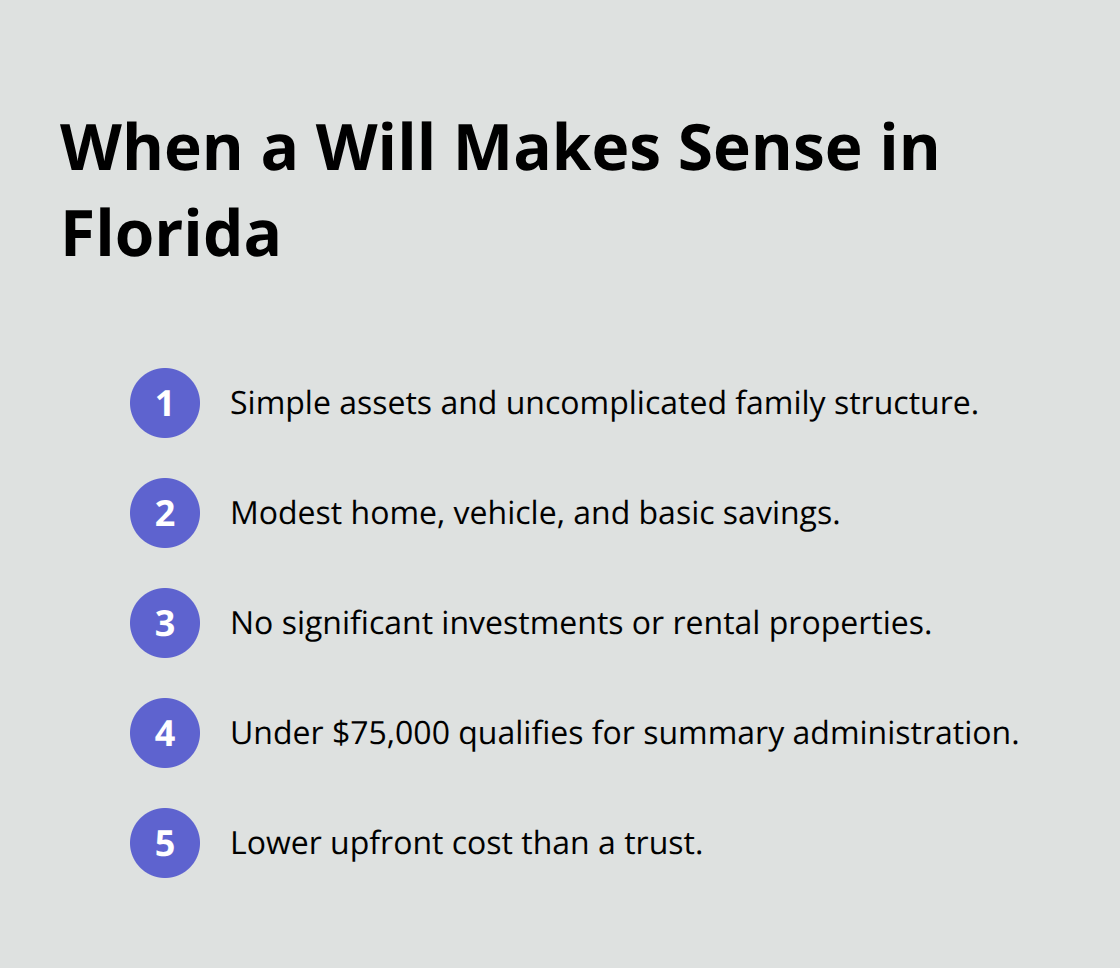
A will works best when your estate is straightforward and your family situation is uncomplicated. If you own a modest home, a vehicle, and some savings without significant investment accounts or rental properties, a will handles your wishes efficiently without unnecessary complexity. Florida law requires your will to be signed by you and witnessed by at least two people under Florida Statutes 732.502, making the document inexpensive to prepare-typically costing between $300 and $1,000 depending on your situation.
Naming a Guardian Is a Will’s Greatest Strength
The real advantage emerges when you have minor children who need a guardian. A will is the only document that allows you to name who raises your children if both parents die, addressing a concern that matters far more than probate delays or costs. Without this designation, Florida courts decide guardianship based on what they believe serves the child’s best interests, potentially overriding your preferences entirely. This protection alone justifies a will for any parent with young children.
Summary Administration Speeds Up Probate for Smaller Estates
If your estate falls under the $75,000 threshold for summary administration in Florida, probate moves faster and costs less, making a standalone will a practical choice. Many families with straightforward assets, young children, and no complex tax situations find that a will addresses their core concerns without the upfront expense of trust creation.
Cost Comparison: Wills Versus Trusts
The financial reality matters here. Creating a revocable living trust typically costs $1,500 to $3,000 or more because the document is longer and requires funding-transferring assets into the trust’s name. A will costs less initially and requires no ongoing administration during your lifetime. If your estate is modest and you’re not worried about privacy after death, that cost difference is meaningful.
When a Will Falls Short
However, low upfront costs can mask what happens next. Your family will face probate court involvement, public disclosure of your financial details, and delays measured in months. For many people with simple estates and young children, the guardianship protection a will provides outweighs these inconveniences. This calculation changes dramatically if you remarry, your assets grow significantly, or you want to keep your financial affairs private from public view-situations where estate planning strategies become the stronger choice.
Why Trusts Outpace Wills for Most Modern Families
Probate Elimination Saves Time and Money
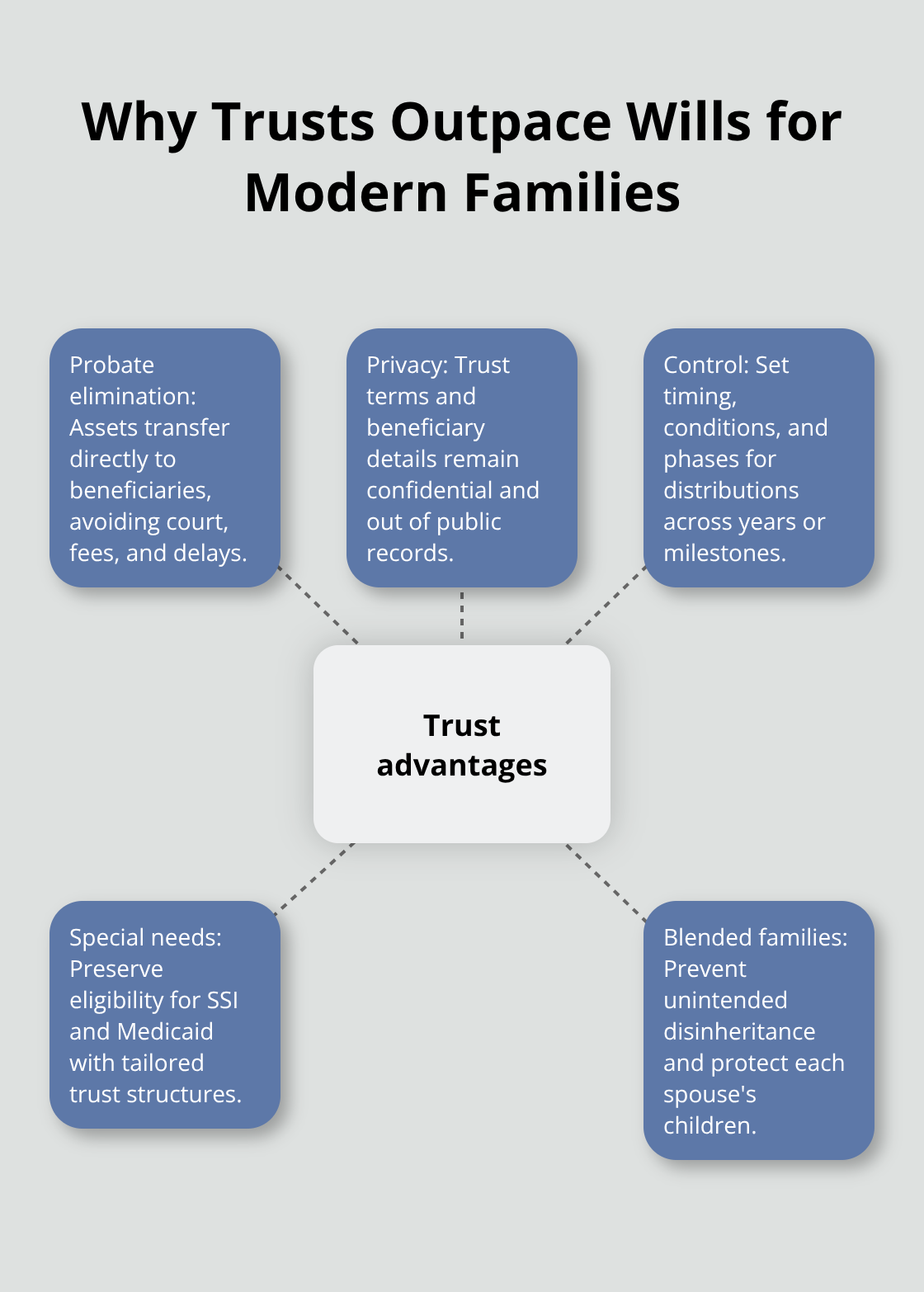
A trust eliminates probate entirely, and that matters far more than most people realize. When you pass away, assets held in a revocable living trust transfer directly to your beneficiaries without court involvement, court fees, or public disclosure. This process typically takes weeks or a few months rather than the 6 to 12 months probate demands. Florida’s probate system requires court validation, asset appraisal, debt settlement, and tax clearance before distribution-each step adds delay and expense. A trust bypasses every single one. For families who want their inheritance quickly and without legal complications, a trust is the only practical choice.
Privacy Protects Your Family’s Financial Details
The privacy advantage compounds this benefit significantly. Your trust document never becomes a public record, meaning your beneficiaries’ names, asset values, and distribution terms remain confidential. Probate wills are filed in court and accessible to anyone, exposing your family’s financial situation to creditors, distant relatives with questionable motives, or anyone curious enough to search court records. If you own real estate, bank accounts, or investment portfolios you’d rather keep private, a trust protects that information completely.
Control Over Distribution Addresses Complex Family Situations
Control over distribution is where trusts truly shine. A will distributes your entire estate to beneficiaries at once after probate concludes, leaving no room for conditions or phased payments. A trust lets you specify exactly how and when beneficiaries receive funds-immediately, over years, or only when they reach certain ages or life milestones. For blended families, this control prevents unintended disinheritance and protects each spouse’s children by keeping their inheritance separate and managed according to your exact wishes.
Special Needs and Spousal Protections
Special needs beneficiaries benefit enormously from trust structures that preserve government benefits like SSI and Medicaid, which an outright inheritance would eliminate. Florida’s spousal elective share rules, governed by Florida Statutes 732.4015, give surviving spouses 30 percent of the estate regardless of what your will says-a restriction that trusts can navigate strategically.
The Investment Pays for Itself
The upfront cost of a trust, typically $1,500 to $3,000, pays for itself through probate avoidance alone. Add privacy, faster distribution, and superior control, and a trust becomes the financially smarter choice for any estate above $75,000 or any family situation more complex than a single person with one adult child.
Final Thoughts
Most families benefit from using both documents together rather than choosing one or the other. A will handles guardianship for minor children and end-of-life healthcare decisions, while a trust manages asset distribution and eliminates probate delays. This combination strategy addresses your immediate concerns about protecting your children while also solving the longer-term problem of how your family accesses their inheritance without court involvement.
Assess your family structure and inventory your assets to determine which documents fit your situation. If you have minor children, a will becomes non-negotiable regardless of estate size. If your assets exceed $75,000 or your family situation involves remarriage, blended children, or special needs beneficiaries, a trust becomes the practical choice. Many families discover they need both documents working together to achieve complete protection, and a wills and trusts comparison reveals which approach aligns with your specific circumstances.
We at Family, Estate & Mediation Law help families across Northeast Florida make this decision with confidence. Contact us for a consultation to discuss which documents fit your situation, and visit our website at https://femlg.com to learn more about how we guide families through estate planning decisions that matter. We have offices in St. Augustine and Palatka and serve families throughout Northeast Florida.