
Losing a loved one is hard enough without navigating the legal maze that follows. Probate steps for families in St. Augustine and Palatka can feel overwhelming, but they don’t have to be.
We at Family, Estate & Mediation Law have guided countless families through this process. This roadmap breaks down exactly what happens, what to expect, and how to move forward with confidence.
What Probate Actually Means and When You Cannot Avoid It
Probate is the legal process that determines who inherits a deceased person’s property and pays their debts. In St. Augustine and Palatka, this process happens through the Seventh Judicial Circuit, which handles over 140,000 cases annually across four counties. For families, probate serves a specific purpose: it creates an official record that debts are paid, taxes are settled, and assets transfer legally to the right people. Without probate, creditors could claim assets meant for heirs, and property titles would remain unclear.
When Probate Becomes Unavoidable
Some families believe they can sidestep probate entirely, but the reality is more nuanced. Probate becomes unavoidable when someone dies with assets in their individual name-a house, bank accounts, vehicles, or investments. If the deceased left a will or died without one, probate is the legal pathway to resolve the estate. The only assets that bypass probate are those with built-in transfer mechanisms: life insurance with named beneficiaries, retirement accounts with designated inheritors, or property held in joint ownership with rights of survivorship. For most families in our area, at least some assets require probate processing.
How Estate Value Determines Your Probate Track
Florida offers three main probate tracks, and which one applies directly impacts how long your family waits for distributions. Formal Administration is the standard court-supervised process for estates valued over $75,000 and typically takes six to twelve months or longer, depending on complications. Summary Administration applies to estates under $75,000 or when the deceased passed more than two years ago, and this streamlined approach significantly reduces processing time.
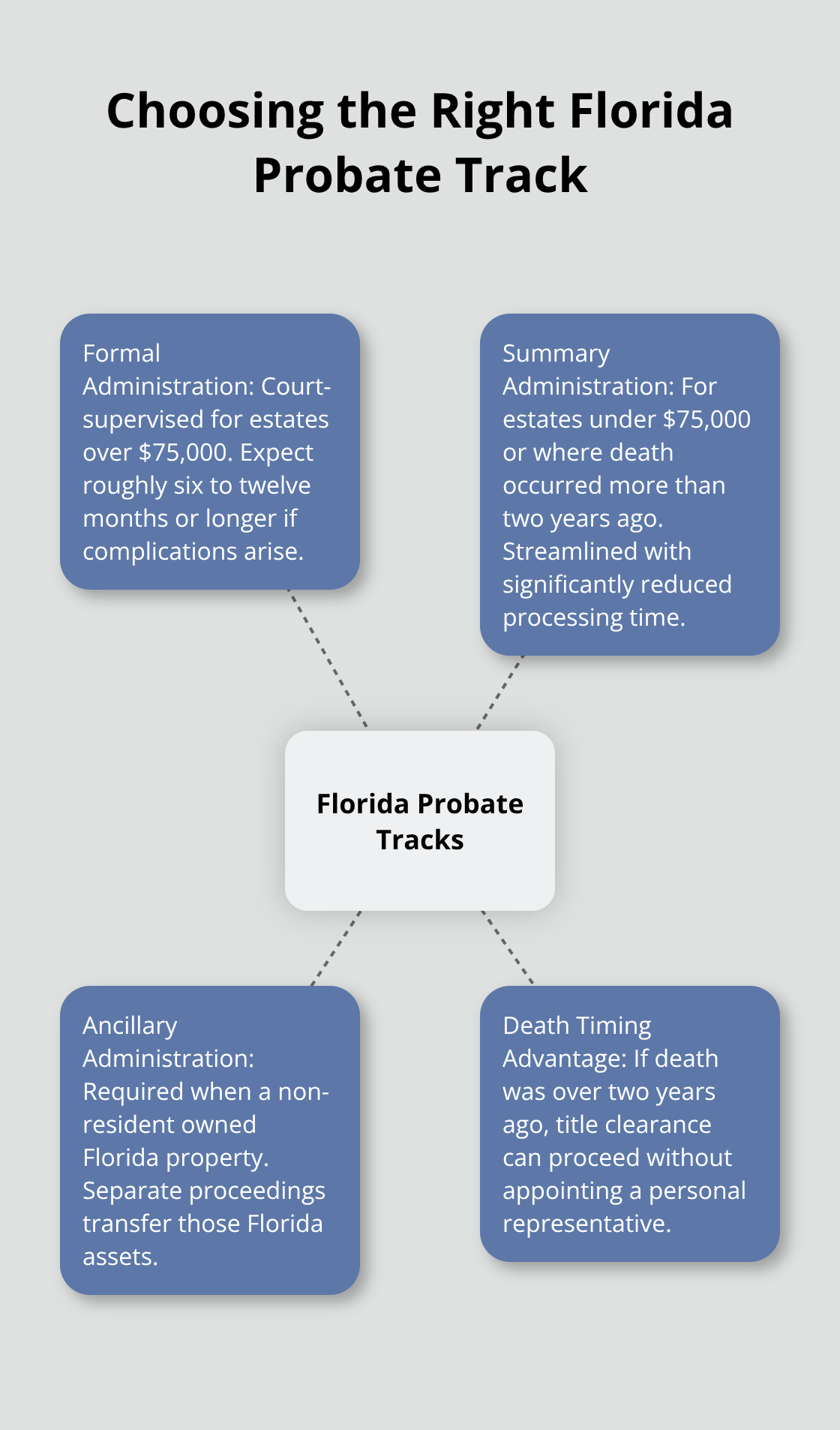
In Putnam County specifically, many rural properties qualify for exemptions that keep estates under the $150,000 threshold, making Summary Administration a common and faster option. The filing fees in 2026 reflect these distinctions: Formal Administration costs $400, while Summary Administration for estates over $1,000 is $345.
When Death Timing Opens Faster Pathways
If an estate qualifies for Summary Administration because the death occurred more than two years ago, families can pursue title clearance without appointing a personal representative, which eliminates one major administrative burden. Ancillary Administration applies when a non-resident dies owning Florida property, requiring separate proceedings to transfer those assets.
The key takeaway is that your estate’s value and the timing of death determine which process applies, and that determination directly shapes your timeline. Acting promptly after death preserves assets and prevents creditor claims from consuming what should go to heirs. Within weeks of a death, contacting legal guidance becomes the practical step that matters most-and it sets the stage for the specific filing requirements and notifications that come next.
Moving Assets and Money Through Probate
Filing the Petition and Meeting Critical Deadlines
Once you file the probate petition with the Putnam County Courthouse at 410 St. Johns Avenue in Palatka, the personal representative must act within strict timeframes. The original Last Will and Testament must reach the Clerk within ten days of death-this single step prevents procedural delays that can push distributions back by weeks or months. Missing this deadline creates unnecessary complications that extend the entire timeline and frustrate beneficiaries waiting for clarity on their inheritance.
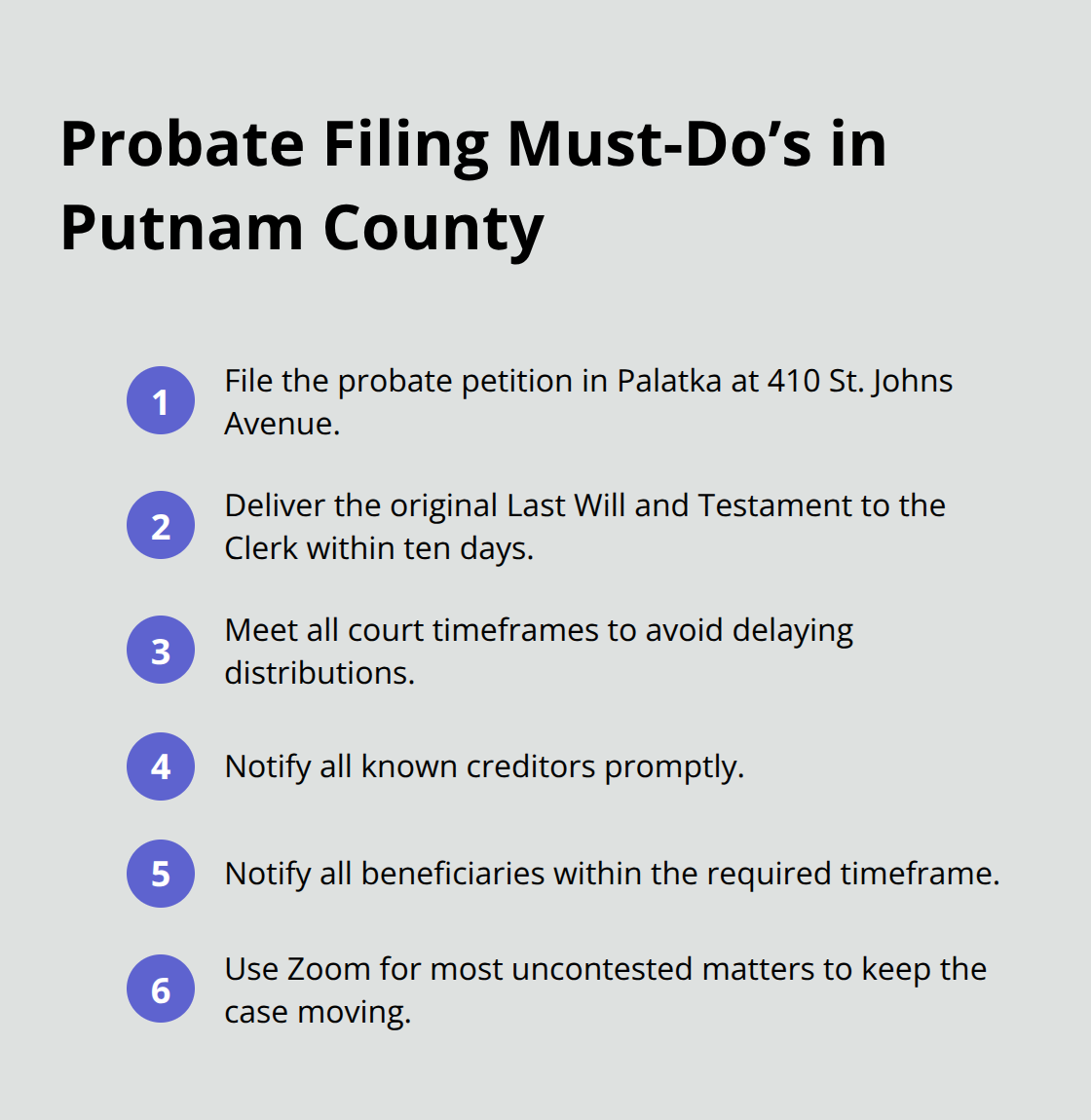
Notifying all known creditors and beneficiaries ranks as the next critical obligation. Florida law requires creditors to receive notice within a specific timeframe, and beneficiaries must learn of their rights and the estate’s status. This notification is not optional, and delays here create personal liability for the representative. In Putnam County, most uncontested probate matters now proceed via Zoom, which eliminates repeated courthouse visits and accelerates communication between the personal representative, the Clerk of Court (Matt Reynolds at 386-326-7600), and the court.
Locating and Documenting Every Asset
The personal representative must locate and document every asset the deceased owned-real estate, bank accounts, vehicles, and personal property all require identification and valuation. This inventory phase determines the estate’s actual value and triggers whether formal or summary administration applies. For estates with properties across multiple counties or states, this step becomes more complex and time-intensive, which is why acting immediately preserves clarity about what exists and where it is held. Some assets may require professional appraisals to confirm accurate value.
Paying Debts and Taxes Before Distribution
Debts and taxes must be addressed before any heir receives a penny. The personal representative pays creditor claims, files final income tax returns, and settles estate taxes if the estate exceeds federal exemption thresholds. In 2026, Putnam County’s filing fees range from $235 for small summary estates to $400 for formal administration, but these fees pale compared to the cost of delays or disputes caused by improper notification or incomplete asset documentation.
Understanding the Personal Representative’s Fiduciary Duty
The personal representative’s fiduciary duty means they must act in beneficiaries’ best interests and document every decision. Breaches of this duty expose them to legal action and liability. The entire process-from petition filing to final distribution-typically spans six to twelve months for formal administration, though summary administration can move significantly faster. After debts are resolved and taxes are paid, the remaining assets distribute according to the will or Florida’s intestacy laws if no will exists.
The complexity of these steps, combined with the personal representative’s legal exposure, explains why families benefit from having legal guidance navigate probate rather than attempting administration alone. Once assets move through these phases and distributions near completion, families often face unexpected complications that require skilled problem-solving-particularly when beneficiaries disagree or creditor claims surface late in the process.
What Happens When Probate Becomes Complicated
Beneficiary Disputes That Halt Distributions
Probate moves smoothly when beneficiaries agree, creditors file claims promptly, and assets fit neatly into one state. Reality rarely cooperates. Disputes between beneficiaries emerge when one heir questions the will’s validity, suspects undue influence, or disagrees with how the personal representative manages assets.
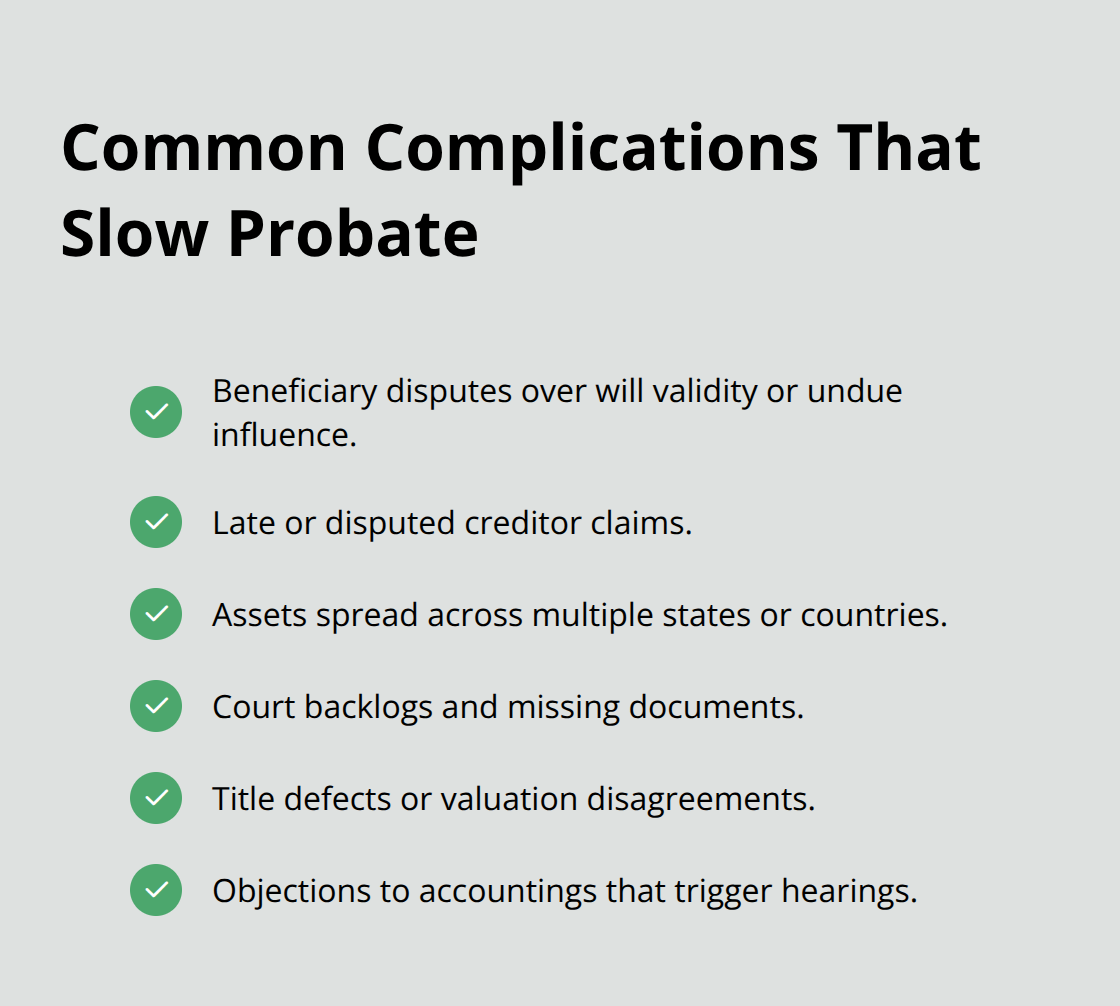
These conflicts stall distributions for months and drain estate funds through legal fees that could have gone to heirs. In the Seventh Judicial Circuit, which processes over 140,000 cases annually, probate litigation over will contests or fiduciary misconduct represents a growing share of court dockets.
When a beneficiary challenges whether the deceased had testamentary capacity or whether someone manipulated them into changing the will, the personal representative faces two options: defend the will’s validity through litigation or negotiate a settlement that satisfies competing claims. Either path costs money and time.
Creditor Claims and Statutory Deadlines
Creditor claims add another layer of complexity. Florida law gives creditors four months from the date of publication to file claims against the estate, but creditors sometimes emerge after that window closes with informal demands or threats. A personal representative who pays a claim outside the statutory period risks personal liability to beneficiaries who lose inheritance as a result.
The personal representative cannot distribute assets until every creditor claim receives proper handling and resolution. This holding pattern frustrates heirs waiting for their inheritance while the representative navigates competing obligations.
Multi-State and International Assets
Out-of-state or international assets multiply these challenges significantly. A family that owns property in Georgia, holds investments in New York, or has inherited foreign bank accounts must navigate Ancillary Administration in Florida plus probate proceedings in those other jurisdictions-each with different timelines, filing fees, and procedural rules. What takes six months in Florida might take eighteen months when assets scatter across multiple states.
Court Backlogs and Procedural Obstacles
Unexpected delays derail even well-managed estates. Court backlogs, missing documents, title defects on real property, or disputes over asset valuations push closing dates further into the future. When a beneficiary or creditor raises an objection to the personal representative’s accounting, the court may order a hearing that delays final distribution by weeks or months.
The personal representative’s fiduciary duty means they cannot distribute assets until every claim receives resolution and every debt payment clears, which creates a holding pattern that frustrates heirs. Families navigating these complications benefit from legal guidance that anticipates problems before they escalate. Proactive communication with beneficiaries and creditors prevents many conflicts from hardening into formal disputes. When complications do arise, having skilled guidance transforms a potential nightmare into a manageable process with a clear resolution.
Final Thoughts
Probate steps for families in St. Augustine and Palatka follow a clear structure when someone guides you through them correctly. The process has predictable phases and statutory deadlines, but missing even one notification or filing deadline creates months of additional complications that drain estate funds and frustrate beneficiaries. We at Family, Estate & Mediation Law have seen firsthand how families either move through probate smoothly or stumble through avoidable mistakes that cost time and money.
Legal guidance matters because probate carries real consequences. A personal representative who mishandles notifications, misses statutory deadlines, or distributes assets prematurely faces personal liability. Beneficiaries who don’t understand their rights lose leverage when disputes arise. Creditors who don’t receive proper notice can resurface years later with claims against the estate (these aren’t theoretical risks-they happen regularly and transform what should be straightforward into months of additional complications).
Your family’s situation is unique, and these distinctions demand tailored guidance rather than generic advice. We at Family, Estate & Mediation Law offer free initial consultations to clarify your specific roadmap. Call us at 352-354-2654 or visit our website to discuss your family’s probate situation.