Probate can drain your family’s time and resources for months or even years. Court fees, legal expenses, and public disclosure of your assets create unnecessary burdens during an already difficult period.
At Family, Estate & Mediation Law, we help families in St. Augustine and Palatka avoid these complications through smart probate avoidance strategies. The good news is that multiple proven methods exist to keep your estate out of court entirely.
What Does Probate Actually Cost Your Family in Florida?
Court Fees and Attorney Expenses Add Up Fast
Florida probate carries real financial weight that catches families off guard. When an estate enters formal administration, the state requires court filing fees, personal representative fees, and attorney costs that add up quickly. For estates exceeding $75,000, formal administration is mandatory, and these costs begin immediately. Court filing fees in Florida typically range from $300 to $1,000 depending on the estate size, but attorney fees often dwarf these amounts. Most probate attorneys in Florida charge hourly rates between $150 and $400 per hour, and a straightforward estate requires 20 to 40 billable hours just for basic administration. Personal representatives also earn statutory fees calculated as a percentage of the estate value, typically 3% on the first $1,000, 2.5% on the next $9,000, and declining percentages above that.
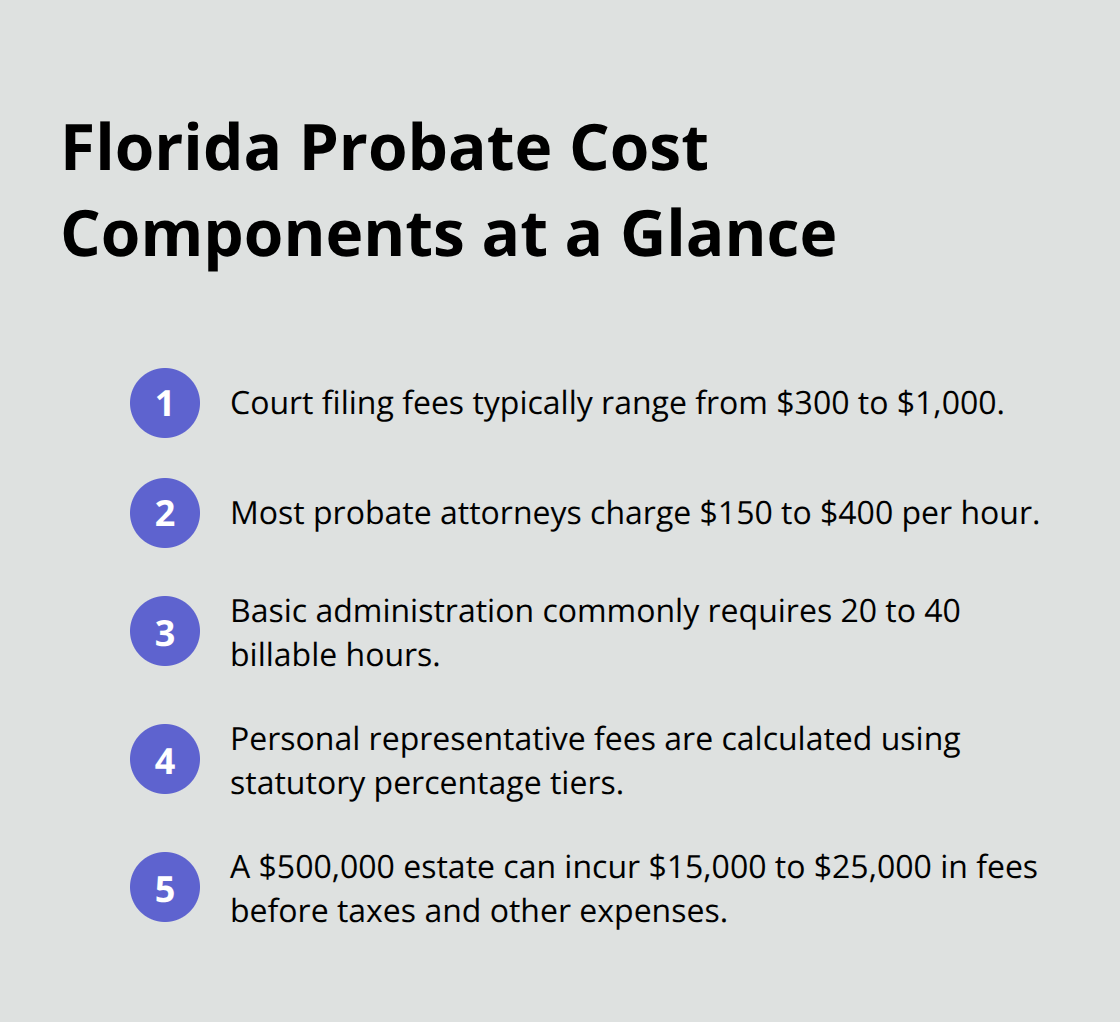
For a $500,000 estate, these fees alone total $15,000 to $25,000 before taxes and other expenses. The real problem is that these costs come directly from assets meant for your beneficiaries, reducing what they actually receive.
Extended Timelines Lock Up Your Inheritance
The probate timeline in Florida stretches the financial pain across months or longer. Formal administration typically takes six to twelve months minimum, but many estates take well over a year due to creditor notification periods, asset gathering, and potential disputes. During this entire period, your beneficiaries wait to access their inheritance while court processes move slowly. Real estate transfers through probate face additional delays because the property cannot change hands until the court formally closes the estate and issues a deed. For families who depend on inherited assets to cover immediate expenses or maintain properties, this extended timeline creates real hardship.
Public Records Expose Your Family’s Private Details
Public court records compound these problems because probate documents become accessible to anyone who searches the courthouse records, exposing details about your assets, family members, and financial situation that would otherwise remain private. This public disclosure creates security risks and invites unwanted contact from distant relatives or creditors. The combination of substantial costs, extended delays, and loss of privacy makes probate an outcome worth avoiding when better alternatives exist. Fortunately, multiple proven strategies allow you to transfer assets directly to your beneficiaries without court involvement, protecting both your family’s finances and their privacy.
How to Move Assets Without Going Through Probate
Revocable Living Trusts Keep Control in Your Hands
A revocable living trust stands as the most effective tool for avoiding probate entirely because it lets you control your assets during life while transferring them directly to beneficiaries after death without court involvement. When you create a revocable living trust, you retitle your major assets-bank accounts, investment accounts, real estate, and personal property-into the trust’s name. The critical step that most people miss is actually funding the trust, meaning transferring ownership of these assets into it. Many families spend money setting up a trust but never complete this funding process, which leaves them vulnerable to probate anyway. Once your assets sit inside the trust and you pass away, your successor trustee simply distributes them according to your instructions, bypassing court entirely.
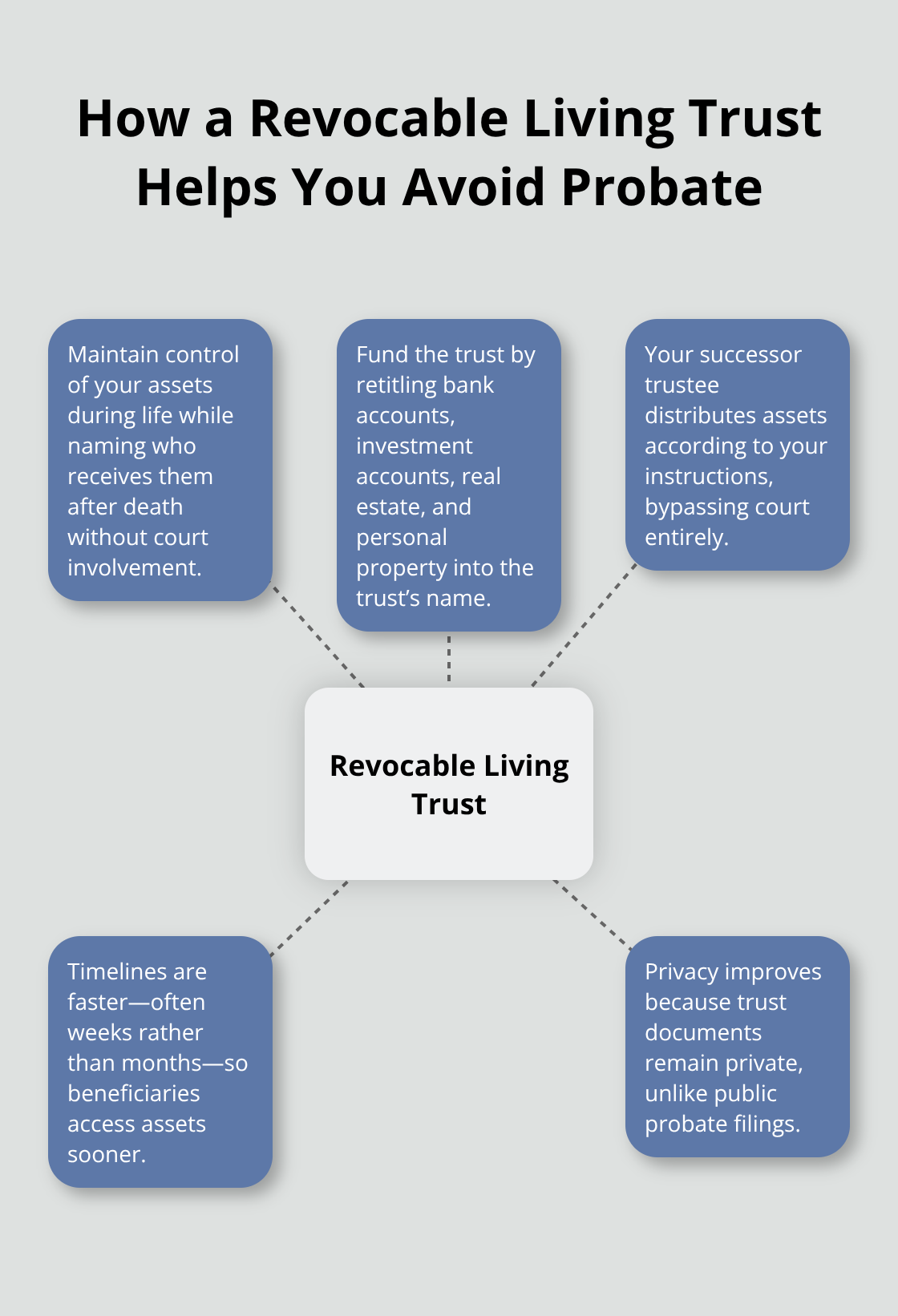
This process typically takes weeks rather than months, and your beneficiaries access their inheritance far faster than through formal probate. The privacy benefit is substantial too-trust documents remain private, not public record like probate filings.
Beneficiary Designations Create Automatic Transfers
Beneficiary designations on retirement accounts, life insurance policies, and bank accounts create an immediate transfer mechanism that completely avoids probate for those specific assets. When you name a beneficiary on an IRA, 401(k), or life insurance policy, that asset passes directly to that person upon your death regardless of what your will says. This is why regularly updating beneficiary designations after major life changes-marriage, divorce, birth of children-matters enormously. Many people name a beneficiary decades ago and never revisit it, causing assets to go to an ex-spouse or someone no longer in their life.
Transfer-on-Death Deeds and Joint Ownership Offer Additional Options
Transfer-on-death deeds and joint ownership with survivorship rights offer additional paths for real estate and bank accounts. A transfer-on-death deed lets you retain full control of your home during life while naming who receives it automatically at death. Joint ownership with survivorship means the surviving owner automatically inherits the property, though this approach carries risks like exposing the asset to one owner’s creditors or creating disputes if one owner becomes incapacitated.
Combine Multiple Tools for Complete Protection
The most practical approach combines multiple tools: use a revocable living trust for your primary residence and investment accounts, maintain beneficiary designations on retirement and life insurance, and consider a transfer-on-death deed as backup protection for real estate. Map out which tool fits each asset based on its type and your family situation, since no single strategy protects everything equally. This coordinated planning prevents assets from accidentally falling through the cracks and ending up in probate court. The next section examines the mistakes that commonly derail these strategies and how to avoid them.
Three Estate Planning Mistakes That Sabotage Your Probate Avoidance Plan
Outdated Beneficiary Designations Send Assets to the Wrong People
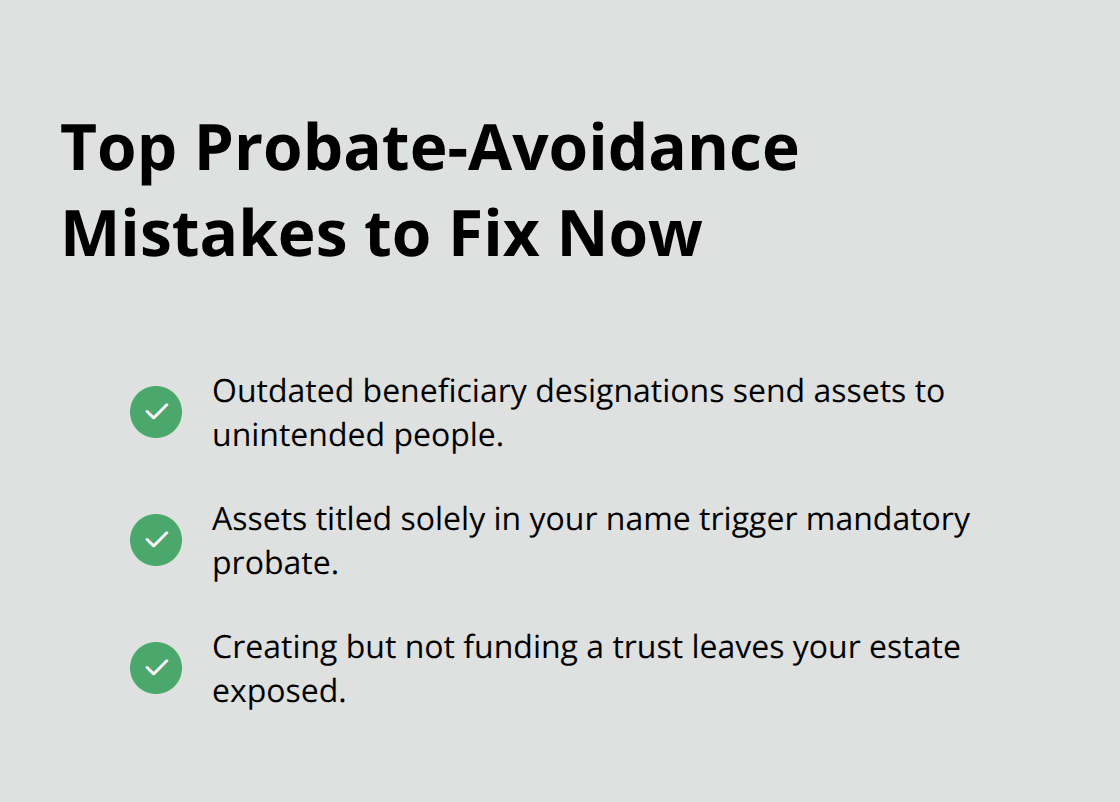
Life changes happen fast, but beneficiary designations on your accounts stay frozen in time unless you actively update them. When you divorce, remarry, or have children, your old designations remain in force. This means your ex-spouse could still inherit your $200,000 life insurance policy, or your retirement account passes to someone you no longer want to benefit. The Financial Industry Regulatory Authority reports that outdated beneficiary designations cause more inheritance disputes than almost any other estate planning failure.
If you married five years ago but never updated the beneficiaries on accounts opened before that marriage, those assets will bypass your current spouse entirely and go directly to whoever you named decades earlier. The solution is straightforward: review all beneficiary designations on life insurance, IRAs, 401(k)s, and bank accounts immediately after any major life change, then document these updates in writing with the financial institutions.
Assets Held Solely in Your Name Trigger Mandatory Probate
Many people believe that a will provides adequate protection, but a will actually guarantees probate because the court must validate it. If you own real estate, investment accounts, or bank accounts only in your name with no beneficiary designation and no trust ownership, those assets will enter formal administration when you die. For St. Augustine and Palatka residents with estates exceeding $75,000, formal administration is mandatory in Florida, triggering the full cost and timeline problems discussed earlier. Your beneficiaries then wait months or longer while the court processes your estate, and substantial fees drain assets meant for them.
An Unfunded Trust Leaves Your Estate Vulnerable
Creating a revocable living trust but never transferring assets into it represents the most frustrating error families make. Professionals draft these trusts for $1,500 to $3,000, yet the trust sits empty while assets go through probate anyway, wasting both the initial investment and the probate costs you were trying to avoid. Assets must be retitled into the trust’s name to actually avoid probate-meaning transferring your deed from your personal name to the trust, moving bank accounts into the trust, and changing investment account registrations. This funding step is not optional; it is the mechanism that makes the entire strategy work. The practical fix is to create a written inventory of all major assets immediately after your trust is drafted, then systematically transfer each one into the trust’s name over the following weeks. Without this action, your trust provides no protection whatsoever.
Final Thoughts
Probate avoidance strategies protect your family’s time and resources by keeping assets out of court and reducing the financial drain that formal administration creates. Revocable living trusts, beneficiary designations, transfer-on-death deeds, and joint ownership work most effectively when you coordinate them as part of a single plan. Your trust handles your primary residence and investment accounts, beneficiary designations cover retirement and life insurance, and proper funding ensures nothing falls through the cracks into probate court.
The real protection comes from taking action now rather than leaving these decisions to chance. Families in St. Augustine and Palatka who implement these strategies avoid months of delays, preserve privacy, and ensure their beneficiaries receive inheritances quickly and completely. The cost of planning is far lower than the cost of probate, and the peace of mind is invaluable.
We at Family, Estate & Mediation Law help families across Northeast Florida design probate avoidance strategies tailored to their specific assets and family situations. Contact us to schedule a consultation and map out which strategies fit your situation best-visit our website to learn more about how we can help you protect what matters most.