
An advance directive Florida gives you control over your medical care when you can’t speak for yourself. Without one, your family may face painful decisions and expensive legal battles during a health crisis.
At Family, Estate & Mediation Law, we’ve seen firsthand how the right documents protect both patients and their loved ones. This guide walks you through everything Florida residents need to know.
What an Advance Directive Actually Does
How Florida Law Defines Your Advance Directive
Florida Statutes Chapter 765 defines an advance directive as a witnessed document or oral statement that addresses your healthcare decisions and health information. This is not theoretical-it’s a legal instrument that takes immediate effect the moment you sign it, giving you control over medical treatment decisions before you lose the ability to make them yourself. Under Florida law, a competent adult can create an advance directive at any time, not just when facing a terminal illness.
The Three Types You Can Choose
The three main types are a living will, a health care surrogate designation, and an anatomical donation declaration. You can complete one, two, or all three depending on your situation. A living will communicates your preferences for life-prolonging procedures if you have a terminal condition, end-stage condition, or persistent vegetative state. A health care surrogate designation names a primary and alternate person to make medical decisions when you cannot, with the option to include specific instructions that guide their choices.
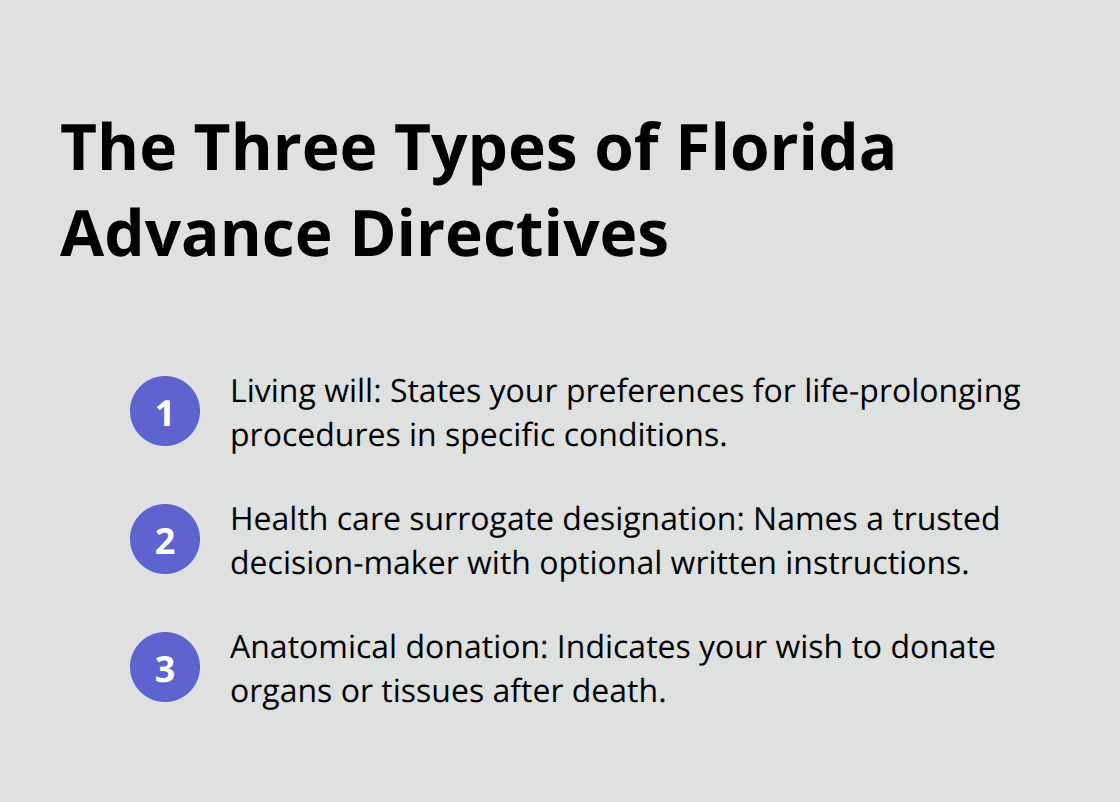
An anatomical donation indicates your wish to donate organs or tissues after death.
What Happens Without an Advance Directive
Florida law does not require you to have an advance directive, but without one, decisions fall to guardians or relatives who may not know your actual wishes, potentially leading to costly court proceedings and family disagreements.
The Two-Witness Requirement Protects You
The two-witness requirement in Florida is not bureaucratic red tape-it’s a safeguard against fraud and misinterpretation. At least one witness cannot be your spouse or blood relative, ensuring independence and reducing conflicts of interest. If you cannot sign, one witness can subscribe your signature in your presence at your direction. You must notify your primary physician that an advance directive exists, and that physician or healthcare facility must add it to your medical records promptly. This ensures clinicians have access to your preferences when decisions arise.
Legal Weight and Protections
A living will creates a rebuttable presumption of clear and convincing evidence of your wishes, giving it significant evidentiary weight in care decisions. The statute emphasizes that advance directives are cumulative with existing rights under Florida constitutions and other statutes, so they work alongside other legal protections. Signing an advance directive does not affect life insurance policy terms or eligibility, and you are not required to have one to obtain healthcare. Health care facilities and providers have immunity from criminal or civil liability for actions taken in good faith under an advance directive, which protects both patients and providers from uncertainty. Now that you understand what an advance directive is and how it works under Florida law, the next step is understanding why every Florida resident should have one in place.
Why You Need an Advance Directive Right Now
Family Members Make Decisions Without Knowing Your Wishes
Without an advance directive, Florida hospitals and doctors follow a legal hierarchy to make your medical decisions during a crisis. That hierarchy starts with your spouse, then adult children, then parents, then siblings. The problem is stark: these people may not know what you actually want. A 2023 study from the Journal of the American Geriatrics Society found that 60% of families disagreed about end-of-life care decisions when no advance directive existed, leading to prolonged hospital stays, unnecessary treatments, and emotional trauma. When your wishes are documented, your surrogate follows your instructions, not their own interpretation or guilt.
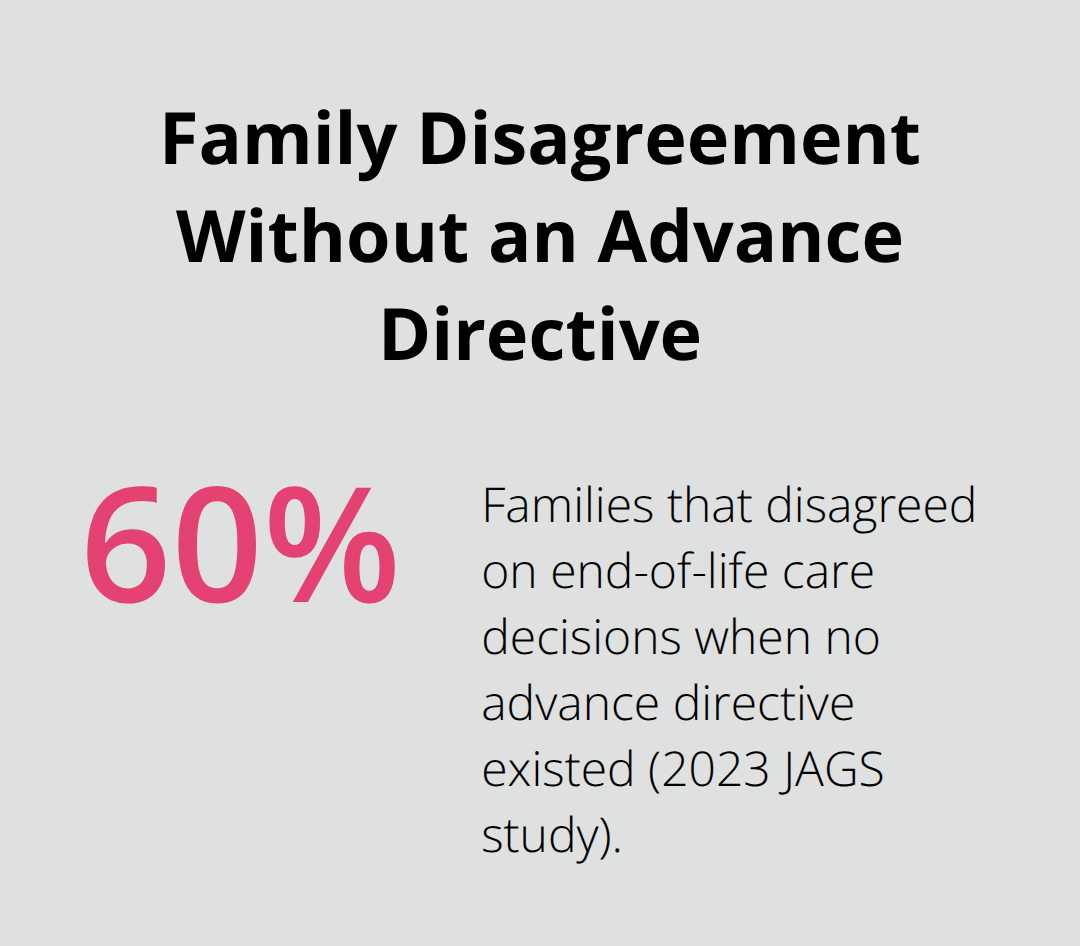
This clarity eliminates the second-guessing and conflict that tears families apart during medical emergencies.
Your Documented Wishes Override Uncertainty
Florida Statutes 765.203 gives surrogates authority to make decisions aligned with your known wishes, but that authority means nothing if your wishes remain unknown. Your surrogate cannot guess what you want-they act on what you tell them in writing. Without documentation, they face impossible choices that haunt them for years. A written advance directive removes that burden entirely and protects your family from making decisions they’ll question forever.
Guardianship Costs Drain Your Estate Fast
Guardianship proceedings cost Florida families between $5,000 and $15,000 in legal fees alone, plus ongoing court supervision expenses that drain estate resources. If you become incapacitated without an advance directive, a family member must petition the court for guardianship, which means public hearings, physician evaluations, and court orders before anyone can legally make medical or financial decisions. This process takes weeks or months-time you don’t have during a health crisis. An advance directive takes effect immediately and costs under $300 to prepare, eliminating guardianship entirely.
Out-of-State Directives Remain Valid in Florida
Florida law recognizes advance directives executed in other states, so if you’ve moved to Florida recently, your existing directive remains valid as long as your healthcare providers know it exists. The real actionable step is notifying your primary physician in writing that an advance directive exists and providing copies to your surrogate, your healthcare facility, and your attorney. Store the original in a safe location and carry a wallet card noting where it can be found. This notification step separates documents that actually protect you from documents that sit in a drawer unused.
What Happens Next Depends on Your Action
Your advance directive only works when the people who need it know where to find it. The next section walks you through the exact steps to create, execute, and activate your advance directive so it stands ready when you need it most.
Getting Your Advance Directive Signed and Stored Correctly
Florida’s Strict Execution Requirements Protect Your Document
Florida law imposes strict execution requirements that exist for one reason: to prevent fraud and ensure your document actually reflects your wishes when it matters most. You must sign your advance directive in front of two adult witnesses, and at least one witness cannot be your spouse or blood relative. If you cannot physically sign, one witness may sign your name in your presence at your direction, but this substitution must be documented clearly. Your primary physician must receive written notification that an advance directive exists, and that physician or healthcare facility adds it to your medical records within a reasonable timeframe.
The Notification Step Separates Valid Documents From Useless Ones
This notification step separates documents that protect you from documents that sit unsigned in a drawer. Many Florida residents complete their advance directive without telling anyone it exists, which renders the document useless during a medical emergency. Your surrogate cannot act on instructions they do not know about, and your healthcare provider cannot follow preferences buried in a filing cabinet. The moment you sign, you must notify your designated surrogate, your primary physician, and your healthcare facility that the document exists and where they can access it.
Common Witness Mistakes That Undermine Your Document
Naming witnesses carelessly creates problems that surface when you need protection most. Choosing your adult child as a witness creates a conflict of interest that clouds the document’s validity if anyone challenges it later. Choosing your neighbor who happens to be a nurse does not satisfy the legal requirement either, since the witness must be a disinterested third party, not someone with medical knowledge who might appear to have influenced your decisions. Florida Statutes 765.302 requires that both witnesses be present when you sign, and both must sign in your presence. Select witnesses who have no financial interest in your estate and no medical background that could suggest undue influence.
Professional Execution Eliminates Technical Errors
Executing your advance directive at an attorney’s office costs between $200 and $400 and guarantees compliance with every technical requirement, eliminating the risk of an invalid document when you need it most. The cost is negligible compared to the guardianship expenses (between $5,000 and $15,000) you avoid and the certainty that your wishes will be honored. An attorney reviews your document, verifies witness qualifications, and ensures proper execution before you leave the office.
Strategic Storage and Notification Activate Your Protection
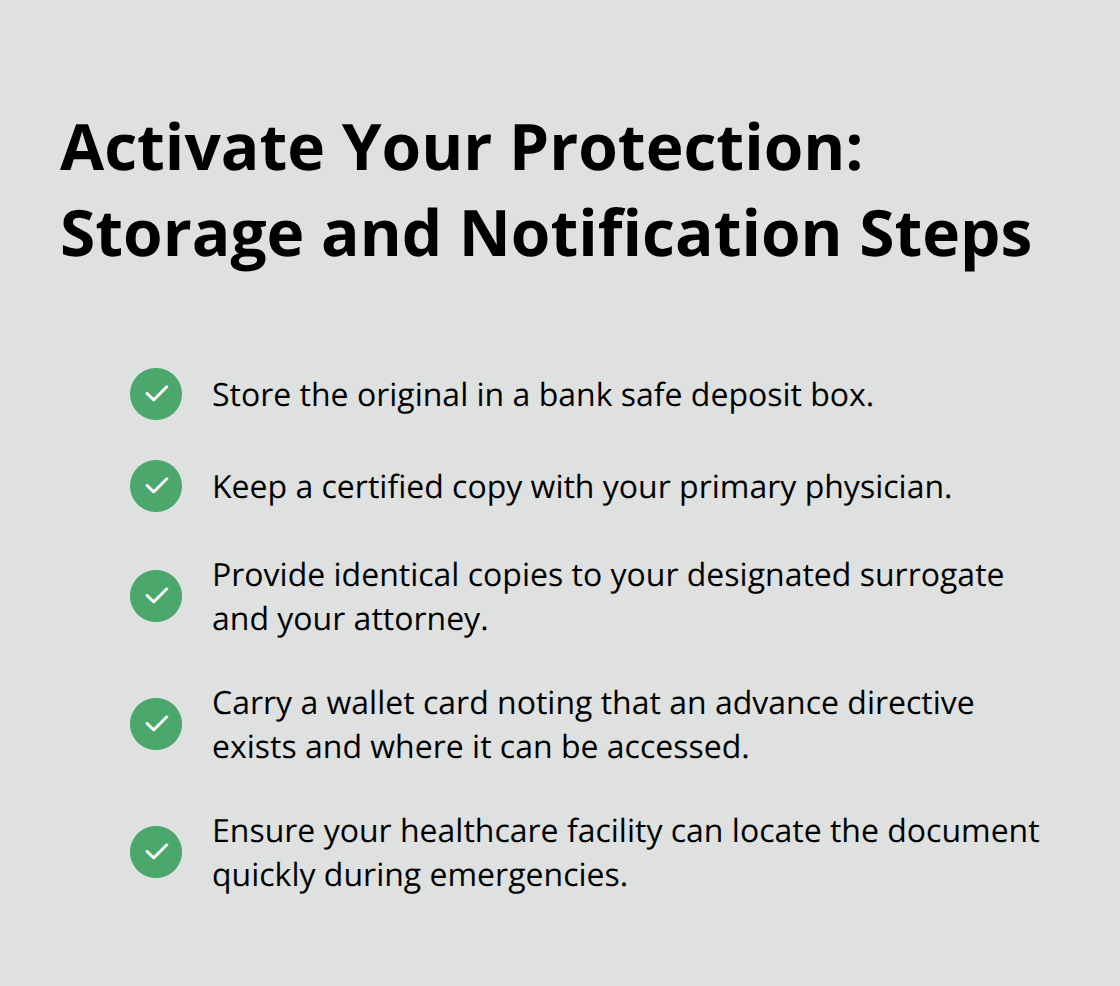
After execution, store your original advance directive in a safe deposit box at your bank, keep a certified copy with your primary physician, and provide identical copies to your designated surrogate and your attorney. Carry a wallet card stating that an advance directive exists and where it can be accessed. This redundancy ensures that no matter which healthcare facility admits you during an emergency, someone in your network knows your document exists and can produce it within hours.
Final Thoughts
An advance directive in Florida gives you the power to protect your family and your wishes when you cannot speak for yourself. The documents are straightforward to create, cost far less than guardianship proceedings, and eliminate the uncertainty that tears families apart during medical crises. Your surrogate knows exactly what you want, your healthcare providers have clear instructions, and your family avoids painful decisions made in the dark.
We at Family, Estate & Mediation Law understand that advance directives are not just legal paperwork-they are expressions of your values and your right to self-determination. Our team has helped Northeast Florida families protect their legacies and preserve their relationships through careful estate planning and advance directive preparation. Whether you need a straightforward living will or a comprehensive advance directive package tailored to your specific circumstances, we provide practical, client-centered guidance that removes confusion and builds confidence.
If you are ready to take action, contact Family, Estate & Mediation Law at our St. Augustine or Palatka office. We will walk you through every step, answer your questions, and execute your advance directive correctly with strategic storage. Your peace of mind and your family’s protection are worth the investment.