
Naming a guardian for your child or aging parent is one of the most important decisions you’ll make as a parent or adult child. Without a clear guardianship plan, the courts decide who raises your children or manages care for vulnerable family members.
We at Family, Estate & Mediation Law help families in Northeast Florida create guardianship plans that reflect their values and protect their loved ones. This guide walks you through selecting the right guardian, understanding Florida’s legal requirements, and completing the guardianship process.
What Guardianship Really Means for Northeast Florida Families
Understanding Guardianship in Florida
Guardianship is a court-supervised legal arrangement that gives one person the authority to make financial or medical decisions for another person who cannot manage their own affairs. In Florida, this process isn’t just paperwork-it’s a formal recognition by the court that someone lacks the ability to care for themselves or their property. The court appoints a guardian to step in and handle everything from paying bills to making healthcare decisions.
This matters in Northeast Florida because families here face the same challenges as families nationwide: aging parents with dementia or Alzheimer’s, adult children with severe disabilities, and minors who inherit money or receive settlements. Without a guardianship plan in place, the courts decide who manages these responsibilities, and that decision may not reflect your family’s values or wishes. St. Johns County sees guardianship cases arise regularly for exactly these reasons, which is why proactive planning makes a real difference.
Types of Guardianship Available in Florida
Guardianship takes different forms depending on what the person needs. A guardianship of the person and property gives one guardian authority over both medical decisions and finances-the most comprehensive arrangement. A guardianship of the property only handles finances while the person retains medical decision-making rights. A guardianship of the person only covers healthcare and personal decisions but not finances.
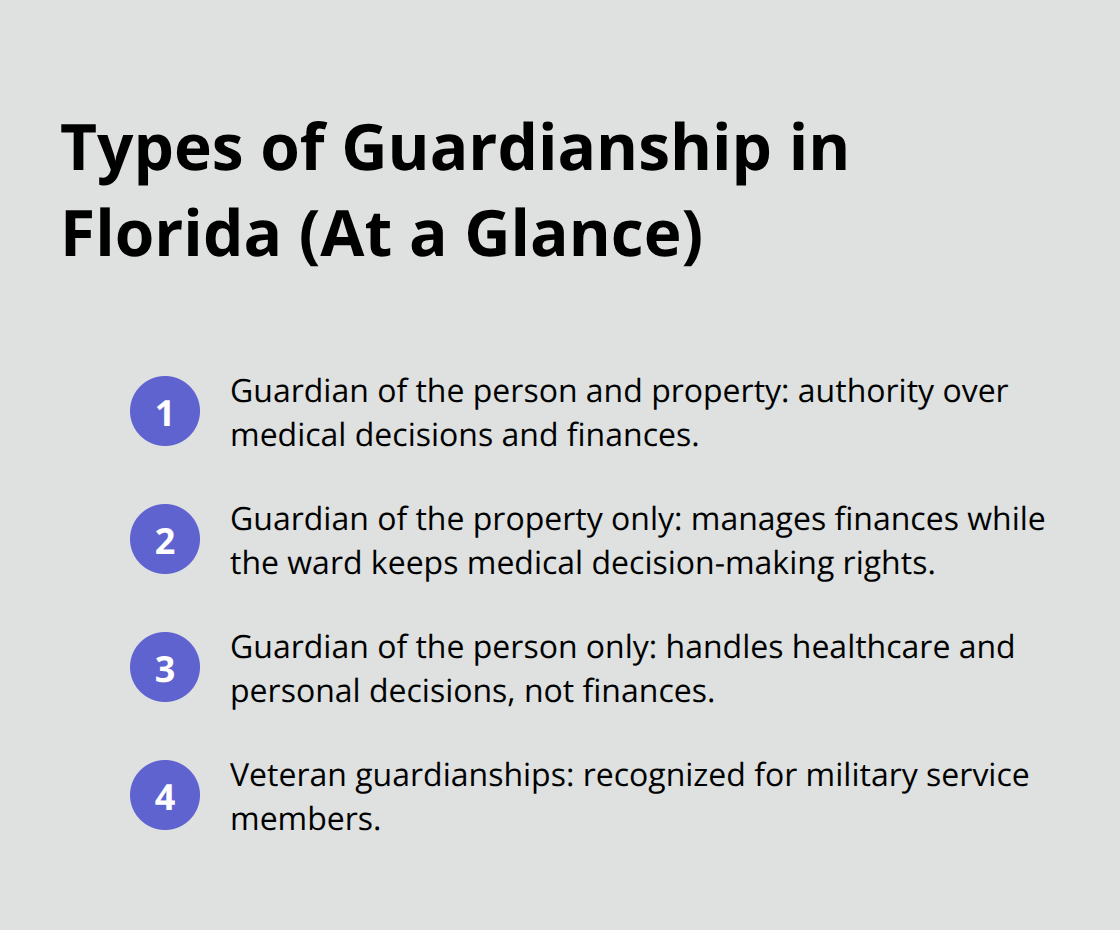
Florida also recognizes veteran guardianships for military service members.
The filing fees in St. Johns County range from $235 for a guardianship of the person only up to $400 for guardianship of both person and property, plus annual accounting and auditing costs that vary by estate size. Once appointed, guardians must file annual reports detailing the person’s condition and how the estate is managed-this court oversight protects vulnerable individuals from exploitation.
Planning Alternatives to Guardianship
Many families assume guardianship is their only option, but advance planning tools like durable powers of attorney can sometimes prevent the need for court involvement altogether. These documents allow you to name someone to make decisions on your behalf if you become incapacitated, without requiring a court process. Health care proxies and health care surrogates serve similar purposes for medical decisions specifically.
The key difference lies in timing and control. Guardianship happens after incapacity occurs and requires court approval, while powers of attorney take effect before a crisis and give you direct say in who decides for you. Families across St. Augustine and Palatka benefit from exploring all options early, before a crisis forces reactive decisions. Understanding which tool fits your situation sets the stage for selecting the right guardian and completing the legal steps that follow.
Who Should Be Your Guardian
The Right Person Goes Beyond Family Ties
Selecting a guardian ranks among the hardest decisions you’ll face because you’re entrusting someone with your child’s upbringing or your aging parent’s daily care. The person you choose needs more than good intentions-they need the stability, financial responsibility, and emotional capacity to handle medical emergencies, school decisions, and sometimes significant estate management. In Northeast Florida, families often turn to relatives first, but blood relation alone does not make someone qualified. A guardian must accept the role before you name them legally, and they need to understand exactly what the responsibility involves. The court will not appoint someone without their consent, so conversations happen early and honestly.
Legal Requirements and Personal Fitness
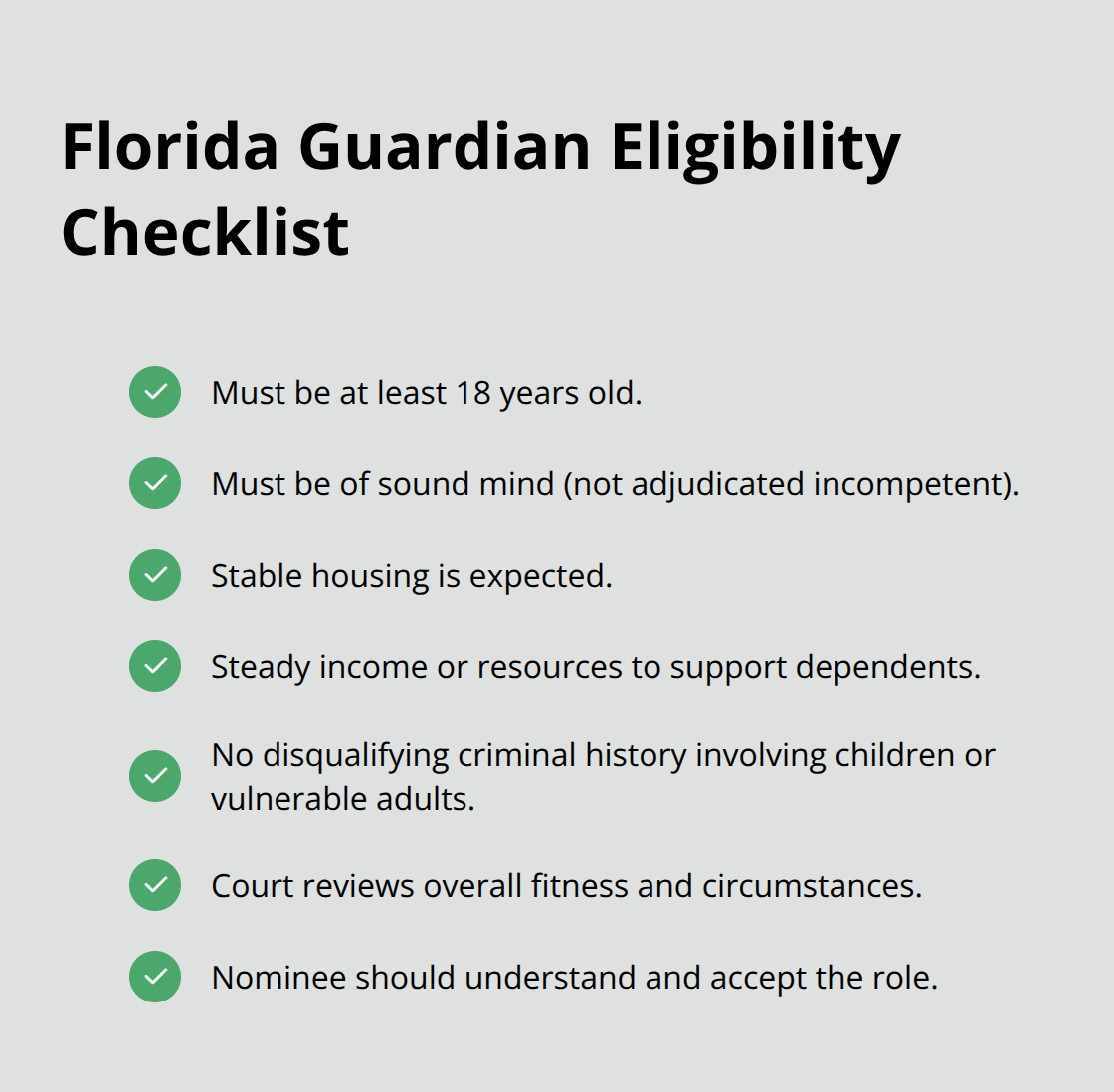
Florida law requires that the person you select be at least 18 years old and of sound mind-meaning the court has not adjudicated them incompetent. Beyond age and mental fitness, the person should live in a stable housing situation, maintain steady income or resources to support dependents, and have no disqualifying criminal history involving crimes against children or vulnerable adults. The court considers these factors when evaluating whether someone is fit to serve.
Many families overlook a critical detail: the guardian’s own family circumstances matter significantly. If your chosen guardian has serious health problems, unstable housing, or active substance-abuse issues, the court may reject the nomination or later remove them if conditions deteriorate. St. Johns County courts have seen guardianships challenged when guardians’ personal situations changed dramatically after appointment, forcing families back to court for costly modifications.
Honest Conversations About Expectations
Open communication with potential guardians prevents misunderstandings and confirms they actually want the role. Some people feel honored by the nomination but do not grasp the financial and emotional demands-they must manage school paperwork, attend medical appointments, make end-of-life healthcare decisions, and potentially handle thousands or hundreds of thousands of dollars in inherited assets. Discussing specific scenarios helps. Ask how they would handle a serious illness, a major disagreement about education or religion, or a substantial inheritance. Their answers reveal whether their values align with yours and whether they can navigate complexity without constantly calling you for guidance.
Financial Obligations and Asset Management
Money matters deserve explicit conversation too. If the ward has significant assets, the guardian must file annual accounting reports with the court detailing how funds were spent-for St. Johns County guardianships, annual auditing fees run from $20 for estates under $25,000 up to $250 for estates exceeding $500,000, according to the Clerk of the Circuit Court. Guardians also post bonds to protect the ward’s assets, which costs approximately $7.50 for approval. Some people accept guardianship of the person but decline responsibility for property management, and that is acceptable under Florida law-you can name separate guardians or arrange a guardianship of the person only.
Families in Palatka and St. Augustine benefit from discussing these financial obligations before asking someone to serve, because surprise costs or court-mandated reporting can strain relationships. Document your guardianship preferences in writing and share them with your chosen guardian so everyone moves forward with clear expectations. Once you have identified the right person and confirmed their willingness to serve, the next step involves understanding the legal process itself-what the court requires, how long the process takes, and what documentation you need to file.
How the Guardianship Process Works in Northeast Florida
Filing Your Guardianship Petition
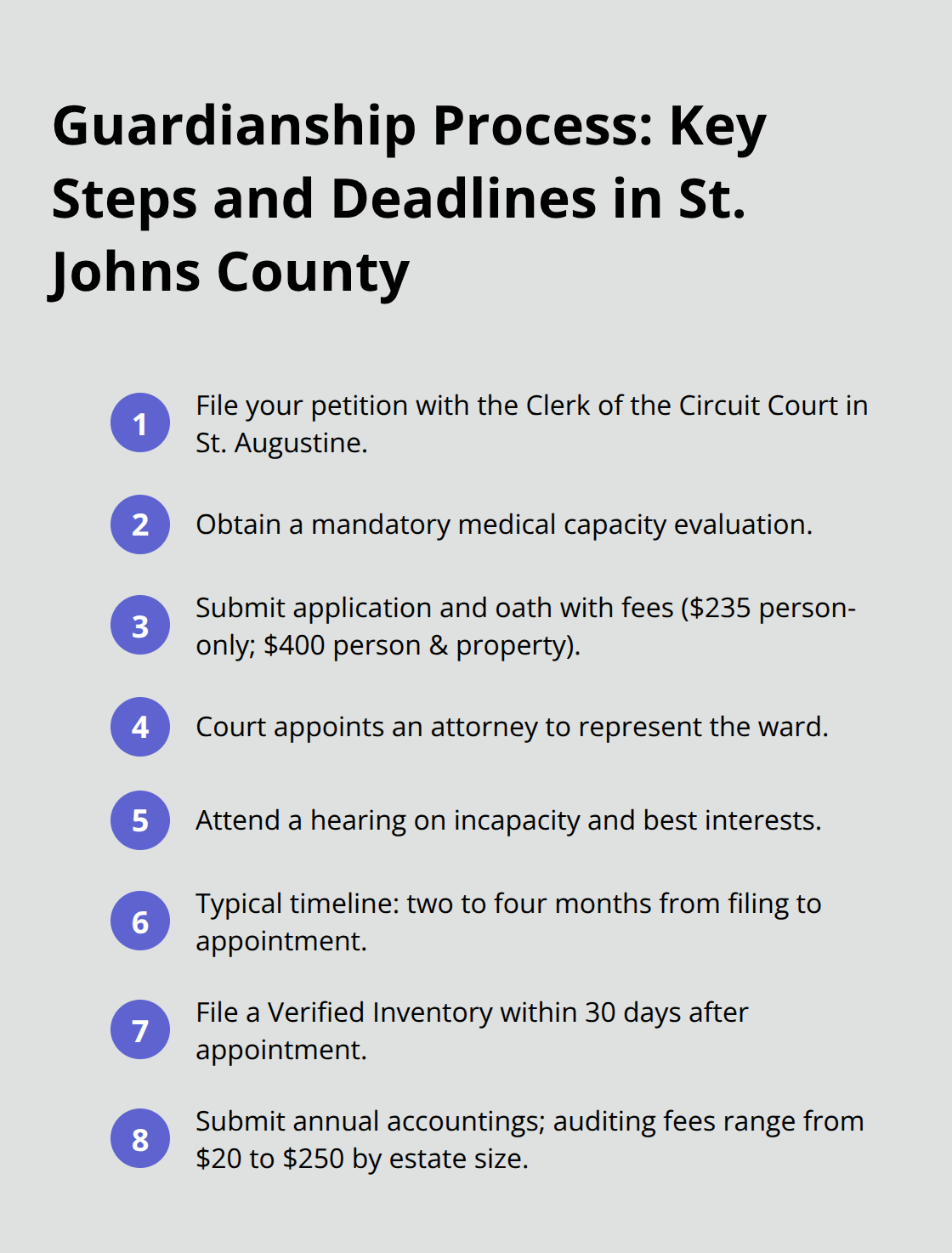
The guardianship process in Northeast Florida starts when you file a petition with the Clerk of the Circuit Court in St. Johns County. The office at 4010 Lewis Speedway in St. Augustine accepts filings Monday through Friday, 8:00 AM to 5:00 PM, and you can reach them at (904) 819-3600. Your petition must include the proposed ward’s name, age, and a detailed explanation of why guardianship is necessary.
A medical capacity evaluation by a physician is mandatory to establish that the person cannot manage their affairs. This evaluation becomes the foundation of the court’s decision, so the doctor’s assessment must be thorough and specific about functional limitations. You will also need to submit an application and oath, pay the establishment fee ($235 for guardianship of the person only or $400 for guardianship of both person and property, according to St. Johns County court records), and provide the proposed guardian’s background information for court review.
Court Appointment and Legal Representation
The court appoints an attorney to represent the incapacitated person-this is not optional. The ward’s attorney may investigate the guardianship petition independently to verify necessity and protect the ward’s interests. Once your filings are complete, the court schedules a hearing where evidence is presented to determine incapacity and whether guardianship truly serves the ward’s best interests.
During the hearing, you present the medical evaluation, explain the proposed guardian’s qualifications, and answer questions from the judge and the ward’s attorney. If the court finds incapacity is proven and guardianship is appropriate, the judge signs the order appointing your guardian.
Timeline and Documentation Requirements
The timeline from filing to final appointment typically spans two to four months, though complications can extend this significantly. After appointment, ongoing obligations begin immediately-the guardian must file a Verified Inventory of assets within 30 days, and annual accounting reports are mandatory thereafter. Auditing fees range from $20 for estates under $25,000 to $250 for estates exceeding $500,000 (according to the Clerk’s office).
Many families find this process overwhelming because court requirements are rigid and paperwork errors cause costly delays. Starting this process early-ideally years before guardianship becomes urgent-gives you time to select the right guardian, discuss expectations openly, and prepare documentation without crisis pressure.
Why Early Planning Matters
Families who plan ahead navigate the process smoothly with minimal stress, while families forced to act reactively often face delays, complications, and sometimes unfavorable court decisions because their documentation was incomplete or their chosen guardian was unprepared for the responsibility. The difference shows clearly in court outcomes and the emotional toll on families managing a crisis.
Final Thoughts
Guardianship planning in Northeast Florida protects your family when you cannot make decisions for yourself. Without a clear plan, the courts decide who raises your children or manages care for aging parents-and that decision may not reflect your values or wishes. The families who avoid crisis and court delays act early, select the right guardian, and complete the legal steps before urgency forces reactive decisions.
Starting guardianship planning now allows you to have honest conversations with potential guardians about their willingness to serve and their capacity to handle financial reporting, medical decisions, and daily caregiving. You can explore alternatives like powers of attorney that may prevent court involvement altogether, and you can gather medical documentation and prepare filings without pressure. Most importantly, you ensure your loved ones are protected by someone you trust, not someone a judge appoints based on limited information.
Contact Family, Estate & Mediation Law at our St. Augustine and Palatka offices to schedule a consultation and discuss how guardianship planning fits into your family’s overall estate and protection strategy. We guide you through selecting the right guardian, understanding Florida’s legal requirements, and completing every step of the guardianship process. Starting today means your family is protected tomorrow.