Many families in St. Augustine and Palatka put off creating a trust because they think it’s complicated or unnecessary. The truth is simpler: a trust is one of the most practical tools for protecting what you’ve built and controlling how it passes to your family.
We at Family, Estate & Mediation Law help Northeast Florida residents set up trusts that actually work for their situation. This guide walks you through the types of trusts available, how they protect your assets, and the mistakes to avoid.
Which Trust Type Fits Your Florida Situation
A revocable living trust gives you complete control during your lifetime and lets you change or cancel it anytime. You remain the trustee, managing your assets as usual, but when you pass away or become incapacitated, a successor trustee takes over without probate delays. This is the most practical choice for most Northeast Florida families because it avoids the public probate process entirely-your estate stays private, and assets transfer to beneficiaries in weeks rather than months.
Funding Your Revocable Trust Properly
Florida Statute Chapter 736 requires the trust to be in writing with clear intent and at least one ascertainable beneficiary, but the real work happens in funding. If you title your real estate, bank accounts, and investment accounts into the trust’s name, probate is avoided. If you don’t fund it, those assets still go through probate anyway, which defeats the purpose. Families often spend money on a trust document, then never retitle anything into it. A $500,000 estate in probate costs $15,000 to $35,000 and takes 6 to 12 months; a funded revocable trust can transfer assets with minimal post-death costs and no court involvement.
When Irrevocable Trusts Make Sense
Irrevocable trusts lock in your decisions permanently, but they offer something a revocable trust cannot: they remove assets from your taxable estate for federal tax purposes. In 2026, the federal estate tax exemption sits at $13.61 million per person, according to the IRS. In 2027 it drops to approximately $7 million unless Congress acts, which means married couples need to act soon if they have substantial assets. An irrevocable trust funded before 2027 can preserve each spouse’s exemption through a credit shelter trust strategy, potentially saving hundreds of thousands in taxes that a will never could. The tradeoff is loss of control-you cannot change the terms or reclaim the assets.
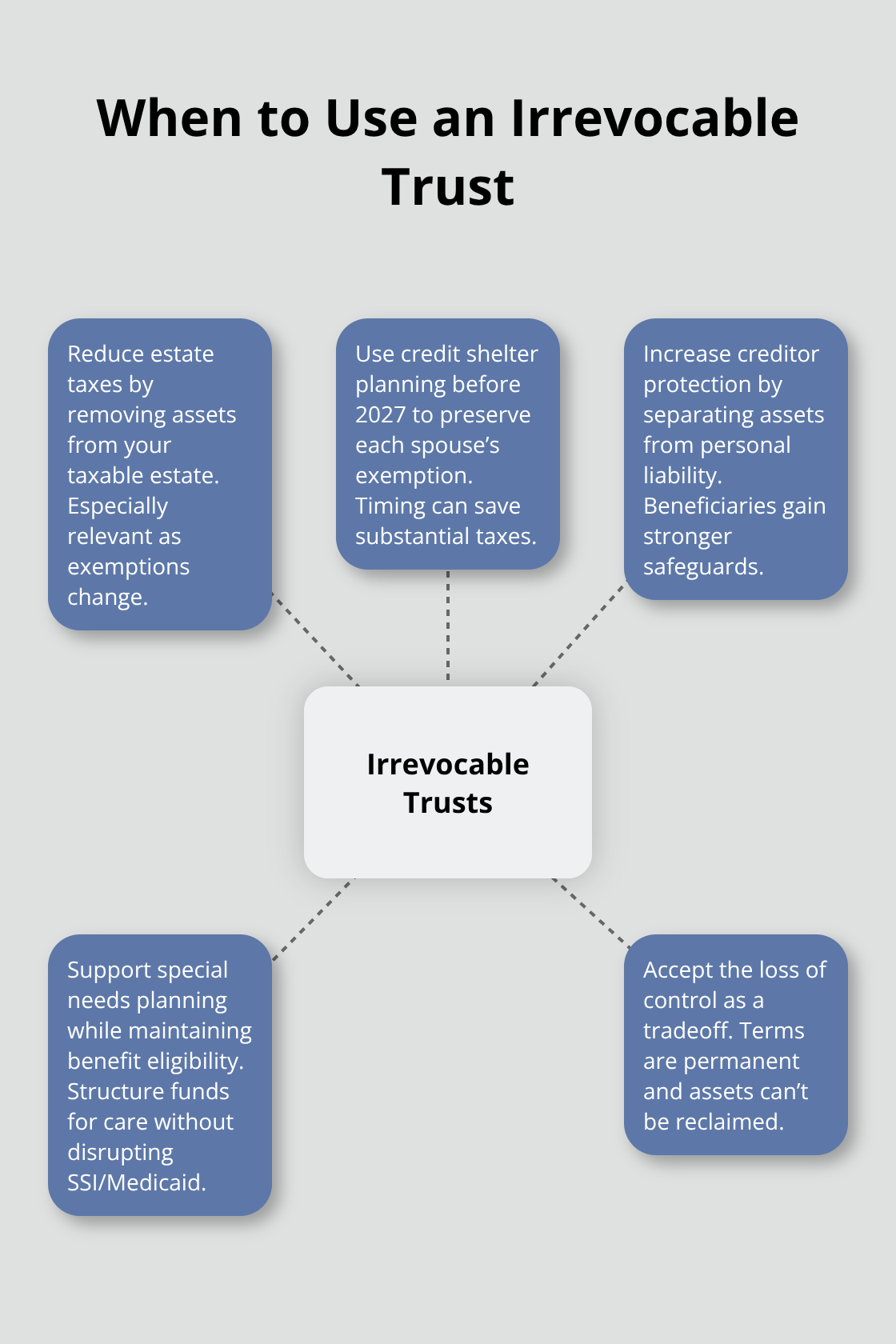
This makes irrevocable trusts suitable only for people with significant wealth, those who want to remove assets from creditor reach, or parents funding special needs trusts for disabled children. Florida has no state income tax on trust earnings, which saves thousands annually compared to states with state taxes, making Florida an attractive place to hold trust assets.
Special Needs Trusts Protect Disabled Children
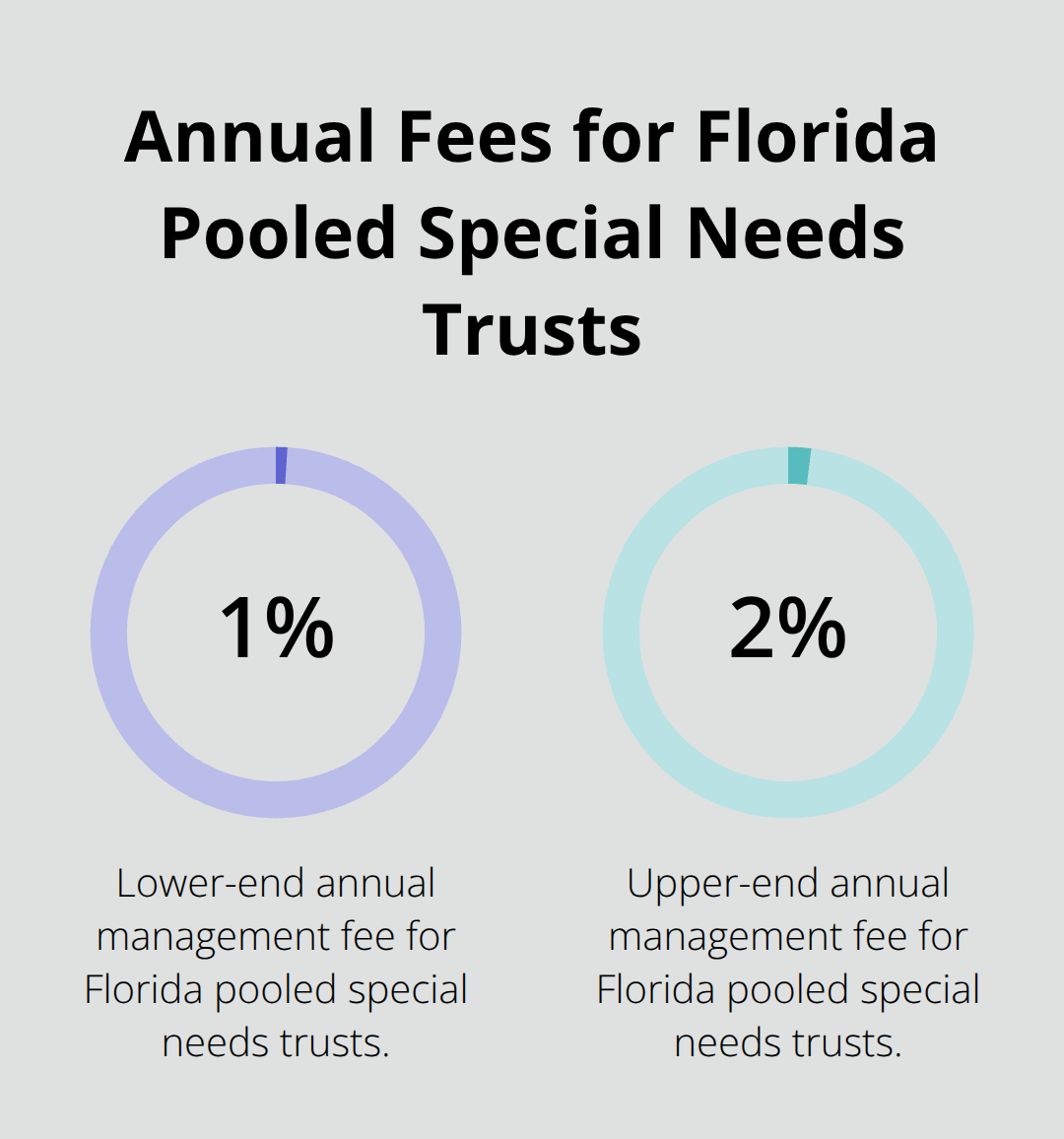
A special needs trust protects a disabled child’s eligibility for Supplemental Security Income and Medicaid while providing for their care. The trust pays for groceries, medical equipment, therapy, and other expenses without reducing SSI benefits. As of September 2024, if the trust covers groceries, SSI remains unaffected. Housing costs paid by the trust-rent, mortgage, utilities-can reduce SSI by roughly up to $351 monthly, so careful planning matters. Third-party special needs trusts cost $2,000 to $5,000 to set up; first-party trusts (funded from the disabled person’s own money) run $3,000 to $7,500 because they must comply with Medicaid payback rules. Florida pooled trusts offer a lower-cost alternative at $0 to $1,000 to enroll, with professional trustees managing the funds and charging 1 to 2 percent annually.
Why Testamentary Trusts Fall Short
Testamentary trusts are created within a will and take effect only after death, so they do not help if you become incapacitated. They also go through probate, which means delays and public disclosure. Most families are better served by a revocable living trust that handles incapacity and avoids probate entirely. The choice between trust types depends on your assets, family situation, and tax picture-factors that require careful analysis of your specific circumstances.
How a Trust Shields Your Assets and Controls Your Legacy
Privacy and Cost Savings Through Trust Structure
A funded revocable trust in Florida accomplishes what a will simply cannot: it transfers your assets outside the public probate system and gives you control over timing, privacy, and who manages things if you become unable to do so yourself. When probate happens in Northeast Florida, the process costs 3 to 7 percent of your estate’s value and typically runs 6 to 12 months. Your will becomes public record, meaning anyone can see what you owned, who inherited it, and all the financial details of your family situation. A trust funded during your lifetime keeps everything private-the beneficiaries, the assets, the distribution timeline all stay out of the courthouse and away from public view.
For families in St. Augustine and Palatka concerned about privacy or those managing modest estates where probate fees eat significantly into what heirs receive, this difference is substantial. A $500,000 estate in probate costs $15,000 to $35,000; a funded trust transfers assets with minimal post-death costs and no court involvement.
Asset Protection From Creditors and Claims
A properly funded trust acts as a barrier against creditors and legal claims that might otherwise target your assets after death. When assets sit in your individual name, they remain vulnerable to claims from business creditors, lawsuits, or other liabilities. A trust, particularly an irrevocable one, removes assets from your personal liability exposure. If you own real estate, business interests, or investments that carry risk, moving them into a trust structure protects them from seizure to satisfy judgments.
Florida courts recognize and respect the separation between trust assets and personal liability, which means creditors cannot easily reach funds held in trust for your beneficiaries. This protection strengthens significantly with irrevocable trusts, where you permanently transfer ownership and relinquish control.
Managing Incapacity Without Court Involvement
The trust document itself serves as your written instructions for managing your affairs during incapacity and after death. Unlike a will, which only directs what happens after you die, a trust tells your successor trustee exactly how to handle your financial and medical decisions if you become incapacitated-whether from illness, injury, or cognitive decline. This eliminates the need for a costly and public guardianship proceeding, which can cost $2,000 to $5,000 or more in legal fees and requires ongoing court supervision.
Your successor trustee simply steps in and manages your accounts, pays your bills, and handles your property according to the trust’s terms. The document can include specific instructions: whether to prioritize income production from investments, how much flexibility the trustee has in distributing funds to beneficiaries, and even precatory language explaining your wishes around education, health, or family relationships.
Trustee Discretion and Flexibility
Florida Statute Chapter 736 allows trustees broad discretion in managing trust assets, and courts respect that discretion unless abuse is clear. This flexibility means your trust adapts to changing circumstances without requiring court approval. A trust also provides continuity if your initial trustee dies or becomes unable to serve. You name successors in the document itself, so the transition happens smoothly without delays or family disputes over who should take over.
For families managing complex situations-blended families, disabled beneficiaries, or substantial assets-this clarity and structure prevents the confusion and conflict that often follows a death when instructions are vague or missing. The next chapter examines the specific mistakes that derail trust plans and how to avoid them.
Where Trust Plans Fail in St. Augustine and Palatka
Most trust documents fail not because of poor legal language but because families never complete the work after signing. A trust sitting in a drawer, unfunded and unchanged for a decade, offers zero protection. The gap between having a trust and maintaining one creates the real damage.
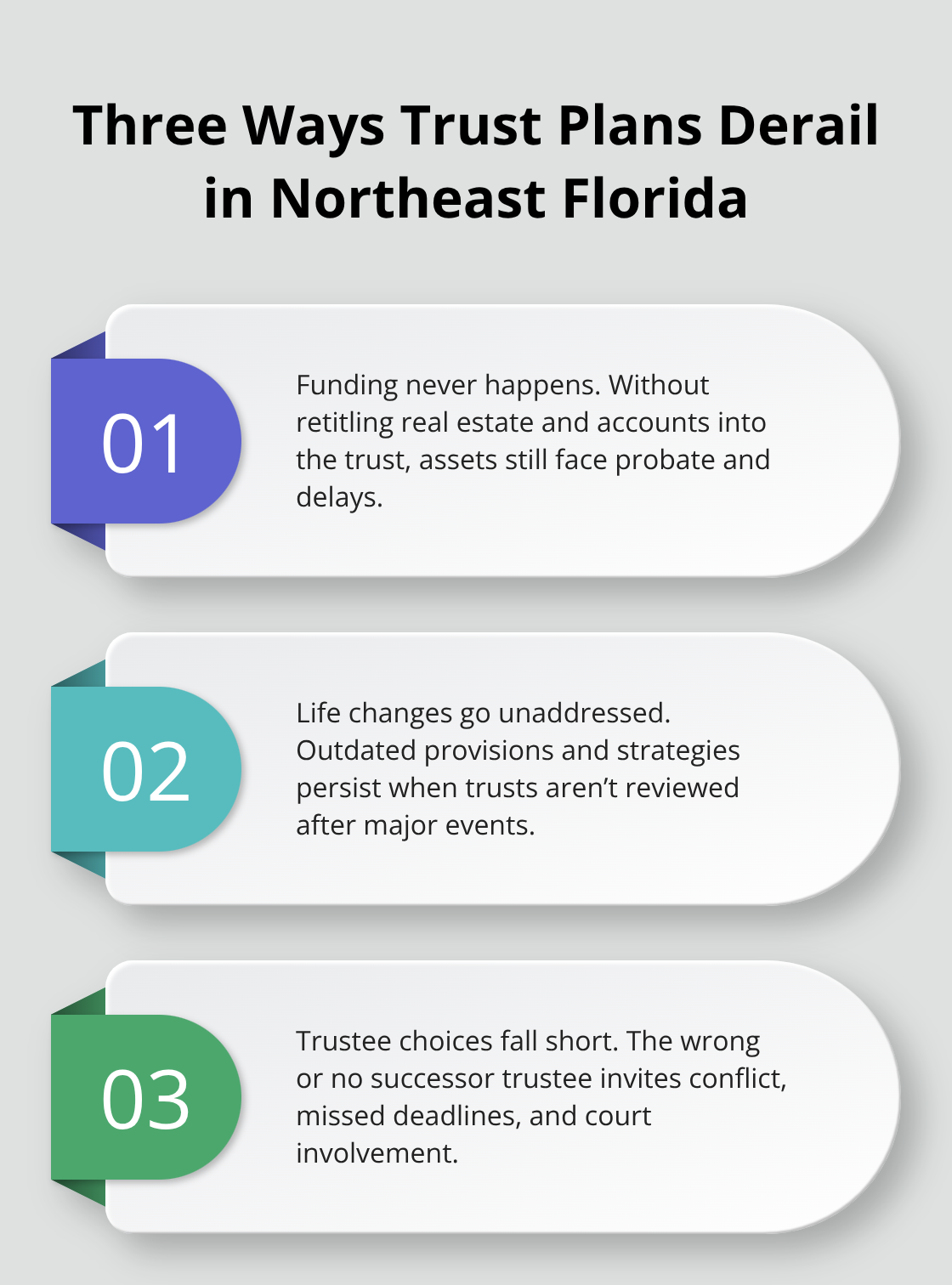
Families in Northeast Florida often spend $2,000 to $5,000 on a trust document, then fail to retitle real estate, bank accounts, or investment accounts into the trust’s name. When that happens, probate still claims those assets at death, the family pays $15,000 to $35,000 in court costs anyway, and the six to twelve month timeline nobody wanted still applies.
The Funding Problem That Defeats Your Trust
We at Family, Estate & Mediation Law see this repeatedly: the trust exists on paper, but the assets never moved into it. Florida Statute Chapter 736 requires the trust to be funded to actually work, yet retitling deeds and accounts feels tedious enough that families delay or skip it entirely. A $500,000 estate in probate costs $15,000 to $35,000; a funded trust transfers assets with minimal post-death costs and no court involvement. The difference between these two outcomes rests entirely on whether you retitle your property into the trust during your lifetime.
Life Changes That Demand Trust Updates
Life changes stack up without updates. A marriage, divorce, birth of grandchildren, significant business sale, or inheritance should trigger a trust review and possible amendments. Florida law allows trustees broad discretion under Chapter 736, but that discretion only matters if the document reflects your current situation. Trusts drafted in 2010 often contain outdated beneficiary language, obsolete tax strategies that changed after the 2027 exemption drops, or successor trustees who have since moved out of state or passed away. Data from the Northeast Florida Estate Planning Council shows families update trusts every seven to ten years if at all, when best practice calls for review every three to five years or immediately after major life events.
Selecting the Right Trustee and Naming Successors
The third failure point cuts deeper: choosing the wrong trustee or naming nobody as successor. A trustee must have fiduciary duty, sound judgment, and willingness to do detailed work. Many families appoint an adult child without discussion, creating resentment when that child later discovers the role involves tracking hundreds of transactions, filing tax returns, managing conflict between siblings, and potentially facing liability for mistakes. Florida courts respect trustee decisions under the prudent investor rule in Florida Statute Section 518.11, but a trustee who lacks financial competence or willingness to learn will distribute assets poorly, miss deadlines, or fail to provide accountings that beneficiaries have a legal right to request under Florida Statute Section 736.0813.
Corporate trustees offer stability but can feel impersonal; individual trustees offer personal touch but may lack training. Naming no successor trustee at all forces a probate court to appoint a guardian of the property or personal representative if the primary trustee dies before the trust fully distributes, undoing the probate avoidance you paid for. Select successors during the drafting conversation itself, collect contact information, and explicitly discuss expectations with whoever you name. If a family member is unwilling, say so now rather than discovering it after your death.
Balancing Family and Professional Trustee Roles
Consider whether a corporate trustee, individual trustee, or co-trustee arrangement fits your family dynamics. Many families benefit from naming a professional trustee alongside a family member to balance personal involvement with financial competence. Professional trustees typically charge one to two percent of trust assets annually, far less than the conflict and mistakes that arise from an unprepared trustee trying to handle everything alone.
Final Thoughts
A trust document sitting unsigned on your desk protects nothing. The real value emerges when you work with someone who understands Florida law, your family situation, and how to coordinate your trust with your will, beneficiary designations, and tax strategy. We at Family, Estate & Mediation Law have spent over 50 years helping Northeast Florida families build estate plans that actually function when needed, and Florida-specific rules matter more than most people realize.
The 2027 federal exemption drop from $13.61 million to roughly $7 million affects married couples differently than single individuals, and homestead protections require specific trust language to survive your death. Special needs trusts must comply with Medicaid rules that shift annually, and a trust drafted in another state or by someone unfamiliar with Florida Statute Chapter 736 often contains language that creates problems rather than solving them. Local knowledge prevents costly mistakes that your family discovers after you cannot fix them.
Circumstances change constantly, and a trust drafted five years ago may no longer reflect your wishes, your family structure, or tax law. We at Family, Estate & Mediation Law provide ongoing support as your life evolves, reviewing your plan after major events and adjusting for new rules. Contact us to discuss your specific circumstances and move from having a trust to having one that truly protects your family in St. Augustine and Palatka.