
Being named an executor in Florida comes with real responsibilities that many people underestimate. From managing assets to handling taxes and settling disputes, executor duties in a Florida estate demand careful attention to detail and knowledge of state probate laws.
At Family, Estate & Mediation Law, we’ve guided countless executors through this process. This guide walks you through what you need to know to handle your role effectively.
What Are Your Core Duties as a Florida Executor
Locate and Secure All Estate Assets
As a Florida executor, you wear multiple hats simultaneously, and the order in which you handle tasks matters significantly. Your first obligation is to locate and secure all estate assets before anything else happens. You must track down bank accounts, investment portfolios, real property, vehicles, and increasingly, digital assets like cryptocurrency or online business accounts. Many executors miss accounts entirely because they fail to request a comprehensive credit report or check for unclaimed property through the Florida Department of Financial Services. Once you identify assets, you must physically take possession and safeguard them-this is a fiduciary duty you cannot delegate away, even if you hire professionals to help. The Florida Courts’ probate division emphasizes that asset preservation is your legal responsibility from day one.
Manage Debts and Taxes in the Correct Order
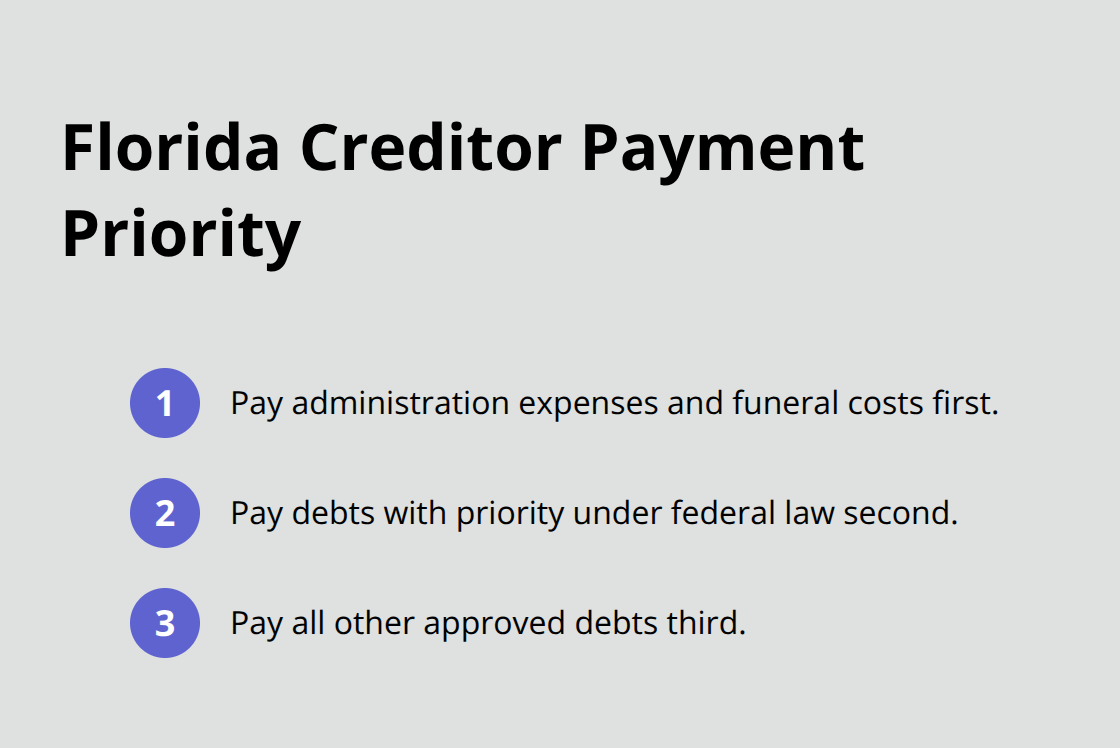
Your next critical task is managing debts and taxes before you distribute anything to beneficiaries. In Florida, creditors have a specific claims period to file against the estate, typically five months from the date you publish a legal notice. You must notify known creditors directly and publish notice for unknown creditors in a local newspaper. Approved creditor claims get paid in a strict legal order set by Florida law: first, expenses of administration and funeral costs; second, debts with priority under federal law; third, all other debts. Only after debts are resolved can you address estate and income taxes.
You must file the decedent’s final income tax return and potentially an estate tax return if the estate exceeds federal thresholds.
Distribute Assets According to the Will
Finally, you distribute remaining assets to beneficiaries according to the will or, if no will exists, under Florida’s intestacy laws. This distribution requires a detailed accounting showing everything you collected, spent, and distributed. The Clerk of the Circuit Court in Palatka requires this accounting before the estate can close. Throughout this entire process, maintaining a separate estate account is non-negotiable-mixing personal and estate funds is one of the most common mistakes executors make and exposes you to personal liability. Florida law allows reasonable executor compensation based on the estate’s size and complexity, so track your time and document your work carefully.
The specific challenges you’ll face depend heavily on your estate’s complexity and whether family members agree on how to proceed.
What Makes Florida Probate So Difficult
Navigate Strict Filing Requirements and Deadlines
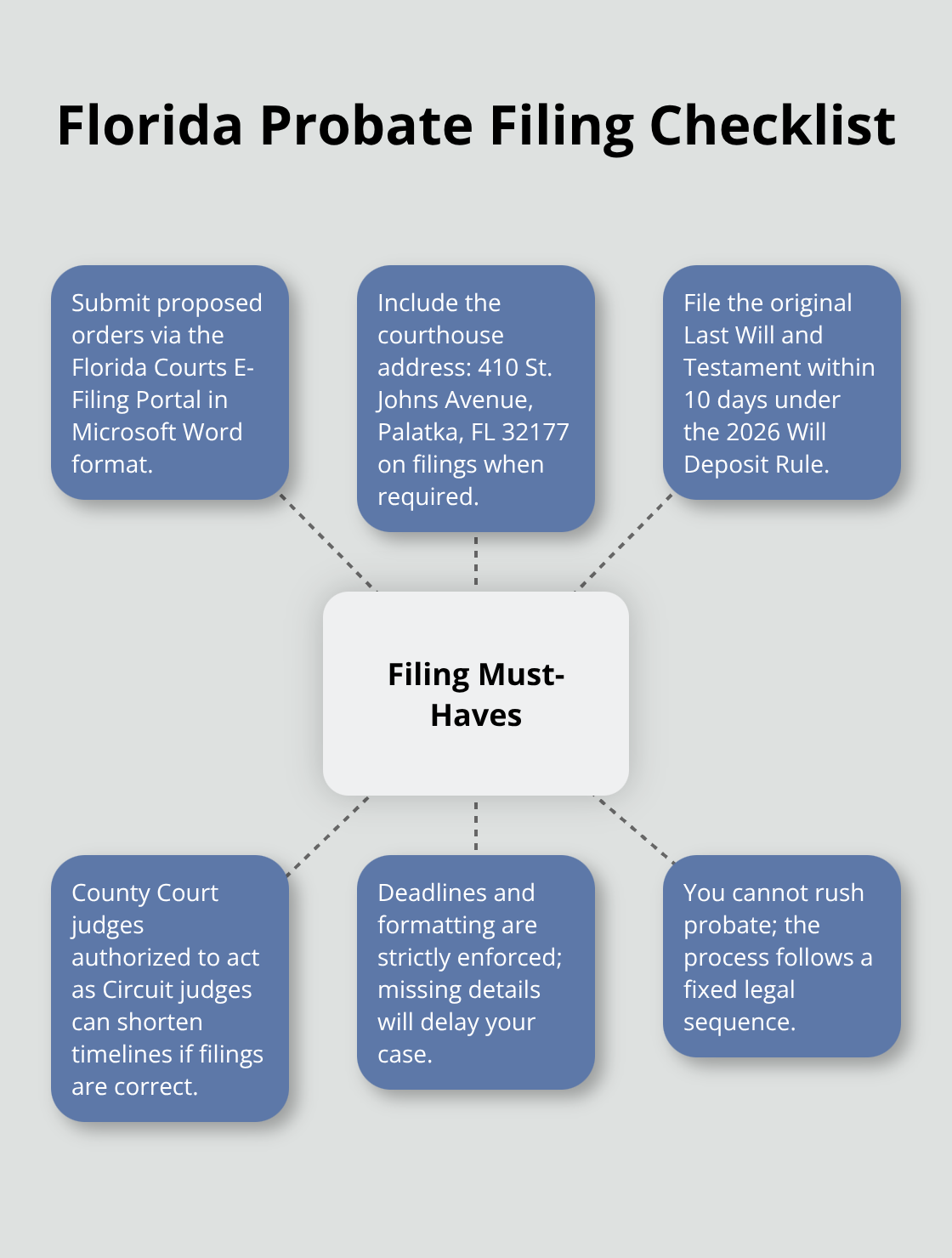
Florida probate law contains specific procedural requirements that trip up many executors, especially those unfamiliar with the state’s court system. The Clerk of the Circuit Court in Palatka enforces strict filing deadlines and formatting rules-proposed orders must be submitted through the Florida Courts E-Filing Portal in Microsoft Word format, and documents must include the courthouse address at 410 St. Johns Avenue, Palatka, FL 32177 to ensure proper recording. Missing these technical details delays your case unnecessarily. The 2026 Will Deposit Rule requires you to file the original Last Will and Testament with the Clerk within 10 days of death, and many estates get held up simply because executors overlook this step. The 7th Judicial Circuit has taken steps to accelerate probate dockets in Putnam County by authorizing County Court judges to act as Circuit judges, which theoretically shortens timelines, but only if you file your documents correctly from the start. Florida law enforces a structured sequence regardless of your urgency or family pressure-you cannot rush probate.
Manage Family Disputes That Derail Progress
Family disputes and contested claims create the real bottlenecks in Florida estate administration. When beneficiaries disagree about asset distribution, your role becomes impossibly difficult because you must remain neutral while satisfying no one. The Clerk of the Circuit Court at (386) 326-7600 can confirm that uncontested probate matters move through Zoom hearings in Putnam County, reducing travel and accelerating resolution, but contested estates lose this advantage entirely. Complex estates involving multiple properties, business interests, or out-of-state assets require additional valuations and separate administration processes that extend timelines by months. If the decedent died more than two years ago, Florida law allows Summary Administration regardless of asset value, which offers a quicker path, but only if no disputes exist.
Address Family Tension Before It Escalates
Proactive communication with beneficiaries early in the process prevents many disputes from escalating, yet most executors wait until problems emerge before addressing family tension. Disagreements rarely resolve themselves without intervention. Probate mediation helps executors and families navigate these conflicts through practical strategies that preserve relationships while protecting the estate. Handling family concerns head-on rather than hoping they disappear makes the difference between a smooth administration and a prolonged legal battle that drains both the estate and everyone’s patience.
How to Stay Organized Throughout Estate Administration
Open a Dedicated Estate Account Immediately
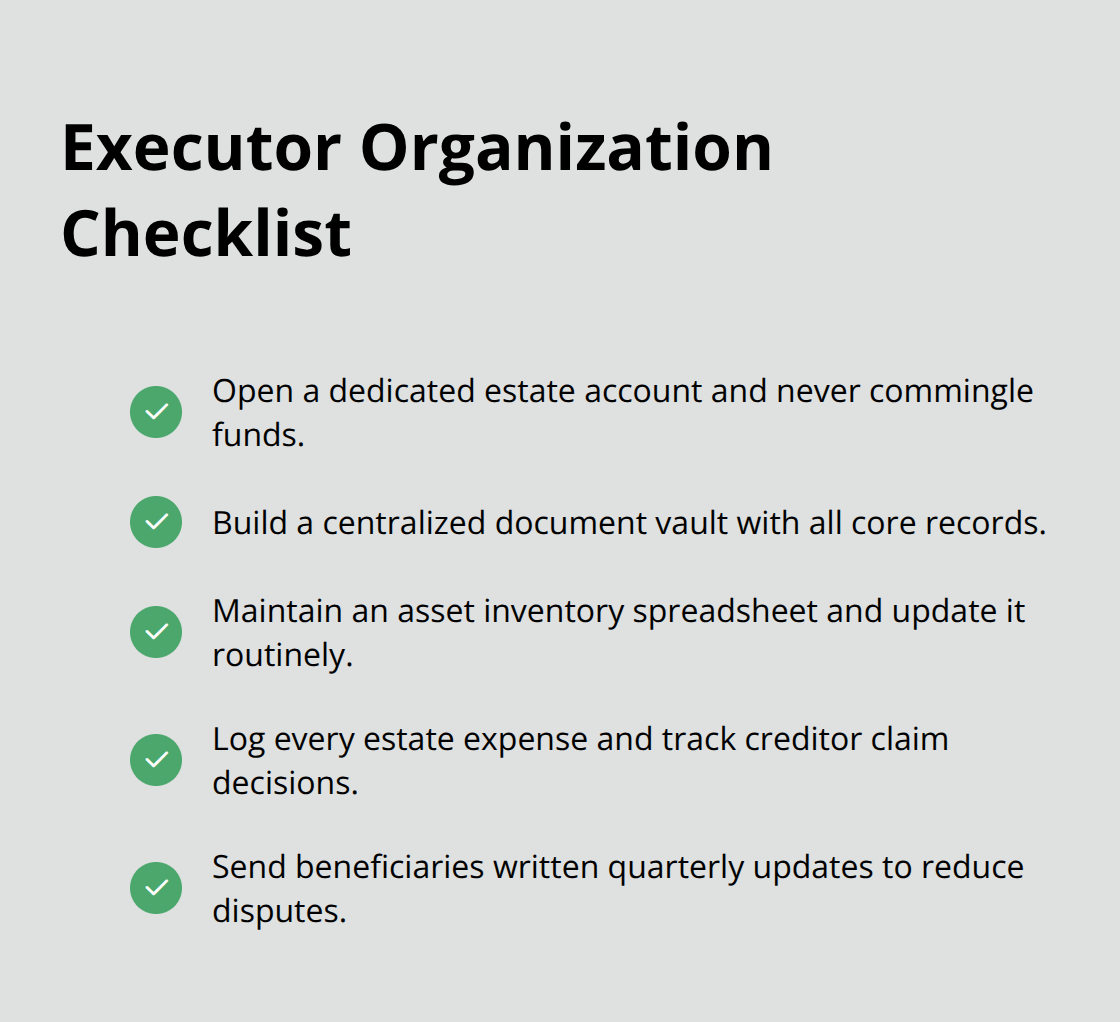
Staying organized separates executors who complete their duties smoothly from those who face costly delays and personal liability. The most critical step is opening a dedicated estate account at a local bank-never mix personal funds with estate money, as this single mistake exposes you to personal liability and makes it nearly impossible to prove you handled assets correctly when the court reviews your final accounting. Executors who fail to separate finances from day one lose time and credibility. A dedicated account creates an audit trail that protects you throughout administration and satisfies the Clerk of the Circuit Court in Palatka when you file your final accounting.
Create a Centralized Document System
Create a centralized document system immediately after accepting your role. Gather the will, death certificate, deeds, financial statements, insurance policies, and any digital asset information in one secure location. Use a simple spreadsheet to track every asset you discover, its value, the date you identified it, and its current status. Update this inventory as you locate additional accounts-many executors find new assets months into administration because they didn’t conduct thorough searches initially. The Clerk of the Circuit Court in Palatka requires a detailed inventory filed with the court, so your spreadsheet becomes your official record.
Document All Expenses and Creditor Decisions
Maintain a separate log of all expenses you pay from the estate account, including dates, amounts, and what each payment covered. When creditor claims arrive, document which ones you approve, which you reject, and the legal basis for your decision. This documentation protects you if beneficiaries later question your choices. Most uncontested probate matters in Putnam County proceed through Zoom hearings, which means you’ll need organized, legible records to present to the judge overseeing your case.
Communicate Regularly with Beneficiaries
Communication with beneficiaries prevents disputes that would otherwise destroy your timeline and reputation. Send beneficiaries written updates at least quarterly detailing what assets you’ve located, what debts and taxes you’ve paid, and your estimated distribution timeline. Many executors wait until the estate is nearly closed to contact beneficiaries, creating suspicion and resentment that erupts into disputes at the worst possible moment. Beneficiaries deserve transparency, and providing it costs nothing but your time.
Address Family Tension Before It Escalates
When family tension emerges-and it often does-address it directly rather than hoping it resolves itself. Disagreements about asset distribution, fairness, or your decisions as executor require professional intervention, not avoidance. Probate mediation offers a practical path to resolve conflicts before they escalate into contested estate litigation that extends timelines by years and depletes the estate with legal fees. A probate attorney handles the technical filing requirements through the Florida Courts E-Filing Portal, monitors deadlines, and ensures proposed orders include the correct courthouse address at 410 St. Johns Avenue, Palatka, FL 32177. An accountant or tax professional reviews your final accounting and handles estate tax returns, protecting you from errors that could trigger audits or penalties. These professionals cost less than the mistakes they prevent.
Final Thoughts
Executor duties in a Florida estate demand organization, attention to detail, and a willingness to seek help when complexity exceeds your comfort level. Your role requires you to locate assets, manage debts in the correct legal order, file required documents by strict deadlines, and distribute what remains to beneficiaries according to the will or Florida law. The technical requirements alone-filing through the E-Filing Portal, depositing the will within 10 days, including the correct courthouse address on proposed orders-trip up executors who attempt to navigate probate without guidance.
Family disputes and contested claims create real obstacles that derail even well-intentioned executors, yet staying organized through a dedicated estate account, centralized documents, and regular beneficiary communication prevents most problems before they start. When disputes do emerge, you should address them directly through mediation or professional counsel, as this costs far less than prolonged litigation. The Clerk of the Circuit Court in Palatka enforces probate rules consistently, and judges in the 7th Judicial Circuit expect compliance from day one.
You don’t need to handle this alone. At Family, Estate & Mediation Law, we help executors across Northeast Florida manage every aspect of estate administration with practical strategies tailored to your specific situation. Contact us to discuss your executor duties Florida estate needs and discover how we can support you through this process.