
When someone passes away, their will might create a testamentary trust to manage assets for loved ones who can’t handle money on their own. At Family, Estate & Mediation Law, we see families in Northeast Florida use these trusts to protect inheritances for minor children and relatives with special needs.
Understanding testamentary trust basics helps you make informed decisions about your family’s financial future. This guide walks you through how these trusts form, activate after death, and distribute assets to beneficiaries.
What a Testamentary Trust Actually Is
A testamentary trust is a legal arrangement created inside your will that only comes to life after you die. Unlike a trust you set up during your lifetime, a testamentary trust remains dormant until probate concludes and the court validates your will. The American Bar Association confirms that this type of trust becomes effective only after death, which means your designated trustee cannot begin managing assets until the probate process finishes and they receive a letter testamentary from the court. This document grants the trustee legal authority to act on behalf of your estate. You control everything while you’re alive-you can change the trust terms, modify beneficiaries, or remove it entirely as long as you remain mentally competent. Once you pass away, the trust becomes irrevocable, meaning the terms are locked in and cannot be altered. The trustee then manages assets according to your exact instructions, distributing them only when conditions you’ve set are met, such as when a child reaches age 25 or completes college.
Why Testamentary Trusts Cost Less Upfront
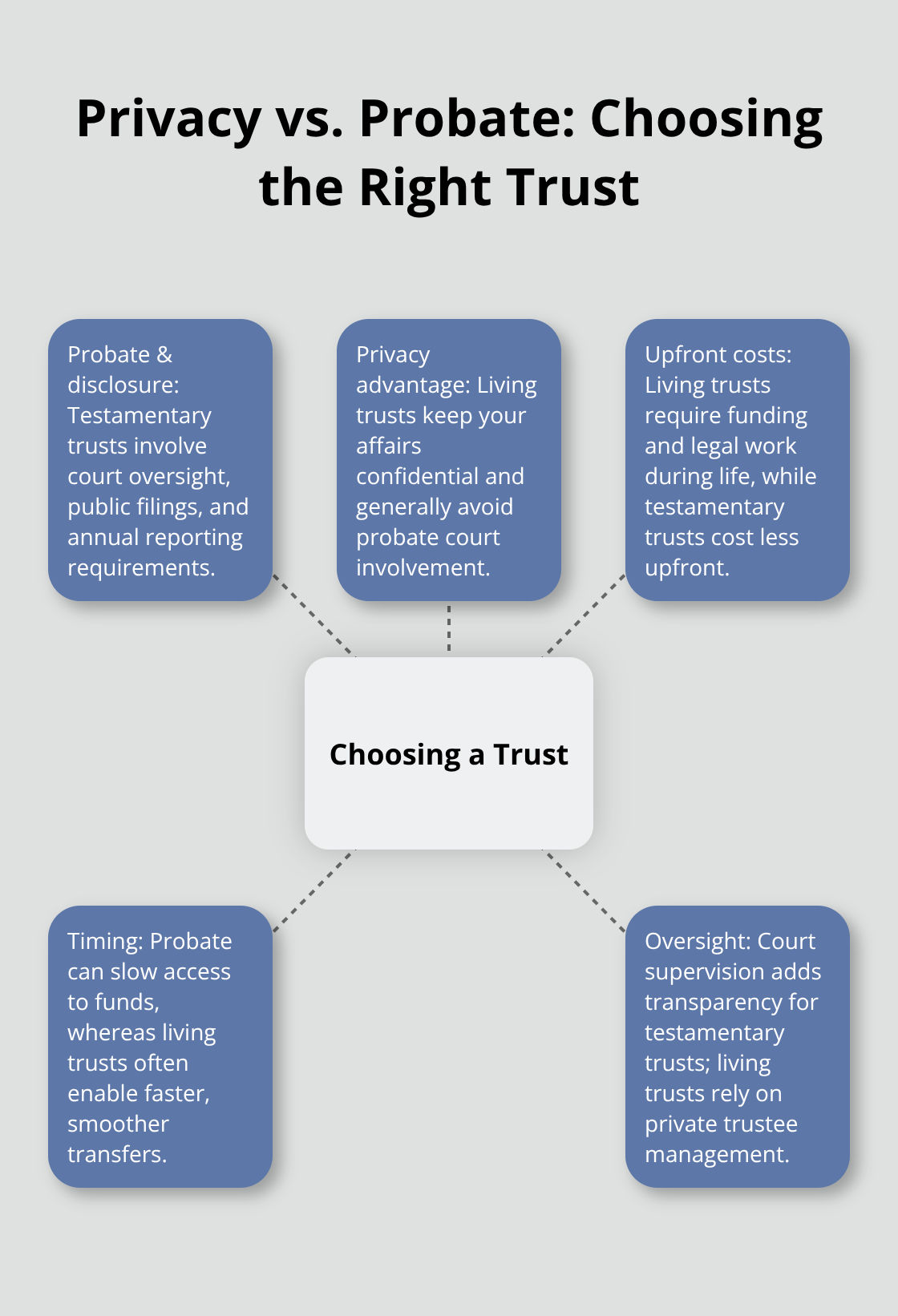
Testamentary trusts require significantly less money at the start because expenses come from the estate itself after death, not from your pocket during life. A revocable living trust demands immediate funding-you must transfer property titles, bank accounts, and other assets into the trust while you’re alive, which involves legal fees and administrative work from day one. Testamentary trusts avoid this burden entirely. For families with modest estates under $500,000, this cost advantage makes testamentary trusts an attractive option.
The Privacy and Probate Tradeoff
Testamentary trusts require probate, which means court involvement, public disclosure of your assets and beneficiaries, and annual trustee reports to the court. If privacy matters to your family or you want to sidestep probate delays, a living trust becomes more attractive despite higher setup costs. Revocable living trusts demand upfront work and money but keep your affairs confidential and bypass probate entirely. The tradeoff is real: testamentary trusts offer simplicity and lower initial expenses but surrender privacy and invite court oversight.
Which Trust Type Fits Your Situation
For larger, more complex estates where privacy and speed matter, living trusts typically outweigh the extra cost. For families with minor children and modest estates (under $500,000), testamentary trusts often make practical sense. The choice between these two structures shapes how your assets move to your heirs and how quickly they can access them. Understanding these differences helps you determine which approach aligns with your family’s needs and your estate’s complexity.
What Happens to Your Testamentary Trust After You Die
Probate Activates Your Trust and Grants Authority
Probate activates your testamentary trust, and this process determines everything that follows. When you pass away, your will enters probate court, where a judge validates it and confirms your trustee’s authority through a letter testamentary. This letter gives the trustee legal permission to access your estate and begin managing trust assets. The probate timeline varies significantly by state and estate complexity, but Florida probate typically takes 6 to 12 months for straightforward estates, though contested cases or complex asset structures can stretch this to 2 to 3 years. During this waiting period, your trustee cannot distribute a single dollar to beneficiaries.
The Trustee’s Initial Responsibilities
Your trustee’s first responsibility is understanding the exact terms you’ve written into the will, because those instructions are binding. The trustee must inventory all assets, pay outstanding debts and taxes from the estate, and only then fund the trust with remaining property. This means if your will designates $100,000 for your minor child’s testamentary trust but your estate owes $40,000 in taxes and funeral costs, the trust receives $60,000 instead. Trustees must act in beneficiaries’ best interests, which means investing conservatively rather than aggressively and keeping detailed records for annual court reports. If your trustee declines the role or becomes unable to serve, the court appoints a replacement, though this delay costs time and potentially money from estate assets.
How Distribution Conditions Work
Distribution follows the conditions you’ve set, not the beneficiary’s wishes or the trustee’s preferences. If your will specifies that your 15-year-old receives distributions at age 25, the trustee holds and manages the money until that birthday arrives, regardless of whether the child needs it sooner for medical emergencies or education. Spendthrift provisions protect assets from creditors by preventing beneficiaries from pledging their inheritance as collateral or allowing creditors to seize trust funds. These protections remain in place throughout the trust’s life, shielding your heirs from their own financial mistakes or legal judgments.
Understanding Trustee Fees and Court Costs
Trustee fees typically range from 0.5% to 2% annually depending on the trust’s complexity and whether you’ve chosen a family member (often unpaid) or a professional trustee like a bank. Court-supervised trusts also incur annual filing fees ranging from $300 to $1,000 depending on your county, plus potential accounting and legal fees if disputes arise.
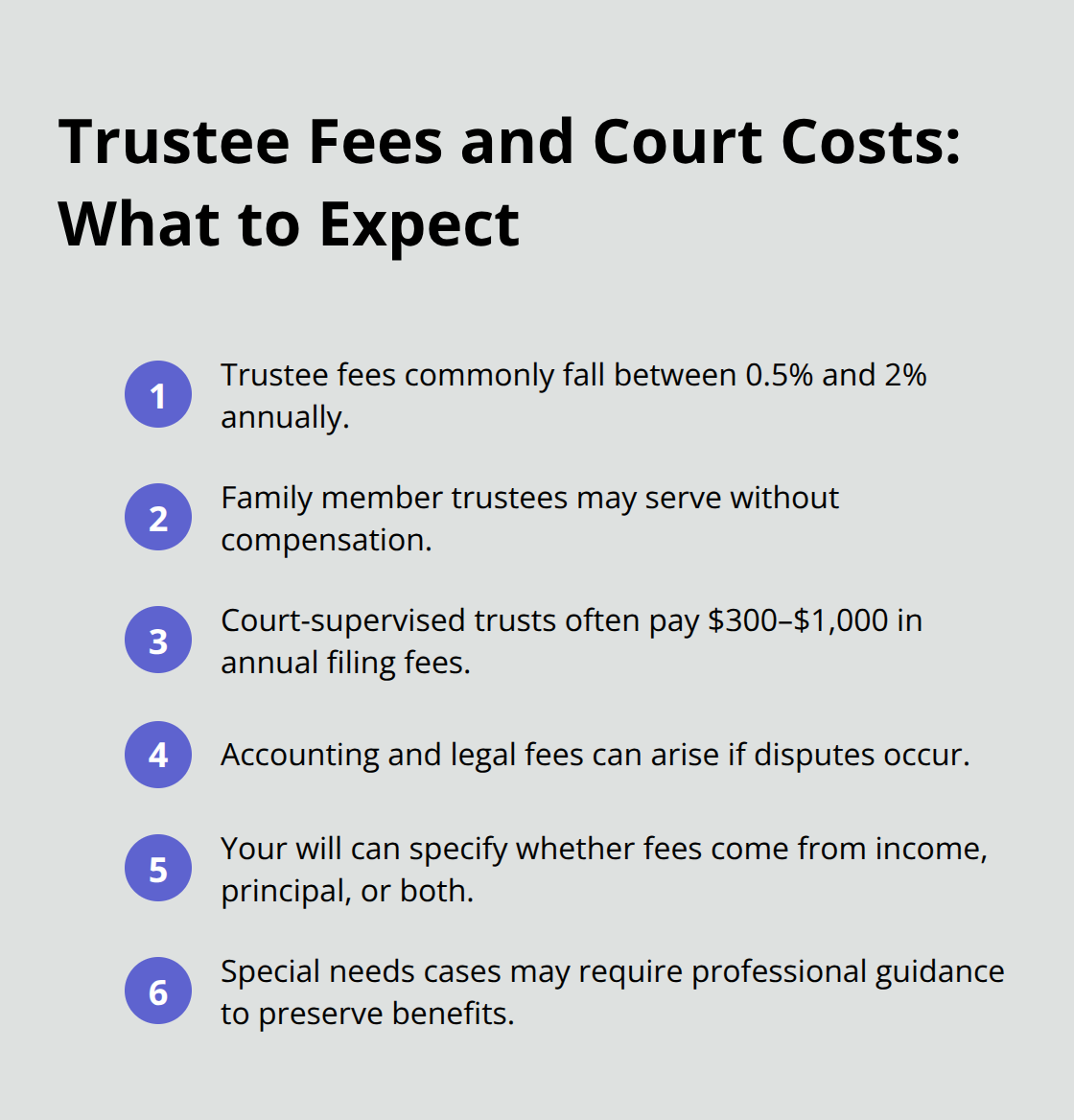
Clarifying in your will whether the trust pays trustee fees from income first or equally across principal and income affects how much beneficiaries actually receive. Special needs beneficiaries require stricter oversight since distributions must preserve eligibility for Medicaid or Supplemental Security Income, making professional trustee guidance essential to avoid disqualifying the beneficiary from means-tested benefits.
Special Considerations for Vulnerable Beneficiaries
Special needs trusts demand careful attention to state and federal benefit rules. A trustee who makes the wrong distribution decision can inadvertently eliminate a beneficiary’s access to critical government assistance, creating financial hardship that no amount of trust assets can repair. Professional trustees understand these nuances and know how to structure distributions that supplement-rather than replace-government benefits. This specialized knowledge becomes invaluable when your beneficiary depends on Medicaid for healthcare or SSI for basic living expenses. The trustee’s role shifts from simple money manager to strategic protector of your beneficiary’s long-term security and independence.
Why Families Choose Testamentary Trusts for Real Protection
Protecting Assets Until Your Child Matures
Testamentary trusts solve specific problems that generic inheritance cannot address. When you leave money directly to a minor child, that child gains legal control at age 18 in Florida, which means they can spend your carefully accumulated assets on a car, travel, or poor financial decisions before they develop judgment. A testamentary trust prevents this by keeping assets under a trustee’s management until you decide they’re ready-typically age 25 or 30, when spending habits have matured. Families use testamentary trusts to delay distributions until children complete college, establish careers, or demonstrate financial responsibility. The trustee makes discretionary distributions for education, healthcare, or living expenses while holding the principal intact, allowing assets to grow over time.
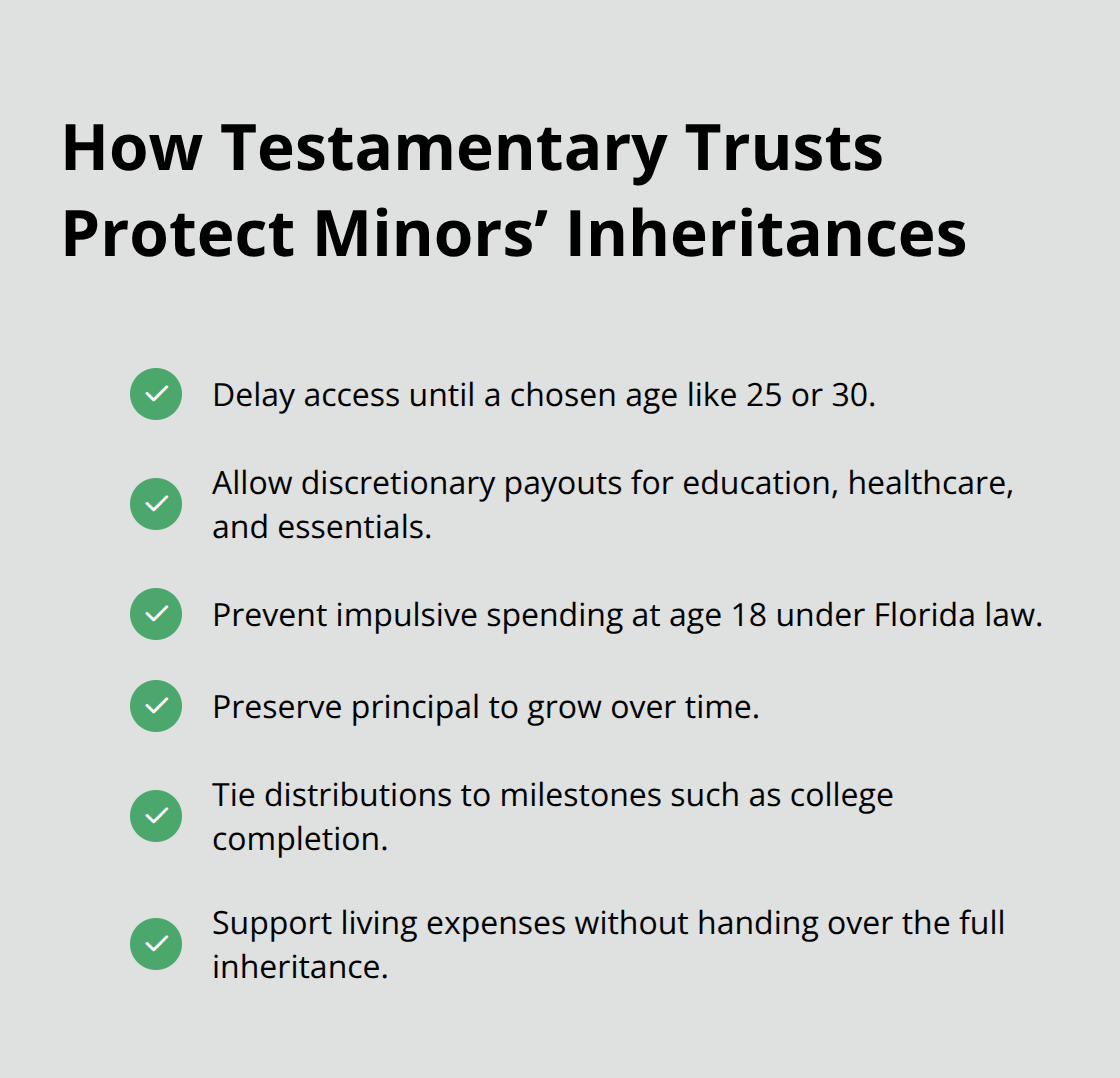
If you name a child as beneficiary at age 10 and set distribution at age 28, the trust principal compounds for 18 years, potentially doubling or tripling in value depending on market conditions and investment strategy. This built-in delay creates wealth rather than depleting it through early access.
Managing Special Needs Beneficiaries With Precision
Special needs beneficiaries require even more careful planning because a single careless distribution eliminates their Medicaid or Supplemental Security Income eligibility, costing them tens of thousands in lost healthcare coverage annually. Testamentary trusts designed as special needs trusts allow the trustee to make supplemental distributions for items Medicaid doesn’t cover-dental work, therapy equipment, recreation-without triggering benefit loss. The trustee acts as a financial guardian, understanding that their role is to enhance the beneficiary’s quality of life while preserving government assistance, not to replace it with direct payments. Professional trustees familiar with special needs law know which distributions are safe and which create disqualifying events. Families with special needs children often combine life insurance proceeds with the testamentary trust to fund it adequately, ensuring the trustee has sufficient resources without depleting the main estate. This strategy protects the special needs child’s independence and security across their entire lifespan, not just during your lifetime.
Final Thoughts
Testamentary trust basics come down to control and protection. They let you decide how your assets reach your heirs after you pass away, and they cost far less upfront than living trusts. If you have minor children, relatives with special needs, or concerns about whether your heirs can manage money responsibly, a testamentary trust transforms your will into a protective framework that works for decades.
A testamentary trust makes sense for your family if you’re building an estate under $500,000, you want to delay distributions until children mature, or you need to protect a beneficiary’s government benefits. The probate process that activates your trust also provides court oversight, which adds transparency and accountability to how your trustee manages assets. Pair your testamentary trust with clear instructions about trustee responsibilities, specific distribution conditions, and adequate funding mechanisms like life insurance to maximize its effectiveness.
We at Family, Estate & Mediation Law help Northeast Florida families structure testamentary trusts that align with their values and protect their legacies. Contact us to discuss whether a testamentary trust fits your family’s situation and to begin building your estate plan with confidence.