A trust is one of the most powerful tools for protecting your family’s assets and controlling how they’re distributed. Yet many people create trusts without understanding the fundamentals, leading to costly mistakes down the road.
We at Family, Estate & Mediation Law help families get trust creation basics right from the start. This guide walks you through what you need to know to build a solid foundation.
What Makes a Trust Work
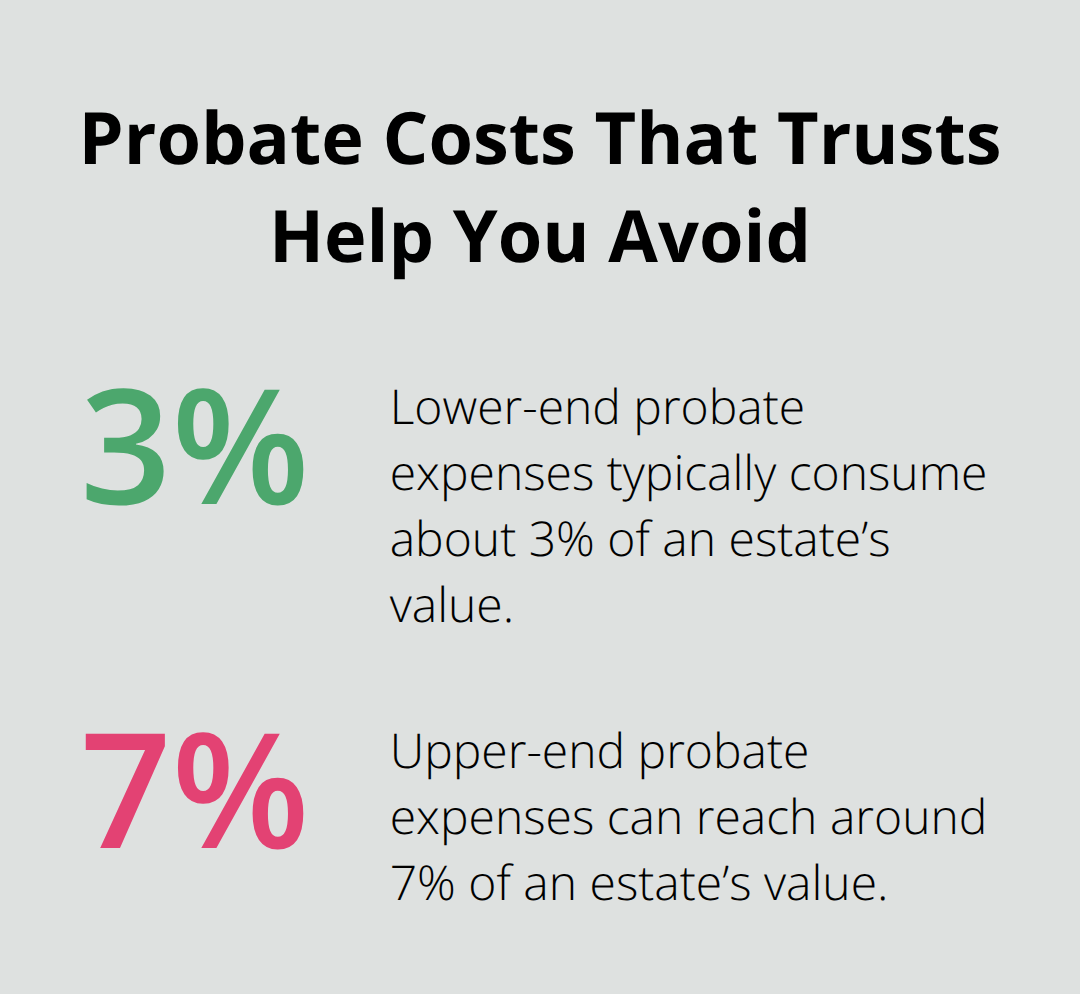
A trust is fundamentally a legal arrangement where you transfer ownership of your assets to a trustee, who then manages and distributes them according to your written instructions. The trustee holds legal title to the property, but they’re bound by law to act in the beneficiaries’ interests. This separation between ownership and control gives trusts their power. When you create a trust, you restructure how your assets are managed and passed along rather than losing them. The National Council on Aging reports that revocable living trusts help families avoid probate, which can take anywhere from six months to several years depending on your state and the complexity of your estate. That delay matters because your family cannot access funds while the court process drags on, and probate costs typically consume 3 to 7 percent of your estate’s value. A trust bypasses this entirely, meaning your beneficiaries receive assets faster and more of your wealth stays in the family.
Revocable Trusts Give You Control While You’re Alive
A revocable trust allows you to change, modify, or even dissolve the arrangement whenever you want. You can move assets in and out, adjust beneficiaries, or swap trustees without any legal restrictions. This flexibility makes revocable trusts the right choice for most Florida families because life circumstances shift-marriages end, children are born, financial priorities change. You maintain complete control during your lifetime, and the trust only becomes irrevocable upon your death. The downside is minimal: revocable trusts offer no asset protection from creditors while you’re alive, and they don’t reduce income taxes. An irrevocable trust, by contrast, locks everything in permanently. Once assets transfer into an irrevocable trust, you cannot get them back, and you lose decision-making power over distributions. This sounds restrictive, but irrevocable trusts provide real benefits-they shield assets from creditors, can reduce estate taxes for larger estates, and protect government benefit eligibility for beneficiaries with special needs. The trade-off is loss of control, so irrevocable trusts only make sense when those protections outweigh your need for flexibility.
Florida Families Often Use Living Trusts as Their Primary Tool
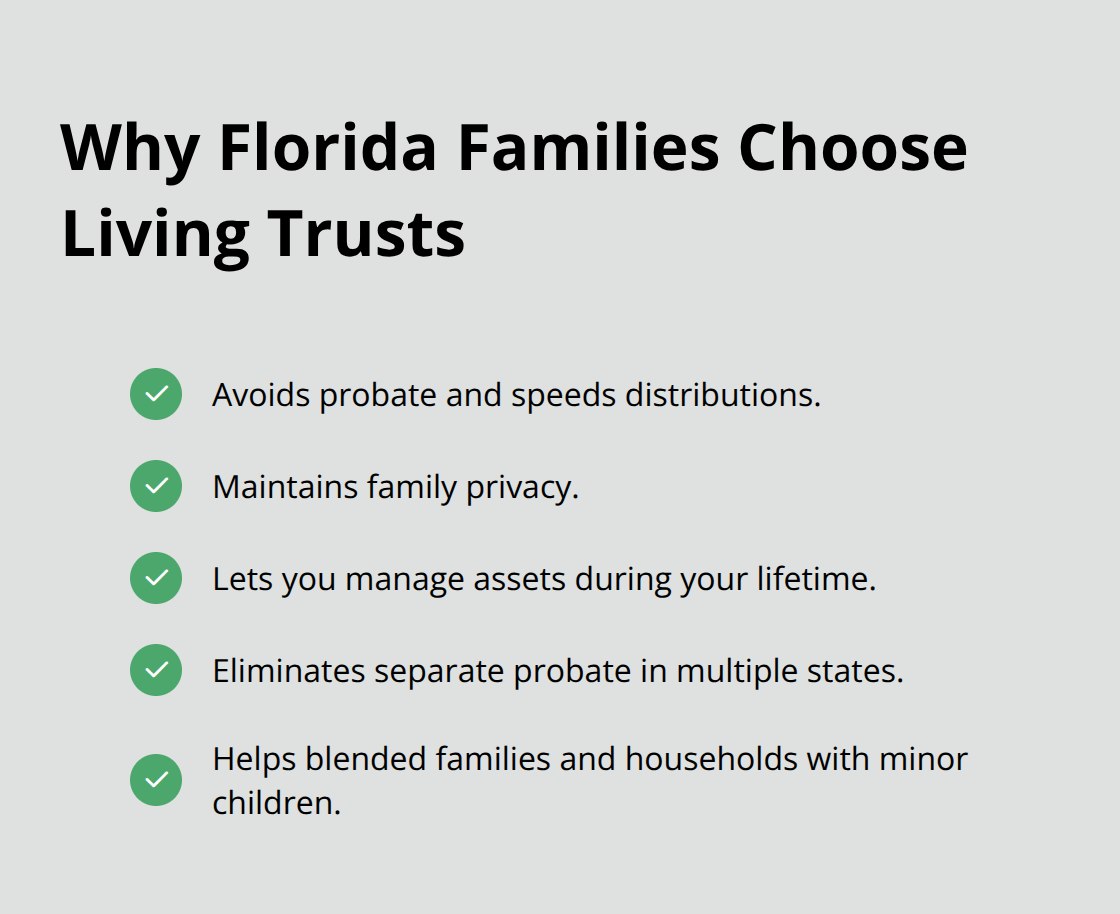
Most Florida residents benefit most from a revocable living trust because it avoids probate, maintains privacy, and lets you manage assets during your lifetime before transferring them at death. A living trust created during your lifetime (as opposed to a testamentary trust created through your will after death) takes effect immediately, meaning you can practice how distributions work and adjust terms if needed. The ACTEC reports that living trusts are especially valuable for blended families, situations involving minor children, or when you own property in multiple states. If you own real estate in Florida and Georgia, for example, a living trust eliminates the need for probate in both states-a massive advantage because probate in each state means separate court filings, separate fees, and separate delays.
Legal Requirements and Costs for Florida Trusts
Florida law requires that trusts be in writing, signed by you, and typically witnessed and notarized to withstand legal challenges. For families with larger estates or complex assets like business interests, multiple properties, or significant investments, the upfront cost of working with an attorney to establish a proper trust structure-typically $1,500 to $3,000 according to national averages-pays for itself many times over. These costs avoid probate expenses and potential tax complications that arise without proper planning. The specific structure you need depends on your assets, family situation, and long-term goals, which brings us to the key elements that make a trust legally valid and effective for your circumstances.
Key Elements Required to Create a Valid Trust
The Trustee: Your Most Important Decision
A valid trust rests on three critical pillars: the right trustee, clearly identified assets, and documented intent that satisfies Florida law. Get any of these wrong, and your trust collapses when it matters most. The trustee is the person or institution who manages your assets after you transfer them into the trust. This role demands reliability, financial competence, and a genuine commitment to your beneficiaries’ welfare.
Many Florida families name a family member solely out of loyalty without assessing whether that person can actually handle investment decisions, tax reporting, and distribution calculations. The National Council on Aging found that trustee selection is the single biggest decision in trust creation because the wrong choice leads to mismanagement, family conflict, and legal liability. You need someone who understands fiduciary duties, stays organized, and won’t play favorites among beneficiaries.
If no family member fits this description, you have options. Name a close family friend with financial discipline, hire a corporate trustee like a bank trust department for larger estates, or use a hybrid approach with a family member and a professional co-trustee sharing responsibility. The key is honest assessment of who can actually do the job, not who you wish could do it.
Identifying Assets with Precision and Clarity
Your trust must spell out exactly which assets transfer into it and identify beneficiaries with precision. Vague language like leaving assets to your children creates disputes because it doesn’t clarify whether distributions happen immediately, gradually, or only when children reach certain ages. Florida law requires that you describe the trust property clearly enough that a court could enforce it if challenged.
This means listing bank account numbers, property addresses, investment accounts, and life insurance policies by policy number. Many families draft beautiful trust documents but fail to actually fund them by retitling assets into the trust name-a mistake that defeats the entire purpose and leaves assets subject to probate anyway. You must contact your banks to retitle accounts, work with a real estate attorney to transfer deeds into the trust, update beneficiary designations on life insurance and retirement accounts, and coordinate with your investment broker on stocks and bonds. Without this funding step, your trust sits empty and useless.
Meeting Florida’s Legal Requirements
Florida law requires that you clearly express your intent to create a trust, sign the document, and typically have it witnessed and notarized. The writing requirement protects against fraud, and witnessing strengthens the document if someone later challenges its validity. These formalities matter because they create a clear record of your wishes and prevent disputes about whether you actually intended to create a trust.
An attorney in Northeast Florida can guide you through the specific requirements for your situation and ensure your trust meets all state standards. With over 50 years of combined experience, Family, Estate & Mediation Law helps families across Northeast Florida structure trusts that capture their actual wishes in language that survives scrutiny. Once you have the right trustee in place, assets properly identified, and legal requirements satisfied, you’re ready to address the mistakes that commonly undermine even well-intentioned trust plans.
Common Mistakes to Avoid When Creating a Trust
Failing to Fund Your Trust Properly
The biggest mistake we see at Family, Estate & Mediation Law isn’t drafting a poor trust document-it’s creating a beautiful trust that sits empty because assets were never transferred into it. You can have the most carefully written trust in Florida, but if your bank accounts, real estate, and investment accounts still carry your individual name instead of the trust’s name, probate will claim those assets anyway. This happens constantly because families assume that signing a trust document automatically transfers ownership. It doesn’t.
Funding a trust requires deliberate action: retitle your deed at the county recorder’s office, call your bank to change account ownership to the trust name, update beneficiary designations on life insurance and retirement accounts, and coordinate with your investment broker on stocks and bonds. Each asset type has different procedures, and missing even one significant asset undermines the entire plan. A Florida family with a $500,000 home, $200,000 in investments, and $100,000 in life insurance who fails to fund properly will watch those assets enter probate, costing 3 to 7 percent of the estate’s value in court fees and delays while beneficiaries wait months or years for access.

The solution is straightforward: create a detailed funding checklist with your attorney that identifies every asset, specifies the exact retitling process for each account type, and assigns responsibility for completing each step before the trust becomes active. Ask your attorney directly whether funding has been completed and verify completion in writing.
Naming Inappropriate Trustees or Beneficiaries
Trustee selection and beneficiary naming demand equal scrutiny because poor choices create conflict that can last decades. Naming a family member as trustee out of obligation rather than capability leads to mismanagement, resentment among other beneficiaries, and potential liability if the trustee fails to meet fiduciary duties. The National Council on Aging identifies trustee selection as the single biggest decision in trust creation, yet many families skip honest assessment of whether their chosen trustee can actually handle investment decisions, tax reporting, and fair distribution calculations.
A corporate trustee like a bank trust department brings professional discipline and removes family dynamics from financial decisions, though it costs more upfront. A hybrid approach-pairing a trusted family member with a professional co-trustee-splits responsibilities and provides checks on decision-making. Equally important is naming successor trustees in writing so the trust doesn’t collapse if your first choice becomes unable or unwilling to serve.
On the beneficiary side, vague language creates disputes. Stating you leave assets to your children without specifying whether distributions happen at age 25, age 35, or gradually over time invites conflict and leaves your children vulnerable if they lack financial discipline. Florida law requires precise identification of beneficiaries and clear distribution instructions, so work with your attorney to spell out exactly when and how each beneficiary receives funds.
Neglecting to Update Your Trust After Major Life Changes
Life changes demand trust updates every three to five years. A marriage, divorce, birth of a grandchild, significant inheritance, or major financial shift can render your trust outdated or misaligned with current tax law. Many families create a trust and never revisit it, leaving outdated trustee choices, beneficiary designations that no longer reflect their wishes, and asset lists that don’t match current holdings.
Schedule regular reviews with your attorney to keep your trust current with your life and the law. These periodic assessments catch problems before they harm your family and ensure your trust still accomplishes what you intended when you first created it.
Final Thoughts
A solid trust foundation protects your legacy by transferring your assets to your family efficiently, privately, and according to your actual wishes. When you master trust creation basics from the start-selecting the right trustee, identifying assets with precision, and meeting Florida’s legal requirements-you eliminate the probate delays and court costs that drain estates and frustrate families. The difference between a well-designed trust and a poorly constructed one often comes down to the quality of planning and attention paid to funding.
If you lack a trust, start the process now rather than waiting for a crisis to force your hand. If you created a trust years ago, schedule a review to confirm it still reflects your current circumstances, family situation, and financial priorities (marriages, divorces, births, inheritances, and shifts in tax law all demand that you revisit your trust every three to five years). Many families discover outdated trustee choices, beneficiary designations that no longer match their wishes, or assets that were never properly funded into the trust.
We at Family, Estate & Mediation Law help families across Northeast Florida structure trusts that capture their intentions in language that survives legal scrutiny. Contact us at our St. Augustine or Palatka offices to discuss your trust needs and take the next step toward a secure legacy.