Most people put off estate planning because they think it’s only for the wealthy or elderly. The truth is that understanding estate planning protects your family regardless of your age or net worth.
At Family, Estate & Mediation Law, we’ve seen firsthand how the right plan prevents financial chaos, reduces taxes, and gives families peace of mind. This roadmap walks you through what matters most.
Why Estate Planning Protects Your Family
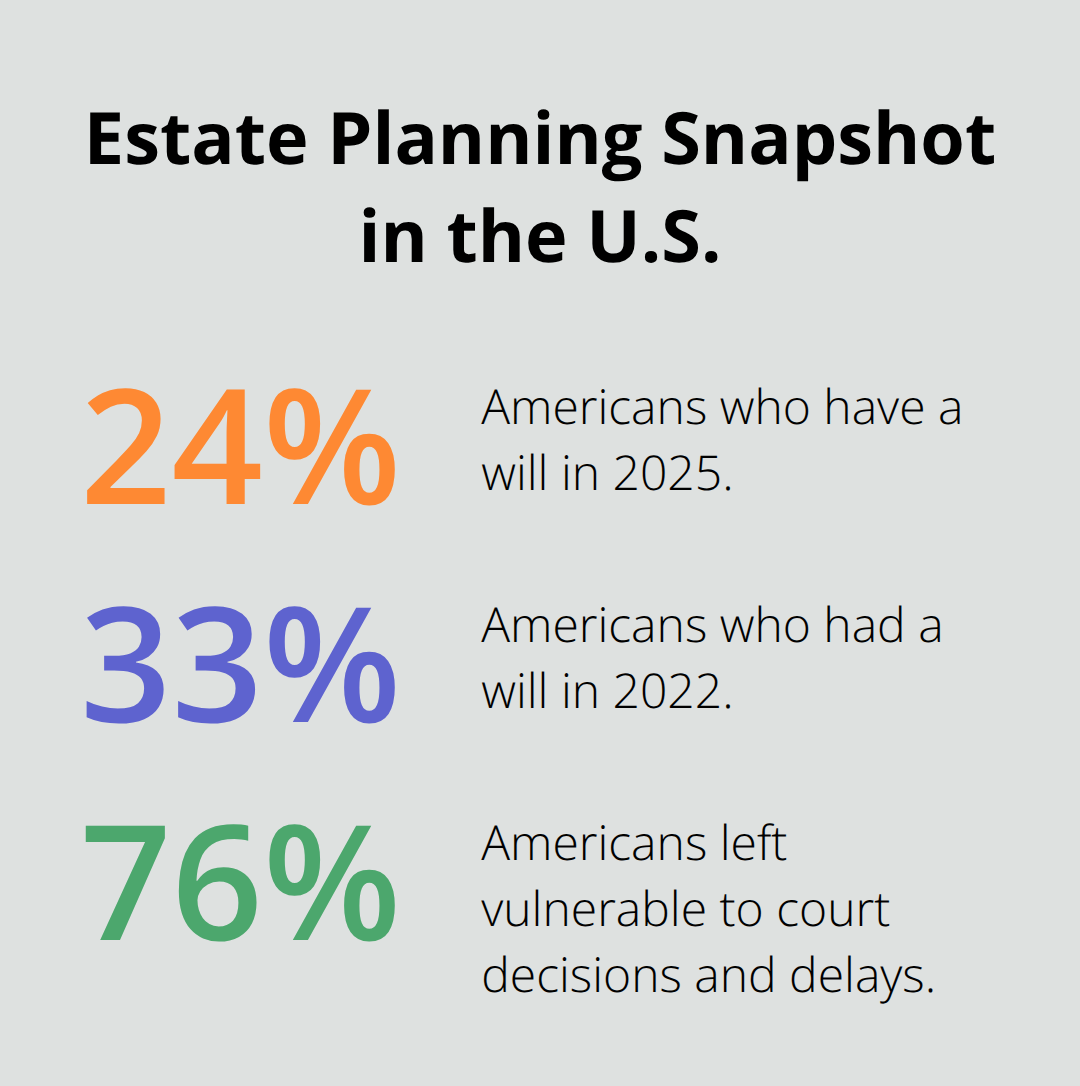
Without an estate plan, your family faces real financial consequences. According to the Caring.com 2025 Wills Study, only 24% of Americans have a will, down from 33% in 2022. The remaining 76% leave their families vulnerable to court decisions, delays, and unnecessary costs. If you die without a plan, state law determines who inherits your assets and who raises your children-not your wishes.
Probate, the legal process that settles your estate, can take months or years and cost thousands in attorney fees and court expenses. Your family spends that time grieving while waiting for access to bank accounts, homes, and other assets they may desperately need. A solid estate plan bypasses these delays by clearly stating who gets what and who manages it all.
Your assets go where you decide, not where the state decides
The most common reason people avoid planning is procrastination. The Caring.com study found that 43% of respondents without a will said they simply hadn’t gotten around to it. Another 56% believed they didn’t have enough assets to justify planning-a dangerous misconception. Your estate plan isn’t just about wealth; it’s about control. You decide if your teenage daughter inherits a lump sum at 18 or receives monthly payments at 25. You choose whether assets go to your spouse, your children, or a trusted family member. You specify that a struggling adult child receives ongoing support rather than a single payment they might squander. Without these instructions, courts appoint a guardian to manage assets for minor children, and your heirs may fight over what you would have wanted. A will or trust transforms vague intentions into binding legal documents.
Probate costs money your family doesn’t need to spend
Probate fees typically run 3% to 7% of your estate’s value, depending on your state and the complexity of your assets. For a $500,000 estate, that’s $15,000 to $35,000 paid to the court and attorneys while your family waits. Trusts and other planning tools sidestep probate entirely, keeping those dollars in your family’s hands. Life events drive planning urgency: the Caring.com study showed that 30% of people updated their plans after inheriting money, receiving a raise, or buying property. Medical diagnoses motivated 37% of respondents to finally take action. Your family’s financial stability shouldn’t depend on a health scare or inheritance to get organized. The components of a solid estate plan-wills, trusts, powers of attorney, and healthcare directives-work together to protect what matters most.
Building the Foundation of Your Estate Plan
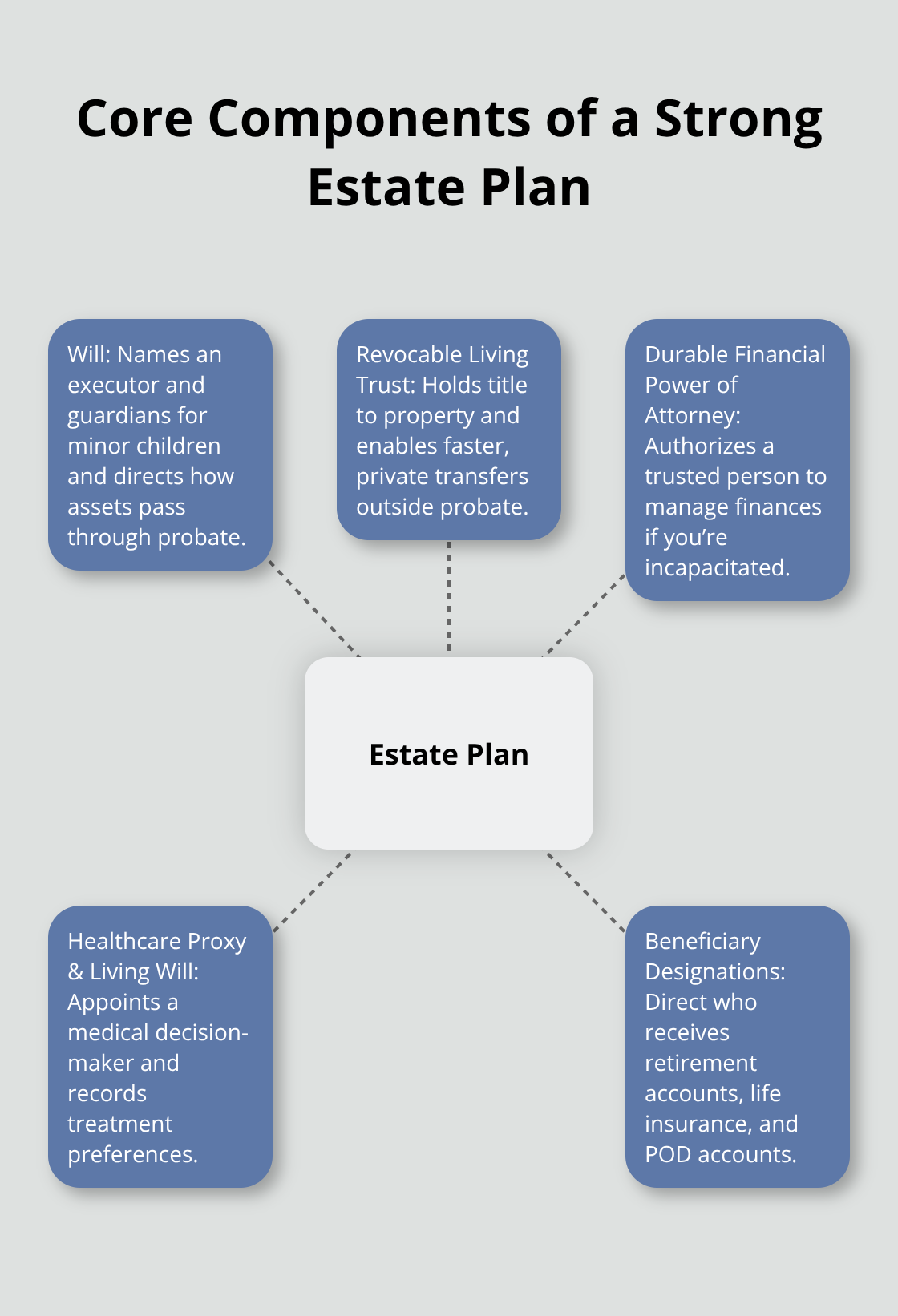
A will alone leaves your family vulnerable. The Caring.com 2025 Wills Study found that only 13% of Americans have a living trust, yet trusts are the most effective tool for controlling how and when beneficiaries receive assets. Pairing a will with a revocable living trust makes sense if you own real estate, have minor children, or want to avoid probate entirely. A will names your executor and guardians for minor children, but a trust actually holds title to your property and transfers assets outside of probate. The difference matters: probate can take 6 to 12 months or longer, while trust distributions happen in weeks. If you own property in multiple states, a trust becomes essential because probate would otherwise occur in each state where you own real estate.
List your assets and decide what goes into the trust
Start by listing all your assets: bank accounts, retirement accounts, real estate, vehicles, and investments. Then decide which assets belong in the trust. Retirement accounts and life insurance typically pass through beneficiary designations rather than the trust, so you must align those designations with your overall plan. Many people create documents without checking whether account titles and beneficiary designations actually match their wishes, creating costly conflicts when they die.
Powers of attorney prevent financial and medical paralysis
A durable financial power of attorney lets someone manage your money and conduct business if you become incapacitated. Without one, your family cannot access your bank accounts, pay bills, or sell property without court intervention. A healthcare proxy and living will are equally critical: they appoint someone to make medical decisions and specify your preferences for life-sustaining treatment. The Caring.com study found that 37% of respondents who finally started planning cited a medical diagnosis as the trigger. Do not wait for a health crisis. Specify exactly who makes decisions, what authority they have, and under what circumstances these documents take effect.
Digital assets require a designated manager
Digital assets demand the same attention as physical property. Create a list of passwords, online accounts, cryptocurrency wallets, and social media profiles, then designate a digital fiduciary to manage or close them. Many families discover after death that they cannot access email, financial accounts, or cloud storage because no one knows the passwords.
Align beneficiary designations with your estate plan
Your beneficiary designations on retirement accounts, life insurance, and payable-on-death bank accounts override what your will says, so review them immediately. If your plan names your spouse as executor but your life insurance names your ex-spouse as beneficiary, your current family loses tens of thousands of dollars. Align every account title, every beneficiary form, and every power of attorney with your actual wishes and your estate plan’s overall strategy. Once these foundational pieces are in place, the next step involves identifying the specific people and roles that will carry out your plan.
Common Estate Planning Mistakes That Cost Families Thousands
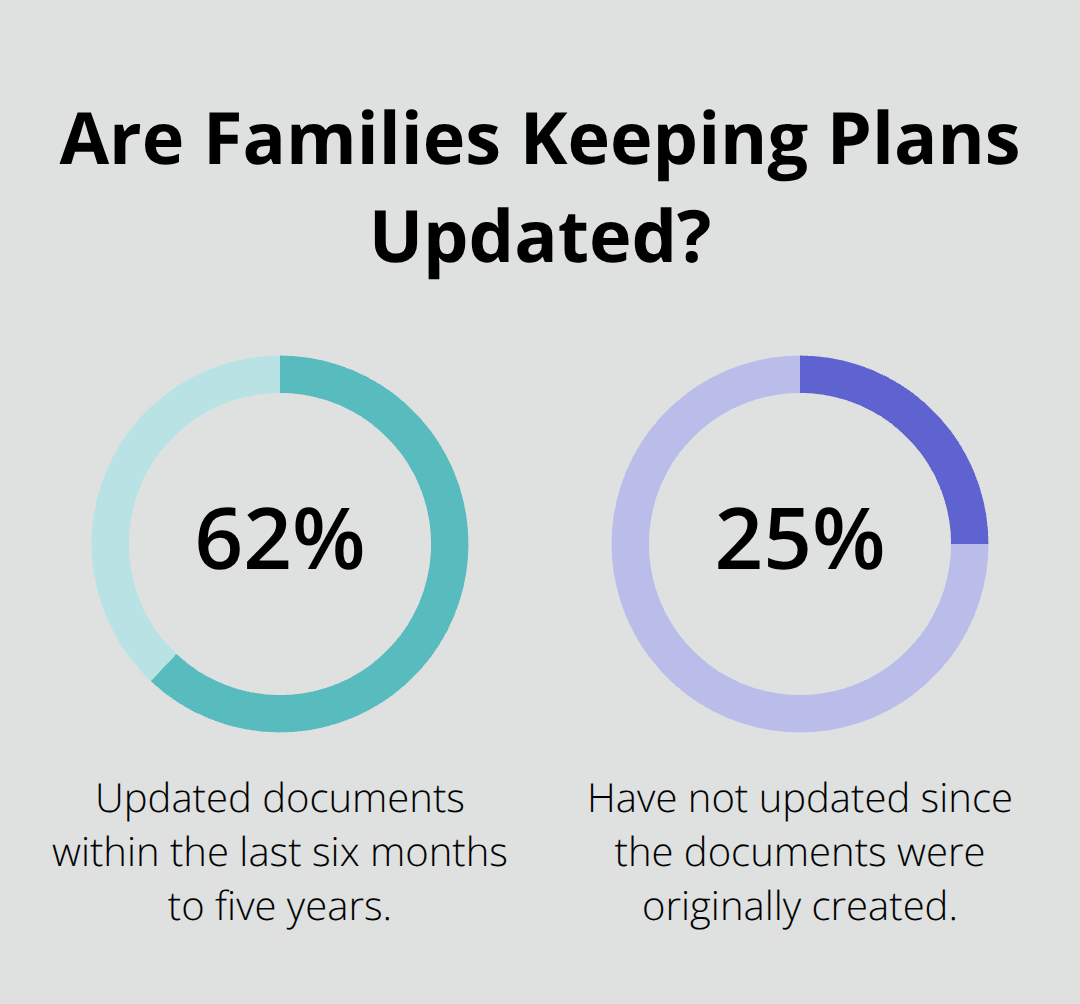
Most families create an estate plan and then abandon it. The Caring.com 2025 Wills Study found that 62% of people updated their documents between six months and five years ago, while roughly 25% have not updated since they originally created them. This neglect destroys families. Life changes constantly: you marry, buy a house, inherit money, have children, or relocate to another state.
Your estate plan must move with you. If you bought property in Colorado after creating your plan in Massachusetts, your trust may not hold title to that new real estate, forcing your family into probate in a second state when you die.
Life Changes Demand Document Updates
A raise or inheritance can dramatically change your tax situation and require different planning strategies. Marriage and divorce are particularly risky. Many people fail to update beneficiary designations after remarriage, accidentally leaving assets to an ex-spouse while their current spouse and children receive nothing. The Caring.com study showed that 23% of respondents updated their plans after births or marriages, meaning 77% did not. That gap represents thousands of families with outdated wishes that no longer reflect their actual circumstances.
The solution is straightforward: schedule a review every three to five years, and immediately after any major life event. Check whether asset titles, beneficiary designations, and trustee appointments still match your current intentions. A property purchase, inheritance, or job change should trigger an immediate conversation with an attorney to confirm your documents still work as intended.
Failing to Name Guardians for Your Children
If you have minor children and no will or trust naming guardians, the state will appoint someone to raise them if both parents die. This is not a theoretical risk. Courts cannot read your mind, and judges do not know your family like you do. Naming a guardian is one of the most important decisions you will make, yet many parents avoid it because the conversation feels heavy.
Choose someone who shares your values, lives near your children, and has the emotional stability and financial capacity to provide care. Discuss the role with them beforehand and name a backup guardian in case your first choice becomes unable or unwilling to serve. Without these designations, your children could end up with a relative you would never have chosen, or worse, split between different guardians.
Ignoring Your Digital Life
Digital assets are now a critical piece of any estate plan, yet most people ignore them entirely. According to the Caring.com study, many families cannot access email accounts, cryptocurrency wallets, online banking, or cloud storage after a death because no one knows the passwords. You likely have thousands of dollars in cryptocurrency, valuable digital photos stored in cloud services, online business accounts, or subscription services that will continue charging your estate monthly.
Create a secure list of all digital assets and passwords, then designate someone as your digital fiduciary with authority to access, manage, or close these accounts. Specify whether certain accounts should be deleted, memorialized, or transferred. Without these instructions, your family wastes time and money trying to recover access, and some assets may be permanently lost.
Misaligned Beneficiary Designations
Your beneficiary designations on retirement accounts, life insurance, and payable-on-death bank accounts override what your will says. Review them immediately. If your plan names your spouse as executor but your life insurance names your ex-spouse as beneficiary, your current family loses tens of thousands of dollars. Align every account title, every beneficiary form, and every power of attorney with your actual wishes and your estate plan’s overall strategy.
The cost of these mistakes compounds over time. Outdated documents lead to probate in multiple states. Missing guardianship designations create family conflict and court intervention during an already difficult period. Unaddressed digital assets disappear or drain your estate through uncanceled subscriptions. None of these outcomes is inevitable. The fix requires only intentional action: update your documents regularly, name guardians explicitly, and document your digital life with the same care you give to your physical assets.
Final Thoughts
Understanding estate planning protects your family from unnecessary delays, costs, and conflict that arise when documents fall out of sync with your life. The Caring.com 2025 Wills Study found that 62% of people updated their plans between six months and five years ago, yet roughly 25% never updated since creating them. Schedule a review every three to five years, and act immediately after major life events like marriage, divorce, inheritance, or relocation to confirm your asset titles, beneficiary designations, and trustee appointments still reflect your current intentions.
The components of a solid estate plan-wills, trusts, powers of attorney, healthcare directives, and aligned beneficiary designations-work together to ensure your family receives what you intend, when you intend it, and without court interference. Probate stretches across months or years when families skip this step, digital assets disappear, guardianship decisions fall to courts instead of you, and beneficiary designations contradict your actual wishes. These outcomes are entirely preventable through intentional action today.
At Family, Estate & Mediation Law, we help individuals and families across Northeast Florida navigate estate planning with practical strategies that preserve relationships and legacies. Whether you need to create your first will, establish a trust, or update documents that no longer fit your life, working with professionals ensures your plan actually works when your family needs it most.