Most families in the Jacksonville area put off estate planning because they think it’s only for the wealthy or elderly. That’s wrong. Without a clear plan, your family faces costly probate delays, family disputes, and the state deciding who gets your assets.
We at Family, Estate & Mediation Law help local families in St. Augustine, Palatka, and throughout Northeast Florida build plans that actually work. This guide walks you through what you need, where to find local resources, and how to get started today.
Why Estate Planning Matters in the Jacksonville Area
Florida’s Probate System Moves Slowly
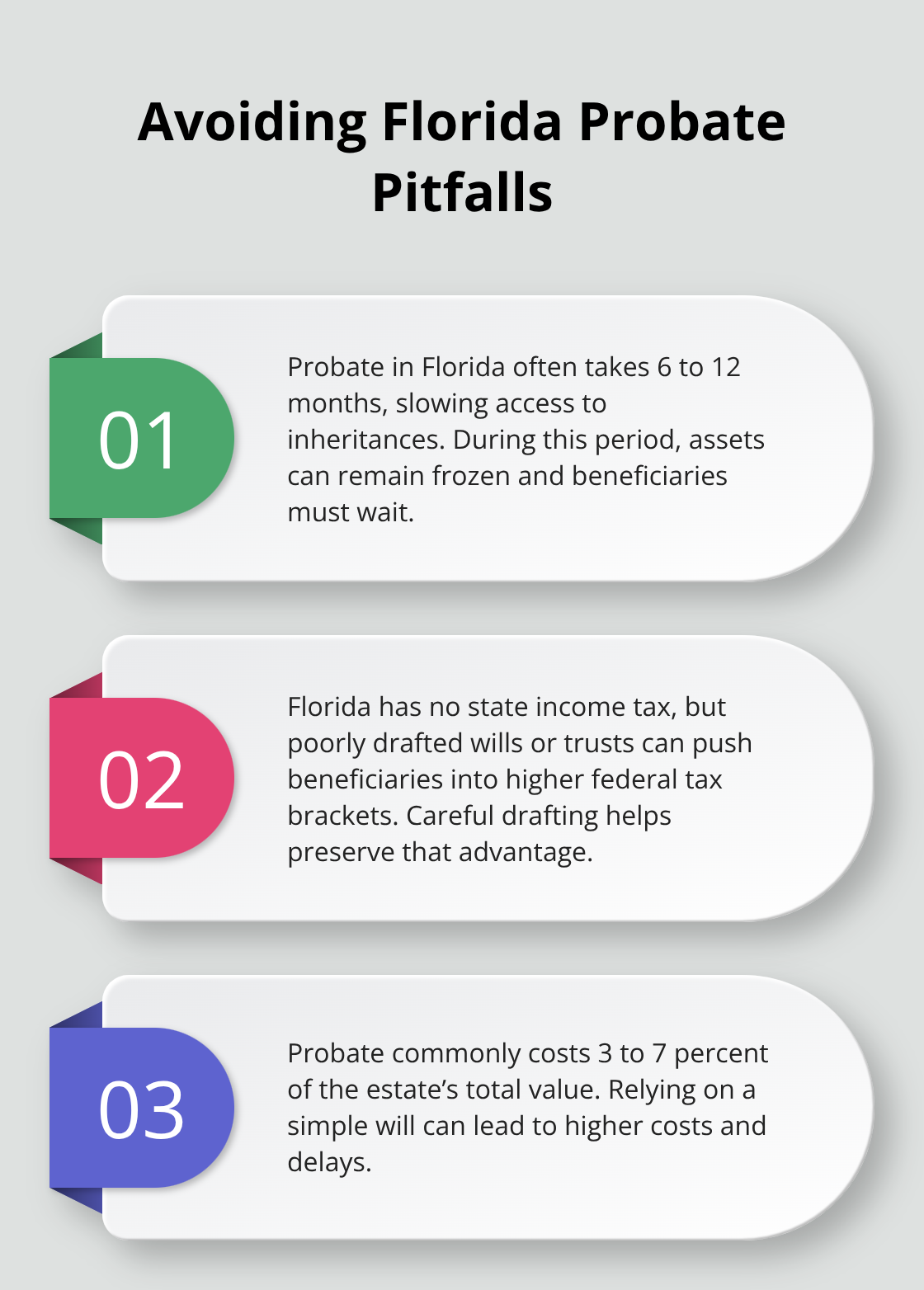
Florida’s probate system moves slower than most states, and families in the Jacksonville area routinely wait 6 to 12 months or longer to settle estates through the courts. During that time, assets sit frozen, beneficiaries receive nothing, and legal fees accumulate. Florida Statute Chapters 731-735 govern the probate process, and the rules are strict-miss a deadline or file the wrong form, and you delay everything further.
The state taxes income differently than many others, which means your investment accounts, retirement funds, and real estate need structured planning to avoid unnecessary tax hits. Florida has no state income tax, but that advantage disappears if your trust or will is poorly drafted and forces beneficiaries into higher federal tax brackets. Local families often assume a simple will is enough, then discover too late that probate costs 3 to 7 percent of the estate’s total value, depending on complexity.
Common Mistakes Local Families Make
People delay planning, life changes occur, and suddenly outdated documents create chaos for their families. A marriage, birth of a child, significant inheritance, or job change should trigger an estate plan review within weeks, not years. Florida law presumes your spouse inherits a substantial portion of your estate if you die without a will, even if you wanted your children to have everything.
Divorce doesn’t automatically remove an ex-spouse from your will or beneficiary designations-you must update these documents manually or your ex may still receive assets. Homeownership in Florida carries special probate rules because homestead property passes outside normal probate to your spouse or children, but only if your documents reflect current homestead status. Blended families face the highest risk because Florida intestacy law doesn’t account for stepchildren, meaning they receive nothing unless your will explicitly names them.
Critical Errors in Document Preparation
Many local residents make the mistake of naming the same person as executor and healthcare surrogate without considering whether that person has the time, financial knowledge, or emotional capacity to handle both roles. DIY estate planning documents purchased online frequently fail Florida’s strict execution requirements-witnesses must be present simultaneously, signatures must be in a specific order, and notarization rules vary by document type. One missing element invalidates the entire document, forcing your family into probate anyway and defeating the purpose of planning.
Family, Estate & Mediation Law Group serves St. Augustine and Palatka with practical guidance on these local challenges. Understanding what documents you actually need-and how to structure them correctly-separates a plan that protects your family from one that creates more problems. The next section walks you through the essential documents every Florida resident should have in place.
Which Documents Actually Protect Your Family
Revocable Living Trusts Keep Your Assets Out of Probate
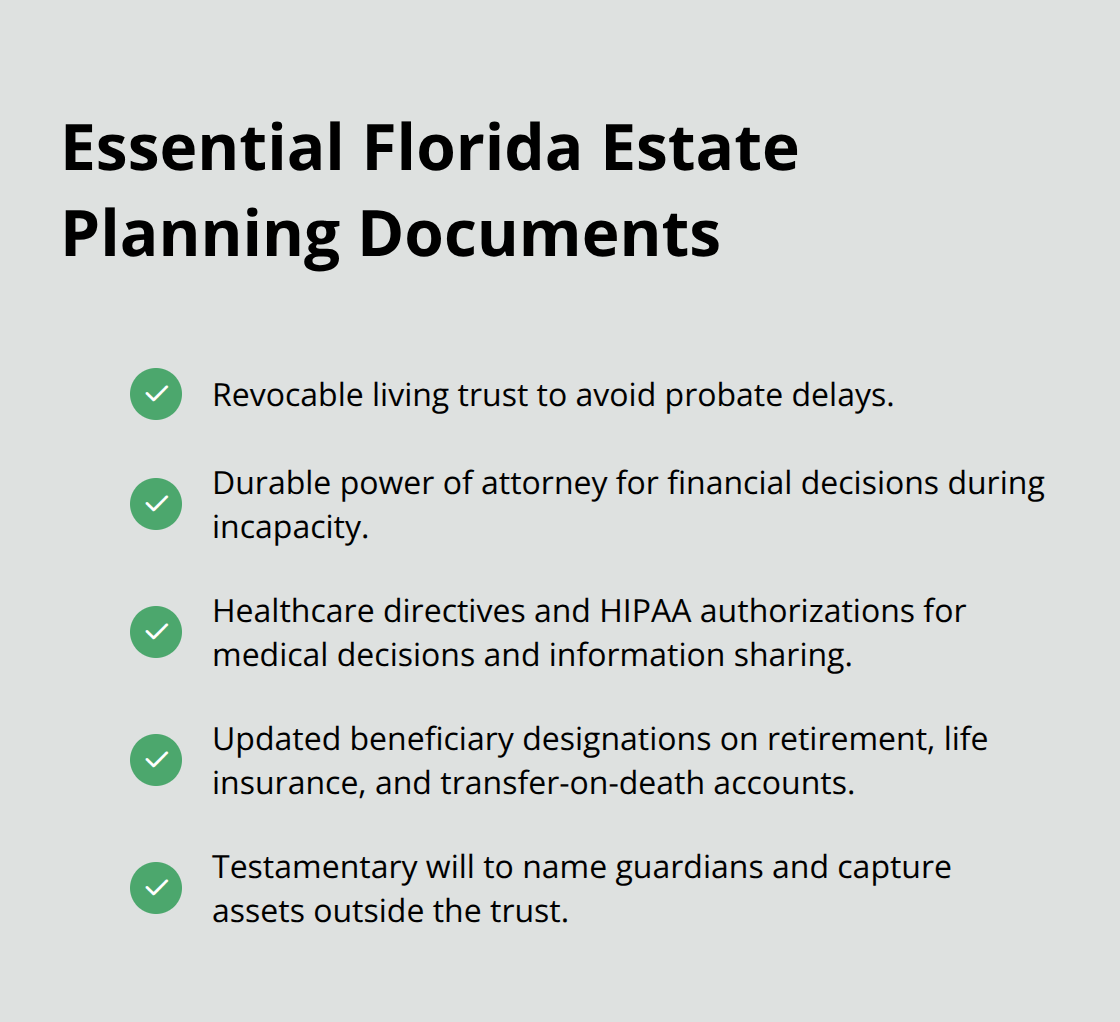
A revocable living trust stands as the single most effective tool for Florida families who own real estate or have assets exceeding $100,000. Unlike a will, a trust bypasses probate entirely, meaning your beneficiaries receive their inheritance within weeks rather than the 6 to 12 months typical in Florida courts. The trust holds title to your property during your lifetime, so you retain full control and can modify it whenever circumstances change. After you pass away, a successor trustee you named simply distributes assets according to your instructions without court involvement.
This matters in St. Augustine and Palatka because local families often own multiple properties or have out-of-state investments that would otherwise require separate probate proceedings in each jurisdiction. A single revocable trust consolidates all these assets under one legal structure, streamlining administration and reducing costs significantly.
Powers of Attorney Protect You During Incapacity
A durable power of attorney for finances names someone to manage your bank accounts, investments, and property if you become incapacitated. Without this document, your family faces a guardianship proceeding that costs $3,000 to $10,000 and strips you of financial control during your lifetime. Healthcare directives and HIPAA authorizations work together to ensure medical providers follow your wishes and share information with the people you designate.
A living will specifically addresses end-of-life care, preventing family conflict and unnecessary medical intervention when you cannot communicate your preferences. Florida law requires these healthcare documents to be notarized and signed with two witnesses present simultaneously, which is why DIY online versions frequently fail validation.
Beneficiary Designations Override Everything Else
Beneficiary designations on retirement accounts, life insurance policies, and transfer-on-death accounts override whatever your will or trust states, making them one of the most overlooked yet powerful planning tools. Many local families discover years later that their ex-spouse is still listed as beneficiary on a $250,000 life insurance policy because they never updated the form after divorce. These designations pass directly to the named person outside probate, so they must match your overall plan.
Review all beneficiary designations whenever you experience a major life change-marriage, birth of children, significant inheritance, or substantial changes in net worth. A single outdated designation can undo years of careful planning.
Wills Address What Trusts Cannot
A testamentary will remains necessary even if you have a trust, because it names a guardian for minor children and addresses assets you forgot to transfer into the trust. The combination of a revocable trust, durable power of attorney, healthcare directives, and updated beneficiary designations creates a comprehensive plan that protects your family and minimizes taxes.
The probate delays that plague so many Northeast Florida estates stem from incomplete or poorly structured documents. Getting these four elements in place correctly determines whether your family navigates your estate smoothly or faces months of court proceedings and mounting legal fees. The next section shows you where to access local resources and how probate courts in your area actually operate.
Estate Planning Tools and Resources Available in St. Augustine and Palatka
File Your Probate Documents at the Right County Courthouse
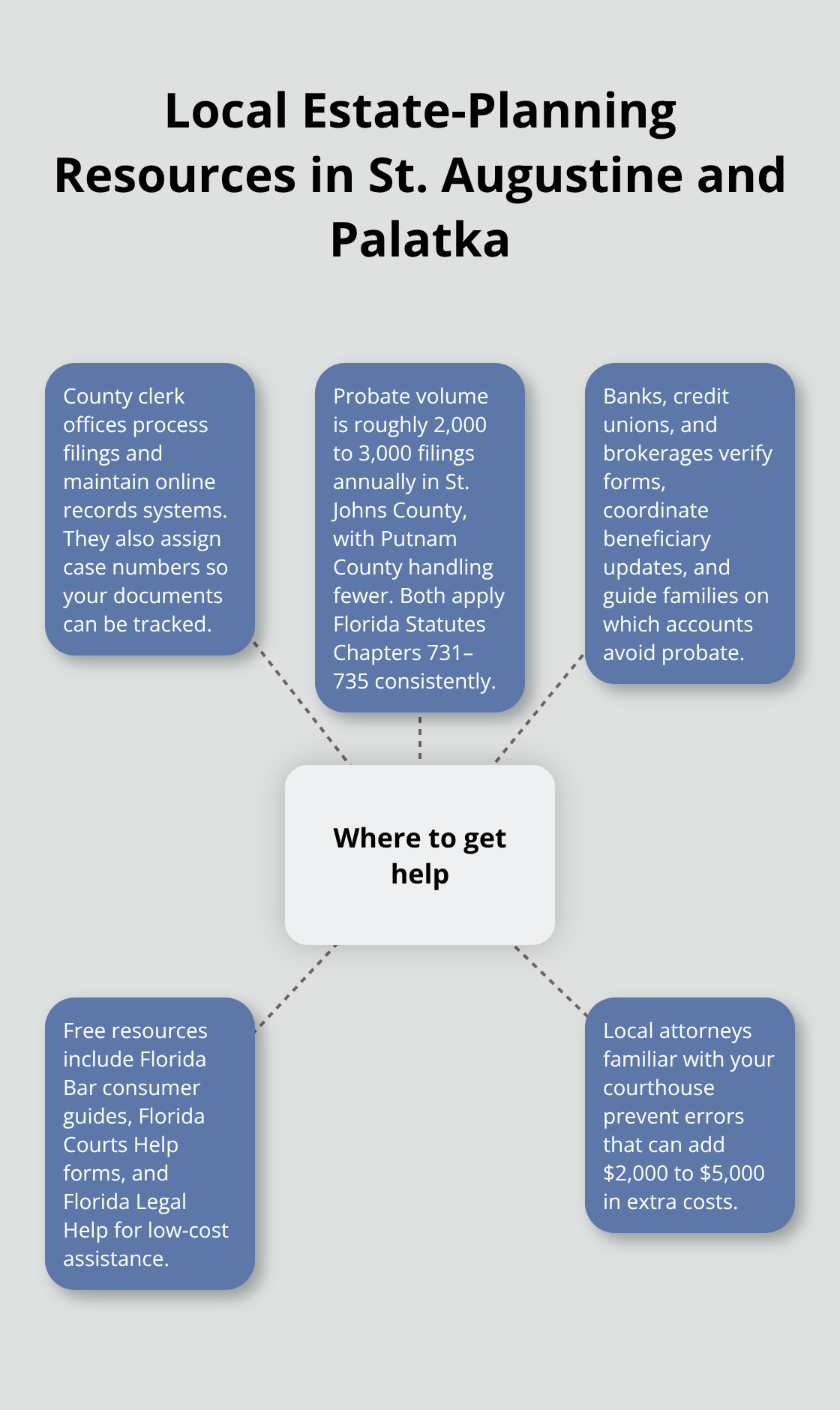
St. Augustine residents file probate documents with the St. Johns County Circuit Court Clerk, located at the St. Johns County Courthouse in downtown St. Augustine. Palatka residents use the Putnam County Circuit Court Clerk’s office. Both clerks maintain official records systems accessible online, allowing you to search existing filings and understand what documents have already been submitted for other estates in your area. When you die, your family files the initial probate petition with a filing fee that varies by estate size-typically between $200 and $500 for straightforward cases. The clerk assigns a case number immediately, and from that point forward, all documents related to your estate are tracked under that number. This means your family does not need to hunt through courthouse records or wonder whether documents reached the right department.
Understand Your County’s Probate Volume and Timelines
The St. Johns County Clerk’s office processes roughly 2,000 to 3,000 probate filings annually, so staff understand local procedures and can answer basic questions about form requirements and deadlines. Putnam County handles fewer filings but applies identical Florida Statutes Chapters 731-735, making the process predictable regardless of location. Court staff in both counties have seen hundreds of estates move through the system, which means they recognize common errors and can point your family toward correct procedures.
The predictability of these processes-combined with consistent application of state law-removes much of the guesswork from probate administration.
Coordinate with Your Local Financial Institutions
Your financial institutions-banks, credit unions, and brokerage firms operating in St. Augustine and Palatka-already understand Florida probate requirements because they handle these cases constantly. When you establish a trust or update beneficiary designations, staff at your local bank can verify that forms comply with Florida law and route them to the correct department. Many institutions maintain probate coordinators specifically trained to work with families navigating estate settlement. These coordinators know which accounts transfer outside probate through beneficiary designations and which require court involvement, saving your family months of confusion.
Access Free Government and Community Resources
Community resources in St. Johns and Putnam counties include the Florida Bar’s consumer information portal at floridabar.org/public/consumer/, which provides free probate guides and attorney referral services. Florida Courts Help at help.flcourts.org/Other-Resources/Probate offers step-by-step probate explanations and downloadable court forms. Florida Legal Help at floridalawhelp.org connects low-income residents with free or reduced-cost legal assistance. These resources cost nothing and provide reliable information about probate procedures, document requirements, and timelines specific to Florida law.
Work with Local Guidance for Complex Situations
For St. Augustine and Palatka families with substantial assets or complex family situations, working with a local attorney who understands regional probate practices prevents costly mistakes. Probate avoidance strategies and proper planning can help you reduce complications before they arise. The difference between filing documents correctly the first time versus correcting errors later often exceeds $2,000 to $5,000 in additional legal fees and court costs. We at Family, Estate & Mediation Law serve both St. Augustine and Palatka with guidance on local court procedures, financial institution coordination, and probate administration specific to your county’s practices.
Final Thoughts
Start your Jacksonville area estate planning by gathering your financial documents and listing the people you want to make decisions for you if you cannot act. Write down account numbers, property locations, and the names of your beneficiaries-this inventory takes an afternoon but gives you clarity about what needs protection. Identify who you trust to serve as executor, trustee, and healthcare surrogate, recognizing that these roles demand different skills and should not automatically go to one person.
Finding the right guidance in Northeast Florida means working with someone who understands your specific county’s probate procedures and local court systems. St. Augustine and Palatka families benefit from local knowledge because attorneys familiar with your courthouse staff and regional property laws anticipate problems before they arise. Free initial consultations let you discuss your situation without obligation, so take advantage of them and ask whether the attorney handles wills, trusts, powers of attorney, healthcare directives, and probate administration.
We at Family, Estate & Mediation Law serve St. Augustine and Palatka with experience helping families protect their legacies and navigate local court procedures. Starting your plan today means your family avoids the 6 to 12 month probate delays and unnecessary taxes that plague estates without clear direction. Contact us to schedule a consultation and take control of your family’s future.