
Most people put off healthcare wishes documentation because they assume they have time. The reality is that medical emergencies don’t wait, and without clear written preferences, your family faces impossible decisions during your most vulnerable moments.
At Family, Estate & Mediation Law in St. Augustine and Palatka, FL, we’ve seen firsthand how proper documentation prevents confusion, conflict, and regret. This guide walks you through what you need to know to protect your wishes and your loved ones.
What Goes Into Healthcare Wishes Documents in St. Augustine and Palatka, FL
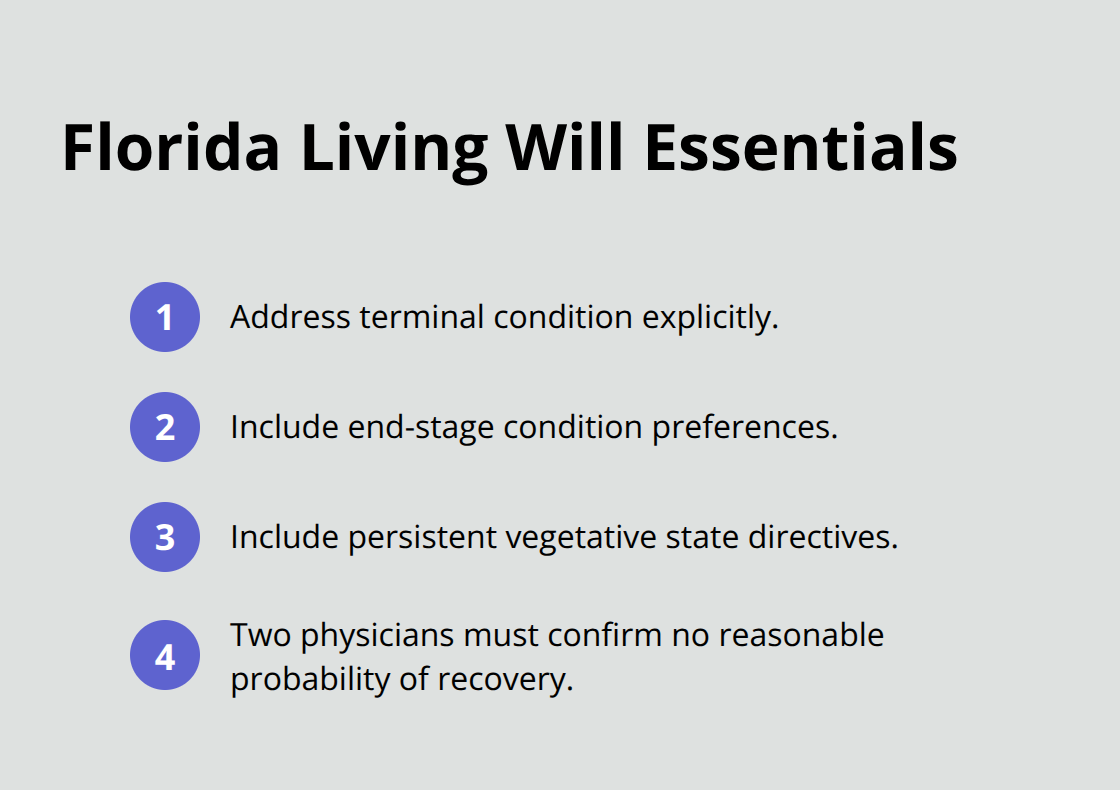
Healthcare wishes documents contain far more than a signature and a few preferences. A living will specifies exactly which treatments you accept or refuse if you become unable to communicate, covering ventilators, feeding tubes, CPR, and dialysis under specific medical conditions like terminal illness or persistent vegetative state. Florida law requires that a living will address three conditions: terminal condition, end-stage condition, and persistent vegetative state, with two physicians confirming no reasonable probability of recovery before your wishes take effect.
A healthcare power of attorney names a specific person to make medical decisions on your behalf when you cannot, and this person needs authority to speak with doctors, review medical records, and approve or deny treatments. The National Institute on Aging reports that people guess incorrectly about their loved ones’ end-of-life preferences nearly one out of three times, which is why written documentation matters far more than casual conversations.
State-Specific Requirements Shape Your Documents
Your documents mean nothing if they don’t comply with your state’s laws. Florida requires living wills to use specific statutory language and be signed by you with two adult witnesses, where at least one witness cannot be your spouse or blood relative. If you travel between states or split time between locations, you face real enforceability problems because portability is not guaranteed across state lines. Some states accept notarization instead of witnesses, while others demand both, and a few allow online notarization while others do not. Healthcare proxies also have different authority limits depending on your state, so a proxy authorized to make all medical decisions in Florida might face restrictions in Georgia or South Carolina. You should keep state-specific forms for each state where you spend significant time and verify your latest version is on file with your primary care physician and any specialists you see regularly.
Why Your Family Needs These Documents in Writing
Without written healthcare wishes, Florida law and your state’s default succession rules determine who makes decisions for you, and that person might not be who you would choose. An unmarried partner has no automatic authority, adult children may be bypassed for a surviving spouse you no longer trust, and the person available at the hospital might not be the person who truly understands your values. Medical crises happen fast, and family disputes over treatment decisions drain emotional and financial resources while you’re at your most vulnerable. Documentation eliminates guesswork, prevents costly guardianship proceedings if someone challenges family decisions, and gives your chosen healthcare proxy clear legal standing to advocate with providers without constant explanations or delays. These written preferences set the stage for the next critical step: actually creating your healthcare wishes document with the right legal structure and language.
Building Your Healthcare Wishes Documents in St. Augustine and Palatka, FL
Living Wills and Healthcare Power of Attorney: What Each Document Does
The choice between a living will alone and a healthcare power of attorney is not about picking one or the other-it’s about understanding what each document does and why most people need both. A living will functions as your instruction manual for specific medical scenarios: it tells doctors exactly which treatments you want or don’t want if you develop a terminal condition, end-stage illness, or persistent vegetative state. Florida law requires your living will to address these three conditions specifically, and it only activates when two physicians agree there’s no reasonable probability of recovery. This document is reactive-it responds to situations you anticipate and document in advance.
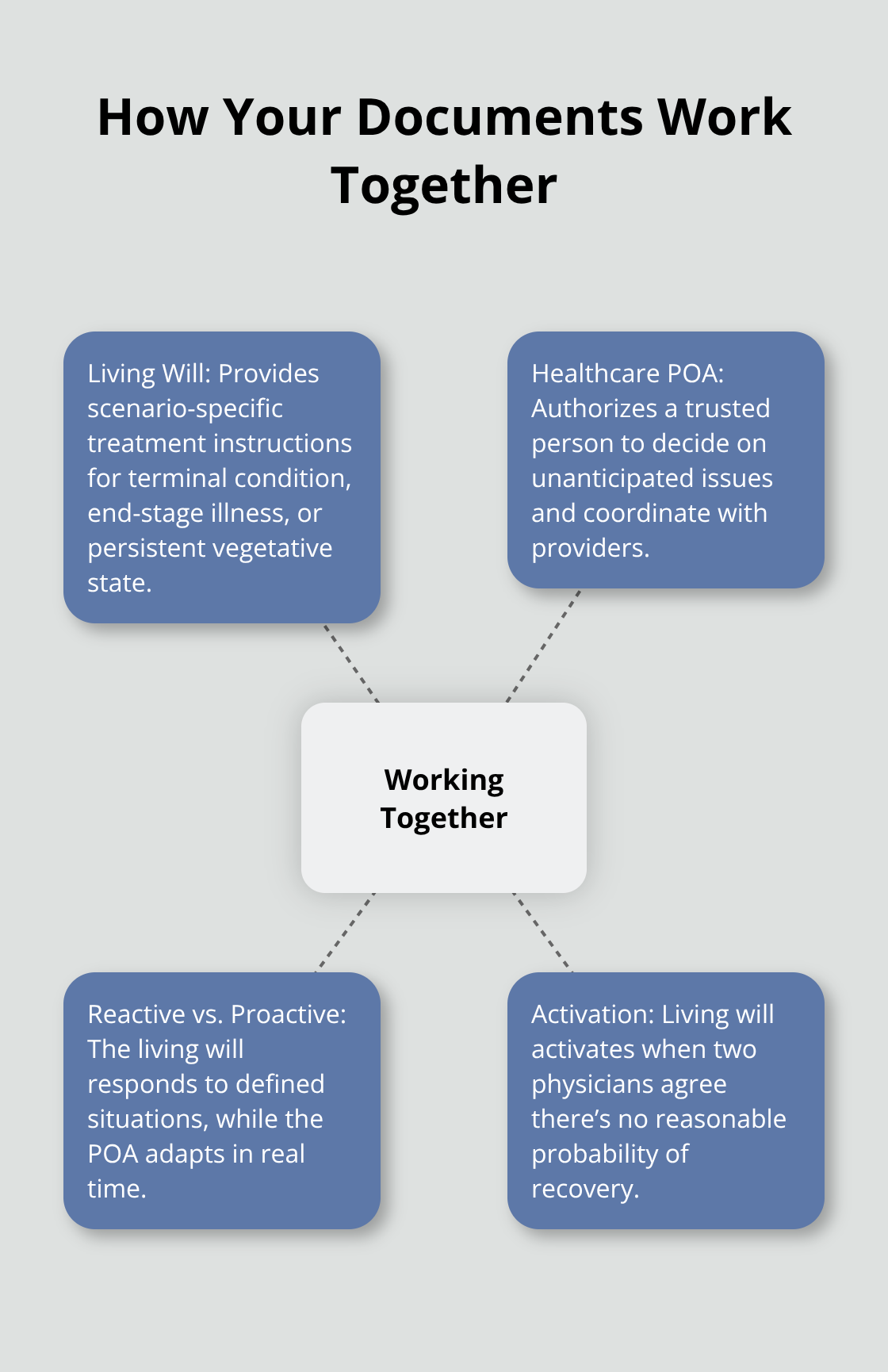
A healthcare power of attorney, by contrast, is proactive and broad. It names a specific person to make any medical decision you haven’t anticipated, handle conversations with doctors, review your medical records, and adjust care based on your changing condition. Research from the National Institute on Aging shows that people incorrectly guess their loved ones’ end-of-life preferences nearly one out of three times, which is precisely why naming someone with decision-making authority matters more than assumptions about what family will figure out.
If you use only a living will without naming a healthcare proxy, your document remains valid in Florida, but gaps appear instantly when medical situations don’t match your written scenarios. If you use only a healthcare power of attorney without a living will, your proxy must guess at your wishes for specific treatments, which creates exactly the kind of uncertainty you’re trying to prevent. Both documents work together: the living will provides your treatment roadmap, and your healthcare proxy executes it with the flexibility real medical situations require.
Documenting Specific Treatments and Conditions
Deciding what to document means getting specific about treatments and conditions rather than vague statements about wanting to die naturally or wanting everything done. Instead of writing you want comfort care, document whether you accept or refuse ventilators if you have terminal cancer, feeding tubes if you’re in a persistent vegetative state, CPR if your heart stops during advanced dementia, or dialysis if your kidneys fail alongside other serious illnesses. The more granular your preferences, the less your healthcare proxy must improvise.
Your written preferences should address real medical scenarios you might face, not hypothetical situations that sound dramatic but won’t apply to your health history. Think about your family’s medical patterns-if heart disease runs in your family, specify your wishes for cardiac interventions; if dementia concerns you, address cognitive decline scenarios explicitly. This specificity prevents your proxy from second-guessing your values during stressful conversations with medical teams.
Selecting and Preparing Your Healthcare Proxy
Choose your healthcare proxy carefully-this person needs to understand your values deeply and be willing to have uncomfortable conversations with doctors under stress. Avoid naming multiple co-proxies with equal authority; Florida law allows alternates, but joint decision-makers create deadlock when they disagree. Your proxy should be someone accessible and available, not someone living across the country who cannot reach your hospital quickly.
Once you’ve selected your proxy, have explicit conversations about your treatment preferences and the types of decisions they may face. Share your living will with them, discuss what gives your life meaning, and explain which activities or conditions would make continued life unacceptable to you. These conversations transform your proxy from a legal appointee into someone who truly understands how to advocate for you.
Proper Execution and Legal Compliance
Formalize everything through proper execution: your living will requires your signature plus two adult witnesses, where at least one witness cannot be your spouse or blood relative. Your healthcare power of attorney requires the same witness structure. These requirements exist to prevent disputes and ensure no one can claim you were coerced or incompetent.
Online forms and templates create enforcement problems because they often lack state-specific language or witness compliance, leaving your family arguing about whether your documents are actually valid when a hospital administrator questions them during a crisis. An advance directives attorney who understands Florida’s specific statutory language and witness rules eliminates the risk that your documents fail when you need them most. With proper documentation in place, the next critical step involves protecting these documents and making sure the right people know where to find them when time matters most.
Common Mistakes People Make with Healthcare Documentation in St. Augustine and Palatka, FL
Life Changes Render Your Documents Obsolete
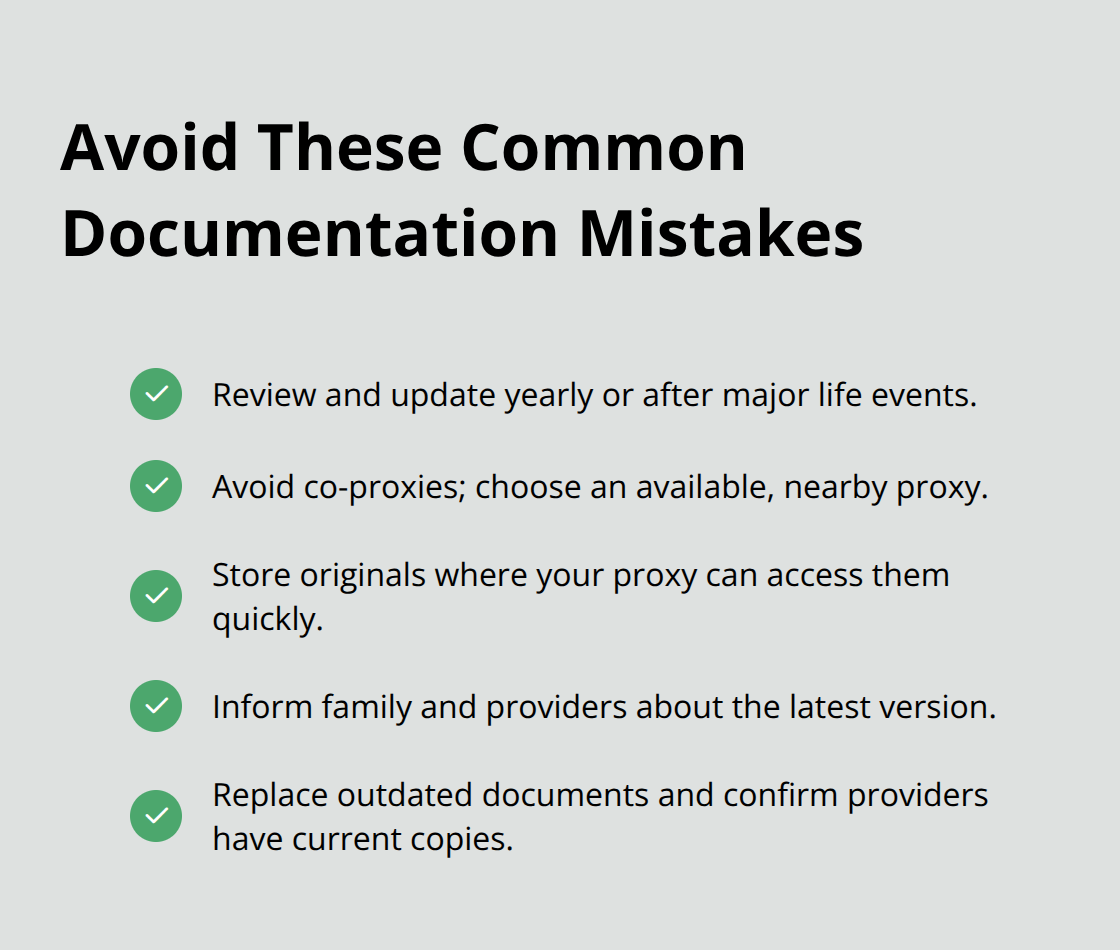
You finalize your living will and healthcare power of attorney, have them properly witnessed, and feel relief that the hard work is done. Then life happens. You marry, divorce, experience a serious health diagnosis, move states, or your chosen healthcare proxy relocates across the country or becomes unable to serve. Your documents sit in a drawer while your actual situation transforms completely. This gap between your documented wishes and your current reality creates the exact problems you tried to prevent. The National Institute on Aging recommends reviewing advance directives at least once yearly or after major life events, yet most people never revisit them after initial creation.
Marriage, divorce, the birth of children or grandchildren, retirement, or a diagnosis of chronic illness all shift your priorities and relationships fundamentally. Your healthcare proxy might have been the obvious choice when you named them, but if they’ve since moved to another state, developed their own serious health issues, or your relationship has deteriorated, they’re now a liability rather than an advocate. A document that made sense five years ago now contradicts your values or names someone who can no longer act on your behalf.
Inaccessible Storage Defeats the Purpose
Your documents disappear into a safe deposit box that your family doesn’t know exists or cannot access during a medical emergency because the bank is closed or requires probate court orders to open it. This creates a cruel irony: you spent time and money creating documents that protect your wishes, but no one can find them when seconds count. Store your original documents in a place your healthcare proxy and closest family members can access within hours, not days. Your attorney’s office, a home safe, or a fireproof box kept accessible works far better than a bank vault.
Silence Leaves Your Proxy Unprepared
Your family members need to know these documents exist, where to find them immediately, and what your wishes actually say. Without this knowledge, they waste critical hours searching for paperwork while medical teams pressure them for decisions. Give your healthcare proxy a copy and discuss specific scenarios: if you develop advanced dementia and stop eating, what then? If you have a massive stroke but might recover some function, what level of disability would you find unacceptable? These conversations transform vague written preferences into actionable guidance your proxy can defend to medical teams under stress.
Outdated Documents Create Legal Confusion
A new will or power of attorney supersedes the old version only if it’s properly executed and dated, so notifying your healthcare proxy and medical providers of the change matters as much as creating it. Update your documents formally whenever circumstances change significantly, not just mentally. Without active communication and regular updates, your most carefully drafted healthcare wishes remain theoretical rather than operational. Medical providers need the latest version on file to honor your actual preferences, not assumptions based on outdated paperwork.
Final Thoughts
Healthcare wishes documentation transforms from an abstract task into urgent reality the moment a medical crisis forces your family to act without guidance. You now understand what these documents contain, why state-specific compliance matters, and how common mistakes undermine even well-intentioned planning. The distance between knowing you need these documents and actually creating them is where most people stall.
This week, reflect on your values and the medical scenarios that concern you most. Think about the conditions that would make continued life unacceptable to you, the treatments you absolutely want or refuse, and the person you trust most to advocate when you cannot speak. Write these preferences down in plain language before you meet with anyone to formalize them.
Family, Estate & Mediation Law in St. Augustine and Palatka, FL simplifies this process significantly by understanding Florida’s specific statutory requirements for living wills and healthcare powers of attorney. Contact our office to schedule a consultation about your healthcare wishes documentation, and we’ll walk you through what you need, answer questions about your specific situation, and create documents that protect both your autonomy and your family’s peace of mind.