
Most people in St. Augustine and Palatka put off healthcare directive planning because they think it’s only for the elderly or seriously ill. That’s wrong.
At Family, Estate & Mediation Law, we see firsthand how a clear healthcare directive protects your medical autonomy when you can’t speak for yourself. Without one, your family faces confusion, conflict, and costly delays during a medical crisis.
What Happens When You Can’t Make Medical Decisions
Your Directive Activates When You Need It Most
A healthcare directive is a written legal document that names someone to make medical decisions for you if you become unable to communicate your wishes. In Florida, it has three core parts: naming a healthcare surrogate, documenting your treatment preferences in a living will, and indicating organ donation wishes. The moment a physician determines you lack capacity to decide-whether from sudden injury, stroke, dementia, or surgery complications-your directive activates. You don’t have to be elderly or dying for this to matter. A 35-year-old car accident victim or a 50-year-old recovering from major surgery can face weeks unable to answer yes or no about feeding tubes, ventilators, or CPR.
Without a written directive, Florida law creates a default hierarchy: spouse first, then adult children, then parents or siblings. That chain of command often conflicts with what you actually want. According to the National Institutes of Health and National Institute on Aging, surrogates guess nearly one-third of end-of-life decisions incorrectly when they work without clear written guidance. Hospitals reject incomplete directives regularly, and casual conversations about your wishes carry zero legal weight during a crisis.
Why Written Documents Beat Family Conversations
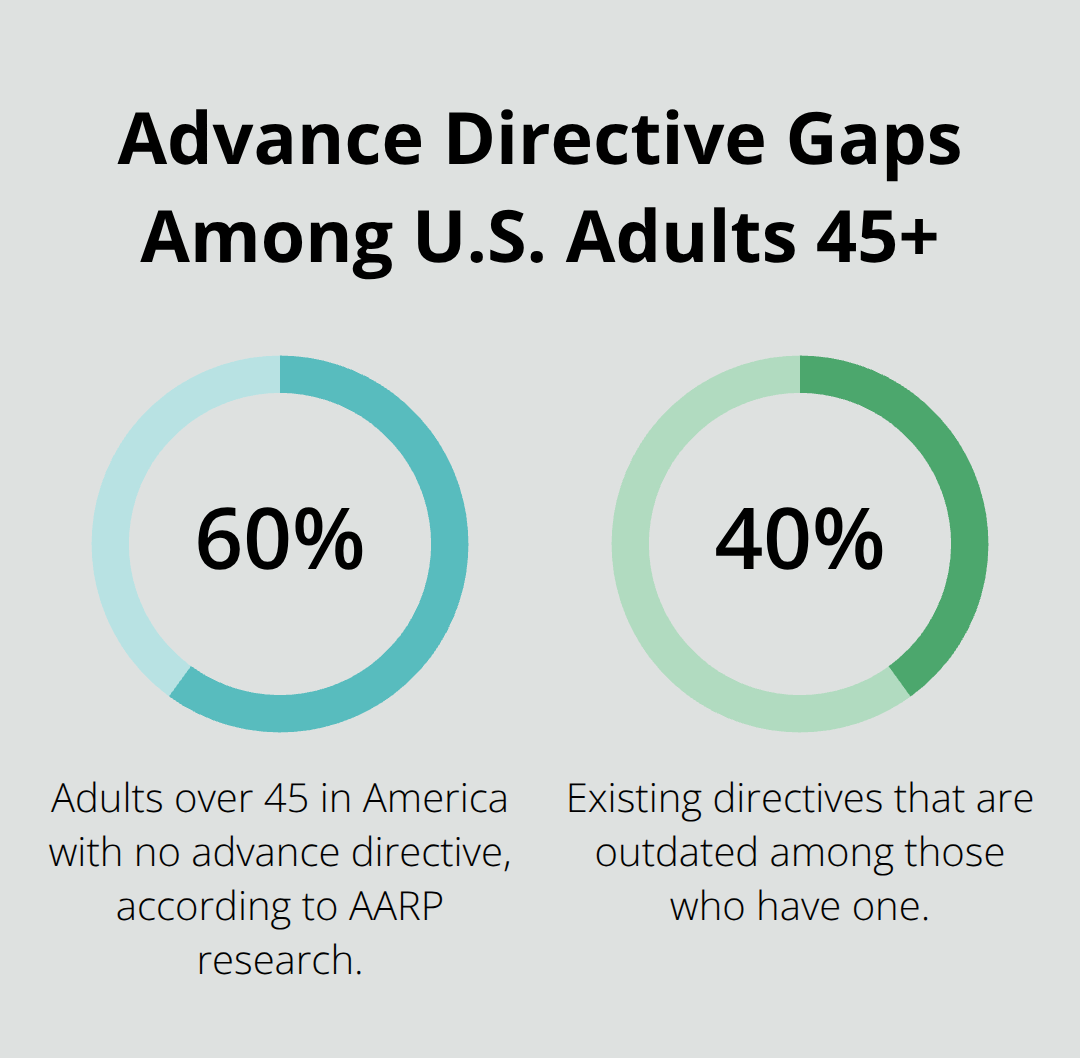
Many people believe a simple conversation with family covers healthcare planning. It doesn’t. Family members disagree, hospitals need signed documents, and stress during emergencies clouds memory. About 60 percent of adults over 45 in America have no advance directive at all, according to AARP research. Among those who do have one, roughly 40 percent are outdated and no longer reflect their current wishes.
In St. Augustine and Palatka, where many residents have deep family roots and multiple generations nearby, unwritten wishes often create conflict between siblings or between spouses about what mom or dad really wanted. A proper healthcare directive written under Florida law (Chapter 765 of the Florida Statutes) requires two adult witnesses, with at least one unrelated to you by blood or marriage. Notarization isn’t legally required but adds credibility if anyone later challenges the document.
How Your Directive Guides Medical Decisions
The living will portion specifically addresses life-prolonging procedures in terminal or end-stage conditions, giving doctors clear direction on ventilators, feeding tubes, dialysis, and CPR. Your healthcare surrogate gains authority to make other medical decisions and access your health information when you cannot communicate. This dual approach (written preferences plus a named decision-maker) covers both routine medical choices and extraordinary end-of-life situations. The surrogate steps in when physicians determine you lack capacity, not only when death is imminent. Without these tools in place, your family faces the burden of guessing your wishes while hospitals demand immediate answers about your care.
Key Legal Tools for Healthcare Decision-Making
Living Wills, Healthcare Powers of Attorney, and HIPAA Forms Work Together
A living will, healthcare power of attorney, and HIPAA authorization form create a complete medical decision-making framework that Florida law recognizes. Each tool serves a distinct purpose that conversation alone cannot replicate. The living will documents your specific treatment preferences for terminal or end-stage conditions-whether you want CPR, ventilators, feeding tubes, dialysis, or other life-prolonging procedures.
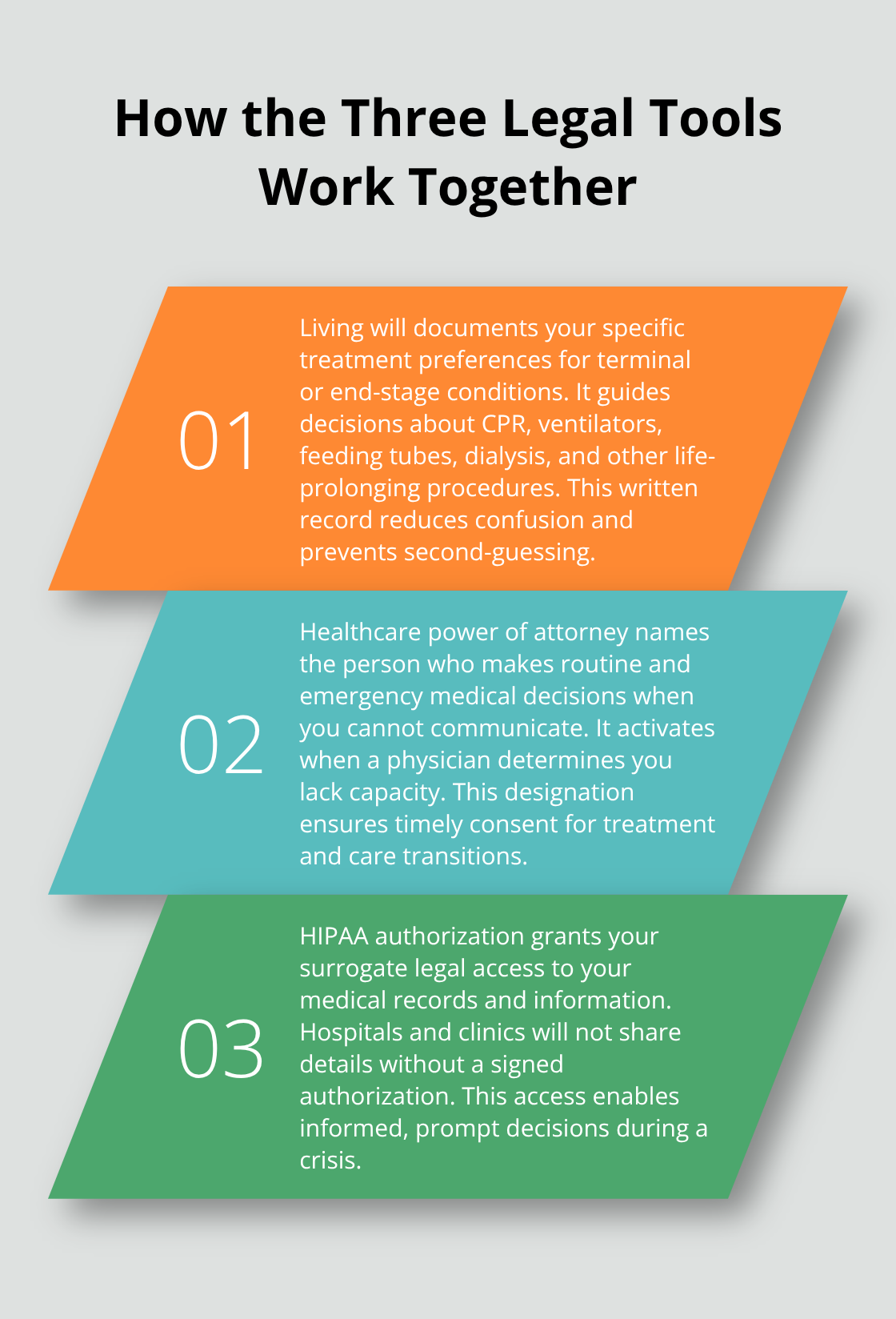
This written record prevents hospitals from rejecting your wishes and stops family members from second-guessing what you would have chosen.
Your healthcare power of attorney (also called a durable power of attorney for healthcare) names the person who makes routine and emergency medical decisions when you cannot communicate. Unlike a living will, this tool activates the moment a physician determines you lack capacity, not only when death approaches. A 48-year-old stroke survivor who cannot speak needs someone authorized to consent to rehabilitation therapy, medication changes, and hospital transfers immediately-not just end-of-life decisions.
HIPAA Authorization Grants Access to Medical Information
The HIPAA authorization form grants your chosen surrogate legal access to your medical records and information. Hospitals and clinics will not share your health details with anyone, including spouses, without this signed authorization. Many families discover too late that they cannot obtain test results or medication lists during a crisis because no HIPAA form existed.
Why One Tool Alone Falls Short
In St. Augustine and Palatka, families often struggle when only one of these tools exists. A living will without a named healthcare surrogate leaves doctors unclear about who decides on non-terminal medical choices. A healthcare power of attorney without a living will gives your surrogate authority but no written guidance on your core values regarding quality of life versus aggressive treatment. A HIPAA form without the other two creates access without decision-making power.
Proper Execution and Regular Updates Matter
Florida requires your healthcare power of attorney and living will to be signed by you, witnessed by two adults (with at least one unrelated to you), and dated. Notarization strengthens the documents if anyone questions them later. All three documents need updates after major life events-marriage, divorce, serious illness diagnosis, or relocation-since your preferences and surrogate availability change over time.
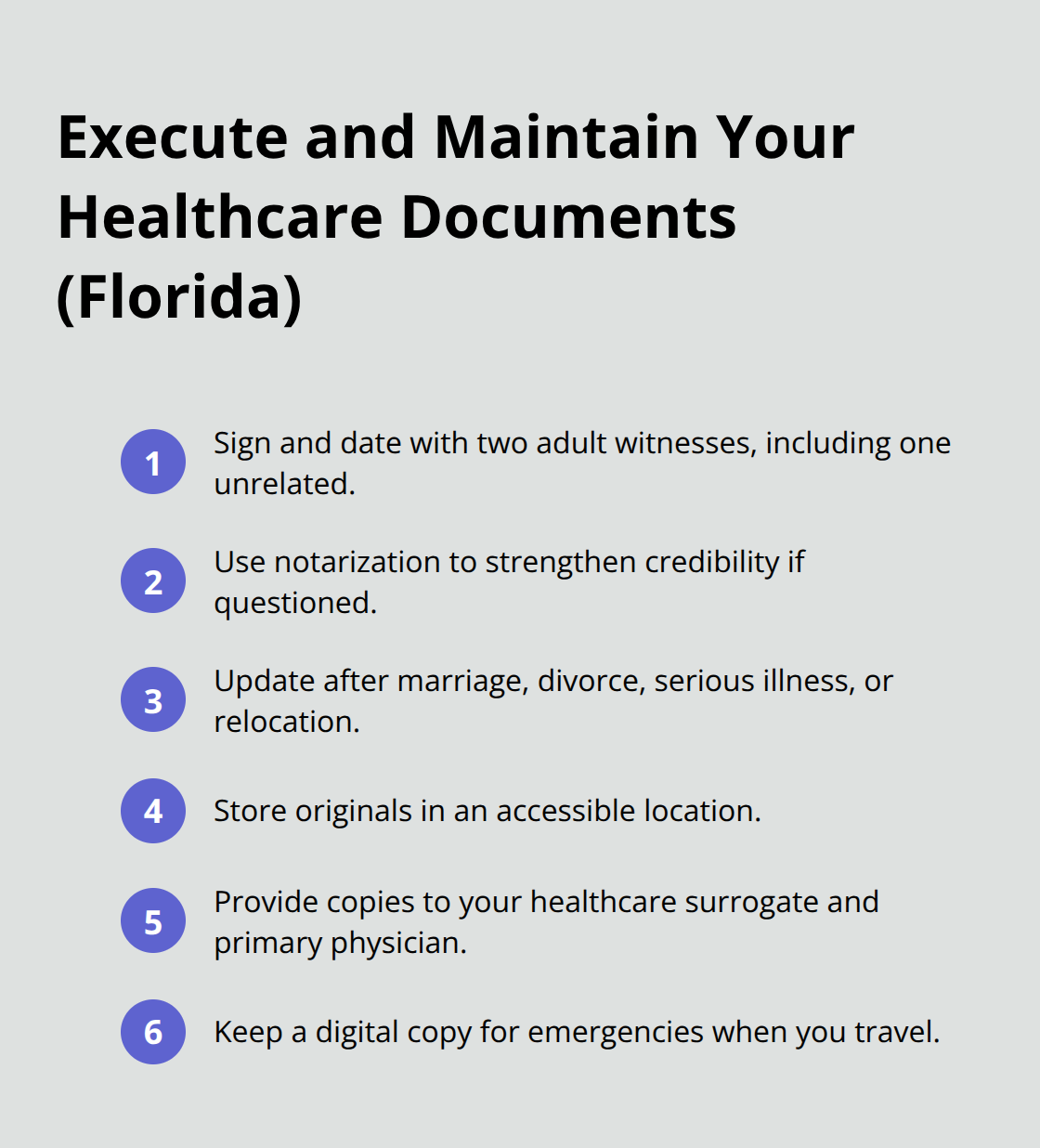
Store originals in an accessible location, provide copies to your healthcare surrogate and primary physician, and keep a digital copy available for emergencies when you travel outside your home. With these three tools properly executed and current, you move from uncertainty to clarity about who decides your medical care and what values guide those decisions.
Building Your Healthcare Directive Step by Step
Document Your Medical Preferences in Concrete Scenarios
Start with specific medical situations and how you want treatment in each one. Avoid abstract thinking-imagine real scenarios instead. Would you want a ventilator if you suffered a massive stroke and couldn’t wake up? What about a feeding tube if you had advanced dementia and couldn’t swallow? What if you faced terminal cancer with months to live versus a temporary coma you might recover from? The National Institutes of Health and National Institute on Aging found that surrogates guess nearly one-third of end-of-life decisions incorrectly when they lack written guidance, so vague preferences create real problems.
Write down which treatments matter most to you: CPR, dialysis, antibiotics, pain medication, hydration. Then write down the conditions where you’d want or refuse each one. This written record becomes your living will and gives your healthcare surrogate concrete direction instead of forcing them to guess your values during a crisis. Many people in St. Augustine and Palatka think their family knows their wishes, but stress, grief, and disagreement during emergencies distort memory. A written document prevents that collapse.
Select a Healthcare Surrogate Based on Capability, Not Just Closeness
Your surrogate’s ability matters more than picking the right legal form. Your surrogate needs three qualities: they must understand your core values about quality of life, they must make difficult decisions even if family members disagree, and they must be available when needed. Don’t pick someone based on closeness alone-pick someone based on their ability to advocate for your actual wishes rather than what they think is best.
A spouse or adult child often seems obvious, but what if they live out of state or cannot handle medical conversations? What if they prioritize keeping you alive at any cost when you’d prefer comfort care? Name a primary surrogate and an alternate, and discuss specific scenarios with both of them before you finalize anything. Tell them exactly what you want in terminal illness, permanent unconsciousness, and temporary incapacity. If they hesitate or seem uncomfortable, choose someone else-a reluctant surrogate creates problems during emergencies.
Update Your Directive After Major Life Changes
After you name your surrogate and document your preferences, schedule a review at least every three years and immediately after major life events like marriage, divorce, serious illness diagnosis, or moving between states. Florida law recognizes directives from other states, but differences between state requirements can create conflicts, so updating after relocation protects you.
Keep your original documents accessible, provide copies to your surrogate and primary physician, and store a digital copy separately. About 40 percent of existing advance directives are outdated according to AARP research, which means they no longer reflect current wishes or surrogate availability. Your directive only works if it’s current and if the people who need it actually have copies.
Final Thoughts
A healthcare directive protects your autonomy by ensuring your medical wishes guide decisions when you cannot speak for yourself. Without one, hospitals and family members make choices based on default legal hierarchies or guesswork, often contradicting what you actually want. With a living will, healthcare power of attorney, and HIPAA authorization in place, you control your medical future even during incapacity.
Healthcare directive planning also reduces the burden on loved ones by replacing guesswork with written guidance and legal authority. Instead of forcing family members to guess your values about quality of life, aggressive treatment, or comfort care, you give them documented preferences and clear direction to act. Research from the National Institutes of Health shows that surrogates guess nearly one-third of end-of-life decisions incorrectly without written direction, so your documented preferences matter.
Schedule time to think through specific medical scenarios and your preferences in each one, then identify someone you trust to serve as your healthcare surrogate and discuss your wishes with them directly. Contact Family, Estate & Mediation Law to ensure your documents meet Florida law and reflect your actual values. Our offices in St. Augustine and Palatka serve residents across Northeast Florida, and a consultation clarifies your options while producing legally binding documents that protect both your autonomy and your family’s peace of mind.