
A living will isn’t your only option for directing your healthcare. Living will alternatives like powers of attorney and medical directives often work better depending on your situation.
At Family, Estate & Mediation Law, we help clients understand which healthcare planning tool fits their needs. The right choice depends on your health, family dynamics, and how specific you want your medical instructions to be.
Your Healthcare Decision-Making Options
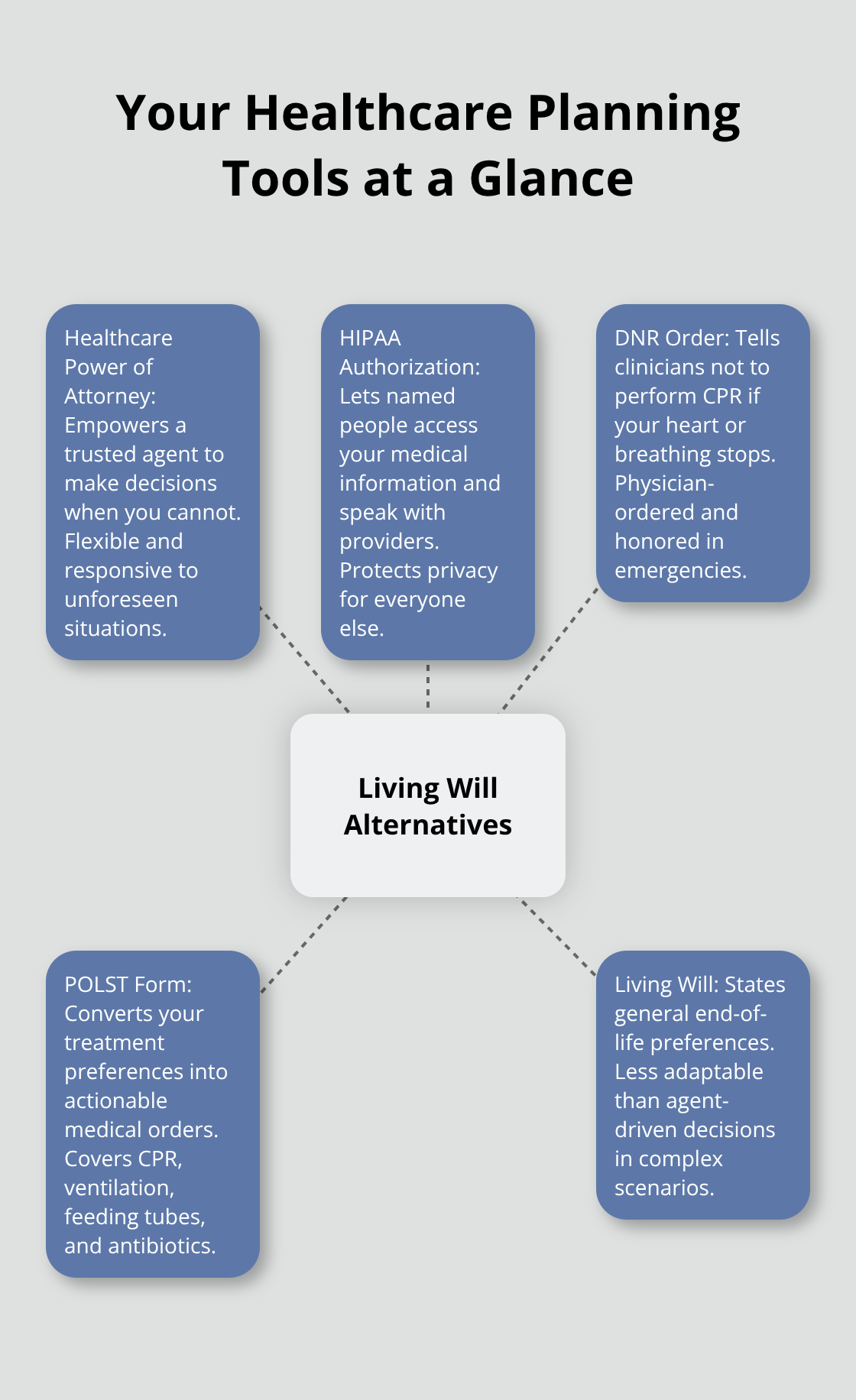
Healthcare Power of Attorney: Flexibility When You Need It Most
A healthcare power of attorney hands control to someone you trust when you cannot make medical decisions yourself. This person, called your healthcare agent or proxy, steps in during emergencies or prolonged incapacity and makes treatment choices aligned with your values. The power is immediate and flexible-your agent adapts to situations you never anticipated, which a living will cannot do. Nevada law allows you to name a healthcare agent through a straightforward document without requiring a lawyer, though working with one prevents costly mistakes. Your agent must meet state requirements: they cannot be your healthcare provider, cannot work at your healthcare facility, and must be willing to have difficult conversations about end-of-life care. Many people name a spouse or adult child, but you need backup agents in case your first choice becomes unavailable. This approach works especially well when family dynamics are stable and you have someone you genuinely trust to honor your wishes.
HIPAA Forms: Controlling Who Accesses Your Medical Information
HIPAA authorization forms serve a completely different purpose than a healthcare power of attorney. A HIPAA form grants specific people permission to access your medical records and discuss your care with doctors-something your agent cannot do without this separate authorization. You control exactly who sees what information, which matters if you want privacy from certain family members. This document protects your medical privacy while allowing trusted individuals to stay informed about your condition and treatment options.
DNR Orders and POLST Forms: Medical Instructions Emergency Responders Follow
Do Not Resuscitate orders are medical directives that instruct paramedics and hospital staff not to perform CPR if your heart stops or you stop breathing. DNR orders are physician-ordered instructions that travel with you across settings and are honored by emergency medical technicians immediately. The National POLST program reports that seriously ill patients with documented DNR orders receive care aligned with their preferences significantly more often than those without orders. A POLST form, which Nevada recognizes, documents your wishes about CPR, mechanical ventilation, feeding tubes, and antibiotics-these are actionable medical orders, not general statements. If you have a terminal diagnosis or advanced frailty, a POLST is far more practical than a living will because it gives emergency responders specific, binding instructions they can follow in seconds. Your healthcare provider completes and signs the POLST after discussing your medical condition, likely future scenarios, and treatment goals with you directly.
Understanding these distinct tools helps you build a healthcare plan that actually works when you need it. The next section explores when each alternative makes the most sense for your particular circumstances.
When Living Will Alternatives Actually Matter
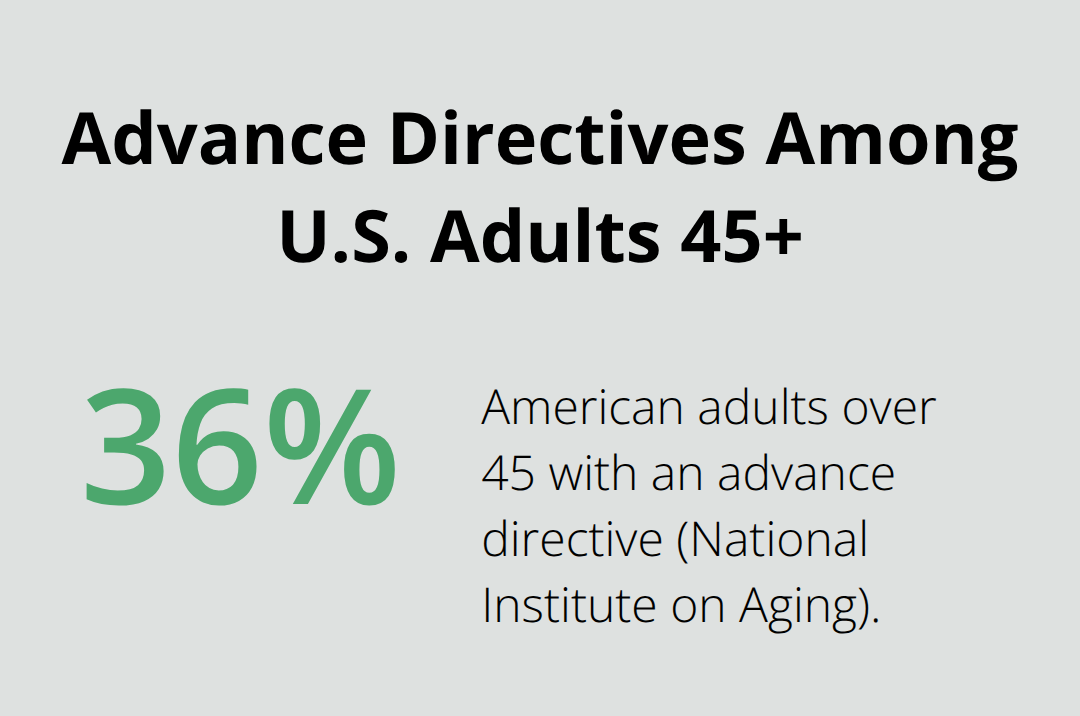
Family situations rarely stay simple, and your healthcare preferences shift as your life changes. A healthcare power of attorney, HIPAA form, or POLST becomes necessary when a traditional living will cannot address your specific circumstances. The National Institute on Aging reports that approximately 36% of American adults over 45 have some form of advance directive, yet many find their documents fail to cover critical situations they later face.
Your family dynamics, current health status, and how your preferences evolve determine which tool you actually need.
Family Conflict Makes Delegation Essential
Disagreements about medical decisions destroy families faster than almost any other issue. If your relatives have a history of conflict over money, parenting choices, or major decisions, a healthcare power of attorney prevents them from fighting over your treatment in an ICU. Naming a single trusted decision-maker removes ambiguity and stops multiple family members from claiming authority. A living will with written statements about your wishes helps, but it cannot adapt when doctors present unexpected treatment options or ask nuanced questions about quality of life. Your healthcare agent interprets your values in real time and explains decisions to relatives who might otherwise feel excluded or betrayed. If family members are likely to challenge each other’s authority, document your agent selection explicitly and discuss your choice with all parties beforehand. This conversation, uncomfortable as it feels, prevents chaos when you cannot speak for yourself.
Serious Illness Changes Everything
If you have received a diagnosis of terminal condition, advanced dementia, or chronic illness with a clear trajectory, a POLST form becomes far more practical than a living will. Your doctor must complete and sign this form based on your medical reality, not hypothetical scenarios. The National POLST program found that patients with documented POLST orders receive emergency care aligned with their stated preferences at significantly higher rates than those relying on living wills alone. A POLST specifically addresses CPR, mechanical ventilation, feeding tubes, and antibiotics-the treatments paramedics and hospital staff actually encounter in emergencies. If you are healthy today but develop a serious diagnosis tomorrow, your healthcare power of attorney gains immediate value because your agent makes decisions your living will never anticipated. HIPAA forms become critical when you want specific people informed about your condition without giving them decision-making authority.
When Your Preferences Shift Over Time
Life changes force you to reconsider healthcare decisions you made years ago. A major diagnosis, marriage, divorce, or shift in your values about quality of life means your old living will no longer reflects what you actually want. A healthcare power of attorney adapts automatically because your agent responds to your current wishes, not statements frozen in time. You should update your POLST form whenever your medical condition changes significantly or your treatment goals shift. The National Institute on Aging recommends reviewing all advance directives roughly every ten years and immediately after major life events. A healthcare agent who knows you well catches nuances a written document cannot capture, especially when medical situations become complex or ambiguous.
Your specific circumstances-not general advice-should guide which tools you select. The next section walks you through how to evaluate your own situation and choose the right combination of documents for your needs.
How to Choose the Right Alternative for Your Situation
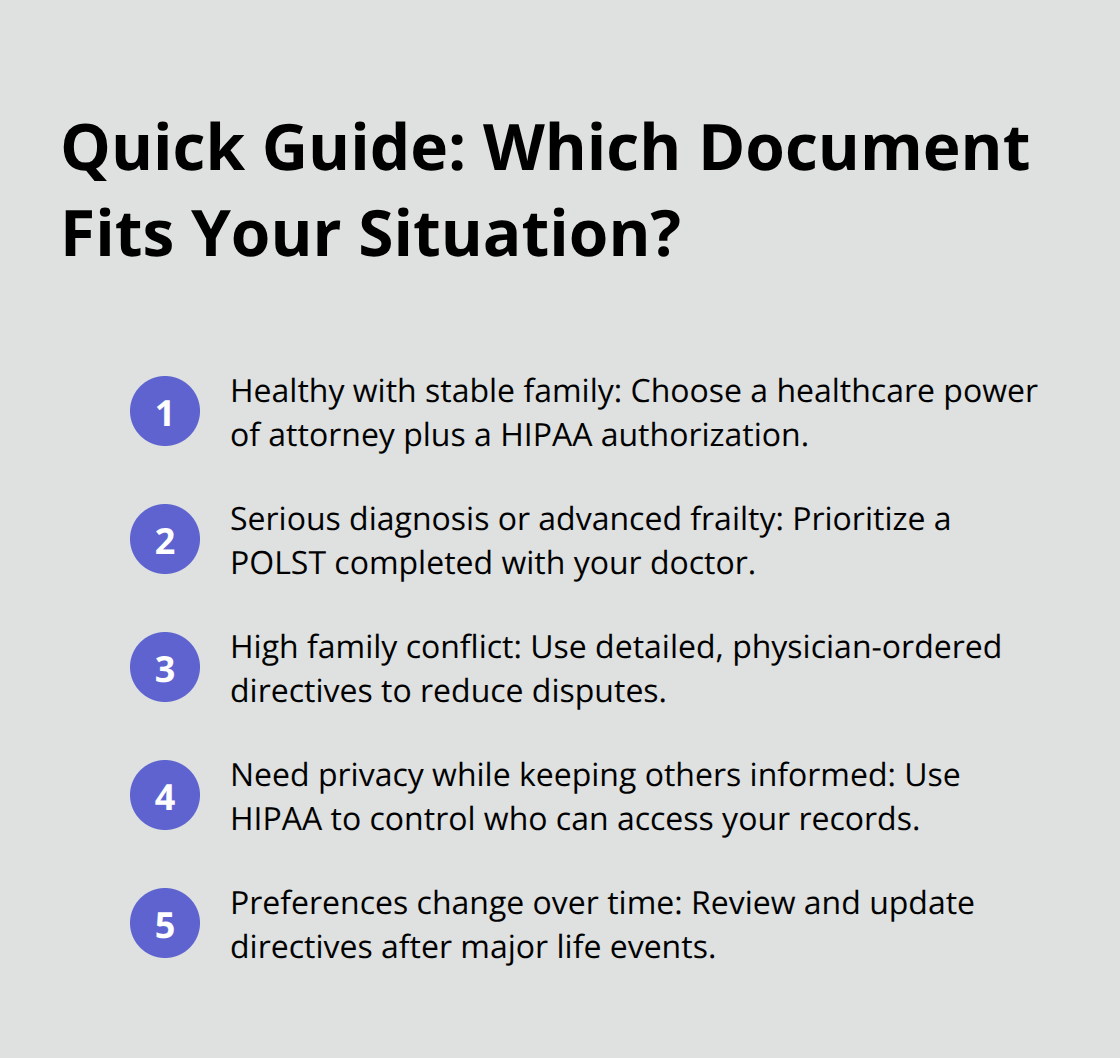
Your health status shapes everything about which documents matter right now. If you are currently healthy with no serious diagnosis, a healthcare power of attorney paired with a HIPAA form covers most situations effectively. Your agent handles decisions you cannot predict, while the HIPAA form lets trusted people stay informed without decision-making power. This combination is simple, affordable, and requires no ongoing updates until your health changes.
When You Have a Serious Diagnosis
If you have received a diagnosis of terminal illness, advanced dementia, or progressive chronic disease, a POLST form becomes your priority instead. Your doctor must evaluate your actual medical condition and likely trajectory before completing this form, making it far more grounded in reality than a living will written when you were well. The National Institute on Aging recommends that anyone with serious illness discuss POLST completion with their healthcare provider immediately rather than waiting. A POLST takes weeks to arrange properly because your physician needs time to review your case thoroughly and discuss each treatment option with you during an appointment. Do not rush this conversation or allow a form to be completed without genuine discussion about your prognosis and what acceptable quality of life means to you personally.
Assessing Your Family’s Communication Patterns
Your family’s actual communication patterns, not what you wish they were, determine whether a healthcare agent can succeed in your situation. Families that discuss difficult topics openly and reach consensus on major decisions benefit tremendously from delegating to a trusted agent who interprets your values in real time. Families with a history of conflict, competition for control, or members who ignore each other’s perspectives need something different. In high-conflict families, naming a healthcare agent often backfires because relatives challenge the agent’s authority or refuse to accept decisions made on your behalf. If this describes your family, a detailed POLST form with specific physician-ordered instructions becomes more valuable than a healthcare power of attorney because paramedics and hospital staff follow the written orders regardless of family disagreement. You can still name a healthcare agent, but the POLST provides backup authority when family conflict threatens to derail your care.
Having the Conversation with Your Family
Schedule a family conversation before finalizing any document, not after. Tell your relatives who you have chosen as your agent, explain why you chose them, and describe your basic treatment preferences. This conversation prevents shock and resentment later, and it gives you a chance to hear objections while you can still revise your plan. Your relatives deserve to understand your choices and voice concerns before your documents become final.
Working with Legal Professionals
Florida law does not require a lawyer to create a healthcare power of attorney or HIPAA form, but mistakes in these documents can render them useless when you need them most. A healthcare provider might refuse to honor a form completed incorrectly, or family members might challenge its validity in court. Working with someone experienced in healthcare planning prevents these problems and costs far less than fixing documents that fail in a crisis. Update your documents whenever your health changes significantly, when your choice of healthcare agent becomes unavailable, or when your values shift about acceptable medical treatment. Do not assume documents completed five years ago still reflect your current wishes.
Final Thoughts
Healthcare planning protects your right to receive care aligned with your values when you cannot advocate for yourself. A healthcare power of attorney, HIPAA form, POLST order, or DNR directive each serve distinct purposes, and living will alternatives provide flexibility that traditional documents cannot match. Your healthcare agent knows you personally and adapts to situations no written document anticipated, while your POLST form gives emergency responders binding medical orders they can follow immediately.
Start by identifying your current health status and family dynamics honestly. If you are healthy with stable family relationships, a healthcare power of attorney and HIPAA form provide solid protection. If you have a serious diagnosis, schedule a conversation with your healthcare provider about completing a POLST form right away, and if your family has a history of conflict, prioritize detailed medical directives that leave less room for disagreement.
Have the difficult conversation with your family before finalizing any documents-tell them who you have chosen as your agent, explain your reasoning, and describe your basic treatment preferences. We at Family, Estate & Mediation Law help individuals and families across Northeast Florida create healthcare plans that actually work when crisis strikes. Contact us to discuss which living will alternatives fit your situation and ensure your healthcare wishes are documented correctly.