
Losing a loved one is hard enough without the added stress of handling their estate. We at Family, Estate & Mediation Law know that estate settlement steps can feel overwhelming when you’re grieving.
This guide walks you through each phase of the process, from managing debts and taxes to distributing assets fairly. You’ll learn what to expect and when to reach out for help.
What Happens After Death in St. Augustine and Palatka, FL
When someone passes away, the estate settlement process begins immediately, though most people don’t realize this. Within days, you’ll need to locate the original will and contact the Putnam County Clerk of Court in Palatka, Florida at (386) 326-7600. Florida law requires the original Last Will and Testament to be deposited with the clerk within 10 days of death notice, according to the 2026 Will Deposit Rule. Missing this deadline causes significant delays that ripple through the entire settlement timeline. The clerk assigns a file number, maintains court records, and the circuit court judge supervises probate proceedings from this point forward. In Putnam County, Judge K. Mark Johnson oversees probate and guardianship matters, with administrative cross-assignment designed to reduce bottlenecks. The personal representative, whether named in the will or appointed by the court, becomes responsible for administering the estate and must hire a qualified probate attorney to guide the process. The attorney advises the personal representative on rights and duties but represents the personal representative, not necessarily the beneficiaries. This distinction matters because conflicts between heirs can arise, and the personal representative’s fiduciary duty protects the estate itself.
Critical First Deadlines
The 10-day will deposit rule determines your entire trajectory. Once filed, the personal representative must publish a Notice to Creditors and serve a Notice of Administration to interested parties within specific timeframes. In Putnam County, most uncontested probate matters proceed via Zoom, which eliminates travel and speeds up the process significantly. Creditors who receive notice have approximately three months to file claims against the estate, though the claim period technically runs from when the Clerk issues Letters of Administration. Known creditors have 30 days to file, while unknown creditors get the full 90-day window. Valid debts, taxes, and administration expenses must be paid before any distributions to beneficiaries occur. The personal representative can be personally liable if taxes go unpaid, making professional guidance non-negotiable. Simple probate typically takes five to six months from filing to final order, though this assumes no complications and no federal estate tax return is required.
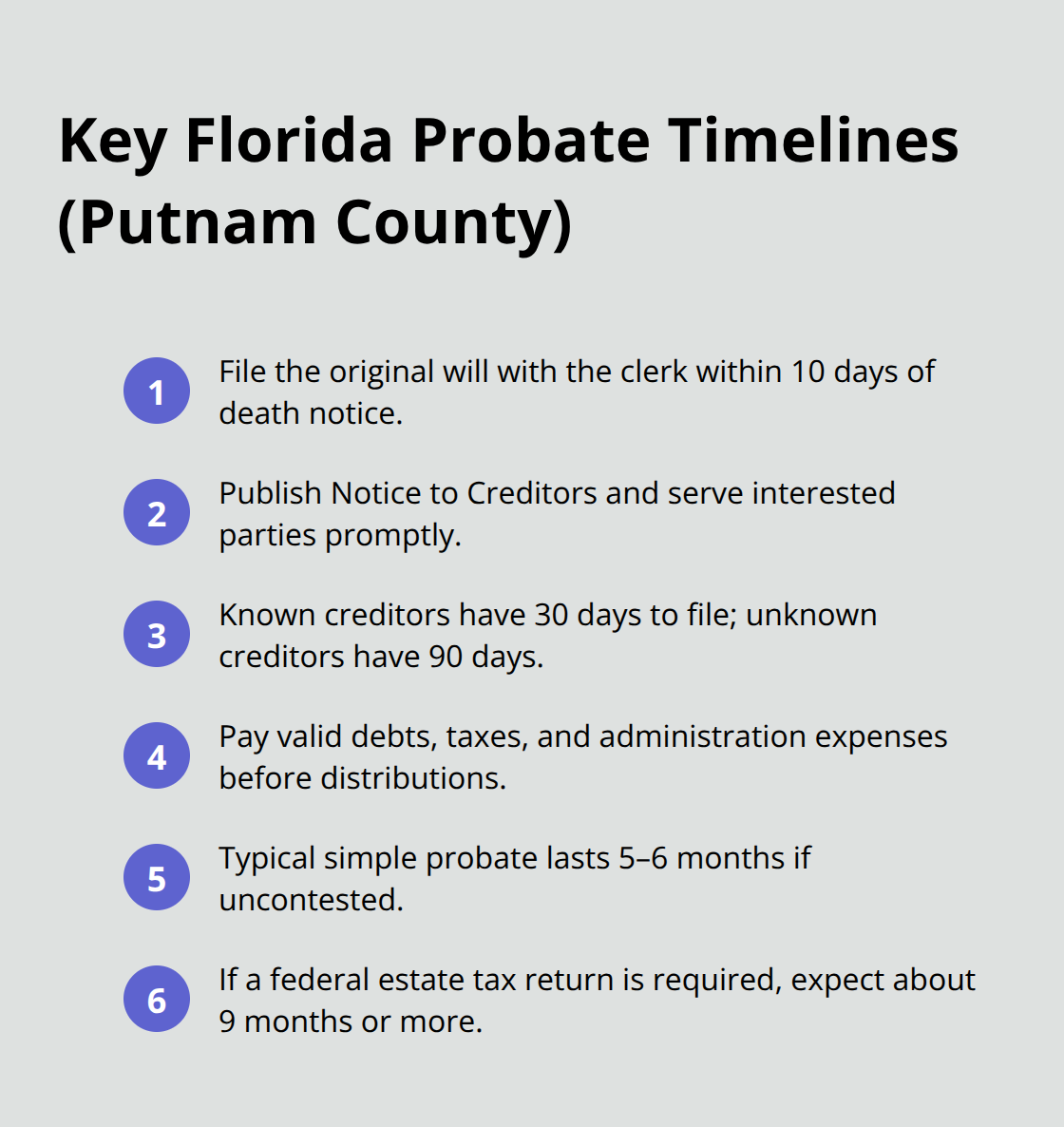
If a federal estate tax return is needed, the timeline extends to approximately nine months, with possible extensions.
Asset Classification Changes Everything
Not all assets go through probate, and this distinction saves time and money. Assets owned jointly with rights of survivorship or payable to named beneficiaries pass directly to heirs outside probate. Homestead property receives special protection under Florida Constitution Article 10, Section 4, with city limits protecting up to a half-acre and rural areas protecting up to 160 acres from creditor claims. Other exempt property typically includes two vehicles, household furnishings, and up to $1,000 in personal property, which transfer free of creditors. The personal representative must identify, gather, value, and safeguard all assets while conducting a diligent search for creditors. This inventory process determines whether Summary Administration or Formal Administration applies. If non-exempt assets total less than $75,000 and debts are resolved or uncontested, Summary Administration applies and costs significantly less. Starting July 1, 2026, the non-exempt asset threshold rises to $150,000, expanding eligibility. Additionally, if the decedent died more than two years ago, an estate qualifies for Summary Administration regardless of asset value, which expedites title clearance for family land.
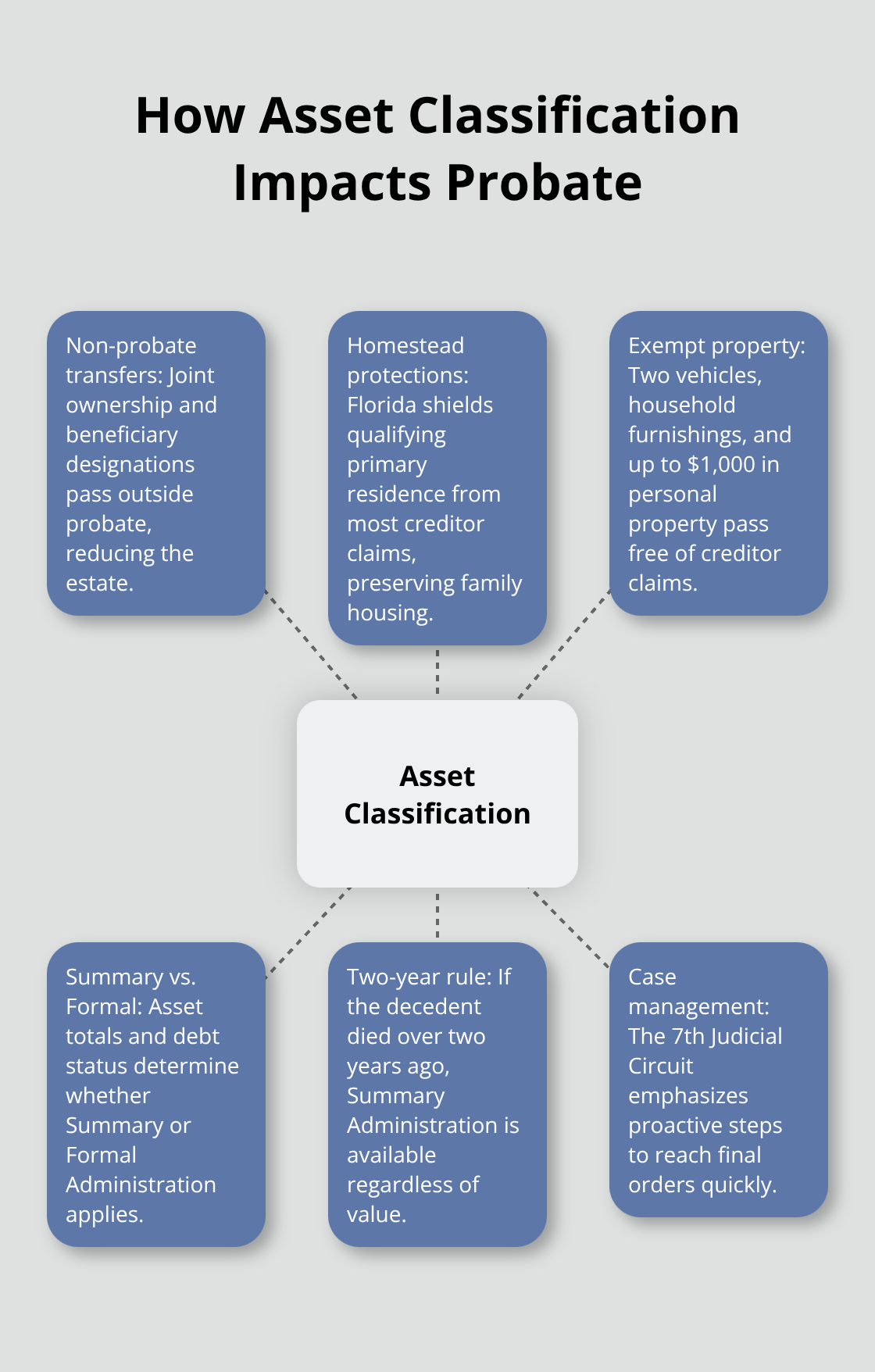
The 7th Judicial Circuit emphasizes proactive case management to move cases from filing to final order as quickly as possible within the law.
What Comes Next
Once you understand these initial steps and asset classifications, the focus shifts to managing the financial obligations tied to the estate. Debts don’t disappear when someone passes away-creditors still expect payment, and taxes still come due. The personal representative shoulders responsibility for identifying what the estate owes and in what order those obligations must be satisfied.
Managing Debts, Taxes, and Final Expenses in St. Augustine and Palatka, FL
The personal representative’s first financial task is brutal honesty about debts. Creditors don’t wait, and estate law requires payment before beneficiaries receive anything. Start by gathering bank statements, credit card bills, mortgage documents, and utility statements from the past twelve months. Contact the three credit bureaus-Equifax, Experian, and TransUnion-to pull a credit report on the deceased; this reveals debts you might otherwise miss.
Identifying and Paying Outstanding Debts
Known creditors have thirty days from the Notice to Creditors publication to file claims, while unknown creditors get the full ninety-day window according to Florida Statute 733.2121. Valid debts must be paid from probate assets before distributions occur, and the personal representative carries personal liability if taxes go unpaid. Mortgage debts are not barred by the two-year claims rule, meaning a home loan can be enforced regardless of timing.
Funeral and burial costs typically range from $7,000 to $12,000 depending on location and preferences; these are priority expenses paid immediately from the estate. Administrative costs-attorney fees, court filing fees, accounting services, and appraisals-also come first. In Putnam County, probate filing fees for 2026 are straightforward: Formal Administration costs $400, Summary Administration for estates over $1,000 costs $345, and Summary Administration for estates under $1,000 costs $235 according to the 7th Judicial Circuit fee schedule. Many personal representatives underestimate these costs and fail to set aside sufficient funds, creating cash flow problems later.
Filing Final Tax Returns and Estate Taxes
Federal income taxes on the decedent’s final year are due on April 15 following death, filed on Form 1040. If the decedent died in January, the estate still owes taxes for that entire year. The personal representative becomes responsible for filing this return and paying what’s owed from probate assets. Additionally, if the estate generates income after death-interest on accounts, rental property revenue, investment gains-those earnings are taxed on Form 1041, the estate’s income tax return.
For large estates, federal estate tax applies using Form 706; the 2026 exemption sits around fifteen million dollars per individual under current law, but estates below this threshold still file if the decedent had significant non-probate assets. Florida has no state estate or inheritance tax, which is one advantage for families settling estates here. However, state-specific apportionment under Florida Statute 733.817 determines which assets bear the tax burden.
Covering Funeral and Administrative Costs
The personal representative should hire a qualified accountant familiar with estate tax returns; mistakes trigger audits and penalties that drain the estate further. Many families fail to file required tax returns on time, incurring late-payment penalties of five percent per month, compounding quickly. A flat-fee probate arrangement often includes basic tax filing coordination, but complex estates with investment income or business interests require separate accounting fees, typically $1,500 to $3,000 depending on complexity.
The creditor claim period runs from when the Clerk issues Letters of Administration, not from death itself, creating a specific filing deadline that triggers the ninety-day window. Missing this deadline means creditors can file claims after the period closes, creating disputes and delays that derail closure timelines. Once you satisfy these financial obligations, the focus shifts to locating what actually belongs to the beneficiaries and preparing those assets for transfer.
Distributing Assets to Beneficiaries in St. Augustine and Palatka, FL
Once debts and taxes are satisfied, the personal representative faces the practical task of locating every asset the deceased owned and preparing those assets for transfer to beneficiaries. This phase separates theoretical probate from real-world settlement because many families discover assets they didn’t know existed-forgotten investment accounts, safety deposit boxes, life insurance policies with named beneficiaries, or property in multiple states. Pull the decedent’s last three years of tax returns, which reveal investment accounts, rental properties, and business interests that might otherwise stay hidden. Contact the three credit bureaus to review the credit report; creditors list accounts on these reports even if family members don’t know about them.
Check with the Social Security Administration to confirm whether the decedent received benefits, as uncashed checks or overpayments sometimes exist. Review bank statements and credit card statements for subscription services or automatic payments that hint at hidden accounts. Safety deposit boxes at banks require a court order to open in Florida, but the personal representative can petition the court for access once Letters of Administration are issued. Life insurance policies, retirement accounts with named beneficiaries, and payable-on-death accounts bypass probate entirely and transfer directly to named beneficiaries outside the estate’s control. This distinction matters enormously because these non-probate assets reduce the probate estate’s size and can push an estate below the Summary Administration threshold, saving thousands in fees and months in timeline.
Inventory and Appraisal Requirements
Florida law requires the personal representative to file an Inventory within sixty days of Letters of Administration, listing all probate assets with estimated values according to Florida Statute 733.604. Real estate requires a professional appraisal if the value exceeds $10,000, typically costing $300 to $600 per property; vehicles need current market values from resources like NADA Guides or Kelly Blue Book. Bank accounts and investment statements provide exact values as of the date of death. The personal representative must safeguard all assets during the settlement process, which means securing the decedent’s home, maintaining insurance on vehicles and property, and preventing unauthorized access to accounts.
Disputes among heirs frequently arise during this phase because beneficiaries question asset valuations or claim the personal representative favors certain heirs. These disputes derail timelines dramatically-what should take five to six months stretches into years when heirs file objections to the Inventory or contest distributions. Florida courts can appoint an attorney ad litem to represent disputed interests, adding legal costs that drain the estate. The personal representative’s fiduciary duty requires transparent documentation of every transaction, every appraisal, and every decision made during settlement.
Transferring Ownership and Closing Accounts
Real property transfers require a new deed prepared by a probate attorney and recorded with the county clerk in Putnam County or wherever the property sits. Deed preparation costs $250 to $350 and must include the legal description from the original deed, the personal representative’s name and title, and the beneficiary’s name exactly as they wish it recorded. Bank accounts and investment accounts transfer via beneficiary designation forms or account closure requests once the financial institution receives a certified copy of Letters of Administration and proof of death.
Some institutions move slowly-expect two to four weeks for major banks and investment firms to process transfers. The personal representative should never commingle probate assets with personal funds, as this creates tax complications and exposes the personal representative to personal liability if disputes arise. Once all assets are accounted for, appraised, and prepared for transfer, the personal representative files a final accounting with the court showing all receipts, disbursements, and proposed distributions. In Putnam County, most uncontested final accountings proceed via Zoom, avoiding the need for in-person court appearances.
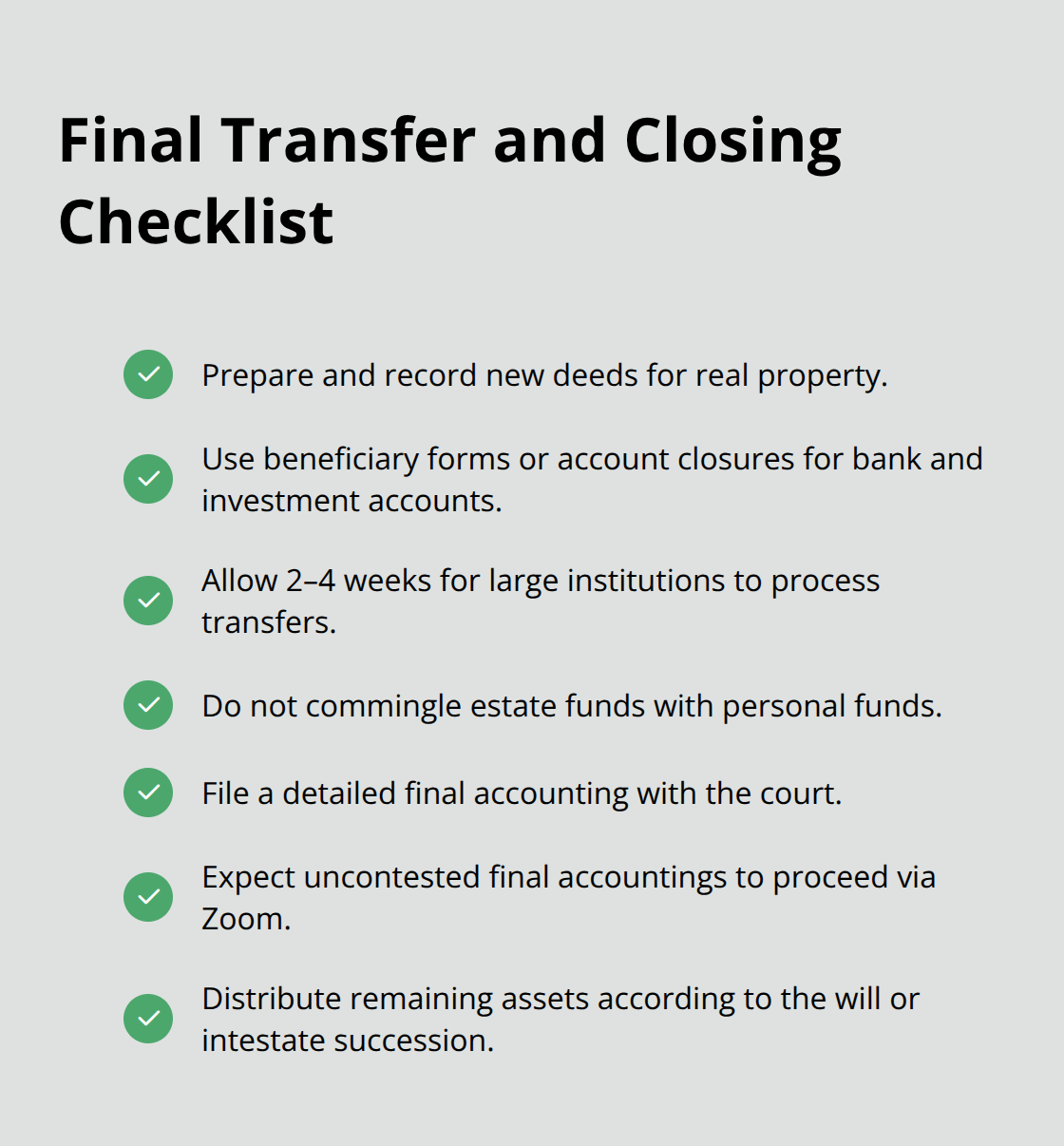
The judge reviews the accounting, issues a final order, and the personal representative distributes remaining assets to beneficiaries according to the will or Florida’s intestate succession rules.
Final Thoughts
Estate settlement steps demand attention to detail and strict adherence to Florida’s legal requirements, but the process becomes manageable when you understand what happens at each stage. The critical path runs from depositing the will within ten days, through the creditor claim period, to final distributions-typically five to six months for straightforward estates. Missing deadlines costs money and time; filing the will late, failing to publish Notice to Creditors properly, or overlooking tax obligations creates complications that extend closure indefinitely.
The personal representative carries real responsibility and real liability. Unpaid taxes expose them personally, commingled funds create tax problems, and poor documentation invites disputes from beneficiaries. This is why hiring a qualified probate attorney isn’t optional-it’s the foundation of a smooth settlement, as an attorney guides the personal representative through each deadline, coordinates with the Putnam County Clerk of Court, handles court filings through the Florida Courts E-Filing Portal, and manages the accounting and tax coordination that most families find overwhelming.
We at Family, Estate & Mediation Law understand that grief and legal complexity don’t mix well. Our team helps families across Northeast Florida navigate estate settlement with practical, client-centered strategies, whether your estate qualifies for Summary Administration or requires Formal Administration. Reach out for a consultation-we serve clients in St. Augustine and Palatka, Florida, and can answer your specific questions about your estate’s timeline, costs, and next steps.