
When a loved one passes away, families face overwhelming decisions about assets, debts, and distributions. Estate settlement planning removes the guesswork and protects what matters most.
At Family, Estate & Mediation Law, we’ve seen how proper planning prevents costly mistakes and family conflict. This guide walks you through the process step by step.
What Estate Settlement Planning Actually Requires
Building Your Complete Asset Inventory
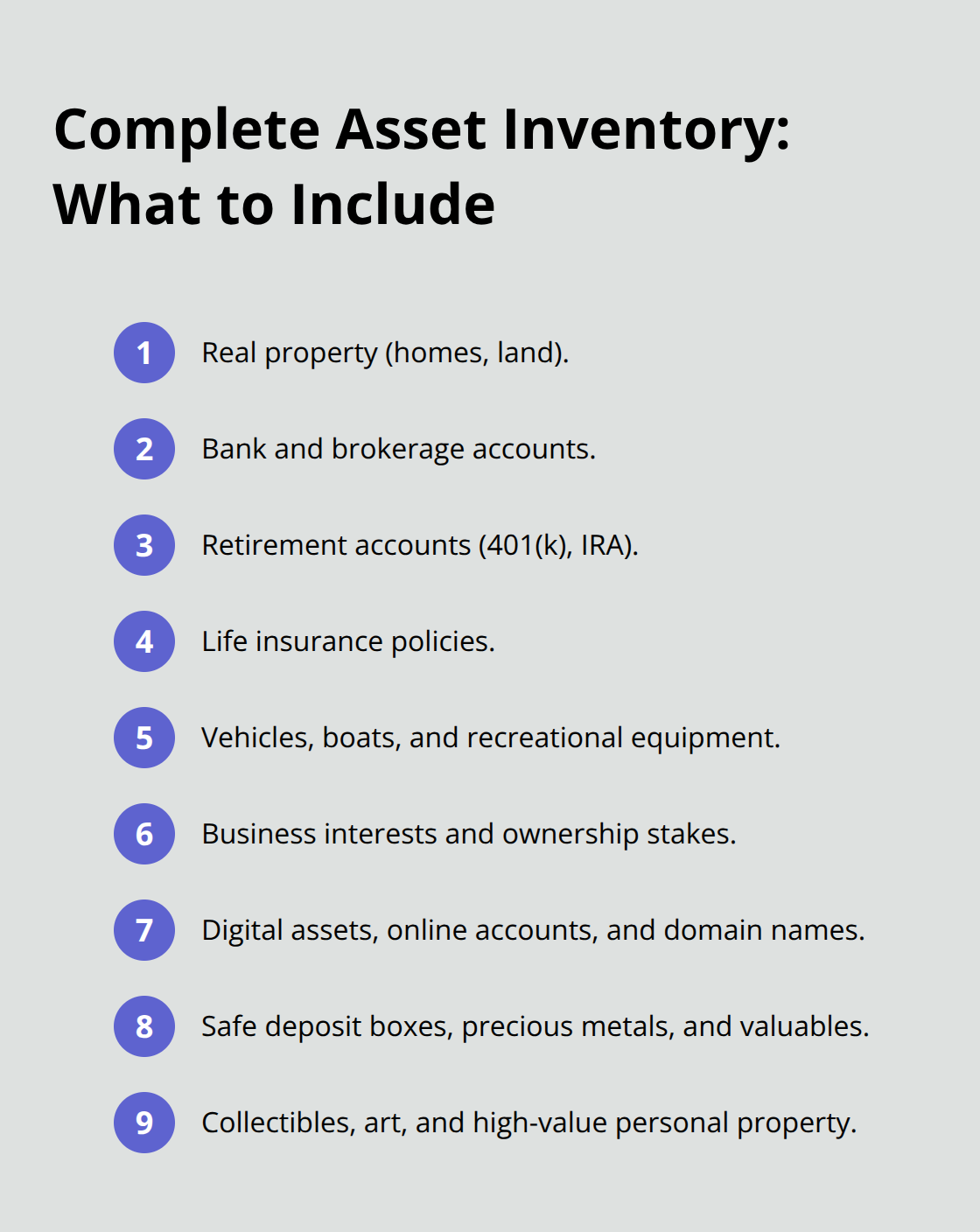
Estate settlement planning starts with a complete asset inventory, and this step determines everything that follows. You must document every asset the deceased owned: real property, bank accounts, investment accounts, vehicles, life insurance policies, retirement accounts, and personal property with significant value. The North Carolina Administrative Office of the Courts recommends using a Property Worksheet to capture real, personal, and financial holdings systematically. Many families miss hard-to-find assets like safety deposit boxes, digital accounts, or collectibles that don’t appear on tax returns, which creates problems later when beneficiaries discover forgotten property.
Determining Settlement Requirements and Options
Once you have the full inventory, contact the clerk of superior court in the decedent’s county to determine whether a personal representative is required based on total asset value. This matters because some estates qualify for abbreviated settlement options when assets are limited or beneficiaries are straightforward, potentially saving months and thousands in administration costs. Simultaneously, identify all debts and final expenses: funeral costs, outstanding loans, credit card balances, property taxes, and any claims against the estate. North Carolina law entitles surviving spouses and dependents to a year’s allowance from probate property, which you must apply for within one year of death.
Setting Up Administrative Infrastructure
You’ll need an Employer Identification Number from the IRS and an estate bank account to manage funds separately from personal accounts during administration. These steps establish the financial foundation for the entire settlement process and prevent commingling of estate and personal assets.
Following the Court-Enforced Timeline
The timeline for estate settlement follows a structured process that courts enforce. After the personal representative receives appointment, you have 90 days to file an inventory detailing assets, their estimated values, and date-of-death balances (including professional appraisals if necessary). If required, publish a creditor notice with a claims deadline of at least 90 days in the future, which gives creditors time to file claims against the estate.
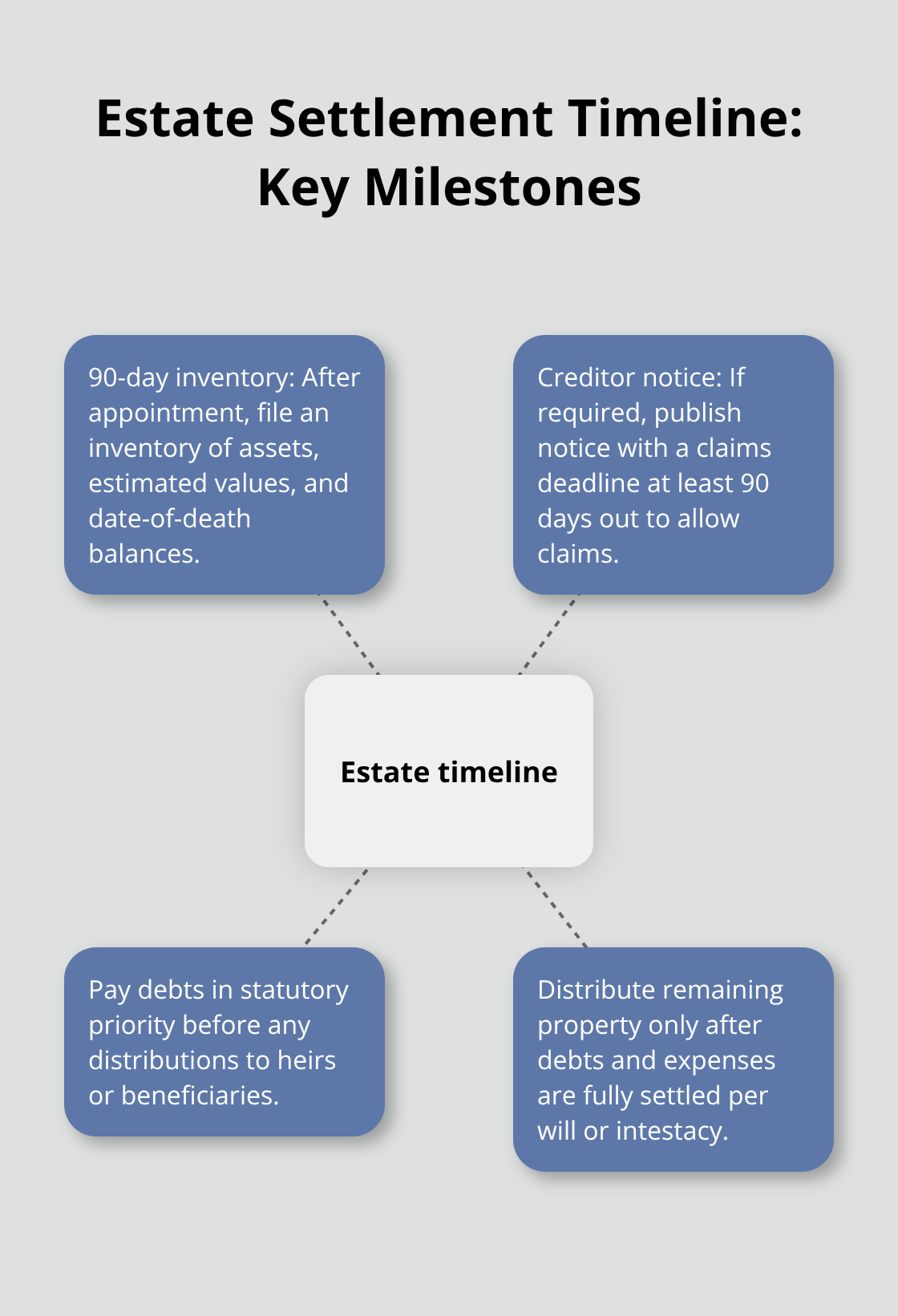
Pay debts in priority order using estate assets, consulting the clerk on priority rules if needed. Only after debts and expenses are settled do you distribute remaining property according to the will or North Carolina intestacy statutes if no will exists.
Managing the Full Settlement Process
The entire process typically takes longer than a year if annual accounting is required, with final accounting mandatory before discharge. This structured timeline prevents rushed decisions and protects heirs from liability for unpaid debts. Working with the clerk of superior court and referring to the North Carolina Administrative Office of the Courts’ Estate Procedures brochure keeps you aligned with legal requirements and prevents costly delays or oversights. Understanding these requirements prepares you for the common mistakes families make during settlement-mistakes that can derail even well-intentioned efforts.
Where Families Go Wrong During Settlement
Misaligned Beneficiary Designations Create Unintended Outcomes
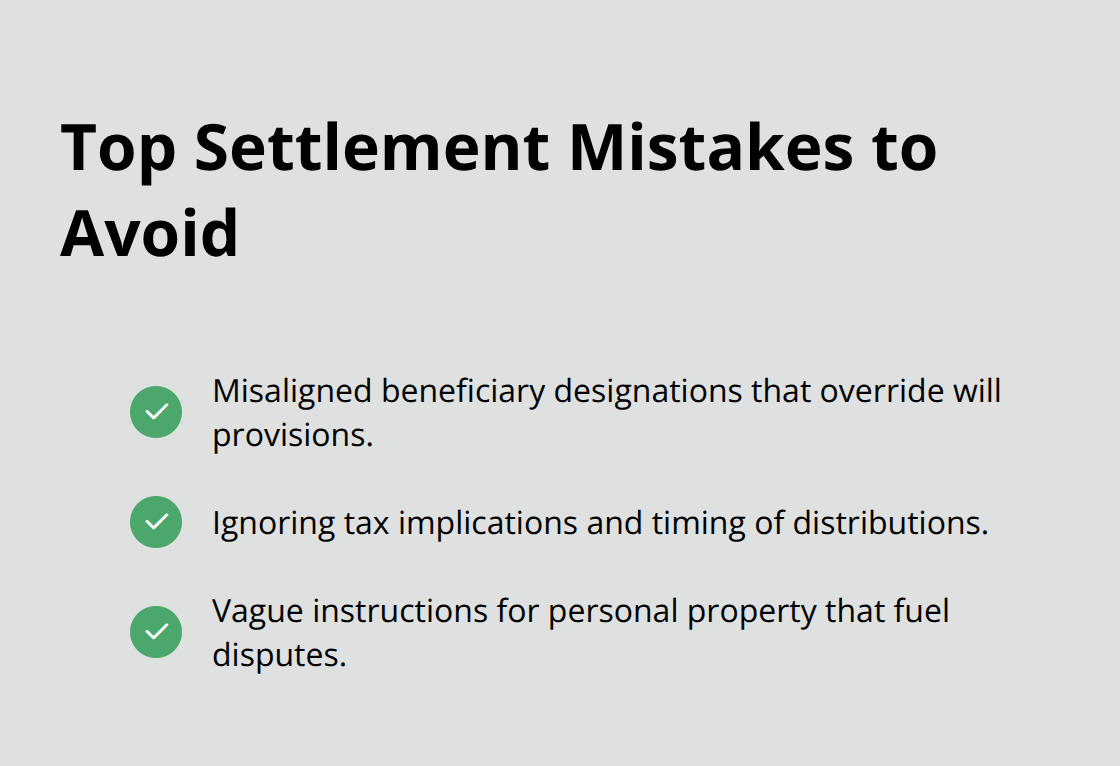
Families make their first critical mistake by leaving beneficiary designations misaligned with the overall estate plan. Life insurance policies, retirement accounts, and transfer-on-death accounts bypass probate entirely and pass directly to named beneficiaries, which means they ignore what the will states. If you named your ex-spouse as beneficiary on a life insurance policy ten years ago and never updated it after remarriage, that policy goes to your ex, not your current spouse or children, regardless of what your will says. The IRS reports that beneficiary designation errors account for significant portions of inheritance disputes, yet most people never revisit these designations after major life changes like marriage, divorce, or the birth of children.
You should review all beneficiary designations every three to four years and immediately after any significant life event. This single step prevents assets from flowing to unintended recipients and eliminates one of the most common sources of family conflict. Coordinate these designations with your overall estate plan to ensure they work together rather than against each other.
Tax Mistakes During Settlement Administration Cost Thousands
The second mistake involves ignoring tax implications and strategies during settlement administration. Many families pay far more in taxes than necessary because they don’t understand how income in respect of a decedent works or fail to coordinate distributions with the beneficiaries’ tax situations. When an executor distributes retirement account funds to multiple beneficiaries in a single year, that distribution can push beneficiaries into higher tax brackets, costing thousands in unnecessary taxes. The federal estate tax threshold reached 13.61 million dollars in 2024, which means smaller estates often escape federal taxes entirely, yet families still make poor distribution decisions that trigger state taxes or income taxes that could have been avoided.
Work with a tax professional during settlement to stagger distributions, coordinate with each beneficiary’s income level, and document the settlement process. This approach prevents costly errors and keeps more money in your family’s hands rather than the government’s.
Vague Instructions About Personal Property Spark Family Conflict
The third mistake involves failing to document final wishes and create clear instructions for handling specific items, particularly personal property with emotional or financial value. When a will states that personal property distributes among children without specifying who receives grandmother’s jewelry, the china collection, or the vintage car, families spend months in conflict trying to divide these items fairly. Detailed instructions reduce post-settlement disputes, prevent resentment between heirs, and honor the deceased’s actual wishes rather than leaving distribution decisions to grieving family members.
Establish an orderly selection process before death (oldest picks first, then youngest, alternating rounds) or explicitly allocate each significant item in your estate documents. These steps transform potential conflict into a straightforward, fair process that all family members understand and accept. With these common mistakes identified, understanding how professional guidance addresses them becomes the next logical step in protecting your family’s interests.
How We Help Navigate Settlement
Settlement administration requires more than following court timelines-it demands someone who handles technical details while addressing real conflicts that emerge when emotions run high and money sits on the table. Families need guidance that combines probate administration with dispute resolution because settlement breaks down quickly when family members disagree on valuations, distributions, or how to interpret the deceased’s wishes.
Managing Probate and Trust Administration
We at Family, Estate & Mediation Law Group manage the entire court process, from filing inventories and creditor notices to coordinating with financial institutions and preparing final accountings. This approach keeps families focused on grieving rather than drowning in paperwork. We handle the conversations that matter most: explaining why the 90-day creditor notice period exists, clarifying how beneficiary designations override the will, and preparing heirs for tax implications before distributions happen. When families work with us during settlement, they understand exactly what’s happening and why, which prevents the surprises that create lasting resentment.
Resolving Family Disputes Over Assets and Distribution
Disputes between family members surface during settlement because emotions intensify around money and property division. Conflicts emerge over personal property allocation, disagreements about whether the deceased intended equal or unequal distributions, and tensions when one sibling questions another’s financial decisions as executor. Our mediation approach keeps families talking instead of fighting, which matters because litigation over estate disputes costs thousands in attorney fees and can destroy relationships permanently. We’ve handled the complex scenarios that make settlement administration difficult: family businesses requiring valuation, collections needing specialized appraisal, and estates with multiple state properties subject to different tax rules.
Minimizing Taxes Through Strategic Distribution Planning
We minimize tax burden and protect assets through strategic distribution planning that considers each beneficiary’s individual tax situation, not just moving money as quickly as possible. Working with tax professionals during settlement administration, we coordinate timing of distributions to avoid pushing beneficiaries into higher tax brackets and identify opportunities to use income in respect of a decedent rules effectively. This coordination prevents costly errors and keeps more money in your family’s hands rather than the government’s.
Final Thoughts
Estate settlement planning protects your family from costly mistakes, family conflict, and unnecessary taxes. The process demands attention to detail-from documenting every asset to coordinating beneficiary designations with your overall estate plan-but the payoff is clear: smoother transitions, preserved relationships, and more money staying in your family’s hands. Settlement administration is not something families should navigate alone because the technical requirements are real, the emotional dynamics are complex, and the stakes become too high for guesswork.
Professional guidance addresses both the administrative and relational sides of settlement. Someone must file the 90-day inventory, coordinate with financial institutions, and prepare final accountings while also explaining why distributions are timed a certain way, mediating disagreements between siblings, and helping families understand tax implications before money moves. These responsibilities demand someone who understands probate law, tax strategy, and family dynamics-not just one of these areas, but all three working together.
Contact Family, Estate & Mediation Law Group to discuss your specific situation and transform estate settlement planning from a stressful process into a clear roadmap that protects your family’s interests and preserves relationships for years to come.