Most Northeast Florida families put off estate planning because they think it’s complicated or expensive. The truth is simpler: without a will or trust, your family faces probate delays, higher costs, and decisions made by the state instead of you.
At Family, Estate & Mediation Law, we’ve helped hundreds of local residents in St. Augustine and Palatka protect what matters most. This guide walks you through the real differences between wills and trusts, common mistakes to avoid, and the concrete steps to get your plan in place.
Why Your Family Needs Estate Planning Now
Florida Intestacy Laws Override Your Wishes
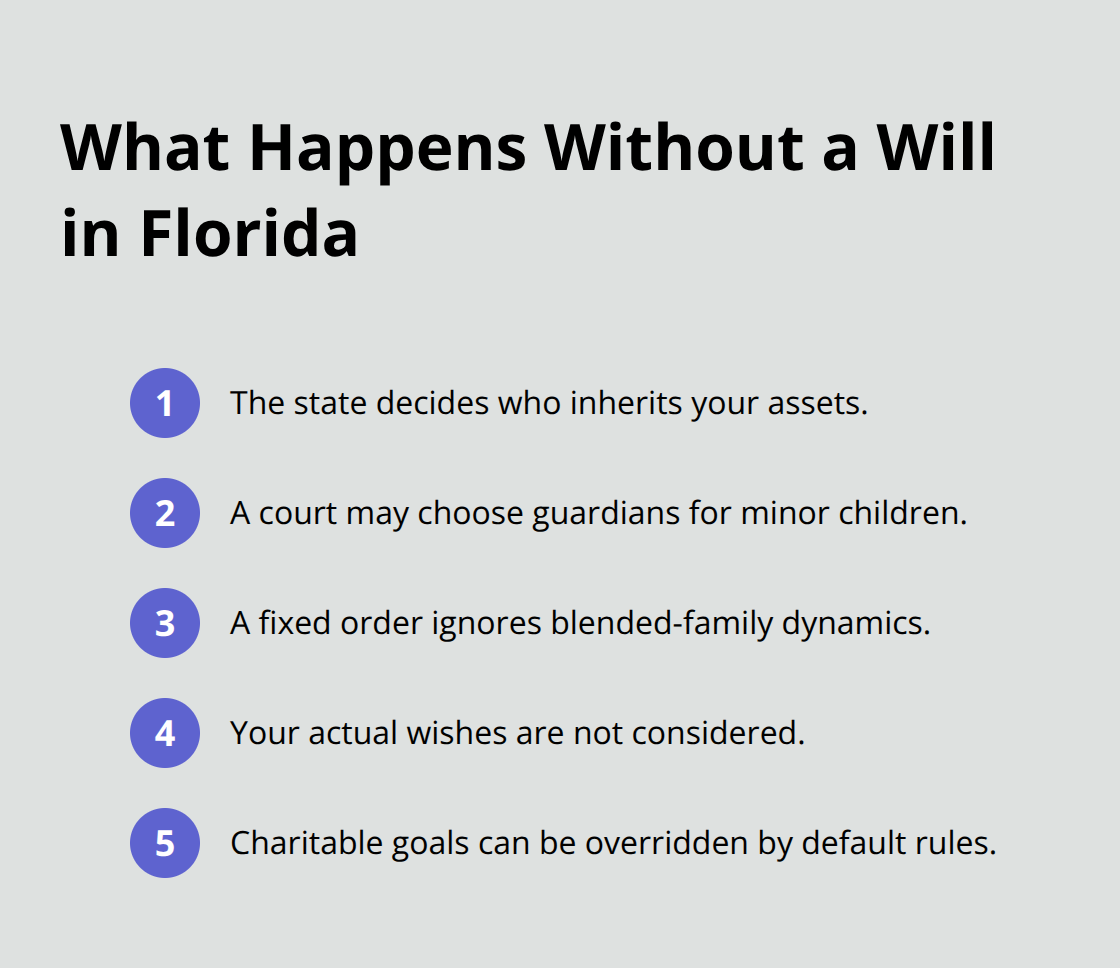
Most Northeast Florida families delay estate planning because they underestimate what happens without it. Florida intestacy laws kick in when you die without a will, meaning the state decides who gets your assets, who raises your minor children, and who manages your finances-regardless of your actual wishes. According to Florida Statute 732.102, your estate distributes first to a surviving spouse and children, then to parents, then to siblings, in a fixed order that ignores family dynamics entirely. If you have adult children from a previous relationship, a blended family, or specific charitable goals, intestacy produces outcomes that contradict your values.
Wills Leave Critical Gaps in Protection
The biggest mistake local residents make is confusing a will with complete protection. A will controls only assets in your name alone-it does not cover life insurance proceeds, retirement accounts with named beneficiaries, or property held in joint ownership. This gap leaves significant wealth outside your control, often flowing to unintended recipients.
Trusts Eliminate Probate and Preserve Privacy
A trust solves this problem by holding title to your assets during life and transferring them privately after death, eliminating probate entirely for trust-funded property. Florida Statute 732.502 requires wills to be signed and witnessed by two people in each other’s presence, a formality that creates delays and expense in probate court. Trusts avoid this process altogether.
The Real Cost of Probate in Northeast Florida
For Northeast Florida residents in St. Augustine and Palatka, the difference matters significantly. Probate in Florida typically costs 3 to 7 percent of your estate’s value and takes 6 to 12 months, while a revocable living trust costs less to create and produces zero probate expense. If you own real estate, operate a business, or want to preserve privacy about your assets and beneficiaries, a trust becomes the foundation of responsible planning rather than an optional tool.
Understanding these gaps between wills and trusts sets the stage for exploring the specific advantages each tool offers your family.
Wills and Trusts: Which Tool Protects What
A will and a trust operate in fundamentally different ways, and most Northeast Florida families choose wrong because they don’t understand this distinction. A will takes effect only after you die-it names an executor, designates guardians for minor children, and directs how probate court distributes your assets. The problem is immediate: every asset titled in your name alone must pass through probate to reach your beneficiaries, a process that costs 3 to 7 percent of your estate’s value and takes 6 to 12 months in Florida. A will also becomes public record once filed in court, meaning anyone can access details about your assets, beneficiaries, and family finances. For Northeast Florida residents in St. Augustine and Palatka who value privacy or want to avoid court delays, a will alone falls short.
A trust operates during your lifetime and after death without court involvement. You transfer assets into the trust now, name yourself as trustee, and designate successor trustees to manage assets if you become incapacitated or die. Because the trust holds title to property, probate never touches trust-funded assets-they transfer directly to beneficiaries according to your instructions. This approach costs less than probate, takes weeks instead of months, and keeps your financial details confidential.
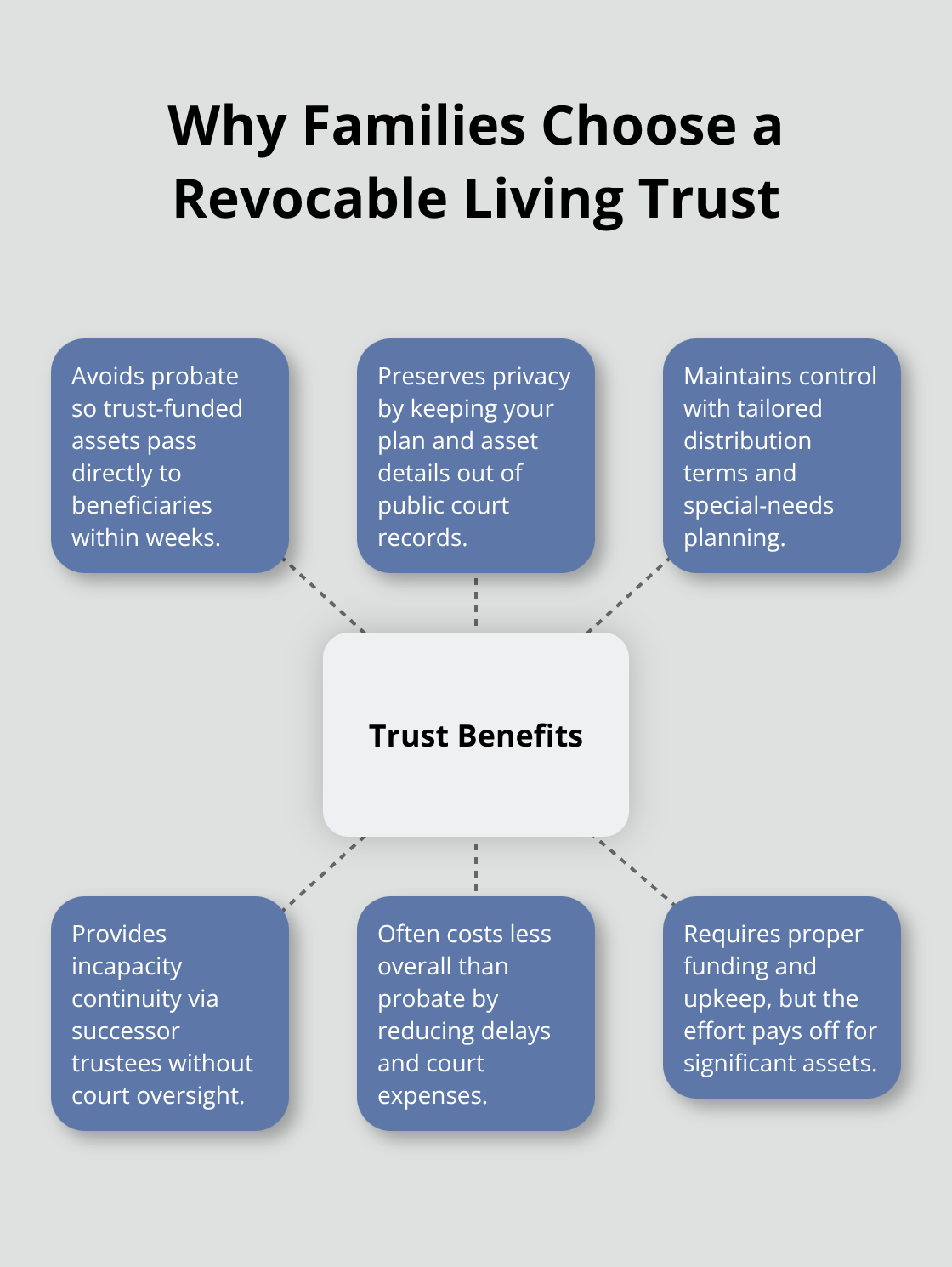
The trade-off is that trusts require more detailed drafting and ongoing funding (transferring deeds, retitling accounts) than a will, but that effort pays dividends for anyone with significant assets or privacy concerns.
Control That a Will Cannot Match
A trust gives you control that a will cannot match. With a trust, you specify exactly how and when beneficiaries receive money-you can restrict distributions to health, education, maintenance, and support rather than handing over a lump sum that a young beneficiary might squander. If you have a child with special needs, a trust protects their government benefits while still providing for their care, something a will cannot do. You can also name a successor trustee without court approval, whereas a will requires probate court to appoint an executor and oversee their actions.
For blended families, a trust prevents a surviving spouse from disinheriting your adult children because you control the distribution terms directly. You set the rules, not the state. Guardianship planning ensures your choices about who cares for your children are legally documented and enforceable.
Privacy Advantages That Matter
The privacy advantage of a trust matters significantly for most families. A revocable living trust keeps your estate plan confidential, whereas a will filed in probate court becomes a public record that creditors, distant relatives, and anyone else can examine. Florida Statute 732.502 requires wills to be witnessed and signed with specific formalities, but those requirements do nothing to protect your family’s privacy once probate begins. A trust avoids this exposure entirely.
Tax Planning and Asset Protection Strategies
Tax planning with a trust is more flexible than with a will. An irrevocable trust can remove assets from your taxable estate and reduce or eliminate federal estate taxes for high-net-worth families, a strategy that a will cannot accomplish. Florida’s unlimited homestead exemption protects your primary residence from creditors and forced sale after death, but a trust can further shield other assets from creditor claims if structured correctly.
For business owners, a trust allows you to transfer ownership without triggering a business sale, whereas a will might force your heirs to sell the business to pay probate costs and estate taxes. Married couples can use a trust to fund a credit shelter trust that preserves each spouse’s federal estate tax exemption-currently $13.61 million per person in 2024-while a simple will often wastes one spouse’s exemption.
Moving Forward With the Right Tool
These strategies require proper drafting and coordination with a tax professional, but the savings for high-net-worth families can reach hundreds of thousands of dollars. For most Northeast Florida families, the immediate benefit is avoiding probate and preserving privacy, but the long-term benefit is control over how your wealth flows to the next generation. Use an estate planning checklist to organize your assets and clarify your goals before meeting with an attorney. The next section explores the specific steps you need to take to build a will or trust that actually reflects your family’s needs and protects against disputes that emerge when terms are vague or unclear.
Building Your Will or Trust Step by Step
Inventory Your Assets With Precision
Create a complete list of every asset you own: real estate, bank accounts, investment accounts, retirement plans, life insurance policies, digital assets, and business interests. Florida Statute 732.502 requires wills to be signed and witnessed by two people in each other’s presence, but that formality means nothing if your document fails to address the assets that matter most to your family. Digital assets deserve special attention because many Northeast Florida families overlook them entirely. Cryptocurrency, online banking accounts, email accounts, and social media profiles hold real value and require explicit designation of who can access them after your death.
Create a separate inventory document that lists usernames, passwords stored securely, and instructions for each digital asset. Give your designated digital fiduciary a way to find this information when needed. For physical assets, separate what goes into your trust from what passes through beneficiary designations on retirement accounts and life insurance. Assets titled in your trust avoid probate, while assets with named beneficiaries bypass your will or trust entirely and transfer directly to whoever you named, regardless of what your will says. This distinction prevents unintended disinheritance and reduces conflict among heirs who might otherwise feel overlooked.
Name Beneficiaries and Guardians With Intention
Think beyond who you want to inherit and consider how they should receive money and who should manage it if they cannot. If you have minor children, Florida law requires you to designate a guardian in writing because without this designation, a probate court will choose a guardian for you, often someone you would never have selected. Choose a guardian who shares your values about education, religion, and family priorities, and have an explicit conversation with that person before naming them to confirm they will actually accept the responsibility.
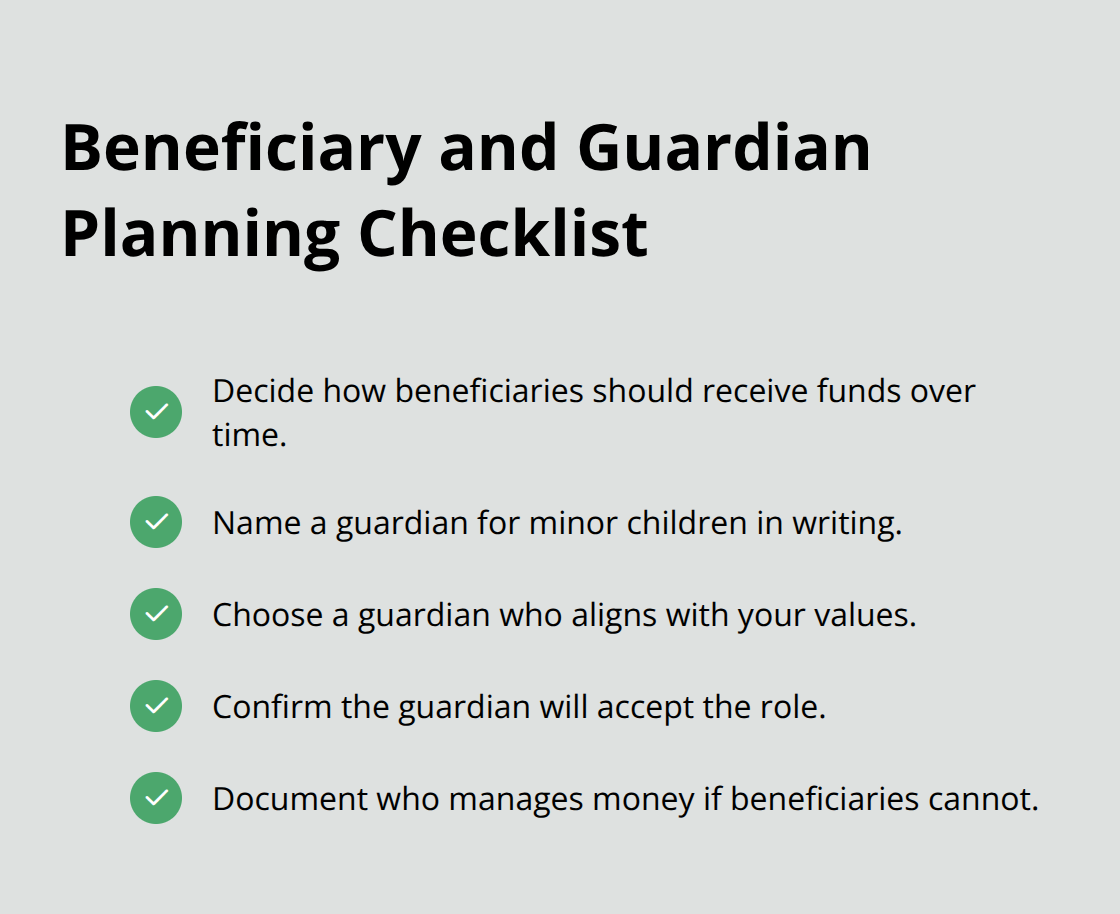
For beneficiaries receiving significant sums, use a trust to specify whether distributions happen at age 25, 30, or 35, or whether they occur gradually over time based on life events like graduation or marriage. This approach prevents a young beneficiary from receiving a large inheritance and spending it recklessly within months. If you have a child with special needs, a special needs trust preserves their eligibility for government benefits like Supplemental Security Income and Medicaid while still providing for their care from trust funds. For blended families, name specific assets to specific children to prevent misunderstandings about your intentions and reduce the risk of litigation after your death.
Work With a Local Attorney Who Understands Your Situation
Schedule a consultation with an estate planning attorney in St. Augustine or Palatka who can draft documents that comply with Florida law and reflect your family’s actual circumstances rather than generic templates that fail when real disputes arise. An experienced local attorney reviews your asset inventory, discusses your family structure, and identifies which assets should fund your trust versus which should pass through beneficiary designations. This coordination prevents gaps in your plan and ensures that your wishes actually control what happens to your wealth and your children after you die.
Final Thoughts
Your Northeast Florida wills and trusts strategy protects far more than assets-it protects your family’s stability and your values after you’re gone. Without a clear plan, Florida intestacy laws take control, probate court delays your family’s access to funds, and the state makes decisions about your children and your wealth instead of you. The cost of inaction far exceeds the cost of planning.
We at Family, Estate & Mediation Law have guided hundreds of families across St. Augustine and Palatka through this process, and the families who act now avoid the stress, expense, and conflict that emerge when planning falls to chance. Your will or trust becomes the document that speaks for you when you cannot, directing exactly how your assets flow to the people you love and protecting your children’s future with guardians you have chosen. Gather your asset inventory, clarify your family structure and goals, and schedule a consultation with an estate planning attorney who understands Northeast Florida families and can identify which assets need trust funding.
We at Family, Estate & Mediation Law offer flexible consultations in person, by phone, or virtually to fit your schedule, and our team provides practical strategies that preserve your legacy while protecting your family’s rights and financial future. Contact us today to begin securing the protection your family deserves.