
Most people never think about who will make their medical decisions if they can’t. At Family, Estate & Mediation Law, we see how this gap creates real problems for families facing health crises.
Your healthcare proxy options determine whether your wishes get respected when it matters most. Choosing the right person-and doing it correctly-protects both your health and your family’s peace of mind.
Who Should You Choose as Your Healthcare Proxy
The Three Essential Qualities Your Proxy Must Have
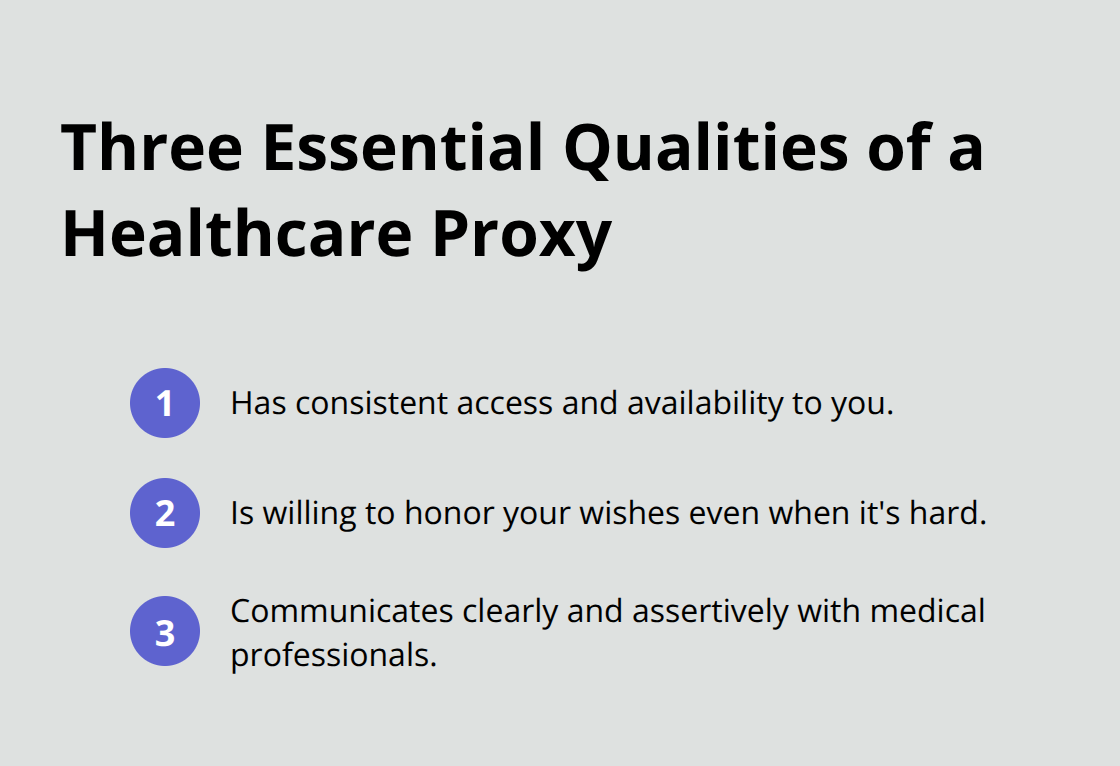
The person you select to make medical decisions for you needs more than good intentions. We’ve seen families struggle when they picked someone based on closeness alone, only to discover that person couldn’t handle the emotional weight of end-of-life decisions or lacked the assertiveness to push back against doctors. Your healthcare proxy must combine three things: access to you, willingness to honor your wishes even when difficult, and the ability to communicate clearly with medical professionals.
Why Family Members Aren’t Always the Best Choice
Family members often seem like the natural choice, but proximity and blood relation don’t guarantee someone can advocate effectively in a hospital setting. A spouse might become emotionally devastated and unable to think clearly. An adult child might defer too much to doctors instead of asking tough questions. A sibling might live three states away and cannot physically be present when decisions need to happen fast. Close friends and trusted advisors sometimes outperform relatives precisely because they bring emotional distance combined with genuine care. They think more clearly under pressure and often have fewer conflicting interests in the outcome.
Who You Should Avoid as Your Proxy
The American Bar Association recommends avoiding healthcare providers, facility employees, and anyone with a financial stake in your care decisions. Florida law requires your proxy to be at least 18 years old and of sound mind, but it says nothing about whether they should feel comfortable with conflict or capable of standing firm against medical authority. That responsibility falls to you-you must assess these qualities through difficult conversations before you sign anything.
Professional Advocates as a Viable Alternative
Professional healthcare advocates and certified patient advocates represent a growing option that people overlook. These individuals have training in medical decision-making frameworks and understand how to navigate hospital bureaucracy without personal emotional baggage. They cost money, but for people without reliable family or friends, or for those whose family dynamics are complicated by disagreement, a professional brings neutrality and accountability. Some people appoint both a family member and a professional, with the professional stepping in if family conflict arises.
What Your Proxy Needs to Know Before You Appoint Them
Your proxy needs to know your values about quality of life, pain management, and when you’d want life-sustaining treatment stopped. They need permission to ask for second opinions and to say no to treatments you wouldn’t want. Once you’ve selected your proxy, have explicit conversations about your treatment preferences and the types of decisions they may face. If you choose someone primarily because they’re available or because you don’t want to hurt their feelings, you’ve made a mistake that could cost you years of suffering in a condition you’d find unacceptable. The person you name lives with the weight of those decisions forever-so choose someone who can handle that responsibility, not just someone who loves you.
Making Your Healthcare Proxy Official
Complete the Required Florida Documentation
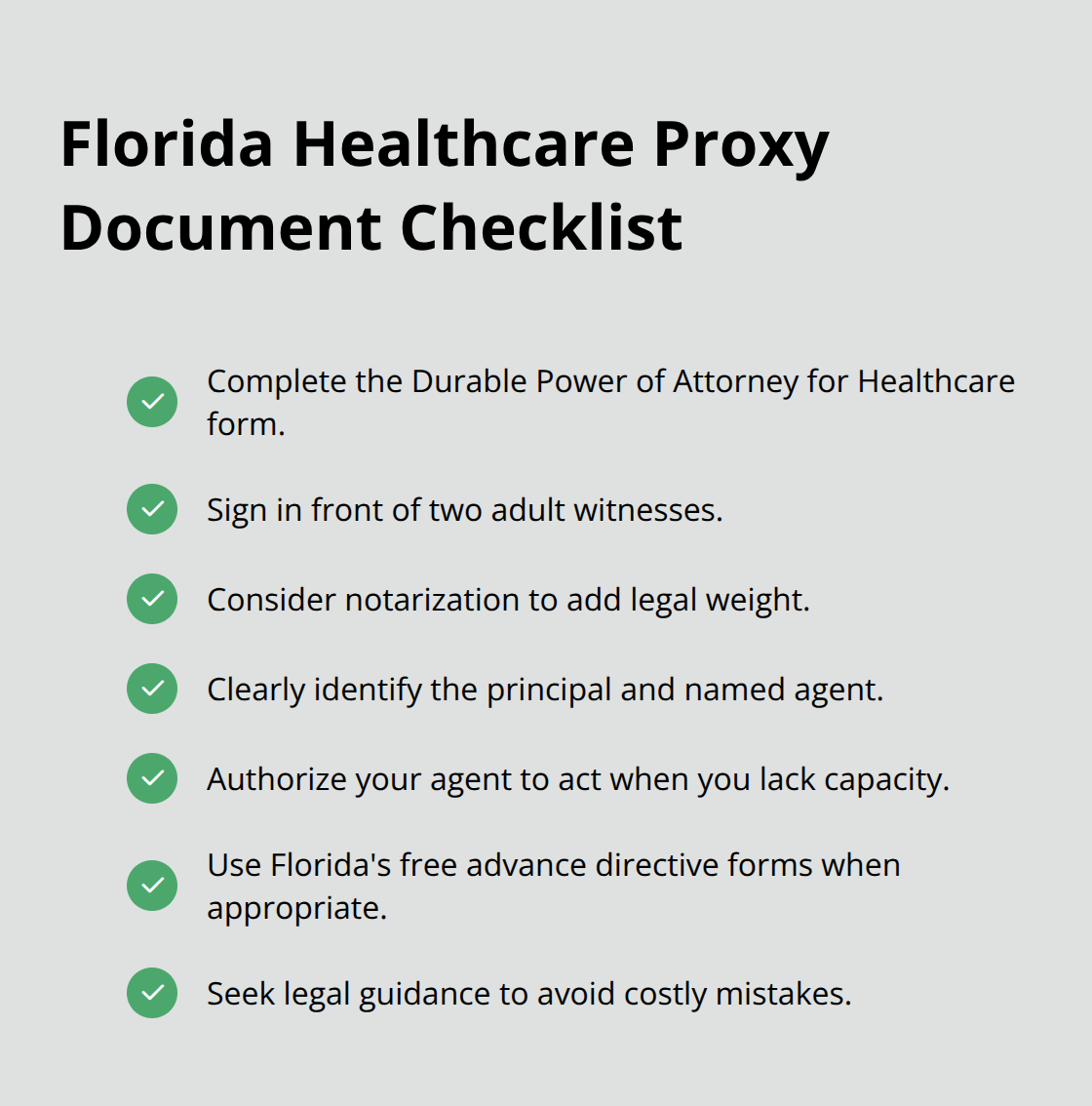
Florida requires your healthcare proxy designation in writing, and the state has specific rules about how that document must be executed. You’ll need to complete a Durable Power of Attorney for Healthcare form, sign it in front of two adult witnesses, and in some cases have it notarized depending on your circumstances. The form must clearly identify you as the principal, name your chosen agent, and state that you’re authorizing them to make healthcare decisions when you lack capacity. Florida law doesn’t mandate notarization for basic healthcare proxies, but having it notarized adds legal weight and eliminates potential challenges later. Many people skip this step thinking it’s optional-it’s not if you want maximum protection. The Department of Health provides free advance directive forms specific to Florida, and you can access these without paying an attorney, though having legal guidance during completion prevents costly mistakes.
Share Your Document and Discuss Your Wishes
Your proxy document means nothing if your designated agent doesn’t know about it or if your doctors can’t find it when needed. You must give your agent a signed copy and discuss your specific wishes about life-sustaining treatment, pain management, and quality of life thresholds before any medical crisis occurs. Many people name a proxy but never have the hard conversation about what they actually want-leaving their agent to guess during an emergency. Share copies with your primary care physician and any specialists you see regularly so the wishes appear in your medical record. If you spend significant time in multiple states, execute healthcare directives in each state where you receive care, since Florida proxies don’t automatically work in other jurisdictions.
Update Your Proxy When Life Changes
You must update your proxy every few years or whenever major life changes occur, such as divorce, relocation, or a shift in your relationship with your chosen agent. When you make changes, inform your previous agent, your new agent, and your healthcare providers in writing to prevent confusion. Outdated proxy documents create unnecessary conflict because they contradict current wishes, or because no one knows where the original paperwork was stored. These gaps in communication leave your medical team uncertain about which version of your wishes to follow, forcing them to delay critical decisions while they track down documentation. The next section covers the mistakes that most people make during this process-and how to avoid them.
Mistakes That Undermine Your Healthcare Proxy Plan
Most people name a healthcare proxy and assume the work is done. The gap between naming someone and actually preparing them to make decisions creates preventable crises. Your proxy might refuse the role when faced with real medical choices, might not know your true wishes about life-sustaining treatment, or might lack the backbone to stand against a doctor’s recommendation when your values demand it. These failures don’t happen because people are negligent-they happen because people avoid difficult conversations, skip updates when circumstances change, and misjudge whether someone can actually handle the weight of medical decision-making under pressure.
The Conversation You Must Have Before Appointing Anyone
The most common mistake is naming a proxy without discussing specific scenarios beforehand. People say things like “I want my spouse to decide” or “my daughter will know what I want,” then never have the actual conversation about what happens if you suffer a severe stroke and need a feeding tube, or if you develop advanced dementia and your family disagrees about whether to continue aggressive treatment. Your proxy needs to understand your values deeply and know whether you’d accept months in a hospital recovering from a major surgery with uncertain outcomes, whether you prioritize extending life at all costs or prioritize comfort and dignity, and whether you want aggressive pain management even if it shortens your life slightly.
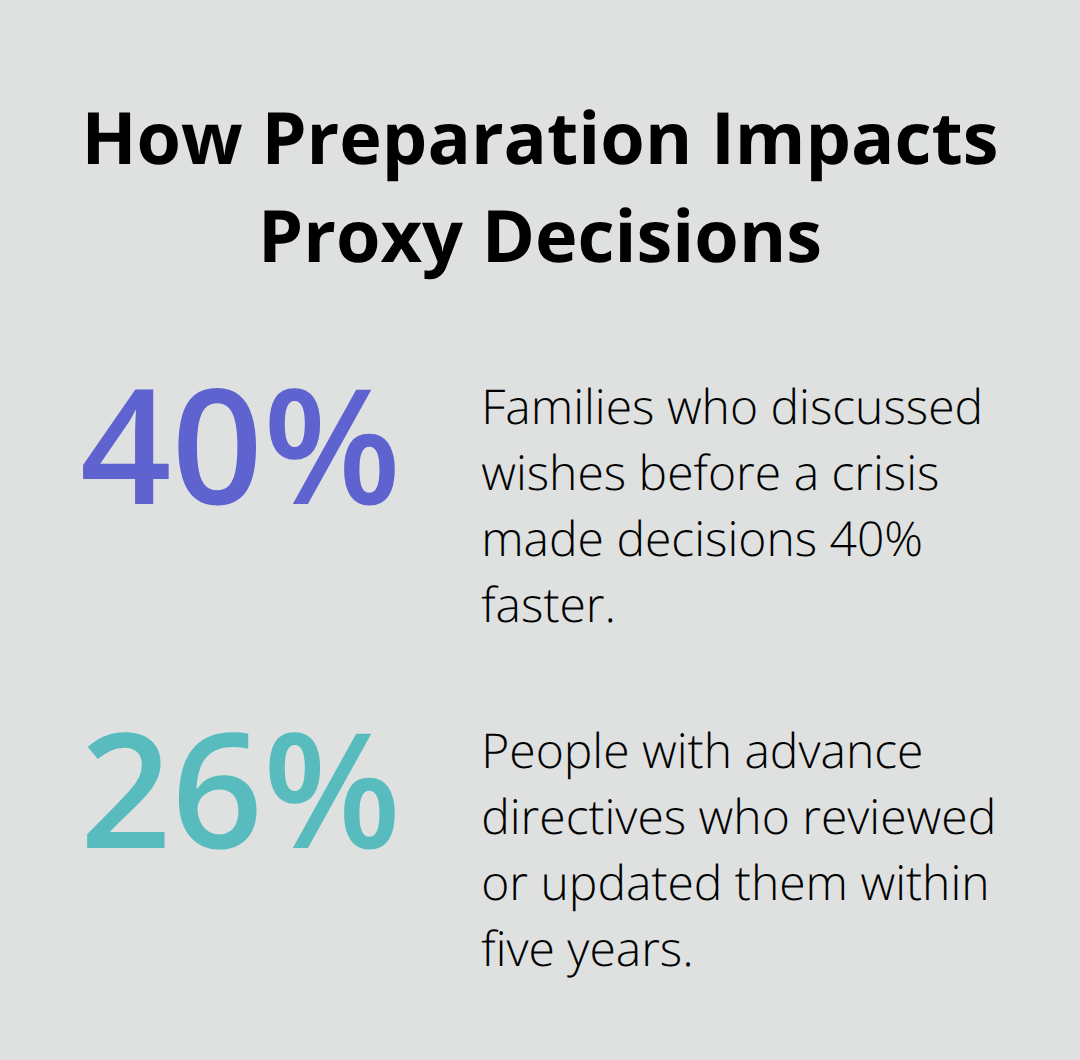
Research from The Conversation Project shows that families who discussed these topics before a health crisis made decisions 40% faster and experienced significantly less guilt afterward. Without these discussions, your proxy guesses-and guessing wrong means you might spend your final months in a state you find unacceptable. The conversation takes two hours, maximum.
Skipping it to avoid discomfort costs years of suffering.
Assessing Whether Someone Can Actually Handle the Role
The second major failure is choosing someone without honestly assessing their ability to handle the role. Some people name their spouse simply because they’re married, without considering whether that person becomes paralyzed by emotion during medical crises, whether they defer too much to doctors instead of advocating, or whether they live far away and cannot physically be present when decisions need immediate attention. Others choose the person who loves them most, forgetting that love and decision-making capability are different things.
You need someone who can think clearly under pressure, who will ask tough questions, and who won’t feel guilty saying no to a treatment you wouldn’t want. Have a direct conversation: Can you make a decision that might end my life if that’s what I’ve asked for? Can you stand firm against doctors if my wishes differ from their recommendation? Will you be available physically when I need you? If someone hesitates or becomes defensive, that’s information you need before you sign the paperwork. Choosing based on hope rather than honest assessment leaves your agent unprepared and guilty.
Updating Your Proxy When Life Changes
The third critical mistake is naming a proxy and then never updating it. Life changes-divorces happen, people move away, relationships shift, and your values about medical care evolve. Research from the Administration for Community Living found that only 26% of people with advance directives review or update them within five years. Outdated proxies create concrete problems: your ex-spouse might still be named as your agent because you forgot to change it after divorce, your proxy might live across the country and cannot reach you in an emergency, or your agent might have developed health problems that prevent them from handling medical decisions themselves.
Florida law automatically revokes a healthcare proxy for a spouse if you divorce, but if you’ve named a sibling, friend, or adult child, that designation stays active unless you explicitly change it. Update your proxy every three years minimum, and always update it within six months of major life changes-relocation, divorce, significant health events, or shifts in your relationship with your chosen agent. When you update, inform your previous agent, your new agent, and your healthcare providers in writing so medical records reflect your current wishes. This step takes 30 minutes and prevents months of confusion if a health crisis occurs.
Final Thoughts
Your healthcare proxy options determine whether your medical wishes receive respect when you cannot advocate for yourself. We at Family, Estate & Mediation Law have watched families navigate medical crises without clear direction, and we have seen how proper preparation prevents months of conflict and regret. The choice of who makes your decisions only matters if you complete the groundwork beforehand-naming someone, discussing your actual values about life-sustaining treatment, assessing whether they can handle the emotional weight, and documenting everything in writing according to Florida law.
The work happens before any health crisis arrives. You must update your proxy when life changes and ensure your medical team knows your current wishes. Research shows families who discuss these topics beforehand make decisions faster and experience less guilt afterward, yet many people delay this work because naming a proxy forces uncomfortable conversations about mortality and medical scenarios they would rather not imagine. That avoidance costs more than the conversation itself-the discussion takes a few hours, while skipping it can cost you years of suffering in a condition you would find unacceptable.
We at Family, Estate & Mediation Law help individuals and families across Northeast Florida protect their medical rights through proper estate planning and advance directives. If you have not named a healthcare proxy or if your current designation is outdated, contact us to review your options and complete the necessary documentation. Your family’s peace of mind depends on decisions you make today.