
Most families don’t realize their estate plan has serious problems until it’s too late. We at Family, Estate & Mediation Law see these estate plan red flags repeatedly-outdated wills, missing beneficiary designations, and no plans for incapacity.
The good news is that spotting and fixing these issues now protects your family from thousands in unnecessary costs and legal complications later.
The Three Mistakes That Unravel Estate Plans
Outdated Documents Create Conflict
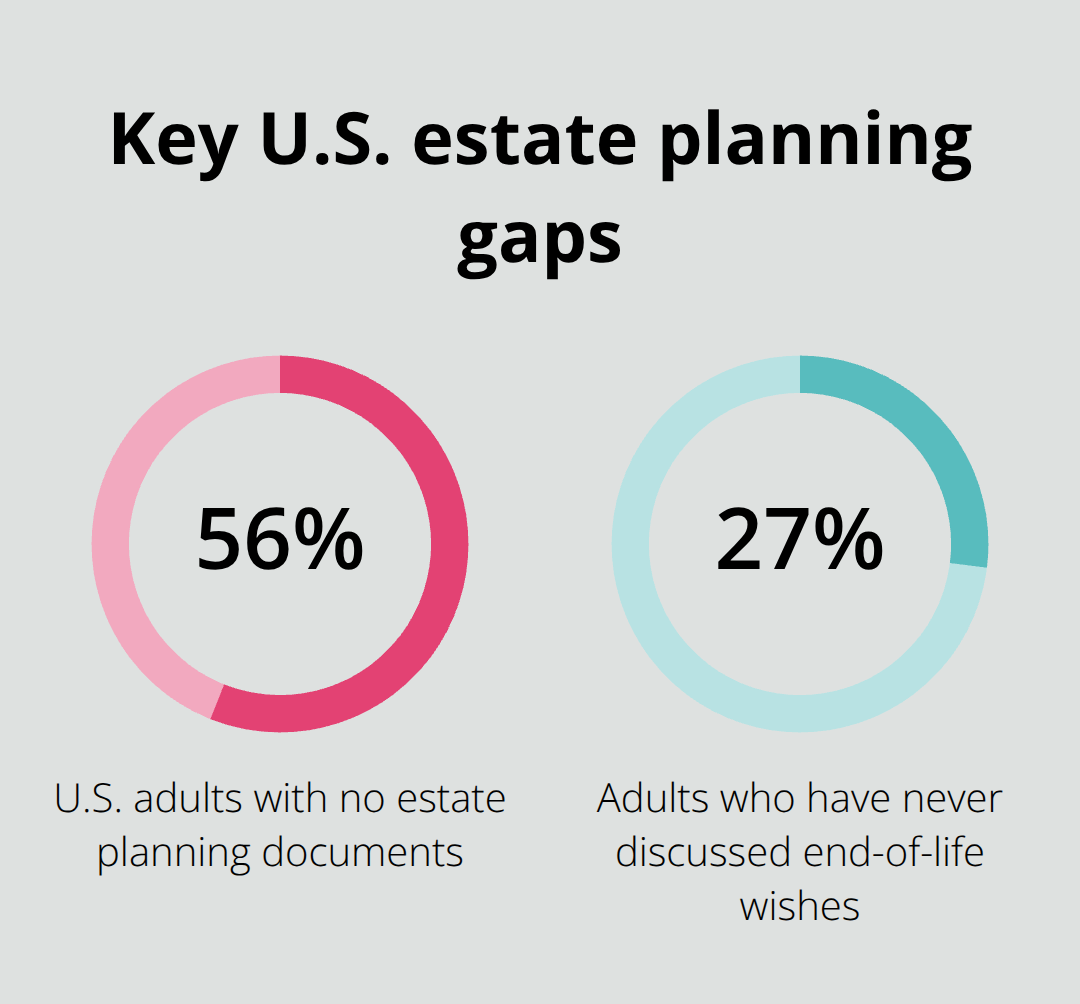
Life changes fast, and most people’s estate plans don’t keep pace. Families struggle with wills written five, ten, or even fifteen years ago-documents that no longer reflect who they are or what they own. A will drafted before your second marriage, your business sale, or the birth of grandchildren creates confusion and conflict when you’re gone. The Trust and Will 2026 Estate Planning Report found that 56% of U.S. adults have no estate planning documents at all, but the real problem isn’t just absence-it’s stale plans that sit unchanged while circumstances shift completely.
When you remarry, have children, acquire significant assets, or experience divorce, your old will contradicts your actual wishes. You must review your entire plan every three to five years, and immediately after major life events like marriage, divorce, the birth of a child, or acquiring substantial property. Don’t assume your attorney’s office will contact you-you must take the initiative to schedule that review.
Beneficiary Designations Override Your Will
Naming beneficiaries sounds simple until you realize how easily it goes wrong. Vague language like leaving assets to “my children” without specifying names or percentages invites disputes among heirs who disagree about what you intended. If you own a home, retirement accounts, investment accounts, and life insurance but never update the beneficiary forms, each asset flows to different people, fragmenting your legacy and creating tax complications.
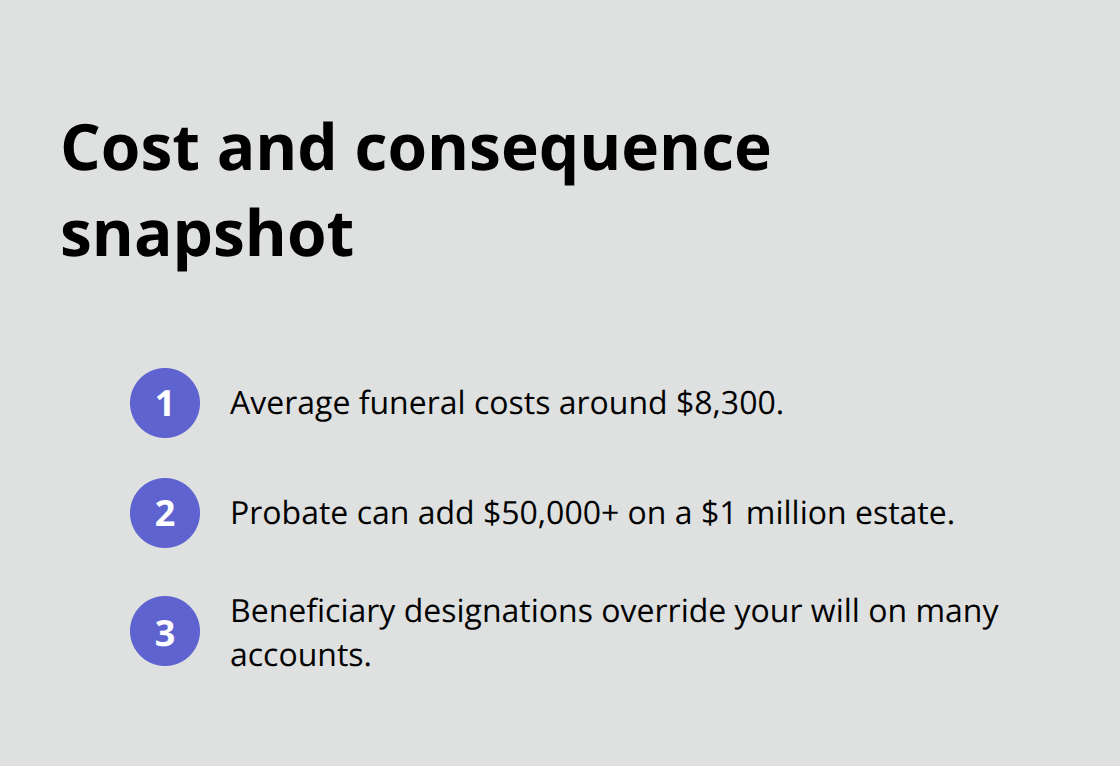
One account might go to your current spouse, another to an adult child from a previous marriage, and a third to no one because you forgot to name a beneficiary-which means it goes through probate. The National Funeral Directors Association reports average funeral costs around $8,300, and probate adds $50,000 or more in legal fees and delays on a $1 million estate. Beneficiary designations on life insurance, retirement accounts, and bank accounts override what your will says, leaving money to an ex-spouse or outdated beneficiary while your current family gets nothing.
Incapacity Planning Leaves Families in Crisis
Failing to plan for your own incapacity-what happens if you become unable to make medical or financial decisions-leaves your family in crisis. Without a durable power of attorney for healthcare and finances, your spouse or adult children cannot access your bank accounts, sell your home, or make critical medical decisions, even with a doctor’s note. The courts must then appoint a guardian or conservator through a lengthy, expensive process that gives a judge control over your affairs instead of your chosen trusted person.
These three mistakes-outdated documents, unclear beneficiaries, and no incapacity planning-are entirely preventable with clear, current paperwork that matches your actual situation. The next section shows you how to identify which of these red flags already exist in your estate plan.
What Red Flags Are Already Hiding in Your Estate Plan
Beneficiary Designations That Contradict Your Will
The moment you stop updating your beneficiary designations is the moment your estate plan begins to fail silently. A client discovers that the beneficiary form on their IRA still names an ex-spouse, their revocable living trust was created but never funded with actual assets, or their will contradicts the payable-on-death designations on their bank accounts. These aren’t minor oversights-they’re the exact problems that trigger probate, create family conflict, and waste thousands in unnecessary legal fees.
Start by pulling every financial account statement you own: your retirement accounts, life insurance policies, bank accounts with payable-on-death options, and investment accounts. Write down exactly who is named as beneficiary on each one. If you cannot find the beneficiary form or if it lists an ex-spouse, a deceased person, or says simply “your estate” without naming specific heirs, that is a red flag. Beneficiary designations on life insurance, retirement accounts, and bank accounts override what your will says, leaving money to an outdated beneficiary while your current family gets nothing.
Unfunded Trusts and Asset Titling Problems
A revocable living trust that sits unfunded defeats its entire purpose. You create the trust document, but you never transfer your home, investment accounts, or bank accounts into the trust’s name. When you pass away, those assets still belong to you individually, which means they go through probate anyway-the very process you tried to avoid. The federal estate tax exemption has risen to $15 million per individual and $30 million for married couples starting in 2026, which means fewer families face federal estate taxes now, but state death taxes remain a real threat in more than 30 states.
Pull your property deeds, investment statements, and bank account registrations. Check whether they list your trust as the owner or whether they still show your individual name. If your home deed says “John Smith” instead of “John Smith, Trustee of the Smith Family Trust,” that asset will not transfer privately through your trust. The National Funeral Directors Association reports average funeral costs around $8,300, and probate adds $50,000 or more in legal fees and delays on a $1 million estate-costs that proper asset titling would have prevented entirely.
Minor Children and Vulnerable Dependents Without Protection
Naming a minor child as direct beneficiary on a $200,000 life insurance policy forces the court to appoint a conservator to manage that money until the child turns 18. This costs money, requires ongoing court approval for spending, and exposes the funds to the child’s creditors and legal judgments. A revocable living trust with a successor trustee and clear instructions about when and how money flows to your children solves this completely-the trustee manages the funds for the child’s benefit without court involvement, and you control the age or milestone when distributions occur.
If you have an adult child with a disability, substance abuse history, or poor financial judgment, naming them as direct beneficiary on accounts virtually guarantees they will misuse the money within months. A special needs trust or a spendthrift trust provision inside your revocable living trust protects that child while ensuring the money lasts for their lifetime.
Conflicting Documents That Create Disputes
Examine whether your will, your trust, and your beneficiary designations all tell the same story about who gets what. If your will says your home goes to your children equally but your revocable living trust names only your current spouse as beneficiary, or if your life insurance names your ex-spouse while your will names your current family, these contradictions create disputes that cost $10,000 to $50,000 or more to litigate. A qualified attorney will compare every document side by side to identify these conflicts before they become problems. The next section walks you through the practical steps that eliminate these red flags and create a coordinated plan that actually works.
How to Fix Your Estate Plan Before Problems Emerge
Audit Your Assets and Identify Conflicts
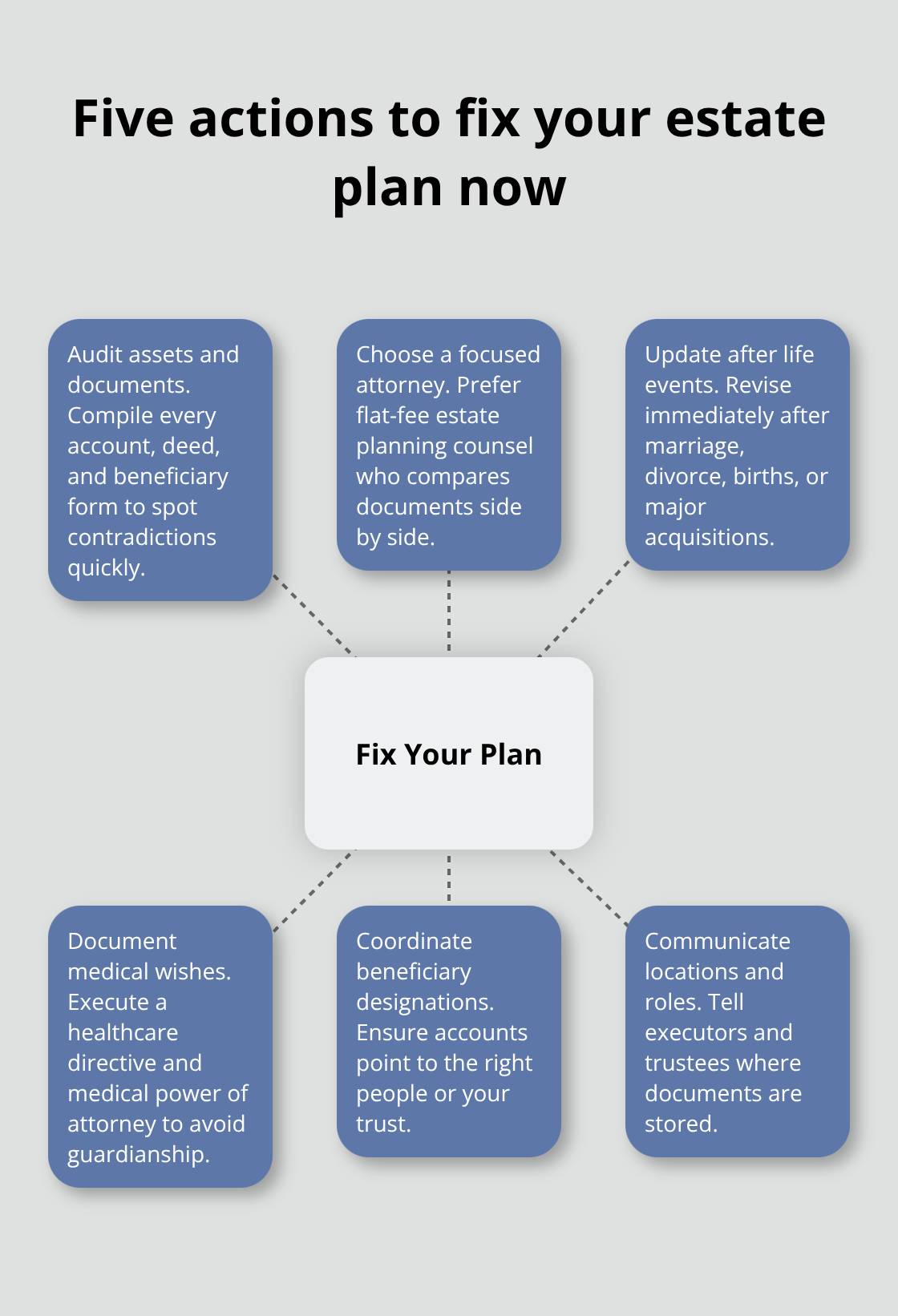
The red flags you identified in your current documents mean nothing unless you take action to fix them. Start with a comprehensive audit of every financial account, deed, and beneficiary form you own. Pull your most recent statements for retirement accounts, life insurance policies, bank accounts, investment accounts, and property deeds. Create a simple spreadsheet listing each asset, its current owner or titling, and the named beneficiary.
This one-hour exercise reveals immediately where your will, trust, and beneficiary designations contradict each other.
If your revocable living trust names one set of heirs but your IRA names another, or if your life insurance still lists an ex-spouse, those conflicts must be corrected before they create probate and family disputes. The federal estate tax exemption rose to $15 million per individual in 2026, which means fewer families face federal taxes now, but state death taxes remain significant in more than 30 states. Coordinated planning becomes even more critical when multiple assets exist across different account types.
Choose the Right Attorney and Pricing Structure
Schedule a meeting with an attorney who specializes in estate planning rather than a generalist who handles twelve different practice areas. Flat-fee pricing for basic estate plans-typically $1,500 to $3,500 for a will, trust, power of attorney, and healthcare directive-gives you transparent costs upfront instead of hourly billing that spirals unexpectedly. An attorney focused on estate planning will compare every document side by side to identify conflicts before they become problems.
Update Your Plan After Major Life Events
The Trust and Will 2026 Estate Planning Report shows 27% of adults have never discussed end-of-life wishes with loved ones, yet these conversations must happen alongside document updates. After a marriage, divorce, birth of a child, substantial inheritance, or significant asset acquisition, your entire estate plan shifts. Do not wait three to five years if circumstances have changed dramatically.
Pull your existing documents and compare them to your current situation. If your will was drafted before your remarriage and still names only your biological children, that document contradicts your current intentions and creates exactly the conflicts you wanted to prevent. Update your plan immediately rather than postponing the work.
Document Your Medical Wishes and Healthcare Authority
Document your medical wishes in a healthcare directive and durable power of attorney for healthcare, specifying whether you want life-sustaining treatment, organ donation preferences, and who makes decisions if you cannot. These documents cost nothing to update and prevent your family from facing a judge-ordered guardianship that costs thousands and strips your chosen person of authority. Clear medical instructions eliminate confusion during a crisis and honor your actual values.
Communicate Your Plan to Key People
Inform your executor, trustee, and key beneficiaries that your plan exists and where they can find it. The National Funeral Directors Association reports average funeral costs around $8,300, and families who scramble to locate documents while grieving add weeks of delay and thousands in additional legal fees. Families who know where documents are stored and understand their roles move forward faster and with less conflict.
Final Thoughts
The estate plan red flags you identified throughout this guide cost families thousands in probate fees and litigation when left unaddressed. We at Family, Estate & Mediation Law have witnessed families lose $50,000 or more because they delayed updating outdated beneficiary designations or failed to fund their revocable living trust. These losses stem directly from postponing work that takes only hours to complete.
A coordinated estate plan aligns your will, trust, and beneficiary designations to protect your family immediately. Your chosen trustee manages assets privately without court involvement, your healthcare directive honors your medical wishes if you become incapacitated, and your durable power of attorney gives your trusted person authority to handle finances right away (avoiding expensive guardianship proceedings). Professional guidance identifies conflicts before they become problems and ensures your plan reflects your actual wishes and values.
Schedule a consultation with Family, Estate & Mediation Law to transform your estate plan from a source of worry into a source of protection for your family.