A durable power of attorney is one of the most practical tools you can put in place to protect yourself and your family. Without it, your finances and healthcare decisions could end up in the hands of a court-appointed guardian-a costly and time-consuming process that strips away your autonomy.
Here at Family, Estate & Mediation Law, we’ve seen firsthand how the right documentation prevents family conflict and financial hardship when illness or incapacity strikes. This guide walks you through what a durable power of attorney actually does, the mistakes people make, and how to set yours up correctly in St. Augustine and Palatka, FL.
Understanding a Durable Power of Attorney in St. Augustine and Palatka, FL
A durable power of attorney is a legal document that names someone to act on your behalf financially and medically, even if you become unable to make decisions yourself. Under Florida Statutes Chapter 709, the document must be signed by you, witnessed by two people, and notarized to be valid. The agent you name, called the attorney-in-fact, can be a family member, friend, or professional such as an accountant or attorney. The critical word here is durable-it means your agent’s authority continues if you become incapacitated, which is precisely what a standard power of attorney cannot do. A standard power of attorney automatically ends the moment you lose mental capacity, leaving your finances and healthcare in limbo and forcing your family into expensive guardianship court proceedings.
What Makes Durability Different
Durability is not automatic. Florida law requires specific language in the document stating that the power of attorney remains effective despite your incapacity. Without this durability clause, the document becomes worthless the instant you need it most. Many people assume a standard power of attorney is durable and later discover their agent has no legal authority to pay bills or manage investments when illness strikes. That mistake costs families tens of thousands of dollars in guardianship fees. A properly drafted durable power of attorney avoids this trap entirely.
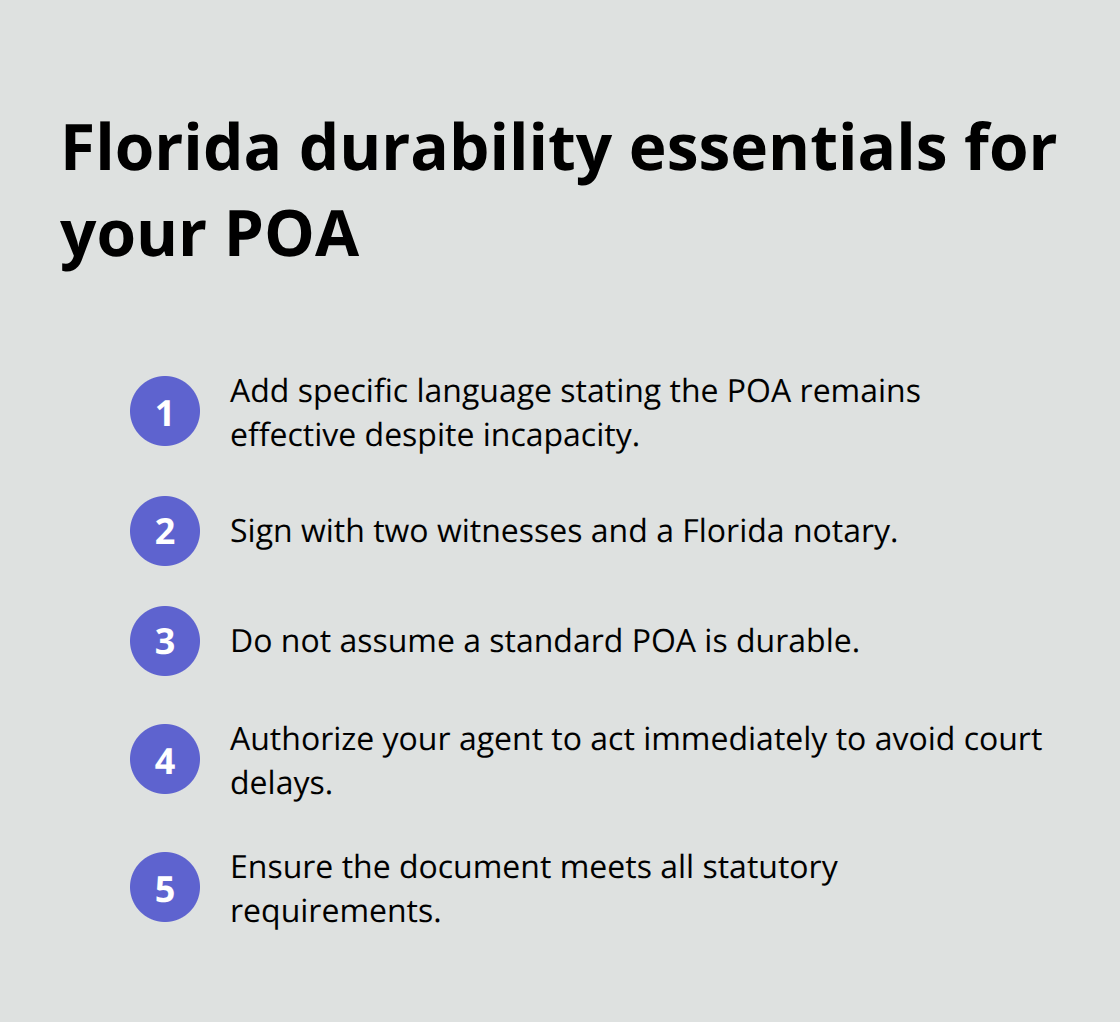
It gives your agent immediate authority to handle your financial affairs and healthcare decisions without court involvement, which is why it is far superior to waiting for a guardianship proceeding. Florida courts recognize durable powers of attorney as legitimate alternatives to guardianship, provided the document meets all statutory requirements and includes that durability clause.
Selecting Your Agent With Care
The agent you select carries enormous responsibility. This person will potentially access your bank accounts, sell your property, manage investments, and make medical decisions about resuscitation, intubation, and organ donation. Florida law requires your agent to be at least 18 years old and competent, but those are minimal standards. The real question is whether this person has your best interests at heart and the capability to handle complex financial and legal matters. Financial institutions with trust powers can also serve as agents if you prefer a neutral third party over a family member. Many families make the mistake of naming someone out of obligation rather than capability, then face conflict or mismanagement later. Try selecting someone you trust completely, someone who will act transparently with other family members and has the time and skills to manage your affairs. If you lack a trustworthy family member, naming a professional protects you from potential mistakes and reduces family resentment.
Avoiding Common Selection Mistakes
Naming an agent out of obligation rather than capability creates serious problems down the road. Your agent must understand their fiduciary duties (act only within authority, preserve your estate plan, keep careful records, and provide accounting as required). Some people name co-agents to share responsibility, but this approach works only if both agents communicate effectively and the document allows them to act separately. More than two co-agents typically creates gridlock and coordination problems. If your primary agent cannot serve due to death, illness, or other commitments, name a successor agent to step in immediately. This backup plan prevents your family from facing court intervention when your first choice becomes unavailable. Transparency about your agent selection protects relationships and reduces disputes among siblings and other family members.
When Professional Agents Make Sense
Naming a professional such as an attorney or accountant costs more than naming a family member, but it eliminates family conflict and ensures competent management of your affairs. A professional agent brings no personal interests to the table and will follow your directives without emotional entanglement. This approach works especially well if you lack trusted family members or if your family relationships are strained. The cost of professional management (typically hourly fees or a percentage of assets) is far less than the expense and stress of guardianship proceedings or the financial damage caused by an incompetent or dishonest family member acting as agent. Your choice of agent ultimately determines whether your durable power of attorney protects your interests or creates new problems.
Why a Durable Power of Attorney Protects Your Money and Health
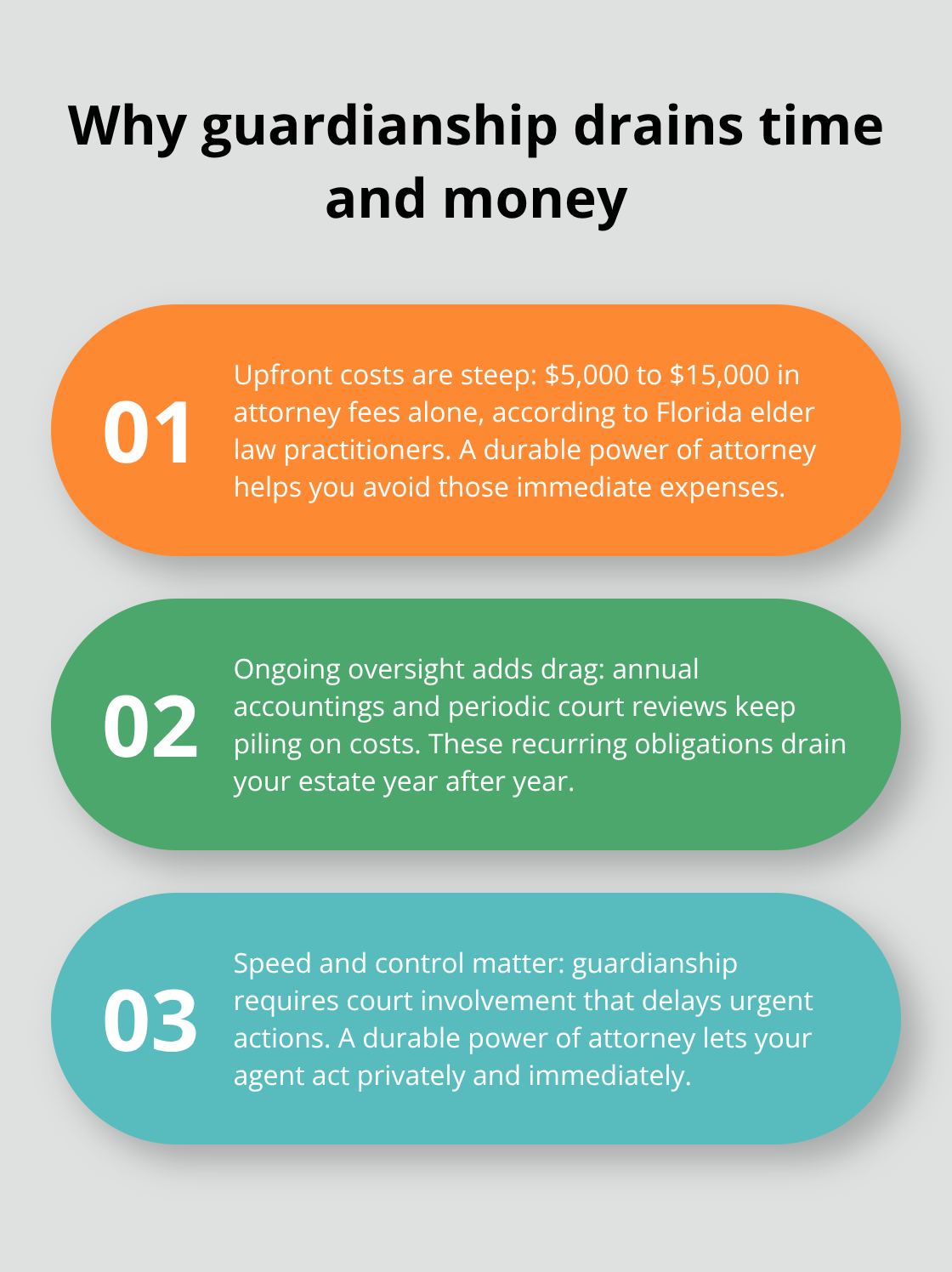
A durable power of attorney stops your finances from spiraling into court chaos the moment you cannot make decisions. Without one, Florida law forces your family into guardianship proceedings, a process that costs between $5,000 and $15,000 in attorney fees alone, according to estimates from elder law practitioners across Florida. Guardianship also requires ongoing court supervision, annual accounting filings, and periodic court reviews-expenses that drain your estate year after year while a judge oversees decisions your agent could have made privately and immediately.
The Cost of Losing Control
A guardian appointed by the court gains broad power over your person and property, stripping you of control over who manages your affairs. A durable power of attorney prevents this loss of control entirely. Your chosen agent steps in the moment you become incapacitated, handles your bills, pays your mortgage, manages investments, and makes healthcare decisions without asking a judge for permission. This speed matters enormously. If you suffer a stroke or develop early-stage dementia, your agent accesses your bank accounts immediately to pay medical bills, transfers funds to cover living expenses, and notifies your creditors-actions that would take months to accomplish through guardianship court proceedings.
Keeping Your Affairs Private
Florida courts recognize durable powers of attorney as legitimate substitutes for guardianship, which means you avoid the public nature of court involvement altogether. Your financial and medical information stays private. Your family avoids the stress of court hearings. Your agent acts based on your documented wishes rather than what a judge decides is in your best interest.
Strategic Asset Management During Incapacity
The financial protection extends beyond avoiding guardianship fees. A durable power of attorney lets your agent manage assets strategically during incapacity in ways a guardian cannot. Your agent invests your money following the prudent investor standard under Florida Statutes Section 518.11, delegates investment management to professionals if the document permits, and makes tax-efficient transfers that preserve your estate. A guardian, by contrast, must obtain court approval for major financial decisions and faces strict restrictions on investments and spending. This means your estate grows more slowly under guardianship while your agent, armed with a durable power of attorney, maintains and protects your wealth actively.
Healthcare Decisions That Reflect Your Values
Healthcare decisions move faster and align with your values when your agent holds a durable power of attorney. Your agent knows your wishes about life support, resuscitation, organ donation, and end-of-life care because you discussed these matters before incapacity struck. Hospitals and doctors recognize the agent’s authority immediately and follow directives without court delays. Without this document, your family members argue in hospital waiting rooms while doctors cannot proceed with treatment decisions, and eventually someone petitions for guardianship anyway-adding months of legal process to a medical crisis.
The protection a durable power of attorney provides extends into the practical details of daily life. Your agent can pay utilities, manage property maintenance, handle insurance claims, and coordinate with healthcare providers without interruption. These routine actions keep your life stable while you recover or receive care. When you compare this seamless continuity to the disruption and expense of guardianship, the value of advance planning becomes unmistakable. The next step involves understanding the specific mistakes that undermine durable powers of attorney and how to avoid them entirely.
Where Durable Powers of Attorney Fall Apart
Most durable powers of attorney fail not because the document itself is flawed, but because people treat it as a set-it-and-forget-it solution. Life changes constantly-marriages end, children are born, assets grow or shrink, and relationships deteriorate. Yet the average person updates their durable power of attorney less than once every ten years, if at all. This stagnation creates real problems. Your agent might be someone you trusted fifteen years ago but no longer speak to. The financial limits you set might be far too low for current medical costs or far too high given your reduced assets. Your healthcare wishes may have shifted after a serious diagnosis or after watching a parent suffer through prolonged life support.
Outdated Documents Leave You Vulnerable
Families face emergency court petitions because the person named as agent has moved overseas, developed dementia themselves, or lost all credibility with the other adult children. The fix is straightforward: update your durable power of attorney every three to five years or immediately after major life events such as marriage, divorce, significant inheritance, purchase of real estate, or diagnosis of a chronic illness. Each update requires a full reexecution with new witnesses and notarization to prevent third parties from questioning the document’s validity. Without these updates, your document becomes a liability rather than a protection.
Selecting an Agent Without Clear Communication
The second fatal mistake involves naming the wrong person and then failing to communicate your actual wishes. Families often select an agent based on obligation-the oldest child, the one who lives closest, the one who seems responsible-rather than the one who actually has the capability and emotional maturity to handle complex decisions. Worse, they never have the difficult conversation about what you want. Your agent might believe you want everything done to keep you alive, while you actually want comfort care and no artificial life support. Your agent might assume they should preserve every asset, while you would prefer spending down your estate to improve your quality of life.
These misalignments create resentment and paralysis at the worst possible moment. Before naming an agent, have a frank discussion about your healthcare priorities, your financial situation, your tolerance for risk, and your end-of-life preferences. Write down these conversations or include plain-language notes in your estate planning file. Share a copy of your durable power of attorney with your agent, your doctor, your bank, and your investment firm so everyone knows the document exists and understands the agent’s authority.
Third Parties Refuse Documents They Have Never Seen
Many third parties refuse to honor a durable power of attorney simply because they have never seen it before or because the agent never provided it. Banks, investment firms, and healthcare providers operate under strict protocols that require proof of authority before they act. Your agent cannot access your accounts or make medical decisions without presenting the document to the relevant institutions. This verification step takes time and creates delays that could prove dangerous in medical emergencies. Proactive sharing of your durable power of attorney eliminates these obstacles entirely.
Lost Documents Create Crisis Situations
Your durable power of attorney is worthless if nobody can find it when you become incapacitated. Keep the original with your attorney or in a safe deposit box, store a certified copy at your bank, and give a copy to your agent and your primary care physician. Tell at least two trusted people where these documents are stored and how to access them. Digital storage services such as Everplans or MyDocSafe allow you to upload documents and grant access to designated people, creating a backup system that prevents frantic searches through filing cabinets during medical crises.
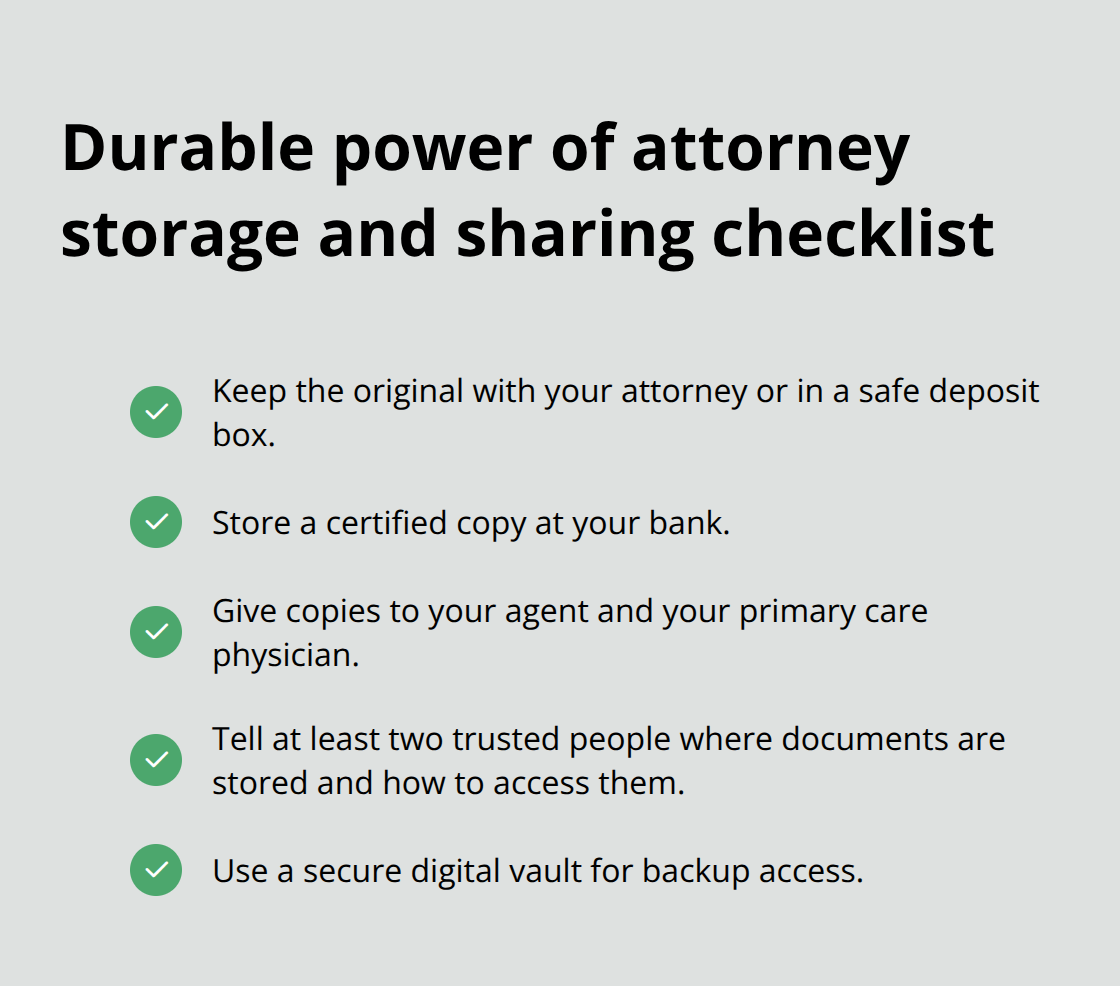
This redundancy ensures your agent can act immediately rather than spending days locating paperwork.
Final Thoughts on Protecting Your Future in St. Augustine and Palatka, FL
A durable power of attorney only works if it reflects your actual wishes and remains current as your life evolves. We at Family, Estate & Mediation Law recommend working with a legal professional to draft a durable power of attorney tailored to your specific assets, family situation, and healthcare preferences. A customized document addresses the gaps that generic forms miss and includes language that third parties will recognize and honor without question.
After your durable power of attorney is signed and notarized, treat it as a living document that requires periodic review. Major life changes such as marriage, divorce, significant inheritance, purchase of real estate, or diagnosis of a chronic illness warrant immediate updates. Even without major changes, reviewing your document every three to five years keeps it aligned with your current circumstances and preferences.
Have direct conversations with your chosen agent about what the role actually entails and share copies of your durable power of attorney with your agent, your physician, your bank, and your investment firm so everyone understands the document exists. Store the original with your attorney or in a safe deposit box, keep certified copies accessible, and tell trusted people where these documents are located. Family, Estate & Mediation Law helps families in St. Augustine and Palatka, FL create comprehensive plans that protect assets, preserve relationships, and reflect your values when incapacity or illness strikes.