
Most families put off estate planning because it feels overwhelming. The truth is, without a clear plan in place, your loved ones could face years of legal battles and unnecessary costs after you’re gone.
At Family, Estate & Mediation Law, we’ve helped hundreds of families create straightforward plans that protect what matters most. This intro to estate planning walks you through the documents you need, the mistakes to avoid, and exactly how to get started.
Why Estate Planning Protects Your Wealth
The Real Cost of Skipping a Plan
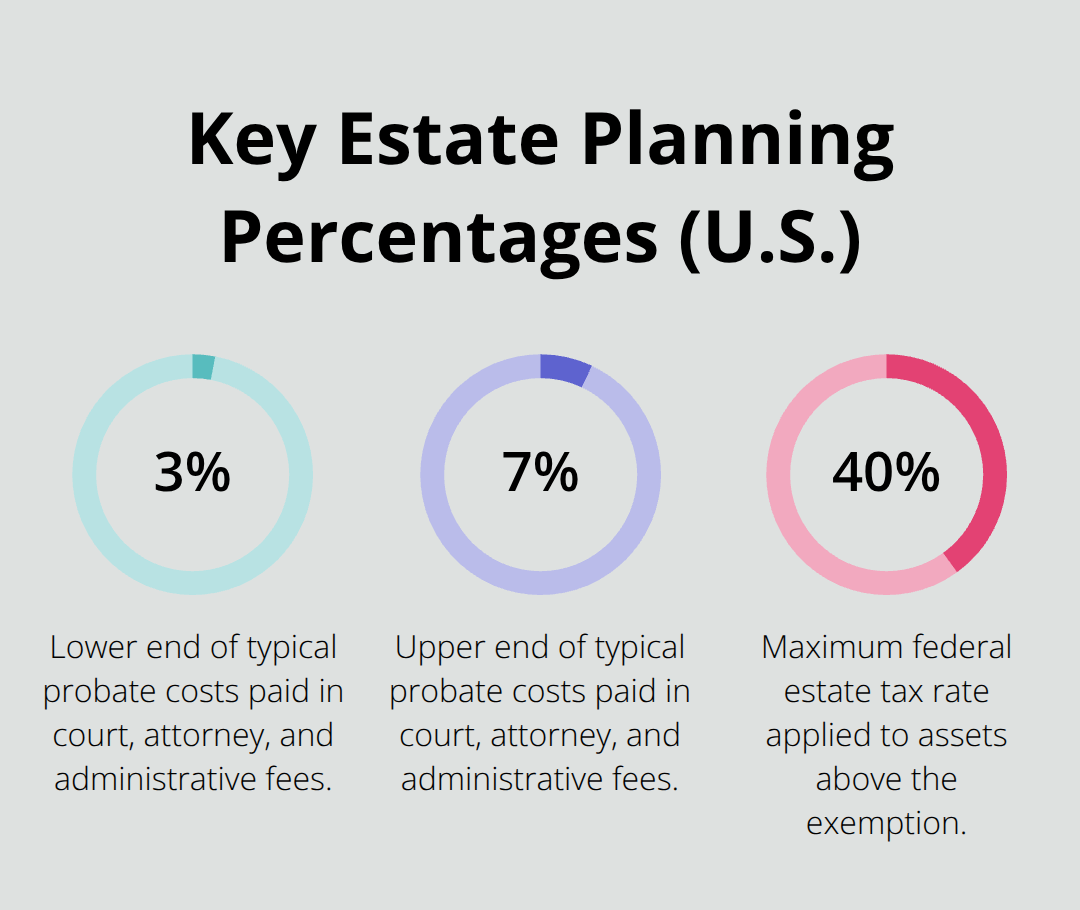
Without an estate plan, your family faces three harsh realities. First, probate costs money-often 3 to 7 percent of your estate’s value goes to court fees, attorney bills, and administrative expenses. For a $500,000 estate, that’s $15,000 to $35,000 your heirs never see. Second, probate takes time. Most estates spend 9 to 12 months in probate, though complicated cases drag on for years.
Your family cannot access funds for mortgage payments, medical bills, or living expenses during that wait.
Third, if you die without a will, state law decides who gets what, which rarely matches what you actually wanted. In community-property states, your surviving spouse owns half of all property acquired during marriage, but the other half goes through intestate succession-a process that ignores your wishes entirely.
How a Living Trust Changes Everything
A living trust solves these problems directly. Assets held in a trust avoid probate entirely, meaning your family receives money immediately without court involvement. Your estate stays private too (probate records become public documents, but trust distributions remain confidential). You maintain complete control while alive and can change the trust whenever circumstances shift.
Protecting Your Children Through Planning
For families with minor children, estate planning is not optional; it is the only way to name who raises your kids and who manages money left for them. This protection alone justifies the time and cost of creating a solid plan.
Getting Started Takes Less Time Than You Think
Most families complete a basic plan in 30 minutes, and the cost is far less than what probate will consume. Starting now means your family avoids years of stress and unnecessary legal fees later. The documents you need are straightforward, and understanding what each one does removes much of the confusion that stops people from taking action.
The next section walks you through the specific documents that form the foundation of any estate plan.
The Four Documents That Actually Protect Your Family
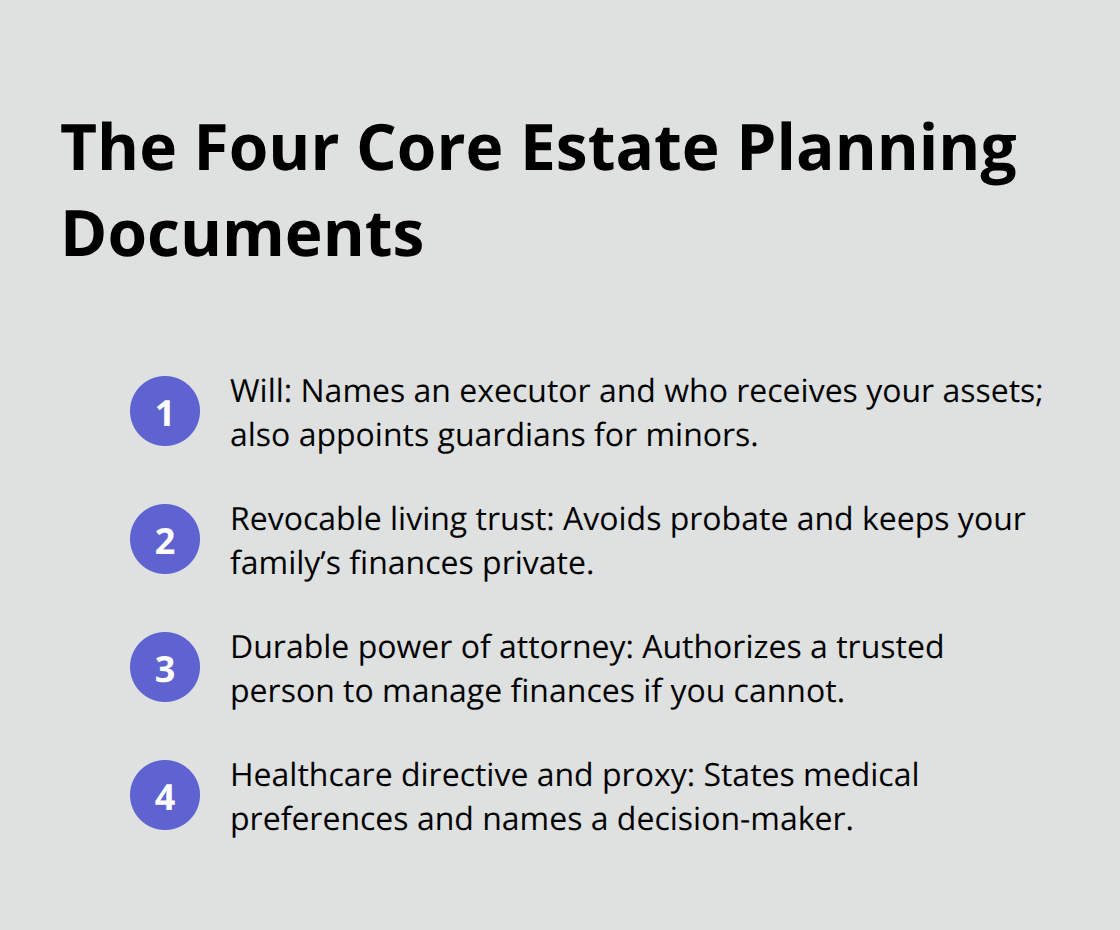
A will handles the basics but leaves gaps that cost families thousands. We recommend starting with four core documents that work together to cover your finances, healthcare, and your family’s wellbeing.
Your Will: The Foundation Document
Your will names an executor to manage your estate and designates who receives your assets. Without a will, state law decides everything, and your family loses control entirely. A will also lets you name guardians for minor children-a protection no other document provides. However, a will alone sends your estate through probate, meaning delays and public court records that expose your family’s financial details to anyone who looks.
A Living Trust: The Probate Killer
A revocable living trust changes the equation entirely. This document holds title to your assets and avoids probate completely, getting money to your family in weeks instead of months. You maintain full control while alive and can modify or revoke the trust anytime. Unlike a will, trust documents stay private, so your family’s financial details never appear in public records. The National Council on Aging emphasizes that combining a will with a living trust creates a complete foundation-your will catches anything accidentally left out of the trust, while the trust handles the heavy lifting of probate avoidance and privacy.
Powers of Attorney: Protection When You Cannot Act
Your third essential document is a durable power of attorney for finances. This names someone you trust to manage your bank accounts, investments, and property if you become unable to handle these tasks yourself. Without this document, your family must petition a court for conservatorship (a costly and time-consuming process that strips you of control). A healthcare directive and health care proxy complete your plan. This document states your medical preferences and names someone to make healthcare decisions if you cannot communicate your wishes.
Why These Four Documents Matter
These four documents cost far less than probate and give your family immediate access to funds, clarity on your medical wishes, and protection from court involvement. Starting with these four removes confusion and ensures your family has the tools to act quickly when it matters most. The next section walks you through the mistakes that derail even well-intentioned families and how to avoid them.
Common Estate Planning Mistakes to Avoid
Failing to Update Documents After Life Changes
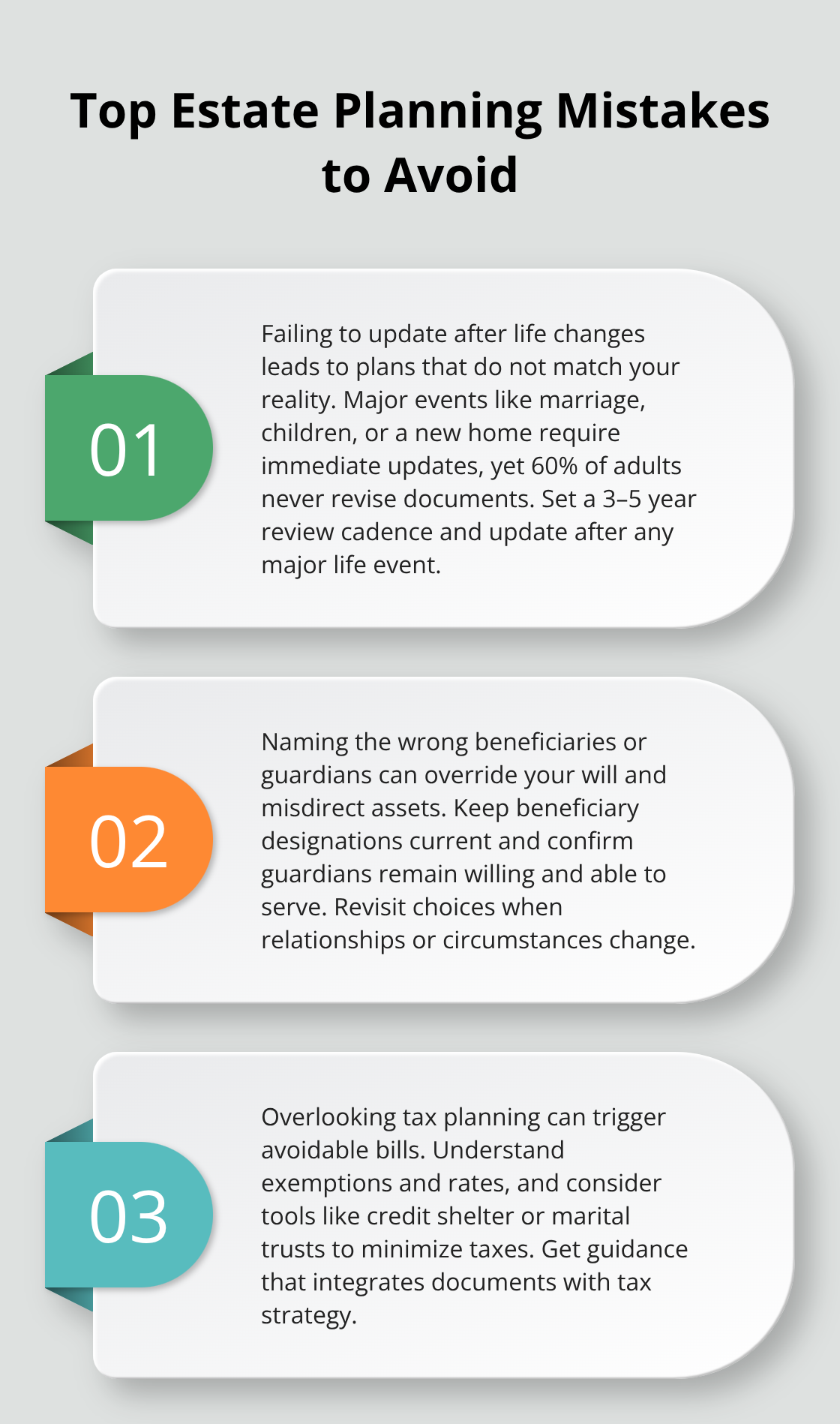
Most families create an estate plan once and never touch it again, which is precisely why their plans fail when it matters most. Life changes constantly-you marry, have children, buy property, or experience a major shift in finances-yet 60 percent of adults never update their documents after these events.
When you marry and add a spouse without updating beneficiary designations on retirement accounts or life insurance, your ex-partner might still inherit everything, completely overriding your will.
The same problem occurs with guardianship decisions. You name your brother as guardian for your children in a will written five years ago, but he now battles addiction and lives out of state. Your outdated plan forces your family into court fights when your real wishes have changed. The fix is simple: review your plan every three to five years or immediately after marriage, divorce, the birth of a child, a job change, or any significant life event. Set a calendar reminder and treat it like a medical checkup.
Naming the Wrong Beneficiaries or Guardians
Beneficiary designations on retirement accounts and life insurance override your will entirely, which means an outdated designation can send your entire 401(k) to someone you no longer want to benefit. Many people name a spouse as beneficiary, then divorce without updating the paperwork. Years later, that ex-spouse collects the full account balance while your current family receives nothing.
Guardianship mistakes carry even higher stakes. You cannot predict the future, so the person you chose five years ago may no longer be fit to raise your children. Circumstances shift-a guardian moves across the country, faces financial hardship, or develops health problems that make parenting difficult. Without regular updates, your children end up with someone you would never choose today.
Overlooking Tax Planning Opportunities
Overlooking tax planning costs families thousands in unnecessary bills. The federal estate tax exemption sits at $15 million in 2026, but this exemption expires in 2026, reverting to roughly $7 million unless Congress acts. Families above these thresholds face federal estate taxes of up to 40 percent on assets over the limit-meaning a $10 million estate could owe $1.2 million in taxes.
Beyond federal taxes, many states impose their own estate taxes with much lower exemptions, and some states have inheritance taxes that beneficiaries must pay. Most families never calculate whether their estate will owe taxes, so they create plans that trigger massive bills their heirs cannot afford to pay without selling the family home or business. A living trust alone does not reduce taxes; you need specific tax planning tools like credit shelter trusts or marital trusts designed to split assets between spouses and minimize what the government takes. Working with someone who understands both estate documents and tax strategy helps you structure your plan correctly the first time, rather than discovering years later that your family faces an unexpected tax bill.
Final Thoughts
Estate planning protects your family from unnecessary costs, legal delays, and decisions made by strangers. Without a plan, probate consumes 3 to 7 percent of your estate’s value while your family waits 9 to 12 months for access to funds. With a plan, your loved ones receive what you intended, when they need it, without court involvement or public exposure of your finances.
This intro to estate planning shows that you do not need to be wealthy or have a complicated situation to benefit from planning. A basic plan with a will, living trust, power of attorney, and healthcare directive costs far less than probate and takes most families just 30 minutes to complete. The real cost comes from waiting, as every year you delay increases the risk that your documents become outdated or beneficiary designations no longer match your wishes.
We at Family, Estate & Mediation Law help families across Northeast Florida create straightforward plans that actually work. Contact us at www.femlg.com or visit our offices in St. Augustine and Palatka to discuss your family’s specific needs and get your plan in place today.