
Most parents in St. Augustine and Palatka don’t have a guardianship plan for their minor children. Without one, Florida courts decide who raises your kids if something happens to you.
At Family, Estate & Mediation Law, we help families protect their children by creating clear guardianship plans. This guide walks you through choosing the right guardian, naming backups, and keeping your plan current as life changes.
What Happens to Your Children Without a Guardianship Plan
Florida Courts Make the Decision for You
When a parent dies or becomes unable to care for their children without a guardianship plan in place, Florida courts step in to make the decision about who raises them. Under Florida Statutes Chapter 744, the court prioritizes the child’s best interests, which sounds reasonable until you realize the judge doesn’t know your family, your values, or who you would have chosen. The court considers relatives first, typically in this order: grandparents, then aunts and uncles, then other family members. If no suitable relatives exist, the state appoints a non-relative guardian or places the child in foster care. St. Johns County Clerk’s Civil Division processes these emergency guardianship filings regularly, and the process moves quickly when a child has no designated guardian. Your preferences carry no weight in the decision.
The Financial Burden Adds Up Fast
The financial side becomes complicated immediately. If your child inherits assets or receives a settlement exceeding $15,000, Florida law requires a court-appointed guardian to manage that property. The St. Johns County Clerk charges a base filing fee of $400 for guardianship of property and person, plus annual audit fees that scale with estate value: $20 for estates up to $25,000, $85 for estates between $25,000 and $100,000, $170 for estates between $100,000 and $500,000, and $250 for larger estates. Beyond these fees, the court requires the guardian to file an Initial Verified Inventory of the property and annual accounting statements, creating ongoing administrative work and expense.
Court Oversight Limits Your Guardian’s Authority
Your chosen guardian also faces court oversight of every decision about the child’s money, medical care, and education. Without a plan naming someone you trust, a stranger could make these decisions, the state absorbs guardianship costs, and your family’s privacy disappears into court records. The emotional toll on your children-losing a parent and then facing a prolonged court process with an unfamiliar caregiver-compounds grief with additional trauma.
Taking Control of Your Child’s Future
The alternative is straightforward: you name the guardian now, while you can make the choice. This single decision protects your children from court intervention, keeps your family’s affairs private, and ensures someone you trust steps in immediately. The next section walks you through selecting the right person for this role.
Choosing the Right Guardian for Your Children
Financial Stability Shapes Your Child’s Daily Life
Selecting a guardian means finding someone who can step into your parental role and make decisions aligned with your values, not just someone willing to help. Financial stability matters tremendously because guardians cover daily expenses from their own resources until they can access the child’s inheritance or assets, if any exist. A guardian earning $40,000 annually will struggle differently than one earning $100,000, and this gap affects whether your child attends the school you’d choose, participates in activities that matter to them, or receives consistent medical care.
Lifestyle and Work Schedule Affect Your Child’s Experience
Beyond income, lifestyle compatibility shapes your child’s daily reality. If you value outdoor activities and your potential guardian works 60-hour weeks in an office job, that mismatch creates friction. Ask potential guardians directly about their work schedule, commute, and flexibility for school events, medical appointments, and time with your child. Their current household composition also signals readiness. A guardian with three teenagers already has experience managing a full house, but one living alone in a small apartment may not have considered space, routines, or the logistical demands of adding a grieving child to their life.
Values and Parenting Philosophy Must Align with Yours
Values and parenting philosophy deserve equal weight to financial capacity. Your child will spend formative years absorbing how this guardian handles conflict, approaches education, manages money, and treats others. If you prioritize faith-based education and your chosen guardian sends their own children to public school exclusively, that disconnect affects your child’s upbringing in ways that cause lasting friction. Talk specifically about discipline, screen time rules, academic expectations, and religious or cultural practices. Ask how they would handle a teenager who rebels or a child who struggles academically. Their answers reveal whether they parent reactively or thoughtfully.
Have the Conversation Before You Name Them
Most importantly, have the conversation with potential guardians before naming them in your will. Many people assume they will be asked eventually and feel honored when you finally approach them, but others experience shock or reluctance they don’t voice immediately. Frame it clearly: you are asking them to step in only if something happens to you, not immediately or in normal circumstances. Give them time to consider the responsibility. A guardian who accepts reluctantly or feels ambushed becomes resentful, and resentment poisons a child’s experience. Once you have chosen someone and they have agreed, confirm their willingness in writing or document their consent in your will itself. Update your choice every few years or whenever major life changes occur for you or your potential guardian, because circumstances shift in ways that affect suitability.
With your primary guardian selected and committed to the role, the next step involves putting that choice into legal form-naming them officially in your will or trust and establishing backup guardians who can step in if your first choice cannot serve.
Creating a Legal Guardianship Plan
Put Your Choice in Writing
Naming a guardian in your will transforms a conversation into a legal document that Florida courts recognize and respect. Florida Statutes Chapter 744 allows parents to designate a preneed guardian, which means you select someone now to care for your child if you die or become incapacitated. This designation carries significant weight with judges because it reflects your informed choice, not a court’s guess about what serves your child’s interests. You can name the guardian directly in your will or in a separate guardianship designation document, though including it in your will keeps everything organized in one place. The moment you put the name on paper and sign it before two witnesses, you have removed uncertainty from your child’s future. Families who name guardians in advance experience faster, less contentious court proceedings when the time comes. Without a written designation, the court must investigate potential candidates, interview relatives, and hold hearings that delay placement and cost your estate money in legal fees. Your written choice eliminates that chaos.
Name Backup Guardians in Order
Naming one guardian only creates risk because life happens unpredictably. Your first choice might relocate for work, develop a serious illness, or face a personal crisis that makes guardianship impossible. We at Family, Estate & Mediation Law strongly recommend naming at least two backup guardians in the exact order you would want them to serve. Many St. Augustine and Palatka families name a primary guardian, then a sibling as first backup, then a trusted friend as second backup.
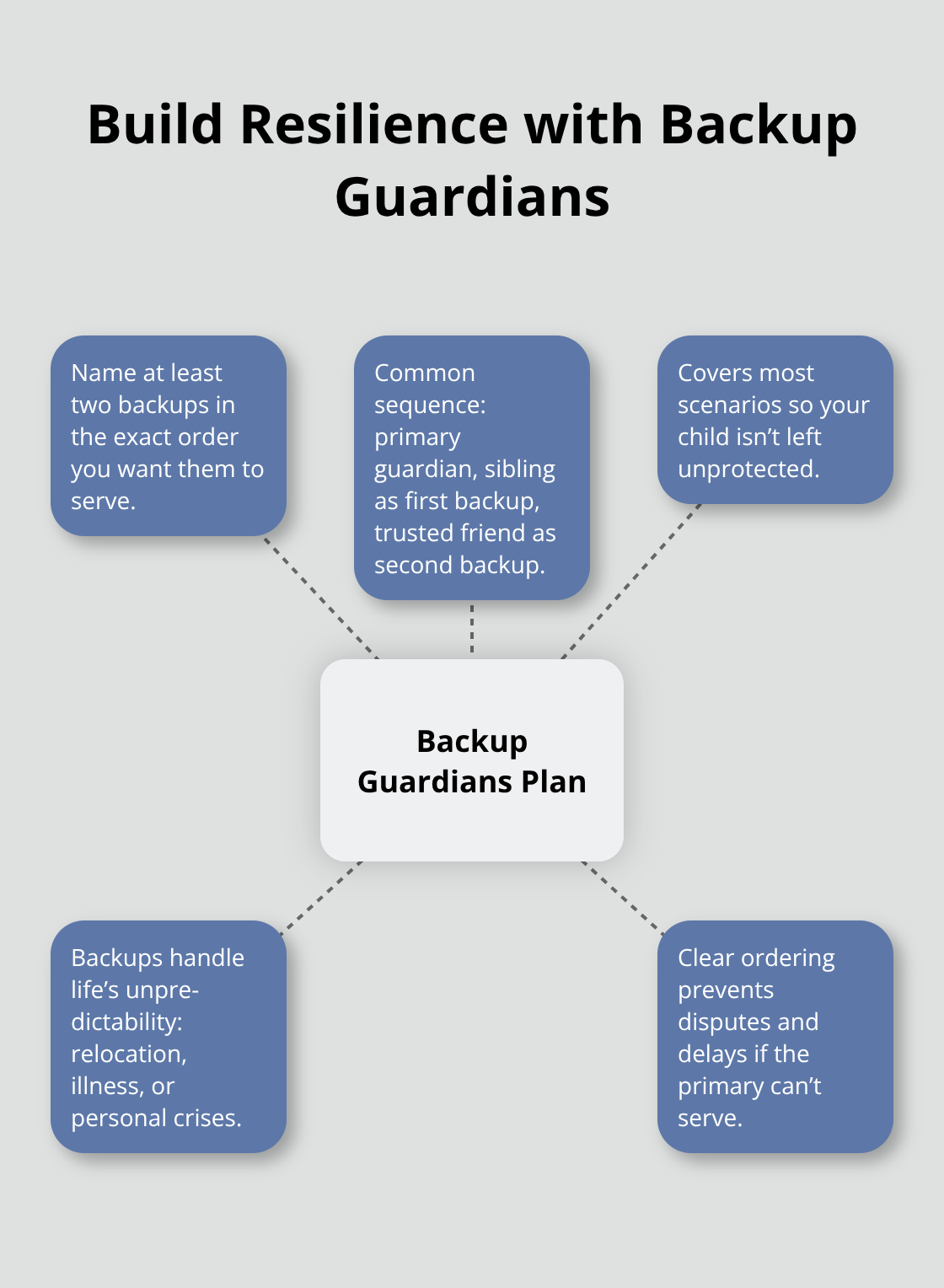
This three-tier approach covers most scenarios without leaving your child unprotected.
Update Your Plan Regularly
You should update your guardianship designation every three to five years or whenever major life changes occur, such as a divorce, a move to another state, a significant financial shift, or a serious health diagnosis affecting your chosen guardian. Review your choice after your children’s significant milestones too, because a guardian who works perfectly for a five-year-old might not suit a teenager. Florida law allows you to modify or revoke your designation at any time, so treat it as a living decision, not a one-time event.
Keep Documents Accessible
Store your will and guardianship documents in an accessible location and tell your chosen guardians and your family members where to find them, because a will locked in a safe deposit box that no one can access quickly defeats the purpose entirely.
Final Thoughts
A guardianship plan for minor children protects your family from court intervention and keeps your decisions in your hands when tragedy strikes. Without this plan, Florida courts make the decision about who raises your children, and that process takes time, costs money, and removes your voice from the outcome entirely. The families in St. Augustine and Palatka who have named guardians avoid the trauma of court proceedings on top of losing a parent.
Planning now means your chosen guardian can focus on caring for your child rather than fighting through legal battles to gain authority. Your family’s values, preferences, and relationships shape your child’s upbringing instead of a judge’s interpretation of the best interests standard. The cost of creating a guardianship plan is minimal compared to the cost of letting the court decide for you.
We at Family, Estate & Mediation Law help St. Augustine and Palatka families create guardianship plans that reflect their values and protect their children’s futures. We handle the legal documents, answer your questions, and make sure everything is in place before you need it. Contact us to schedule a consultation and start your guardianship plan today.