
A Florida living will gives you control over your medical care if you can’t speak for yourself. Without one, hospitals and doctors make decisions based on state law, not your wishes.
At Family, Estate & Mediation Law, we’ve seen firsthand how families struggle when no living will exists. This guide walks you through what you need to know to protect your healthcare decisions today.
What a Living Will Actually Does
How a Living Will Works in Florida
A living will in Florida is a written document that tells doctors exactly what medical treatments you want or don’t want if you become unable to communicate. Florida Statute 765.302 defines it as a directive about life-prolonging procedures when you face a terminal condition, end-stage condition, or persistent vegetative state. The document only activates when you’re seriously ill and cannot make decisions yourself-it doesn’t apply if you’re healthy or have any reasonable chance of recovery. This distinction matters because many people mistakenly think a living will controls ongoing medical care. It doesn’t.
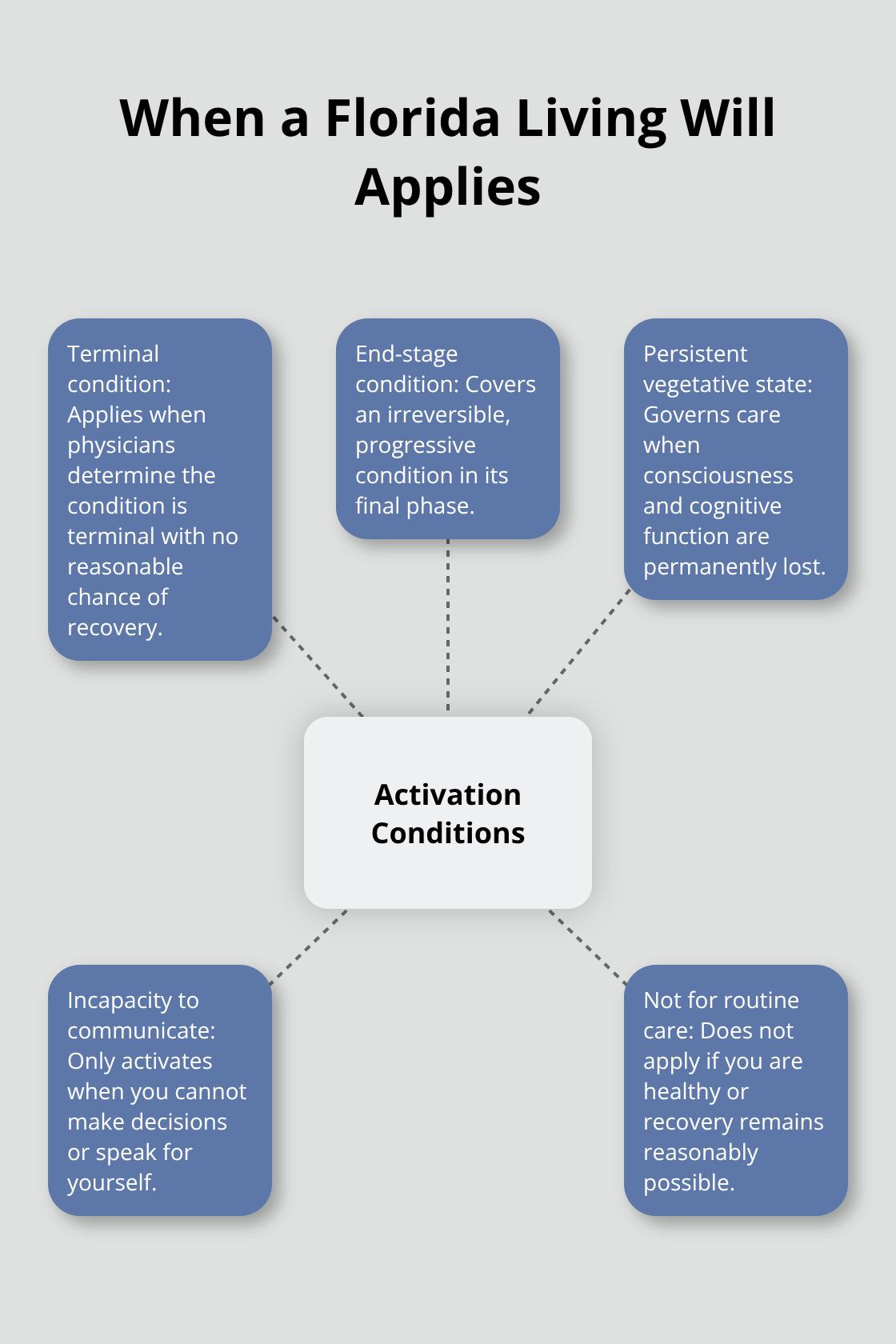
It only governs what happens when your condition is irreversible and you’ve lost the ability to speak for yourself.
Under Florida law, your living will creates what’s called a rebuttable presumption of clear and convincing evidence about your wishes. Doctors must follow it unless they have strong evidence that your preferences have changed.
The Real Gap Between What People Think They Have
The gap between what people think they have and what they actually own is striking. According to data from the CDC, roughly one in four people will face incapacity at some point in their lives, yet many Floridians operate without any advance directive in place. Without a living will, Florida law defaults to a hierarchy of surrogate decision-makers-your spouse, adult children, parents, or siblings-who must guess what you would have wanted. That burden falls on the people who love you most, and their decisions can face challenges from other family members or even court challenges.
A living will removes that guesswork entirely.
Living Wills Versus Other Estate Documents
A living will differs fundamentally from a revocable living trust, which handles probate avoidance and property management, or a durable power of attorney for finances, which covers money and assets. A living will is exclusively about healthcare decisions. Many Floridians need all three documents working together to cover their complete estate and healthcare picture.
Updating Your Living Will Matters More Than You Think
If your current living will is more than ten years old, Florida law and medical technology have evolved enough that you should update it to reflect current treatments and your current preferences. The form matters too-hospital forms and DIY documents often lack the clarity and enforceability that an attorney-drafted document provides. An attorney can ensure your document truly reflects your values and stands up to scrutiny when it counts most.
The next step involves understanding exactly what healthcare decisions you can include in your living will and which ones require separate documentation.
What Makes a Florida Living Will Legally Valid
Strict Requirements Under Florida Statute 765.302
Florida Statute 765.302 sets strict requirements that separate a valid living will from a document that hospitals will ignore. Your living will must be in writing and signed by you in front of two witnesses, with at least one witness who is neither your spouse nor a blood relative. If you cannot physically sign, one witness may sign on your behalf while you direct them to do so in front of both witnesses. Florida courts take these formalities seriously because they protect against fraud and confirm the document reflects your genuine wishes, not someone else’s agenda.
The Critical Notification Step
Beyond the signatures, you must notify your physician that the living will exists, or any other person can notify them if you’re incapacitated at hospital admission. The physician then places the document in your medical record where it becomes actionable. Without this notification step, your living will sits in a drawer and accomplishes nothing. Many Floridians draft a living will and never tell their doctor, which defeats the entire purpose. You should keep a copy at home, give one to your designated healthcare surrogate, and provide one to your primary physician during a healthcare planning conversation.
Healthcare Decisions You Can Address
The healthcare decisions you can address in your living will include mechanical ventilation, dialysis, feeding tubes, artificial hydration, CPR, pain management medications including opioids, and organ or tissue donation preferences. However, Florida law limits your living will to situations where you face a terminal condition, end-stage condition, or persistent vegetative state. This boundary matters because it prevents your living will from controlling routine medical care when recovery remains possible.
Common Mistakes That Invalidate Living Wills
Common mistakes that invalidate living wills include using only one witness instead of two, having both witnesses be family members, failing to sign in front of witnesses, creating an undated document without clarity on when you executed it, and using vague language like “I don’t want extraordinary measures” without specifying which treatments you actually refuse. Hospital-generated forms sometimes fail to meet Florida’s statutory requirements, and documents drafted without attorney review often contain ambiguous language that doctors hesitate to follow.
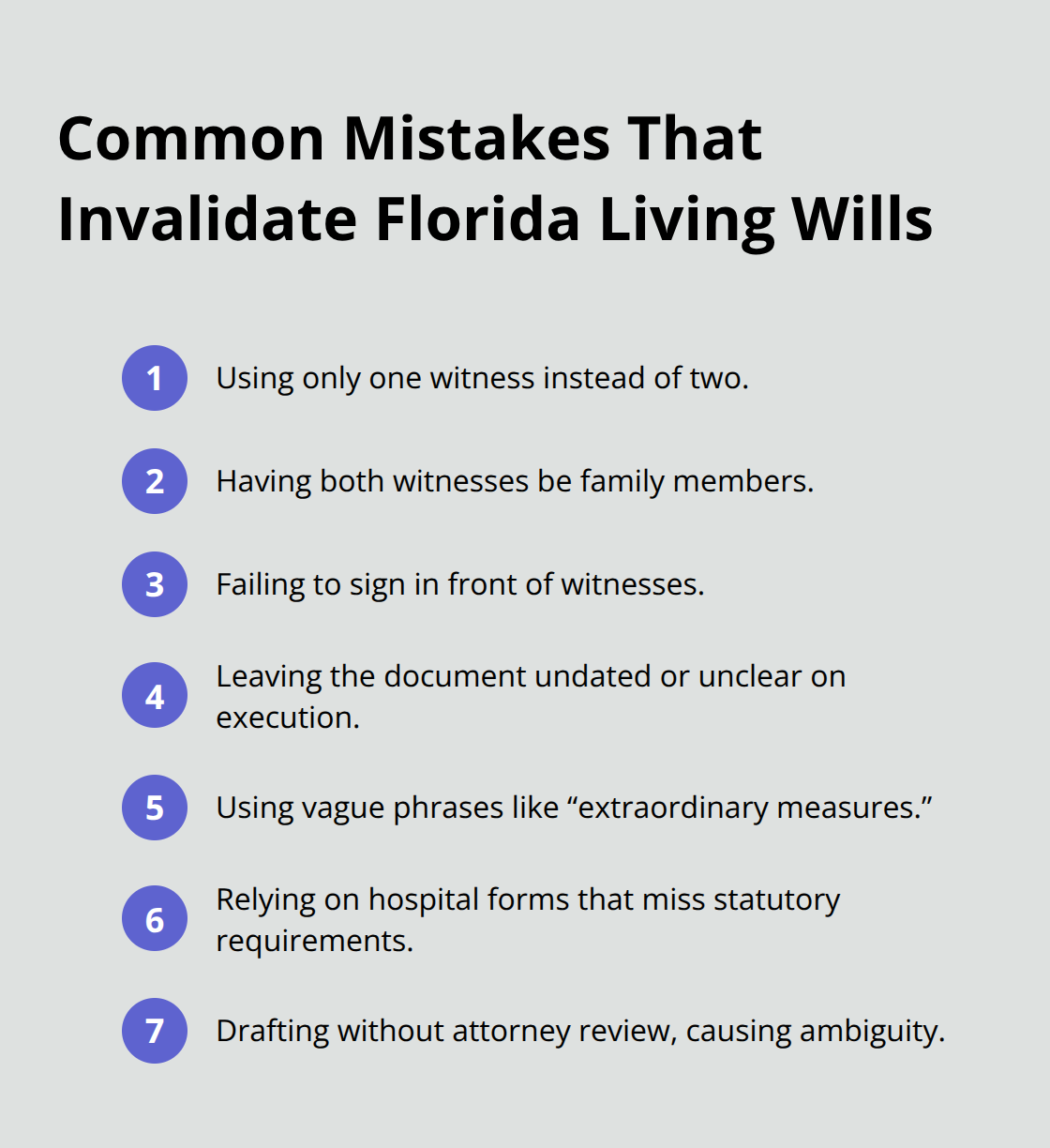
Why Vague Language Fails You
If your living will says you want comfort care only but doesn’t specifically address feeding tubes, dialysis, or CPR, your healthcare surrogate and physicians face uncertainty about your true preferences. An attorney-drafted document addresses foreseeable medical scenarios explicitly, reducing the risk that your document sits unused because medical staff cannot confidently interpret your intent. The difference between a DIY form and a compliant attorney-drafted living will often determines whether your wishes are honored or whether your family defaults to Florida’s surrogate decision-making hierarchy. Understanding how to execute your living will correctly sets the stage for the next critical step: actually creating and storing the document so it works when you need it most.
Creating Your Living Will Step by Step
Start your living will with a conversation with your physician about realistic medical scenarios you might face. Ask your doctor which treatments apply to your health situation, what each treatment involves, and what outcomes you can reasonably expect. This medical context shapes every decision in your living will. Once you understand the options, write your preferences in plain language specific to each treatment type. Instead of vague statements like “I don’t want heroic measures,” specify exactly which treatments you refuse or accept. State whether you want CPR if your heart stops, whether you want mechanical ventilation if you cannot breathe on your own, and whether you want feeding tubes if you cannot eat. Address pain management explicitly, including whether you accept opioids to manage suffering even if they might shorten your life. The Florida Agency for Health Care Administration provides downloadable forms on their website that walk you through these decisions, but forms alone often lack the clarity that attorney-drafted documents provide. An attorney can translate your values into language that hospitals and physicians interpret consistently, which matters when time is short and your surrogate faces pressure from multiple medical teams.
Witness Requirements Determine Document Validity
Florida Statute 765.302 requires you to sign your living will in front of two witnesses, with at least one witness who cannot be your spouse or a blood relative. This means you cannot use your adult child as both witnesses, and you cannot use your spouse at all. Many people make this mistake and end up with an invalid document. A colleague, neighbor, clergy member, or coworker qualifies as a valid witness. If you cannot physically sign due to illness or disability, one of the two witnesses may sign your name on your behalf while you direct them to do so in front of both witnesses. Notarization is not legally required in Florida for a living will to be valid, though some healthcare facilities request it anyway. If you pursue notarization, it adds an extra layer of credibility but does not replace the two-witness requirement.
Notification to Your Physician Activates Your Document
After signing, you must notify your physician that the document exists. This step is not optional. Place the original in your medical record at your primary care office, give a copy to your designated healthcare surrogate, and keep a copy at home. Without this notification, your document sits unused when you need it most. Your physician places the living will directly into your medical record where it becomes actionable during treatment decisions.
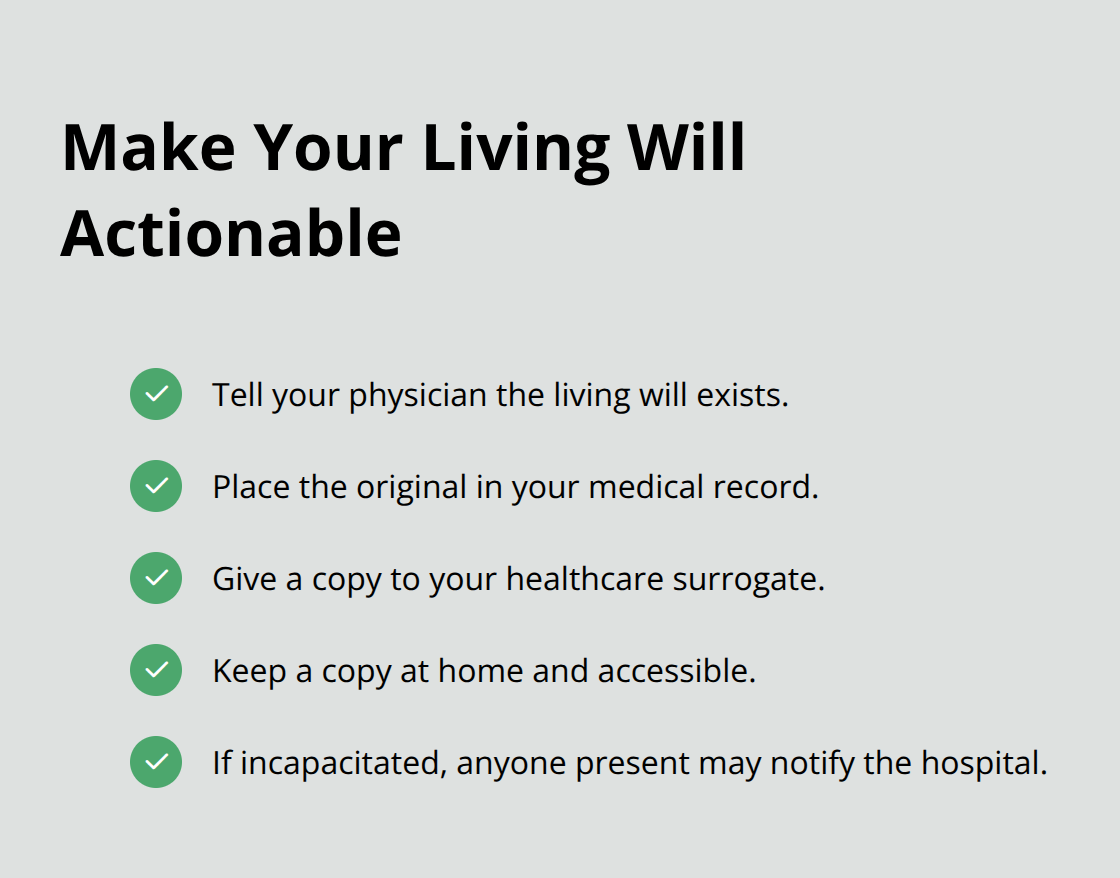
If you arrive at a hospital incapacitated, any person present can notify the medical staff about your living will, and the facility must add it to your records promptly.
Storage and Access Determine Real-World Effectiveness
Your living will accomplishes nothing if hospitals cannot find it when you arrive unable to speak. Keep the original in a safe place at home, not a safety deposit box that your family cannot access during an emergency. Give copies to your physician, your healthcare surrogate, and any close family members who might be present if you become incapacitated. Some people register their living will with Florida’s Health Care Advance Directives Registry, though this registry is optional and not universally accessed by all hospitals. A better approach involves telling multiple people where the document is located and what your wishes are.
Updating Your Document Strengthens Enforceability
If your living will is more than five years old, create an updated version because Florida law and medical technology have changed significantly. Hospital forms often fail to meet current statutory requirements, so replacing an old hospital form with a current attorney-drafted document strengthens enforceability. An attorney who understands Florida’s specific requirements can ensure your document meets all statutory formalities and reflects your current medical situation and preferences. We at Family, Estate & Mediation Law can help you draft your living will, verify proper execution with qualified witnesses, and coordinate it with your healthcare surrogate designation and other estate documents.
Final Thoughts
A Florida living will stops being theoretical the moment you face a health crisis. Right now, while you’re healthy and thinking clearly, you control what happens when you cannot speak for yourself. The CDC data showing one in four people will face incapacity at some point makes this less about worst-case scenarios and more about basic planning that protects your autonomy.
Without a living will, Florida law hands your medical decisions to whoever the state decides should make them, and that person may not know your true wishes. Your family members then carry the emotional weight of guessing what you would have wanted while facing pressure from medical teams and possibly other relatives who disagree. We at Family, Estate & Mediation Law understand that creating a Florida living will involves more than filling out a form-it requires honest conversations about your values, clear documentation that hospitals will actually follow, and proper execution that meets Florida’s strict statutory requirements.
Contact Family, Estate & Mediation Law at our St. Augustine or Palatka office to schedule a consultation. We’ll walk you through your healthcare preferences, verify your living will meets all Florida requirements, and make certain your physician and surrogate have copies when they need them. Acting now protects your healthcare autonomy and gives your family peace of mind.