
A medical power of attorney in Florida gives someone you trust the legal authority to make healthcare decisions if you can’t. Without this document, your family may face delays, conflicts, or court involvement during a medical crisis.
At Family, Estate & Mediation Law, we help Florida residents protect their healthcare wishes through proper documentation. Whether you’re in St. Augustine, Palatka, or elsewhere in the state, understanding this tool is the first step toward peace of mind.
What a Medical Power of Attorney Actually Means in Florida
The Legal Definition and How It Works
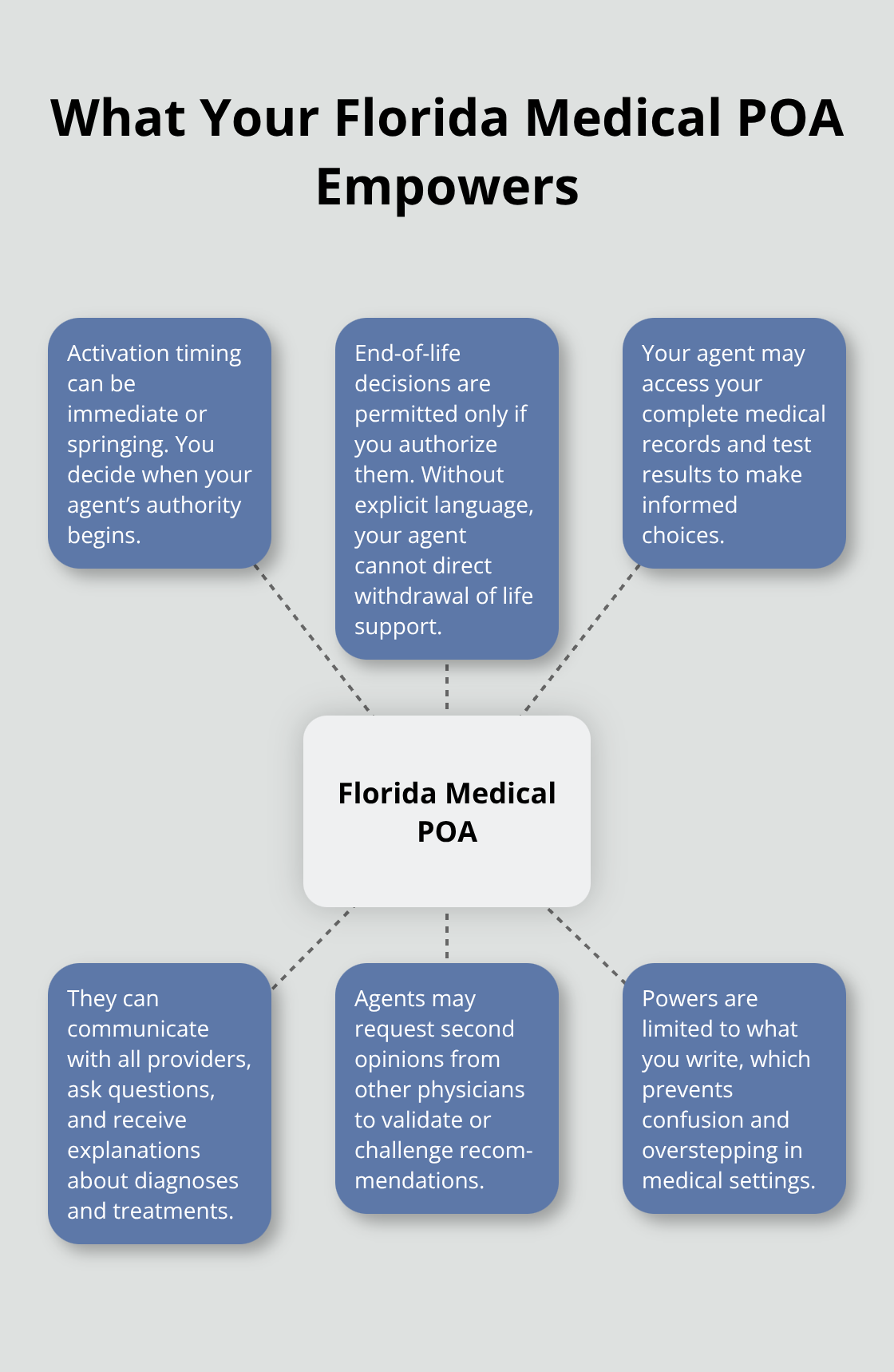
A medical power of attorney in Florida is a legal document that names someone to make healthcare decisions for you when you cannot make them yourself. Under Florida Statute 765.204, this person-called your agent or healthcare surrogate-gains the authority to speak with doctors, review medical records, and decide on treatments the moment you sign the document, unless you specify otherwise. You control when your agent’s power activates. You can make the authority immediate, meaning they can act right now, or you can make it spring into action only if you become incapacitated. Florida law gives you this flexibility, and most people choose the springing option to keep control while they’re able.
Your agent’s powers are limited to exactly what you write down. If you grant authority over end-of-life decisions, they have it. If you don’t mention it, they don’t get it. This specificity prevents confusion in medical settings and stops agents from overstepping.
How It Differs from Living Wills and Health Care Surrogate Designations
Many Florida residents confuse a medical power of attorney with a living will or health care surrogate designation, but they serve different purposes. A living will documents your wishes about life-prolonging treatment if you’re terminally ill or in a permanent vegetative state-it’s passive and specific. A health care surrogate designation, governed by Florida Statutes Chapter 765, names someone to make decisions but offers less detail about their exact powers. A medical power of attorney is more active and flexible: your agent can make a broader range of healthcare decisions, access your full medical information, and adapt to changing circumstances.
Why Florida Residents Face Real Risk Without This Document
Florida residents need this protection because without it, family members have no legal standing to make medical decisions during emergencies. Hospitals may refuse to discuss your condition with anyone, even your spouse. If no one has authority, courts can appoint a guardian-a costly, time-consuming process that strips your family of decision-making control.
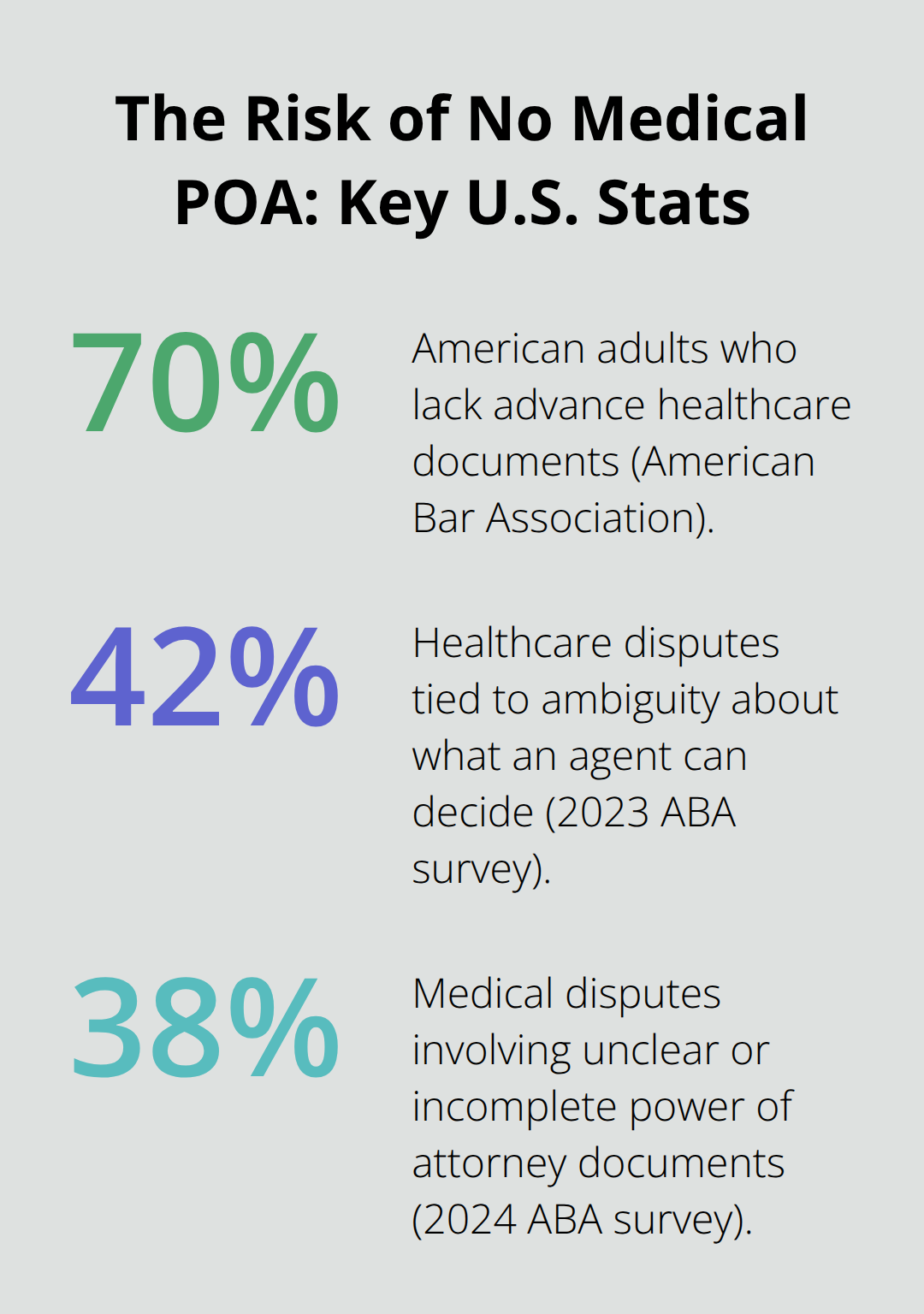
According to the American Bar Association, nearly 70 percent of American adults lack advance healthcare documents, leaving their families vulnerable. In Florida, where the median age exceeds the national average, this gap creates real risk. Families in St. Augustine and Palatka struggle through medical crises without clear authority structures.
A medical power of attorney takes minutes to sign but prevents months of legal complications.
Understanding what powers you grant and to whom you grant them sets the foundation for effective healthcare planning. The next step involves identifying the specific authorities your agent will hold and the responsibilities that come with them.
Key Powers and Responsibilities of a Medical Power of Attorney
What Your Agent Can Actually Decide
Your agent’s authority hinges on what you explicitly grant in the document. Florida Statute 765.204 allows you to specify powers down to the granular level, and most agents discover their actual scope only when they need to act. If you authorize your agent to make end-of-life decisions, they can direct doctors to withdraw life support. If you don’t mention it, they cannot, even if they believe it’s in your best interest. This specificity matters enormously in hospitals. A 2023 survey by the American Bar Association found that 42 percent of healthcare disputes stem from ambiguity about what an agent can decide. The clearer your document, the faster clinicians will accept your agent’s authority and avoid treatment delays.
Medical Records Access and Information Rights
Your agent gains the right to access your complete medical records, review test results, and request second opinions from other physicians. This information access is non-negotiable for informed decision-making. Without it, your agent would be making life-altering choices without essential facts. Florida law also grants your agent the power to communicate with all your healthcare providers, ask questions, and receive explanations about diagnoses and treatment options. Many agents underestimate this communication role. In reality, they spend more time talking with doctors and nurses than making formal decisions.
A competent agent asks hard questions, pushes back on recommendations they don’t understand, and ensures your preferences are heard.
How Agents Protect Themselves Legally
Your agent signs documents as your agent, not in their own name, to avoid personal liability. They maintain records of what they decided and why, protecting themselves and honoring your wishes if disputes arise later. Hospitals sometimes challenge an agent’s authority even with a valid document. Florida law requires facilities to provide a written explanation if they refuse to accept your power of attorney. If that happens, you can request the hospital’s ethics committee review the decision or ask your attorney to send a formal opinion letter. Most hospitals accept valid documents immediately once they verify the signatures and witness requirements.
Choosing an Agent Who Shares Your Values
The agent role demands trustworthiness above all. You need someone who will follow your stated wishes, not their own preferences about what’s best for you. An agent who hesitates or disagrees with your medical philosophy will create conflict precisely when you need unity. Your agent should understand that they owe you fiduciary duties: they must act in your best interest, follow your known preferences, and avoid conflicts of interest. If your agent is also inheriting from your estate, that creates a potential conflict if treatment decisions affect your medical costs or survival. It’s not disqualifying, but it demands transparency and careful thought.
Moving Forward with Proper Selection
Selecting the right agent sets the stage for smooth healthcare decision-making when you cannot act. The next step involves understanding the specific legal requirements Florida imposes on how you create and execute this document to make it valid and enforceable.
How to Create and Execute a Medical Power of Attorney in Florida
Meeting Florida’s Legal Requirements
Florida Statute 765.204 sets specific requirements that your medical power of attorney must meet to be valid and enforceable. The document must be signed by you, the principal, and witnessed by two people-at least one of whom cannot be your spouse or a blood relative. Many people skip notarization thinking it’s optional, but notarizing the document strengthens its enforceability in medical settings. Hospitals and clinics accept notarized documents faster because notarization creates a presumption of authenticity.
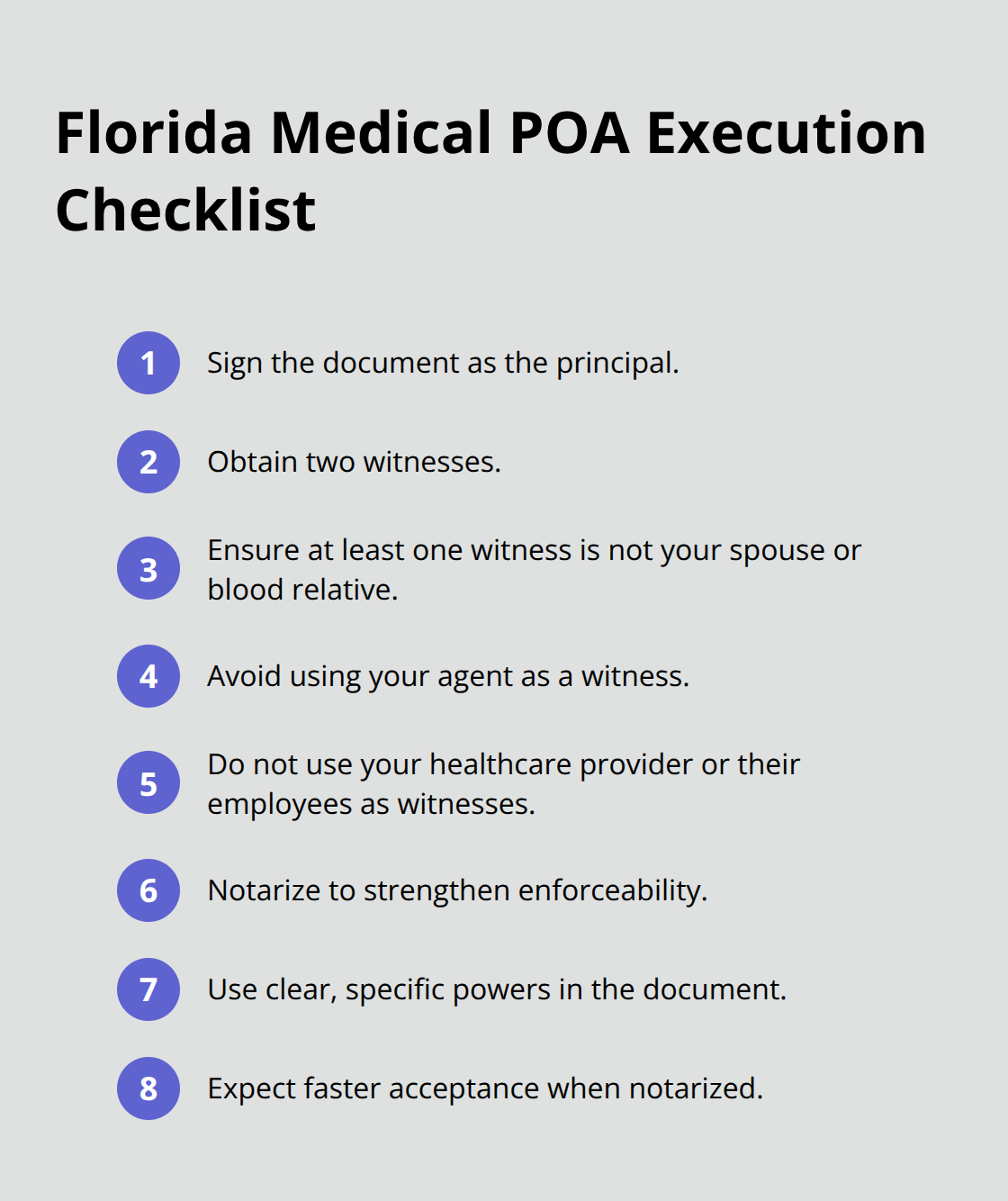
Your agent cannot serve as a witness, and neither can your healthcare provider or anyone employed by your healthcare provider.
Florida’s two-witness requirement exists specifically to prevent fraud and verify that you genuinely understood what you were authorizing. The document must clearly state the powers you’re granting-whether your agent can make end-of-life decisions, consent to surgery, access medical records, or handle all healthcare matters. Vague language creates problems. A 2024 survey by the American Bar Association found that 38 percent of medical disputes involved unclear or incomplete power of attorney documents.
Selecting an Agent Who Honors Your Values
The agent role demands trustworthiness above all. This person must prioritize your wishes over their own beliefs about what’s medically appropriate. Your agent needs emotional stability to handle difficult conversations with doctors while you cannot speak for yourself. They should live nearby or be available by phone quickly-an agent in another state creates delays when time matters.
Discuss your specific medical preferences with them before signing anything. Do they know you want aggressive treatment or comfort-focused care? Do they understand your religious or moral objections to certain procedures? Many agents discover they never actually discussed these details with the principal, creating conflict when decisions arise. Select an alternate agent in case your first choice becomes unavailable or dies.
Executing the Document Properly
Your agent should review the final document and sign it, confirm they understand their role, and accept the responsibility. Keep copies with your primary care physician, at the hospital where you receive care, and provide one to your agent. A wallet card listing your agent’s name and phone number gives emergency responders critical information during crises.
Maintaining Current Documentation
Life circumstances change constantly. If your marriage ends, Florida law automatically terminates your spouse’s authority as agent unless you take action. Review your medical power of attorney every three to five years, especially after major life events like divorce, remarriage, serious illness, or relocation. Outdated documents with deceased agents or estranged family members create chaos. Update your healthcare documents whenever you move between Florida counties or change primary healthcare providers, ensuring all parties have current information and your wishes remain clear.
Final Thoughts
A medical power of attorney in Florida protects your healthcare future by ensuring someone you trust makes decisions aligned with your values when you cannot act. Without this document, your family faces uncertainty, potential court involvement, and delays during medical emergencies. We at Family, Estate & Mediation Law understand that healthcare planning feels overwhelming, and that’s where we step in to help Northeast Florida families create documents that hospitals and clinics actually accept.
Contact Family, Estate & Mediation Law to schedule a consultation about your healthcare planning needs. Our team will review your situation, explain your options, and guide you through creating a medical power of attorney in Florida that works when you need it most. With decades of combined experience, we’ve helped countless families protect their healthcare wishes and avoid preventable conflicts.
Don’t wait for a medical crisis to discover your family lacks authority. Take control of your healthcare future today by reaching out to our offices in St. Augustine and Palatka.