
Family conflict doesn’t have to mean courtroom battles. Mediation for families offers a path where relationships stay intact while disputes get resolved.
At Family, Estate & Mediation Law, we’ve seen how the right approach transforms outcomes. This guide walks you through why mediation works and how it actually happens.
Why Mediation Beats Going to Court
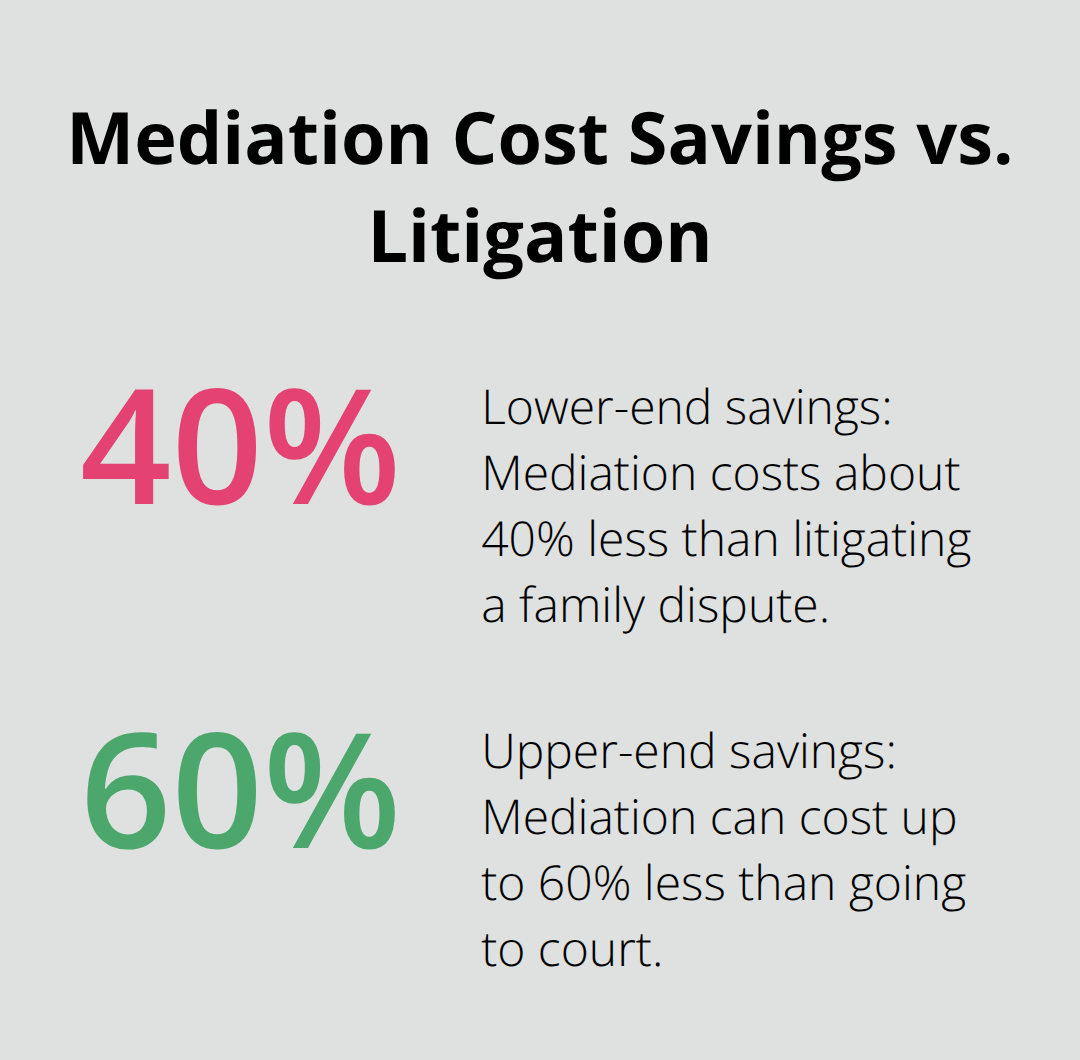
Litigation drains families financially and emotionally in ways that most people don’t anticipate. Court battles average between $15,000 and $30,000 per person for divorce cases alone, according to data from the American Academy of Matrimonial Lawyers. Mediation typically costs 40 to 60 percent less because there’s no need for multiple attorneys, lengthy discovery processes, or trial preparation.
Beyond the dollars, court proceedings force families into an adversarial system where a judge makes final decisions about matters that deeply affect everyone involved.
Mediation works differently. Families who choose mediation retain control over their own outcomes instead of handing that power to a stranger in a black robe. The process keeps communication channels open rather than closing them through formal discovery and depositions. When parents mediate custody arrangements, they craft solutions tailored to their children’s actual needs and schedules. When couples divide property through mediation, they negotiate terms that reflect their unique circumstances rather than applying generic legal formulas. This control matters enormously because families know their situations better than any court ever could.
The Relationship Preservation Factor
Litigation destroys relationships. Court proceedings pit family members against each other with competing attorneys amplifying conflict at every stage. The adversarial process inherently creates winners and losers, leaving lasting resentment that poisons relationships for years. Mediation fundamentally changes the dynamic by positioning both parties on the same side of the table, working toward mutually acceptable solutions.
This collaborative approach allows parents to maintain functional relationships after divorce, which directly benefits children. Research from the Journal of Divorce and Remarriage shows that children whose parents mediated their divorce reported better relationships with both parents compared to children whose parents litigated. Mediation also preserves dignity and privacy. Court records become public documents that anyone can access, exposing family matters to scrutiny. Mediation sessions remain confidential, protecting sensitive information about finances, health, parenting styles, and personal circumstances from public view.
Speed and Certainty in Resolution
Mediation moves faster than litigation because the process depends on the parties’ willingness to negotiate rather than court schedules and judicial availability. Most mediation cases resolve within three to six months, while contested litigation frequently takes two years or longer to reach trial. Faster resolution means families can move forward sooner instead of remaining trapped in uncertainty.
The predictability also matters significantly. Litigation outcomes depend on which judge hears the case and how they interpret evidence presented. Mediation outcomes depend on what both parties actually want, eliminating the guesswork about judicial interpretation. Families who understand these advantages often wonder what the actual mediation process looks like and how it unfolds from start to finish.
How Mediation Actually Works
Setting Clear Goals from the Start
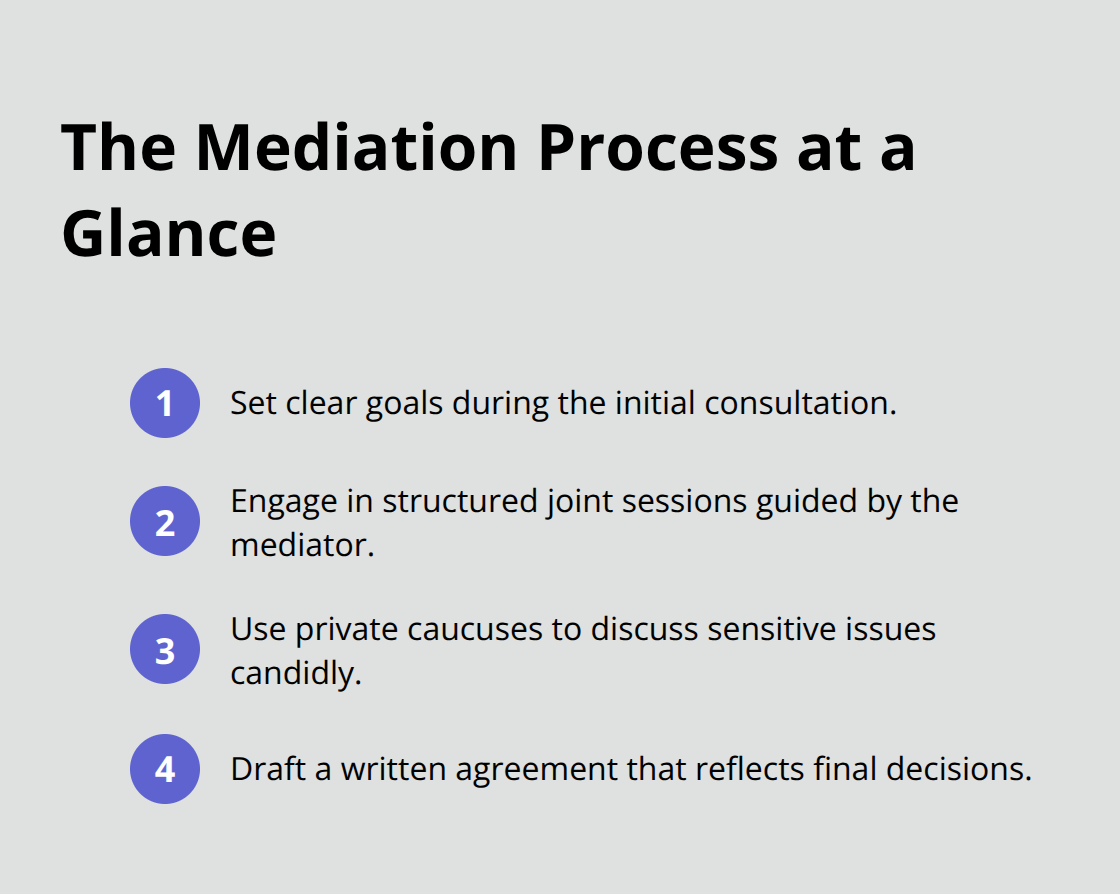
Mediation begins with clarity about what each party wants to accomplish. During the initial consultation, the mediator meets with you to understand your situation, explain how the process functions, and establish what success looks like for your family. The mediator doesn’t judge or take sides-they gather information about the core issues, the relationships involved, and your priorities. Many families arrive at this stage confused about what they can realistically negotiate or what outcomes matter most. The mediator helps you articulate these goals clearly.
If you’re divorcing and have children, your primary goal might be crafting a custody arrangement that minimizes disruption to the kids while allowing both parents meaningful time together. If you’re dividing property, your goal might be protecting a family business or securing enough assets for retirement. Specific goals from the start dramatically improve outcomes because both parties understand what they’re working toward.
Structured Negotiation Sessions
Once goals are clear, the mediator facilitates structured negotiation sessions where both parties present their positions and explore solutions together. The mediator doesn’t decide outcomes for you-they keep discussions focused, prevent escalation, and help identify common ground. These sessions typically last two to three hours and happen weekly or biweekly, depending on complexity. A divorce mediation might require four to eight sessions, while property division or custody disputes sometimes need more. The mediator often meets separately with each party in private sessions called caucuses to discuss sensitive issues, test proposed solutions, and prepare for joint discussions. This confidential space allows you to be candid about concerns or constraints without the other party hearing every detail. Studies from the American Bar Association show that mediation participants report higher satisfaction with the process itself compared to litigation, partly because they have genuine input at every step.
Documenting Your Agreement
As agreements take shape, the mediator documents what you’ve decided in writing. This documentation becomes your mediation agreement, which you can then file with the court as a binding settlement. The mediator ensures the language is clear, legally sound, and accurately reflects what both parties agreed to (preventing disputes later about what was actually decided). The written agreement transforms informal discussions into formal terms that hold legal weight. Once you have this agreement in place, you’ll want to understand what happens next-how the court processes your settlement and what steps you take to finalize everything.
What Family Disputes Can Mediation Actually Resolve
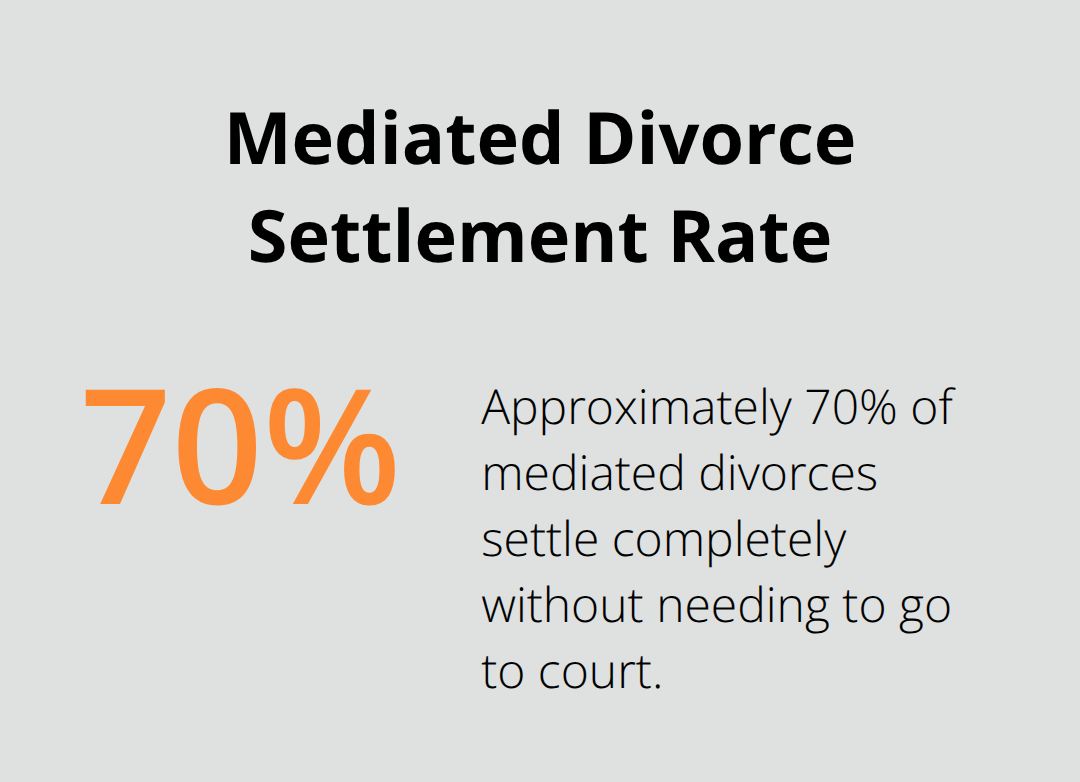
Mediation works for specific family conflicts where both parties need to reach agreement on concrete terms. Divorce and separation disputes top the list because they involve multiple interconnected decisions that families must make regardless of how they proceed. When couples divorce, they must divide property, establish custody arrangements, determine support obligations, and often resolve questions about retirement accounts, business interests, and debt allocation. Mediation allows couples to address all these issues simultaneously in coordinated sessions rather than fighting each battle separately in court. According to the American Academy of Matrimonial Lawyers, approximately 70 percent of mediated divorces settle completely without requiring litigation, saving families the $15,000 to $30,000 per person that contested divorces demand. Couples who mediate their divorce reach agreement faster because they control the pace and can address issues comprehensively rather than waiting for court availability. The financial advantage extends beyond legal fees-mediation eliminates costs for depositions, expert witnesses, and trial preparation that litigation requires.
Custody and Parenting Arrangements
Custody disputes benefit tremendously from mediation because parents understand their children’s needs better than any judge ever could. When parents litigate custody, the court applies legal standards to determine what serves the child’s best interests, but those legal standards cannot account for a specific child’s personality, school schedule, extracurricular activities, or relationship dynamics with each parent. Mediation lets parents design custody arrangements that reflect their actual circumstances. One parent might need flexibility for work travel while the other has a more predictable schedule-mediation accommodates that reality. A child might thrive with equal time between parents, or they might need a primary residence with substantial time at the other parent’s home. Parents craft these arrangements themselves rather than accepting a judge’s template. The practical advantages matter significantly: mediated custody arrangements typically include detailed parenting plans that address decision-making authority for education, healthcare, and major life decisions, vacation schedules, communication protocols between parents, and mechanisms for handling disputes as children age and circumstances change. Research from the Journal of Divorce and Remarriage found that children whose parents mediated custody arrangements reported better relationships with both parents five years after the divorce compared to children whose parents litigated. This outcome occurs partly because mediation preserves parental communication patterns and reduces the animosity that litigation creates.
Property Division and Asset Distribution
Property division disputes often involve complexity that mediation handles more effectively than litigation because both parties can explain the value they place on specific assets and negotiate accordingly. A family home might hold emotional significance to one parent who wants to keep it, while the other parent prioritizes liquid assets for retirement. A business might represent decades of work and identity for one spouse while the other views it primarily as a financial asset. Mediation allows couples to negotiate trades that reflect these different priorities rather than following automatic legal formulas. One spouse might retain the family home and a smaller portion of retirement savings while the other receives more liquid assets and investment accounts. These customized divisions emerge from actual conversation about what matters most to each party, not from judicial application of equitable distribution laws. The process also addresses hidden assets more effectively because both parties understand that dishonesty will eventually surface and damage their credibility in any subsequent court proceeding. Couples negotiating directly have incentive to disclose everything rather than risk exposure later. Mediated property divisions settle faster and stick better because both parties feel heard about their priorities rather than feeling defeated by a judge’s decision.
Final Thoughts
Mediation for families offers something litigation cannot: the ability to resolve serious disputes while keeping relationships intact. Mediation costs significantly less than court battles, typically running 40 to 60 percent cheaper than litigation. More importantly, mediation puts control back in your hands instead of leaving decisions to a judge who doesn’t know your family’s unique circumstances.
The relationship preservation aspect stands out as mediation’s greatest strength. When parents mediate custody arrangements, they maintain the communication patterns necessary for co-parenting after divorce. Research from the Journal of Divorce and Remarriage demonstrates that children whose parents mediated report better relationships with both parents compared to children whose parents litigated, and this outcome matters enormously because your family’s future depends on functional relationships, not courtroom victories.
Mediation also moves faster than litigation and protects your family’s private matters from public court records. Most cases resolve within three to six months rather than the two years or longer that contested litigation demands, allowing you to stop living in uncertainty and start moving forward with your life. If you’re considering mediation for your family situation, contact us at Family, Estate & Mediation Law to discuss how this approach can work for your specific circumstances.