
Most people put off estate planning because they’re unsure where to start. The difference between wills and trusts matters more than you’d think, and getting it wrong can cost your family thousands in taxes and legal fees.
At Family, Estate & Mediation Law, we’ve seen firsthand how the right wills and trusts guidance transforms a chaotic situation into a protected legacy. This guide walks you through what actually works.
Wills and Trusts: Which One Actually Protects Your Family
How Wills Work and What They Miss
A will is a legal document that takes effect only after you die. It names an executor to distribute your assets, can designate guardians for minor children, and outlines your end-of-life healthcare wishes. The catch: wills go through probate, a court process that typically takes six months to two years, costs 3–7% of your estate in fees, and becomes a public record.
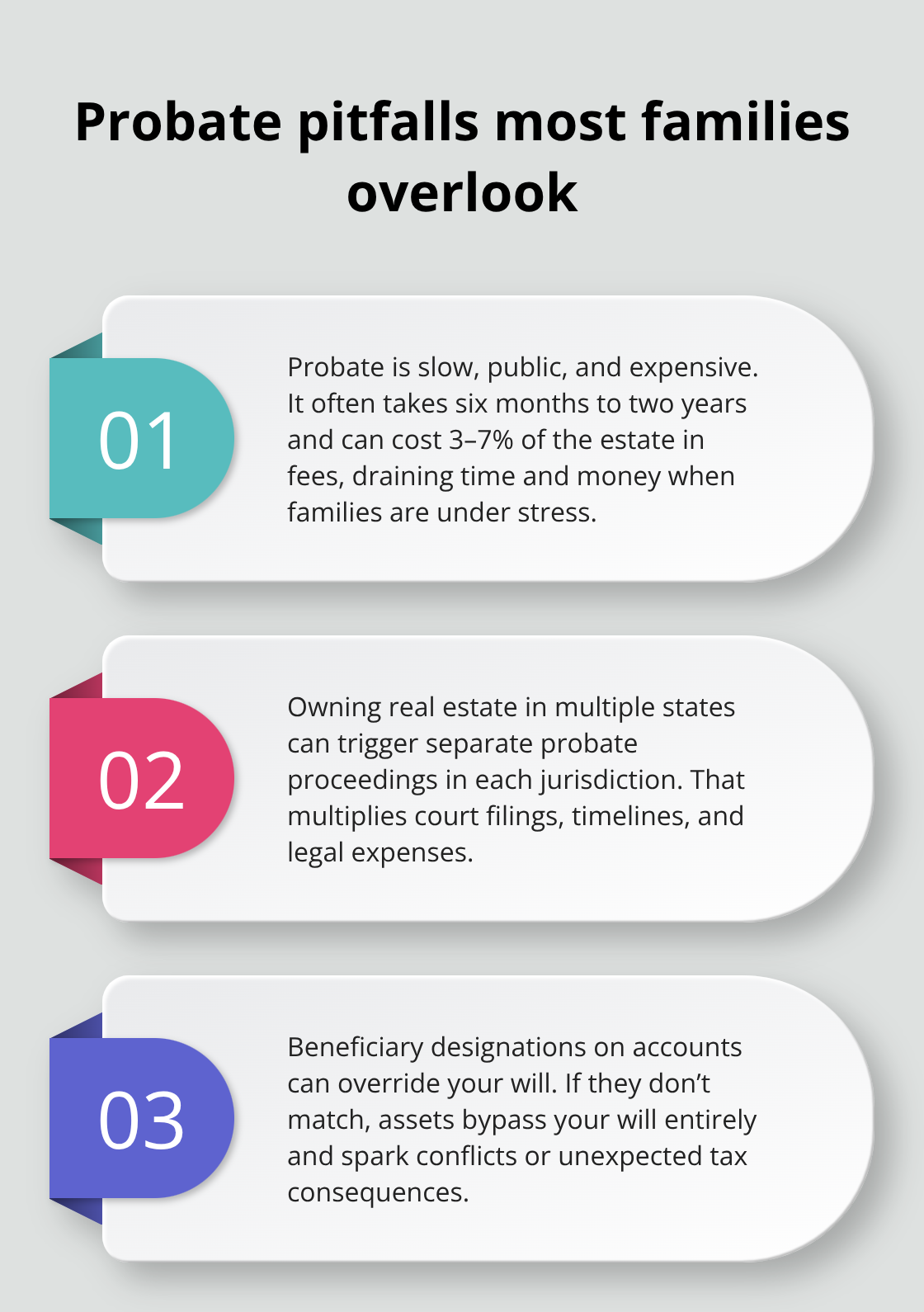
If your will names your children as guardians but doesn’t specify how assets flow to them, the court decides. If you own real estate in multiple states, probate happens in each one. If your beneficiary designations on retirement accounts don’t match your will, the account goes directly to whoever you named there-bypassing your will entirely. This mismatch creates one of the most common reasons families end up in conflict or face unexpected tax bills.
Why Revocable Living Trusts Offer Better Control
A revocable living trust operates differently. You create it during your lifetime, fund it with your assets by retitling property and accounts into the trust’s name, and name yourself as trustee. You maintain full control and can change or revoke it anytime. When you die or become incapacitated, a successor trustee you’ve named steps in without court involvement. Assets held in the trust skip probate entirely, meaning your family avoids delays, public exposure, and those steep court fees. A living trust also keeps your affairs private-unlike a probated will, trust documents don’t become public records.
The Real Cost of Incomplete Trust Funding
The downside: setting up a trust costs more upfront than a simple will, and it requires you to retitle assets correctly. Many people create a trust but fail to fund it, leaving assets outside the trust that still need probate. If you own a $500,000 home but never transferred the deed into your trust’s name, that home goes through probate regardless. This mistake defeats the entire purpose. Some assets can’t be held in a trust-like certain retirement accounts that must name a beneficiary directly-so you need both documents working together.
Tax Planning and the Lifetime Exemption
The lifetime exemption for federal estate taxes sits at $13.99 million per person as of 2026, but that drops to roughly $6 million at the end of 2025 unless Congress acts. A trust structured as irrevocable can help reduce estate taxes by removing assets from your taxable estate, though you lose control of those assets. For most families, a revocable living trust paired with a pour-over will-a backup will that catches anything left outside the trust-provides the strongest protection. The will names guardians for minor children, something a trust cannot do, while the trust handles asset distribution smoothly and privately.
Choosing the Right Structure for Your Situation
If your estate is under $100,000 and you have no minor children, a simple will might suffice. If you own a home, have multiple bank accounts, or want to avoid probate, a living trust becomes essential. If you have children, remarried situations, or significant assets, both documents working together is the only approach that actually covers all your needs.

The right structure depends on what you own and who depends on you-which is exactly why the next section walks through the key components that make any estate plan complete.
Who Should Make Decisions About Your Estate
The Weight of Your Choices
The people you name in your estate plan carry enormous responsibility. They decide how your assets flow, what happens to your children, and whether your wishes actually take effect. Most families make poor choices by naming the wrong people or failing to communicate what those people must do. Siblings fight for years because a parent named one child as executor without explanation, or because the designated trustee had no idea what their role actually entailed. The financial and emotional cost of these conflicts far exceeds what you’d spend getting this right from the start.
Executors and Trustees: The Heavy Lifting
Your executor or trustee handles the hardest work. An executor manages probate if you use a will, which means filing court documents, paying debts and taxes, and distributing assets over months or years. A trustee manages your trust during your lifetime and after, making investment decisions and ensuring beneficiaries receive what you intended. The person you choose must understand numbers, handle conflict calmly, and stay organized across multiple accounts and properties. Many people name a spouse or adult child out of loyalty rather than ability, then that person drowns in paperwork and family pressure. If you own real estate in multiple states, your executor faces probate in each jurisdiction, multiplying complexity and cost. Your trustee must retitle assets correctly into the trust, file tax returns, and track distributions. These tasks demand someone with both competence and patience.
Guardians and Beneficiary Designations
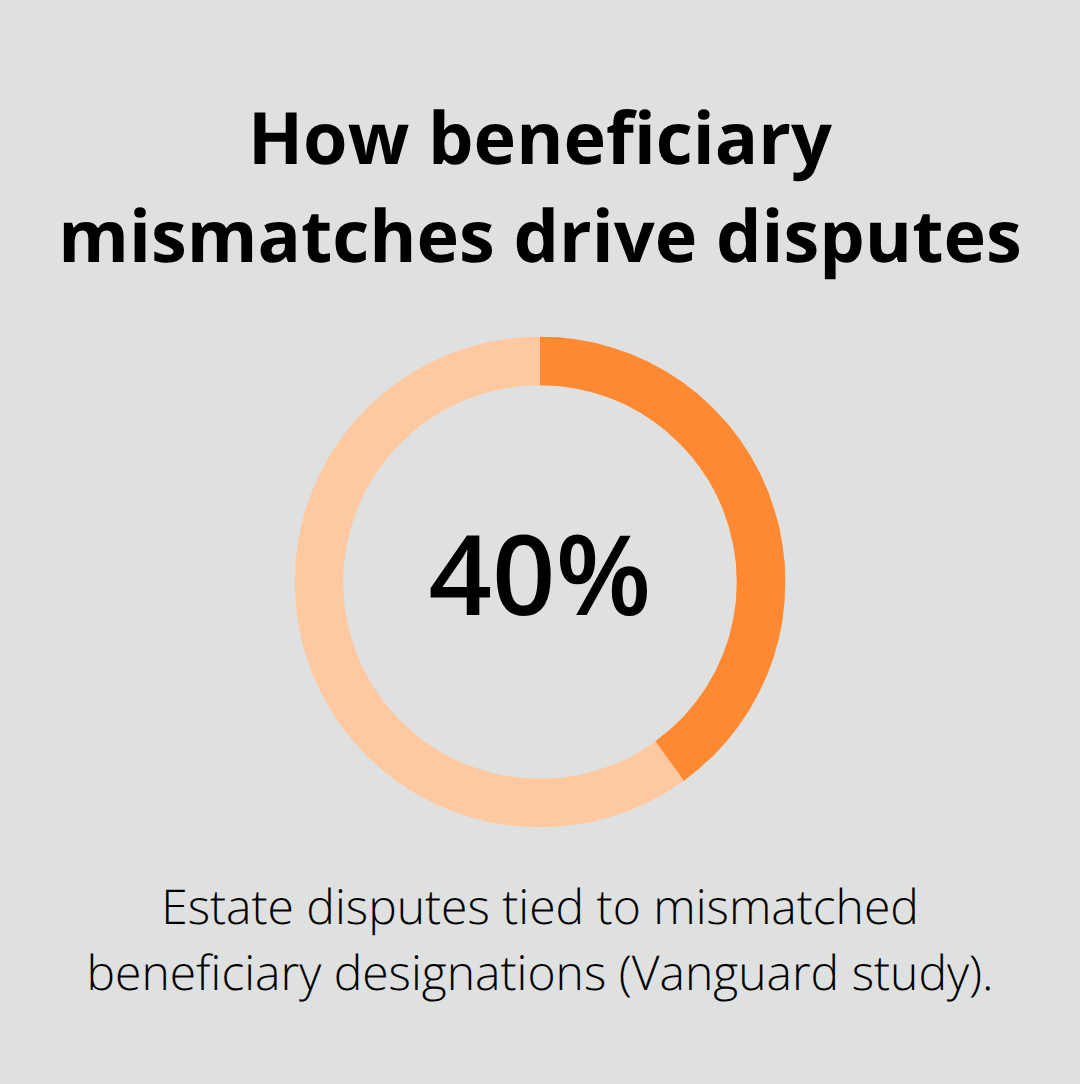
If you have minor children, your choice of guardian shapes their upbringing and values. Courts rarely override a parent’s selection, but naming someone who lives across the country or has fundamentally different parenting philosophies creates years of resentment. Beneficiary designations on life insurance and retirement accounts bypass both your will and trust entirely, going straight to whoever you named there. If you named an ex-spouse years ago and never updated it, that account goes to them regardless of what your current will says. A study by Vanguard found that mismatched beneficiary designations cause roughly 40 percent of estate disputes, yet most people never review these forms after initial setup. You need a complete inventory of every account with a beneficiary field, and you must update them when you marry, divorce, have children, or experience significant wealth changes.
Tax Efficiency and Trust Structure
Tax efficiency requires different choices depending on your net worth. If your estate will exceed $6 million by 2026, an irrevocable trust removes assets from your taxable estate and saves your family hundreds of thousands in federal taxes. However, irrevocable trusts mean you lose control of those assets permanently, so you only fund them with money you’re certain you won’t need. A revocable living trust paired with a pour-over will and properly named beneficiaries handles most situations without the complexity or cost of irrevocable structures. The right fiduciaries and beneficiary designations work together to protect what you’ve built. Once you understand who makes these decisions, the next step involves the specific components that transform a collection of documents into a plan that actually works.
What Stops Most Estate Plans From Working
Life Changes Demand Document Updates
The moment you sign your will or trust, life changes. You marry, have children, sell a business, move states, or face a health crisis. Yet most people file their estate documents in a drawer and never touch them again. This pattern repeats constantly, and it’s the primary reason otherwise solid plans fail when families need them most. A will or trust created ten years ago reflects your old life, not your current one.
If you named your brother as executor when you were single but haven’t updated that choice after a bitter family conflict, he still controls your estate. If your beneficiary designations on a $400,000 life insurance policy still name an ex-spouse because you never returned the form to your employer after divorce, that money goes to them, not your current family. Your documents need review every three to five years minimum, or immediately after marriage, divorce, the birth of children, significant wealth changes, moves to different states, or major health diagnoses.
The Cost of Selecting the Wrong Fiduciaries
Selecting the wrong people to manage your estate or care for your dependents creates conflict that lasts decades. Many people choose fiduciaries based on emotion rather than capability, naming a sibling out of obligation when a more organized adult child would handle the role far better. Your executor or trustee must manage complex financial tasks, file tax returns, communicate with beneficiaries under stress, and sometimes navigate disagreements between family members.
If you pick someone who avoids conflict or lacks basic financial literacy, they’ll struggle or hire expensive professionals to do work they should handle themselves. Similarly, naming a guardian for minor children without discussing the choice with that person first creates shock and resentment when they discover they’re responsible for raising your kids. Have direct conversations with anyone you name in your estate plan, confirming they understand the role and accept it willingly.
The Hidden Crisis: Long-Term Care Planning
Long-term care planning gets overlooked entirely in most estate documents, yet it’s where real money disappears. If you suffer a stroke at sixty-five and need assisted living or nursing care for twenty years, costs can exceed $250,000 depending on your location and care level. Medicare doesn’t cover long-term care, and most families deplete their savings before qualifying for Medicaid.
Your will and trust say nothing about who makes medical decisions if you’re conscious but unable to communicate, or who manages your finances if you develop dementia. A durable power of attorney for healthcare and a separate durable power of attorney for finances address incapacity directly, naming specific people to act on your behalf before probate or trust succession becomes necessary. Without these documents, families petition courts for guardianship-a public and expensive process that strips you of rights and control.
Incapacity Planning Protects Your Present and Future
Your estate plan must include incapacity planning alongside death planning, covering scenarios where you live for years unable to manage your own affairs. Procrastination and failure to update documents rank as the top two mistakes families make, yet most people spend more time planning a vacation than reviewing their estate plan annually. The gap between what families think their documents accomplish and what those documents actually do creates the largest source of conflict and financial loss in estate administration.
Final Thoughts
Your estate plan only works if it reflects your actual life and stays current as circumstances change. A professional reviews your beneficiary designations against your will and trust, ensuring they align, catches assets you’ve forgotten about, and identifies tax-saving opportunities based on your current net worth. They also address incapacity planning directly, naming people to make medical and financial decisions if you can’t, which protects you during your lifetime and prevents costly guardianship proceedings.
Start by gathering a complete inventory of what you own: bank accounts, retirement funds, real estate, life insurance, and digital assets. List the people who depend on you and the values you want your legacy to reflect. Then schedule a conversation with a professional who can translate those intentions into documents that actually work through proper wills and trusts guidance.
At Family, Estate & Mediation Law Group, we help individuals and families across Northeast Florida build estate plans that protect what matters most. With over 50 years of combined experience, we handle wills, trusts, probate, and the incapacity planning most people overlook. Contact our office in St. Augustine or Palatka to discuss your specific situation and move forward with confidence that your family’s future is protected.