
Most people don’t think about guardianship until a crisis forces their hand. By then, it’s too late to have a say in who makes decisions for you or your loved ones.
Preneed guardianship steps let you plan ahead and choose your guardian before you need one. We at Family, Estate & Mediation Law help families in Florida take control of this process and protect what matters most.
What Preneed Guardianship Actually Does
A written declaration you file with the Florida court names someone to manage your affairs or your child’s care if you become incapacitated. Under Florida Statutes 744.3045 and 744.3046, this declaration creates a legal presumption that your chosen guardian should serve when the time comes, rather than leaving the court to appoint a stranger. The process requires your signature in front of at least two witnesses, and once filed with the clerk, it remains there until needed. When incapacity occurs, your declaration gives the court a clear roadmap instead of forcing your family into emergency hearings and costly litigation to figure out who should take over.
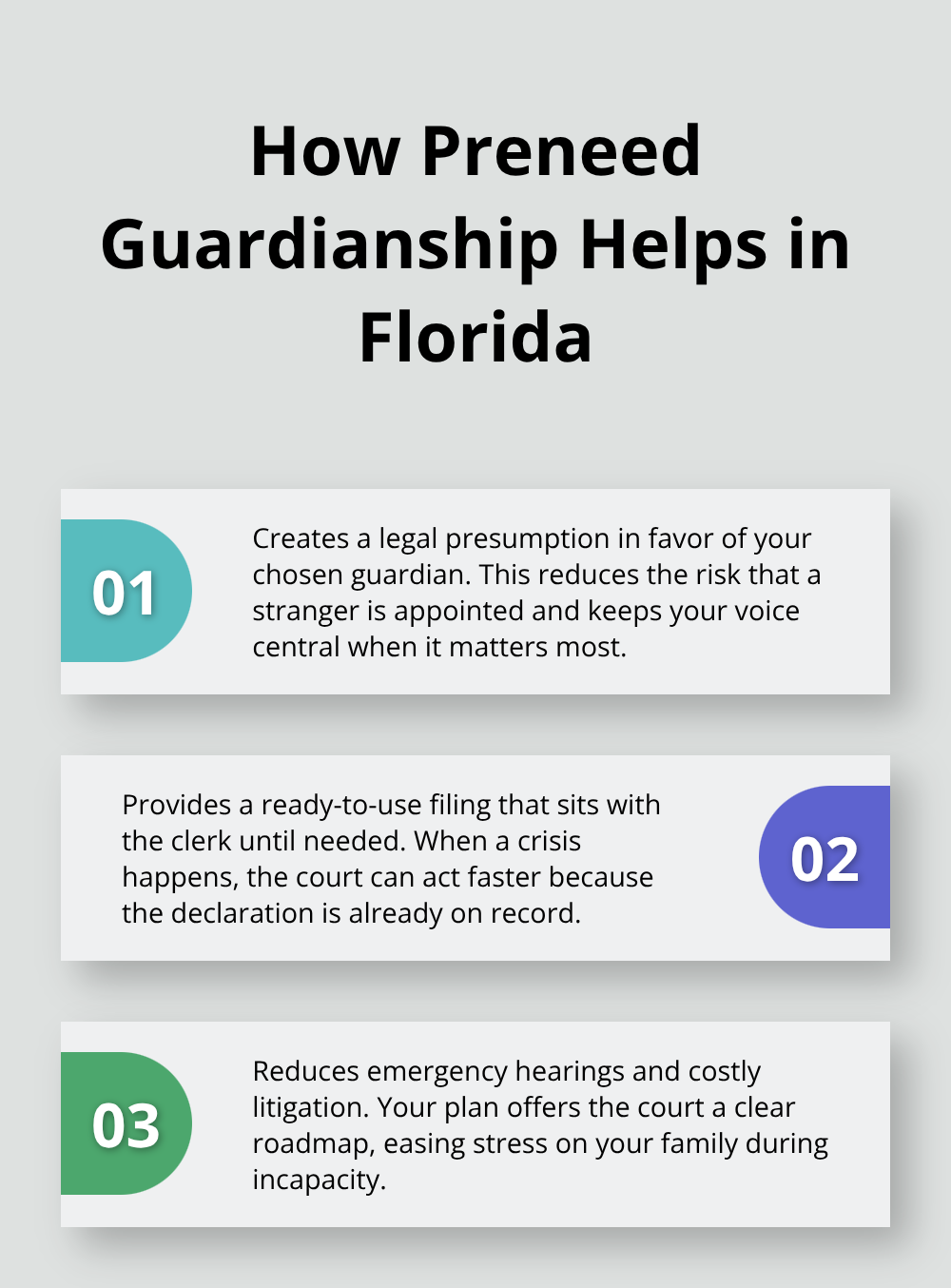
This isn’t theoretical planning-it’s the difference between your voice being heard and a judge making decisions based on incomplete information about what you actually wanted.
How Preneed Guardianship Differs from Traditional Guardianship
Traditional guardianship happens after someone becomes incapacitated, meaning the court appoints a guardian without your input. You lose control entirely. Preneed guardianship flips this around: you choose your guardian while you’re still capable of making sound decisions. If you don’t file a preneed declaration, the court will appoint someone after hearings, potentially delaying critical decisions and running up attorney fees. Preneed guardianship also works for adults planning for their own future incapacity, not just for parents protecting children. Many people use it alongside a durable power of attorney for healthcare decisions, creating layered protection. The court still oversees the guardian once appointed, but your preferences carry real legal weight from day one.
When Preneed Guardianship Applies
Parents name preneed guardians for minor children in case both die or the surviving parent becomes incapacitated. Without this declaration, your child could end up in state custody while relatives fight in court. Adults designate preneed guardians for themselves when facing progressive illness, cognitive decline, or simply wanting assurance that someone they trust will handle financial and medical decisions if capacity is lost. The declaration takes effect only after a court determines you’re actually incapacitated-it doesn’t hand over control prematurely. You can name an alternate guardian too, so if your first choice can’t serve, the backup steps in automatically. Within 20 days of assuming duties, your preneed guardian must petition the court for confirmation, and if qualified under Florida law, the appointment receives confirmation and letters of guardianship are issued.
What Happens Next in the Process
Once you understand when preneed guardianship applies to your situation, the next step involves preparing the actual declaration and selecting the right person to serve as your guardian. This decision shapes everything that follows in the court process.
How to Create Your Preneed Guardianship Declaration
Meet Florida’s Legal Requirements
Florida Statutes 744.3045 and 744.3046 set out the exact requirements, and meeting them matters because technical defects can invalidate your entire declaration. You need a written document that clearly identifies both you as the declarant and your chosen guardian. The declaration must include your full legal name, your guardian’s full legal name, and if you’re naming a guardian for a minor child, that child’s full name, date of birth, and Social Security number if available.
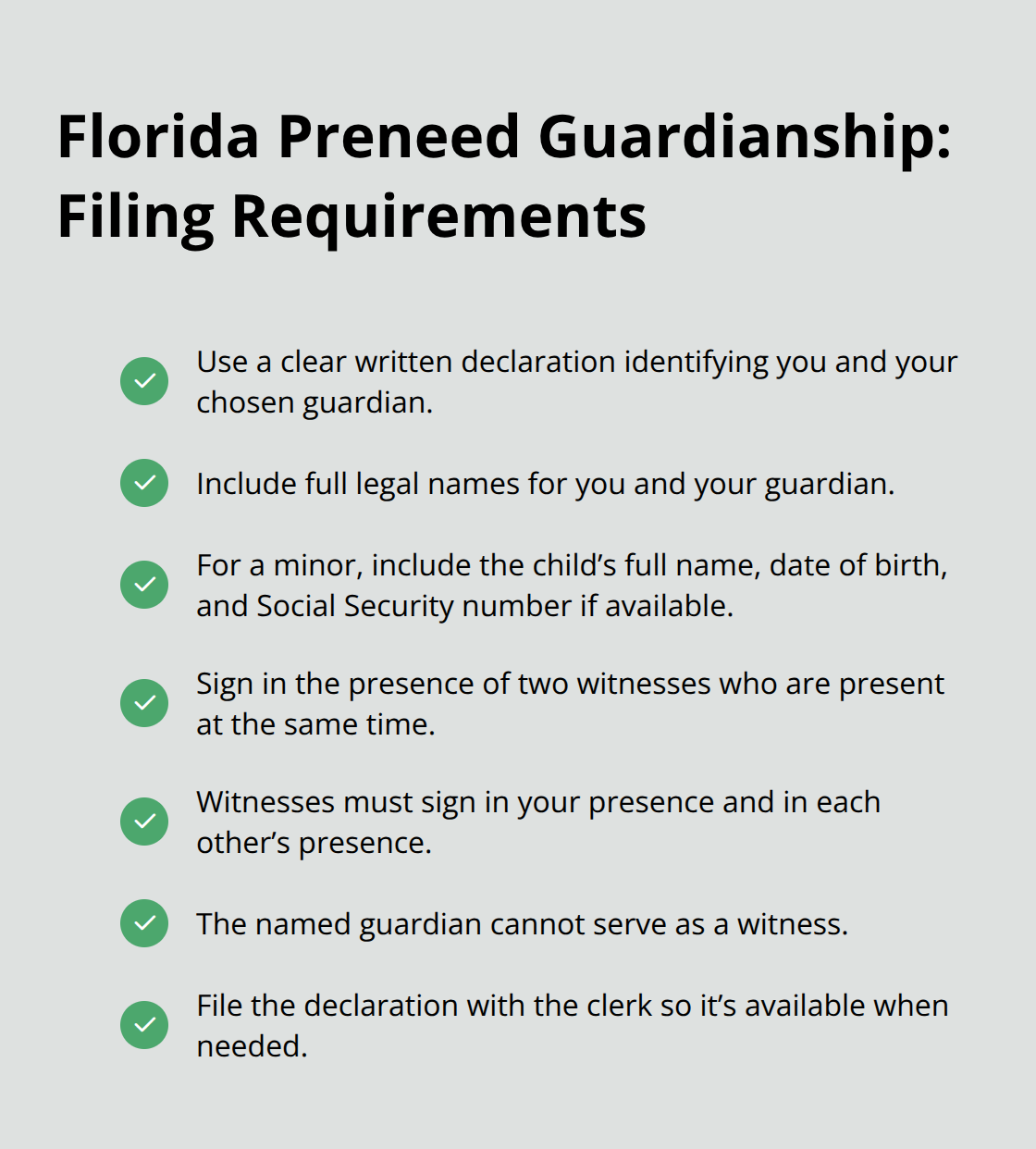
Two witnesses must be present at the same time when you sign the document, and they cannot be the person you’re naming as guardian. These witnesses must also sign in your presence and in each other’s presence.
File Your Declaration with the Court
The clerk of the court accepts filings in your county, and once filed, the declaration stays in the court system until a petition for incapacity or guardianship is filed, or until all named minors reach age 18. Many people skip working with an attorney here and regret it later when a court finds their declaration ambiguous or improperly executed. Preneed guardianship costs far less upfront than fighting through a court-initiated guardianship after crisis strikes, which typically requires multiple hearings and attorney fees that can exceed several thousand dollars.
Name an Alternate Guardian
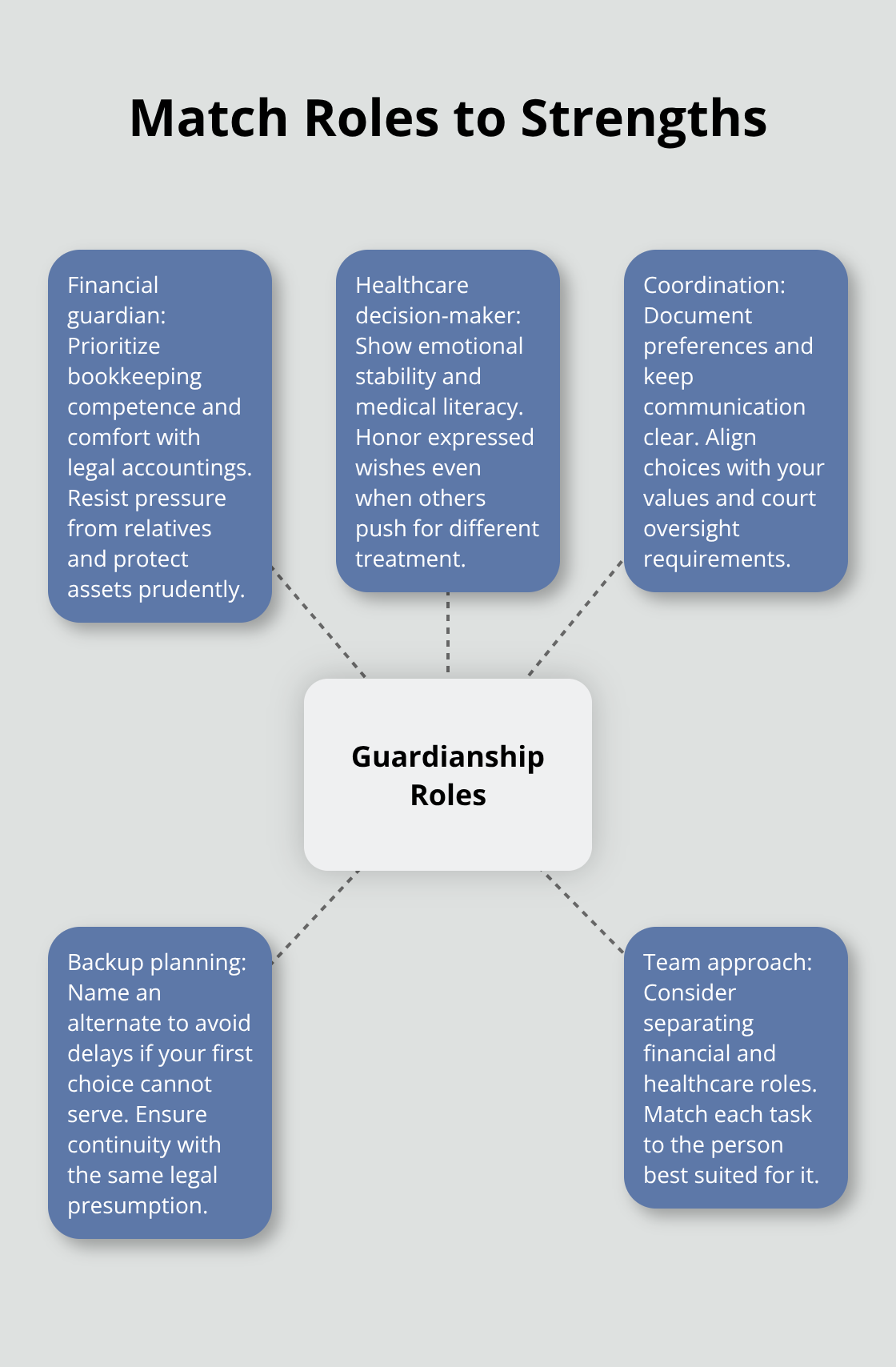
When you file your declaration, name an alternate guardian as well. If your first choice refuses to serve, dies, or becomes incapacitated after the last parent’s death, the alternate steps in with the same legal presumption. This backup plan protects your family from delays and uncertainty if circumstances change.
Understand the Court Confirmation Process
Within 20 days of assuming duties, your preneed guardian must petition the court for confirmation of appointment. The court will verify that the guardian meets Florida’s qualification standards under Statutes 744.309 and 744.312, meaning they must be at least 18 years old, a Florida resident or related to you, have no disqualifying felony convictions, and have no significant conflicts of interest. If qualified, the court confirms the appointment, the guardian files an oath, and letters of guardianship are issued. This confirmation step protects you because the court still reviews the guardian’s fitness rather than handing over control automatically.
Know Your Guardian’s Fiduciary Duties
The guardian then owes fiduciary duties, meaning they must manage finances prudently, preserve your assets, make healthcare decisions aligned with your expressed wishes, and file annual accountings with the court. This court oversight is the backbone of preneed guardianship-it combines your autonomy in choosing who serves with ongoing judicial protection of your interests. Once you understand these duties and the confirmation process, you’re ready to identify the specific person who should serve as your guardian and address how they’ll handle your financial and healthcare decisions.
Who Should You Name as Your Guardian
Selecting the right guardian ranks as the most consequential decision in preneed guardianship planning, yet many people rush through it or assume whoever seems available will work. Your guardian will make medical decisions about your body, control access to your finances, and represent your wishes to healthcare providers and courts. This person needs both the willingness to serve and the actual capacity to handle the role responsibly.
Legal Qualifications Your Guardian Must Meet
Florida law requires your guardian to be at least 18 years old, a Florida resident (or related to you if out-of-state), free from disqualifying felony convictions, and without serious conflicts of interest. These legal minimums form the baseline, but they don’t tell you whether someone will actually perform well in the role. Beyond these requirements, you need someone who shares your values about end-of-life care, spending money, and family involvement.
Test Your Candidate’s Actual Readiness
Many families assume an adult child should automatically serve, but that child may lack financial discipline, struggle with medical decisions, or harbor resentment about the burden. A sibling, trusted friend, or professional fiduciary can perform better if family dynamics are complicated. Talk directly with your intended guardian before filing the declaration-do not assume they want the job. Some people decline because they fear liability, distrust their ability to manage finances, or anticipate family conflict.
Test their willingness with specific scenarios. If you needed nursing home care costing $8,000 monthly and your assets lasted five years, how would they handle it? If your wishes conflicted with your spouse’s preferences, whose judgment would they follow? Their answers reveal whether they truly grasp the role or are simply being polite.
Separate Financial and Healthcare Decision-Making
Pairing financial and healthcare decisions with the right people matters more than centralizing everything under one guardian. You can name one person to manage your property and a different person to make healthcare decisions, which often works better when your family has different strengths. The person managing your finances needs bookkeeping competence, comfort with legal accountings, and resistance to pressure from other relatives seeking money. The healthcare decision-maker needs emotional stability, medical literacy, and the ability to honor your expressed wishes even when family members push for different treatment.
Document Your Preferences in Writing Now
Florida law specifies that your guardian must consider your expressed desires and preserve family contact unless harmful, so document your preferences in writing now rather than leaving them to memory or interpretation. Within 20 days of assuming duties, your guardian petitions for court confirmation, and the court will scrutinize whether they’re qualified and acting in your best interests. This confirmation process means a judge reviews the guardian’s background and the circumstances before letters of guardianship issue, adding a layer of protection. Coordinate your preneed declaration with a durable power of attorney for healthcare and a separate financial power of attorney, so decisions flow through the right channels before incapacity ever requires court involvement.
Final Thoughts
Preneed guardianship steps protect your autonomy when you cannot speak for yourself. Filing a declaration now means you name the person you trust to make decisions for you or your child, rather than leaving that choice to a judge unfamiliar with your values. This planning costs far less than emergency guardianship proceedings, which often exceed several thousand dollars in legal fees and court costs.
The path forward starts with identifying your guardian, documenting your wishes, and gathering two witnesses to sign your declaration with the court clerk. Coordinate this with a durable power of attorney for healthcare and financial decisions so your complete incapacity plan covers every scenario. Name an alternate guardian as well, so your family avoids delays if your first choice cannot serve.
We at Family, Estate & Mediation Law help families across Northeast Florida navigate preneed guardianship planning and integrate it with wills, trusts, and other estate planning tools. Contact us for a free consultation to discuss how preneed guardianship fits into your overall plan.