Most families in St. Augustine and Palatka put off estate planning because it feels overwhelming. The truth is, without a solid plan in place, your family could face unnecessary stress, delays, and costs when they need clarity most.
At Family, Estate & Mediation Law, we help Northeast Florida families build estate plans that actually work for their situation. Whether you’re just starting out or updating documents that haven’t been touched in years, this guide walks you through what matters.
Why Estate Planning Matters in Northeast Florida
Growing Population and Rising Property Values
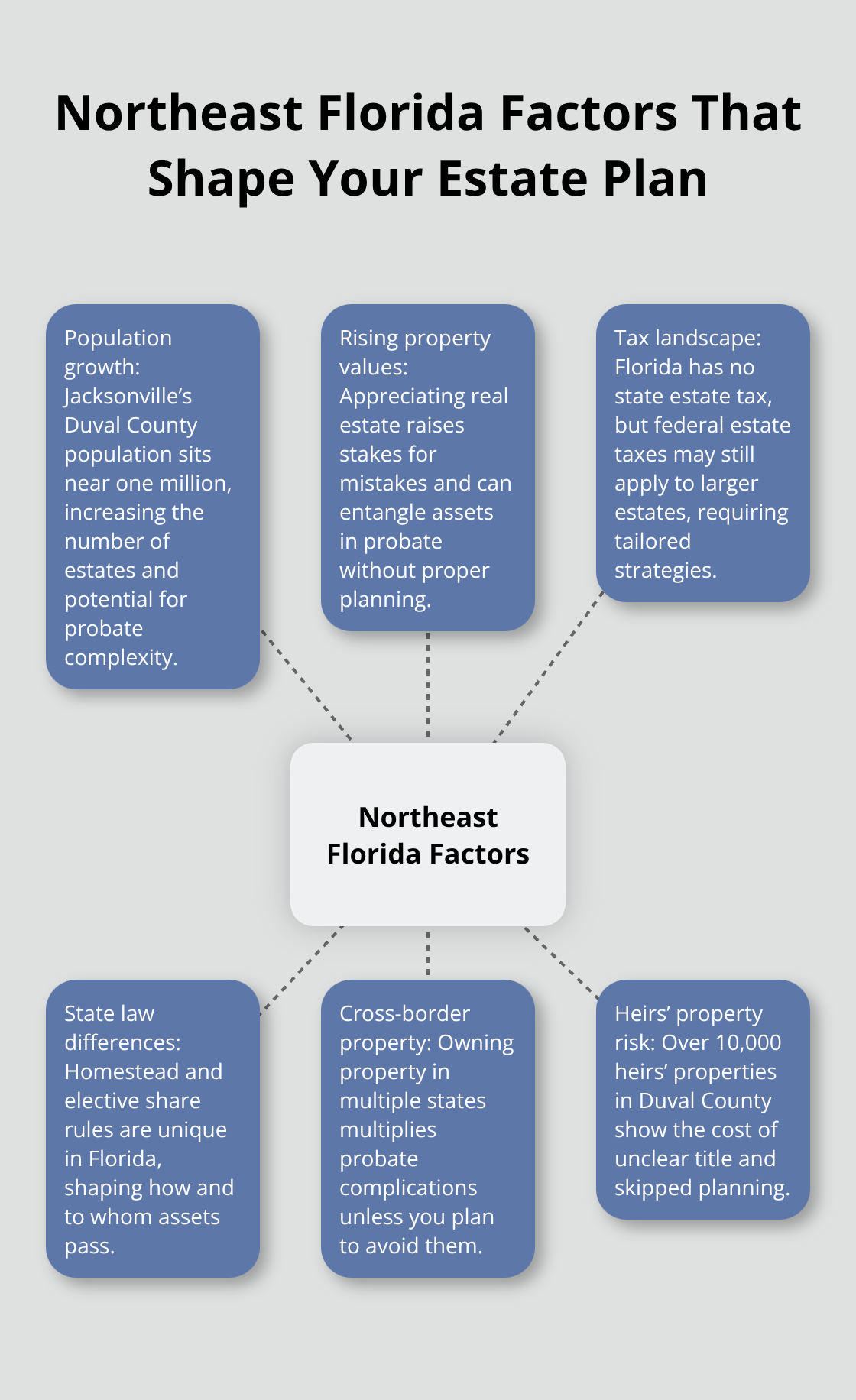
Northeast Florida is experiencing real growth that affects how you should plan. Jacksonville’s Duval County population sits near one million, and property values continue climbing across St. Augustine, Palatka, and surrounding areas. This rising real estate market means more families hold significant assets that could get tangled in probate without proper planning. When properties appreciate, so does the cost of mistakes. A revocable living trust helps you avoid probate entirely, which matters because formal probate in the 4th Judicial Circuit can take months or longer and drain your estate through court fees and attorney costs.
Understanding Florida’s Tax Advantages and Limitations
Florida has no state estate tax, which is a real advantage for your family. Federal estate taxes still apply to larger estates, so understanding your specific situation prevents your heirs from losing more than necessary to taxes. State law creates specific requirements that trip up families who don’t plan locally. Florida’s intestacy laws determine who inherits if you die without a will, and the result rarely matches what families actually want.
How State Law Shapes Your Plan
Homestead exemptions, elective share rules, and the mechanics of how property transfers at death all follow Florida statutes that differ from other states. If you own property in multiple states or have family ties elsewhere, cross-border probate complications multiply quickly. The data from LISC Jacksonville shows that over 10,000 heirs’ properties exist in Duval County alone, disproportionately affecting Black neighborhoods and weakening family wealth. This happens when families skip formal estate planning and leave unclear ownership.
Protecting Your Family Through Clear Planning
Your plan protects against this by establishing clear title, naming guardians for minor children, appointing someone to manage your affairs if you become incapacitated, and ensuring your heirs know where to find your documents and accounts. Estate planning helps Northeast Florida families build plans that address these specific challenges. Understanding how Northeast Florida’s legal framework and real estate market shape what works for your family positions you to make decisions that actually protect what matters most. The next section covers the specific components that make an estate plan work.
Key Components of a Solid Estate Plan
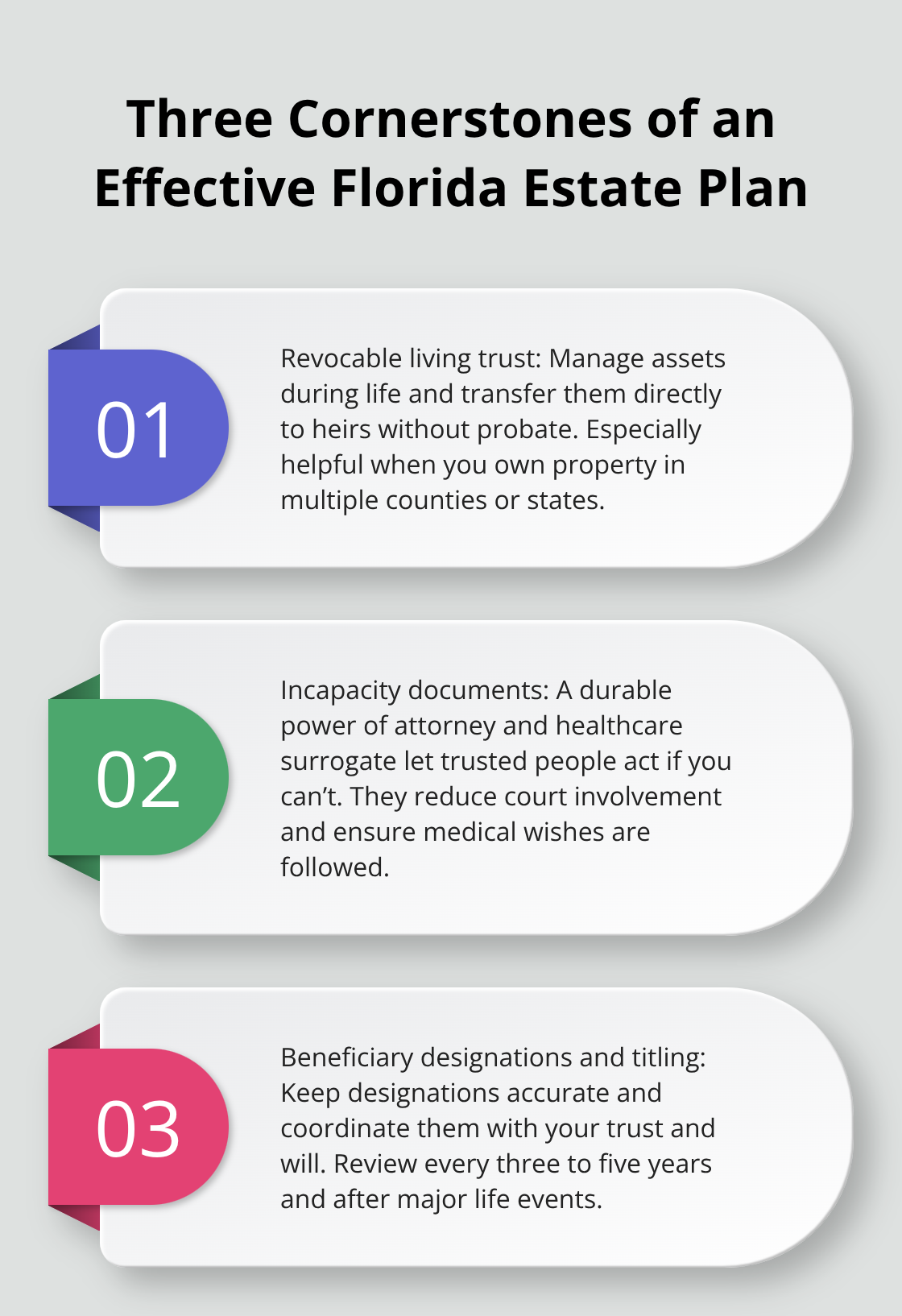
A revocable living trust should be your starting point, not a will alone. Wills only work after you die and require probate, which in the 4th Judicial Circuit means months of court proceedings, filing fees, and attorney costs that reduce what your family actually receives. A revocable living trust lets you control your assets during your lifetime and transfer them directly to your heirs without probate when you pass. For St. Augustine and Palatka families with property in multiple counties or states, this matters significantly because each property avoids separate probate proceedings. Florida’s Beneficiary Deed provides a simpler option for real estate specifically, allowing property to pass at death while bypassing probate entirely, though this works best for straightforward situations without complex family dynamics.
The LISC Jacksonville data on heirs’ properties shows what happens without clear title: over 10,000 properties in Duval County alone remain tangled in unclear ownership, leaving families unable to access home equity, maintenance loans, or tax exemptions. Proper titling through a trust or deed prevents this entirely.
Powers of Attorney and Healthcare Directives
A durable power of attorney and healthcare surrogate designation are the documents most families overlook until crisis hits. Without a durable power of attorney naming someone to handle your finances, your family faces court involvement and delays if you become incapacitated. Without a healthcare surrogate, hospitals will not follow your wishes for medical decisions, and your family may face court battles to make decisions on your behalf. These documents cost far less than probate or guardianship proceedings and take effect immediately when you sign them.
Beneficiary Designations and Account Titling
Beneficiary designations on retirement accounts, life insurance, and transfer-on-death accounts bypass your will and trust entirely, passing directly to named beneficiaries. This means these assets do not get tied up in probate, but incorrect or outdated designations cause real problems-naming an ex-spouse by mistake or listing a deceased child as beneficiary creates conflict and delays. You should review these designations every three to five years or after major life changes like marriage, divorce, or births.
Account titling also matters: joint accounts with survivorship transfer automatically to the surviving owner outside probate, but this creates complications if creditors pursue claims or if you want unequal distribution among children. For couples, naming each other as primary beneficiary on most accounts and listing children or a trust as contingent beneficiary ensures assets flow smoothly if you die simultaneously. Proper titling decisions depend on your specific family situation and goals, which is why local planning that accounts for Northeast Florida’s real estate market and your actual circumstances produces better results than generic templates. The next section addresses the mistakes that derail even well-intentioned families and how to avoid them.
Common Estate Planning Mistakes Families Make
Life Changes Demand Updated Documents
Your life shifts-marriage, divorce, a new child, a business sale, or a significant inheritance arrives-and your estate plan becomes outdated. Most families in St. Augustine and Palatka sign documents and never revisit them, which means their plans no longer reflect reality. Life changes happen faster than most people update their paperwork. You remarry, your children graduate, your rental property appreciates significantly, or you move assets between accounts, and suddenly the plan you paid for no longer works.
The LISC Jacksonville data on heirs’ properties shows what happens when families skip updates: over 10,000 properties in Duval County remain tangled in unclear ownership because people either died without updated documents or left plans that failed to account for their actual circumstances. You should review your documents every three to five years minimum, and immediately after any major life event. If your will names your ex-spouse as executor or your beneficiary designations still list someone you no longer want to inherit, those outdated decisions override everything else and create exactly the conflict and delay you tried to prevent.
Incapacity Planning Gets Overlooked Until Crisis Strikes
Incapacity happens more often than death, yet families assume they will never need to plan for it. A car accident, stroke, or fall can leave you unable to communicate your wishes or handle finances, and without a durable power of attorney and healthcare surrogate in place, your family faces court involvement and uncertainty. Hospitals will not follow your medical wishes without a healthcare surrogate designation, and banks will freeze your accounts without a power of attorney, leaving your family unable to pay bills or manage your affairs.
These documents cost minimal time and money to create but prevent guardianship proceedings that drain estates and create family conflict. The cost of inaction far exceeds the cost of planning.
Digital Assets Remain Almost Completely Unaddressed
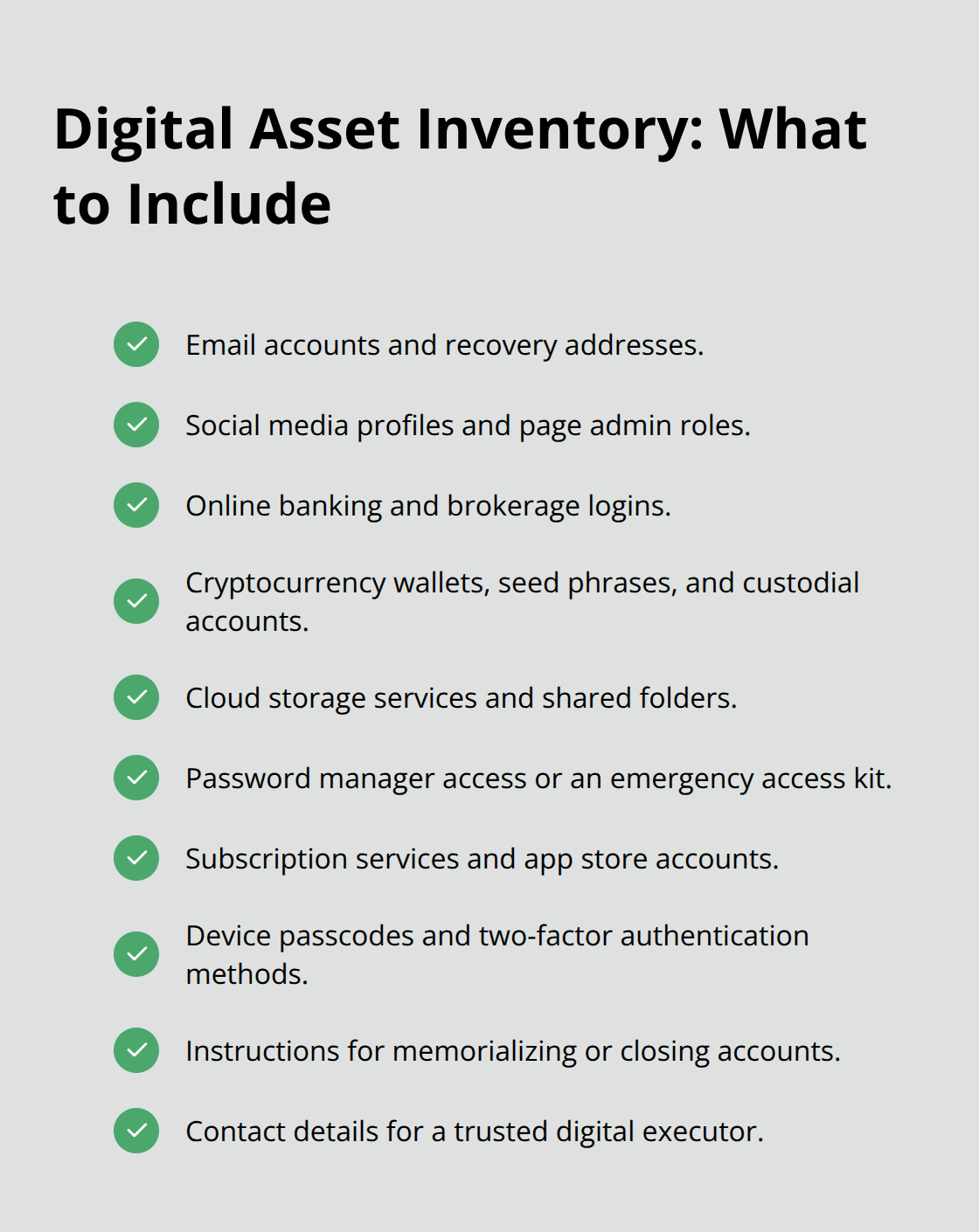
Your family may not know where your cryptocurrency lives, what passwords unlock your email accounts, or how to access cloud storage containing important documents and family photos. Without a digital asset inventory listing account names, usernames, and access instructions, your heirs face months of bureaucratic delays trying to retrieve or memorialize accounts. Most families have no idea where their digital assets live or what happens to them after death.
You should create a detailed inventory of every digital account-email, social media, financial accounts, cryptocurrency wallets, cloud storage, and subscription services-and store access instructions in a secure location that your designated executor or trusted family member can reach. This single step prevents your heirs from losing access to irreplaceable photos, important financial records, and sentimental digital property.
Getting Started With Your Plan
The path forward starts with a single conversation. We at Family, Estate & Mediation Law work with St. Augustine and Palatka families to build Northeast Florida estate planning solutions that fit your actual life, not generic templates that miss what matters. Your first step costs nothing-a free consultation lets you discuss your assets, family situation, and goals with someone who knows Northeast Florida law inside and out.
Life changes, property values shift, and laws evolve, which is why Northeast Florida estate planning works best when you treat it as an ongoing process rather than a one-time event. You should review your documents every three to five years and immediately after major life events like marriage, divorce, a new child, or a significant inheritance. This simple habit prevents the outdated plans that create conflict and delay for your heirs.
Your family’s financial future depends on decisions you make today. Reach out to Family, Estate & Mediation Law to schedule your free consultation and take control of what happens to your legacy.