Most people in St. Augustine and Palatka put off estate planning because they think it’s only for the wealthy. That’s wrong. Without proper wills and trusts guidance, your family could face years of probate delays and unnecessary court costs.
At Family, Estate & Mediation Law, we’ve seen firsthand how the right estate plan protects what matters most. This guide shows you exactly how wills and trusts work together to build a stronger financial future for your loved ones.
What Wills and Trusts Actually Protect
Florida’s Default Path Costs Time and Money
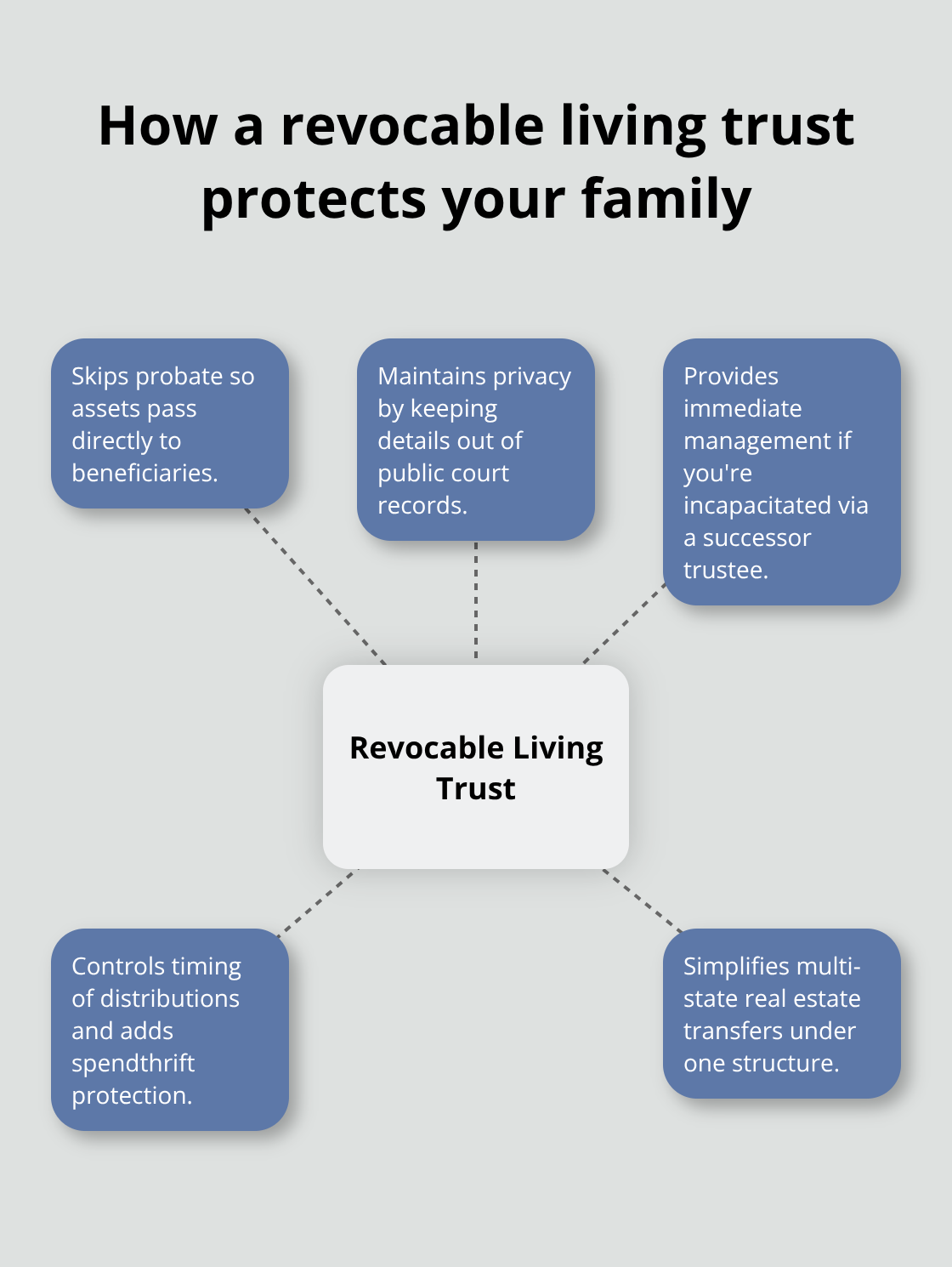
Without a will or trust in place, Florida law decides who gets your assets and who manages your estate. That default path costs time and money. In Florida, probate cases for estates under $75,000 can use summary administration, which is faster, but larger estates face standard probate that typically takes nine months to two years. Court filing fees, attorney costs, and executor compensation reduce what your family actually receives. A revocable living trust avoids probate entirely by transferring your assets into the trust during your lifetime, so they pass directly to beneficiaries after you die without court involvement. Families lose thousands in unnecessary court costs simply because they waited too long to plan.
Privacy Matters More Than You Think
Your family loses privacy in probate. Wills and probate documents become public record, meaning anyone can access details about your assets, beneficiaries, and how your property transfers. A trust keeps those details confidential because the trust operates outside the court system. This privacy protection alone makes trusts valuable for many families in St. Augustine and Palatka who want to shield their financial information from public view.
Control Over When Beneficiaries Receive Money
A proper estate plan gives you control over when and how beneficiaries receive money. You can structure trust distributions to prevent a young beneficiary from receiving a large inheritance all at once, or you can require that funds stay in the trust if a beneficiary faces creditor claims. Florida trusts with spendthrift provisions protect inherited assets from creditors after distributions occur. This flexibility allows you to match distributions to your family’s actual needs rather than handing over everything at once.
Multi-State Real Estate Simplification
If you own real estate in multiple states, a trust simplifies everything by avoiding probate in each state where you hold property. Without a trust, your heirs face separate probate proceedings in every jurisdiction-a costly and time-consuming nightmare. A trust consolidates your real estate holdings under one legal structure, making the transfer process straightforward for your family.
The Real Cost of Waiting
The cost of creating a trust upfront is small compared to what probate costs your heirs, and the privacy and control you gain make the investment worthwhile. The question isn’t whether you can afford to plan-it’s whether your family can afford not to. Understanding these protections helps you see why the right combination of wills and trusts matters for your specific situation.
Wills Handle Today, Trusts Protect Tomorrow
What a Will Actually Does-and Doesn’t
A will is a legal document that tells Florida courts how to distribute your assets after you die, but it only works if you create it correctly and fund it properly. Many people in St. Augustine and Palatka believe a will is enough, then discover too late that probate still drains their family’s time and money. A will must pass through the court system no matter what-there’s no way around it. Florida law requires the probate court to verify the will, notify creditors, handle claims against the estate, and oversee distribution. Even with summary administration for smaller estates under $75,000, your family still faces court involvement, public record exposure, and delays.
The bigger problem: a will alone cannot control how or when beneficiaries receive money after probate ends. Once probate closes and assets transfer, your beneficiaries own the money outright with no protection from creditors or poor financial decisions. A will also cannot help if you become incapacitated before death-it only takes effect after you die, leaving your family without clear direction if you’re hospitalized or unable to manage your affairs.
How a Revocable Living Trust Changes Everything
A revocable living trust operates completely outside the court system and gives you control during your lifetime and after death. You create the trust, transfer your assets into it while you’re alive, and name yourself as trustee initially. This means you control everything-you manage the assets, make decisions, and live exactly as you did before. If you become incapacitated, your successor trustee steps in immediately without court involvement or guardianship proceedings, avoiding months of legal delays while your family waits for a judge to appoint someone.
After you die, your successor trustee distributes assets directly to beneficiaries according to your trust instructions, skipping probate entirely. Florida trusts with spendthrift language protect inherited assets from your beneficiaries’ creditors after distributions occur, and you can structure the trust to release money gradually rather than all at once-a critical feature if a beneficiary struggles with financial management.
The Real Cost Comparison
The upfront cost of creating a trust is higher than a simple will, typically ranging from $1,500 to $3,000 depending on complexity, but families save thousands in probate costs and court fees that would otherwise reduce what your heirs receive. For most families in St. Augustine and Palatka with real estate, multiple beneficiaries, or concerns about incapacity, a trust is the practical choice that actually protects what you’ve built.
The decision between a will alone and a trust-based plan depends on your specific situation. Understanding how each tool works helps you see which combination makes sense for your family’s needs and assets.
Building Your Customized Estate Plan
Inventory Your Assets and Understand How They Transfer
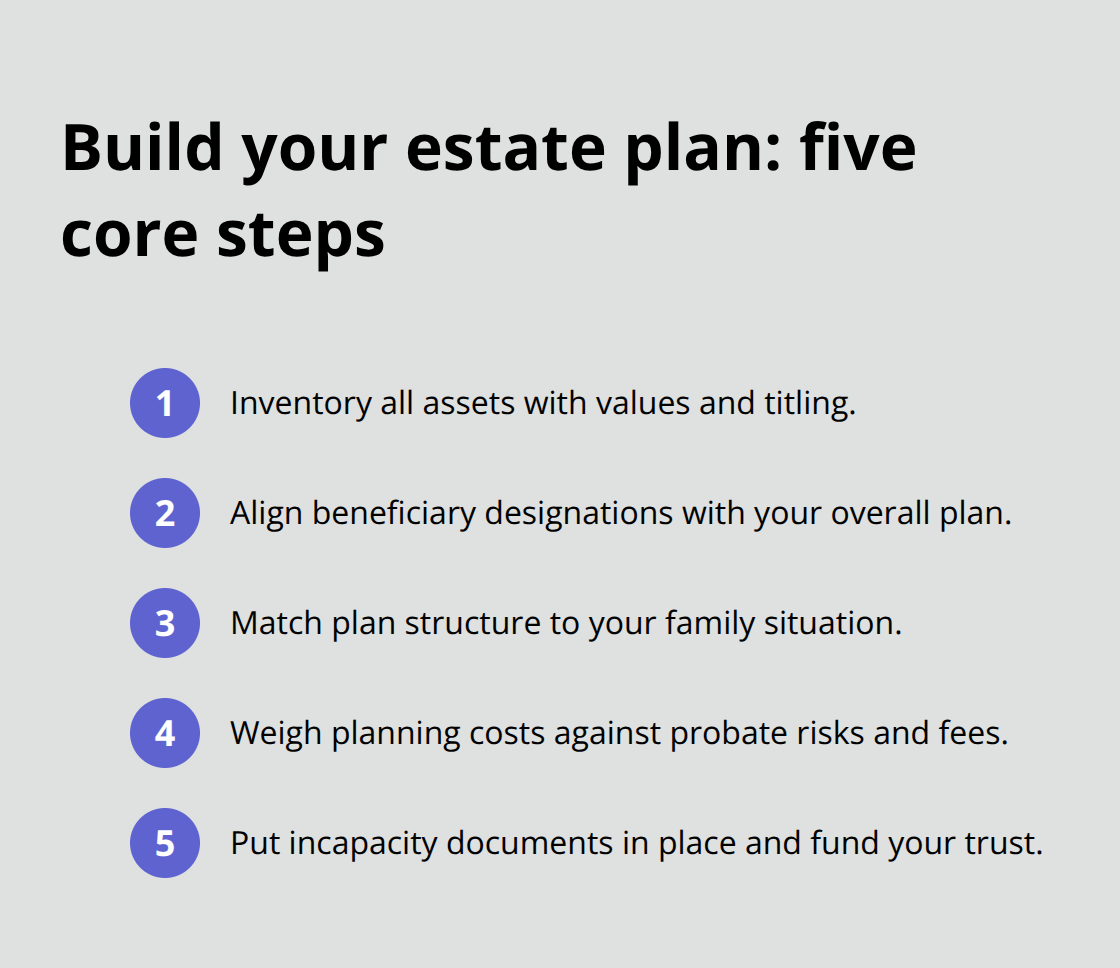
Start with a complete inventory of everything you own. Real estate, bank accounts, retirement funds, life insurance, vehicles, business interests, and digital assets all need to fit into your estate plan, but most people in St. Augustine and Palatka skip this step and wonder later why their plan falls apart. Write down each asset, its approximate value, and how it’s currently titled or owned. This matters because assets titled in your name alone will pass through probate unless you transfer them into a trust during your lifetime. Joint accounts with survivorship rights bypass probate automatically, but retirement accounts and life insurance need designated beneficiaries to work properly.
Align Your Beneficiary Designations With Your Overall Plan
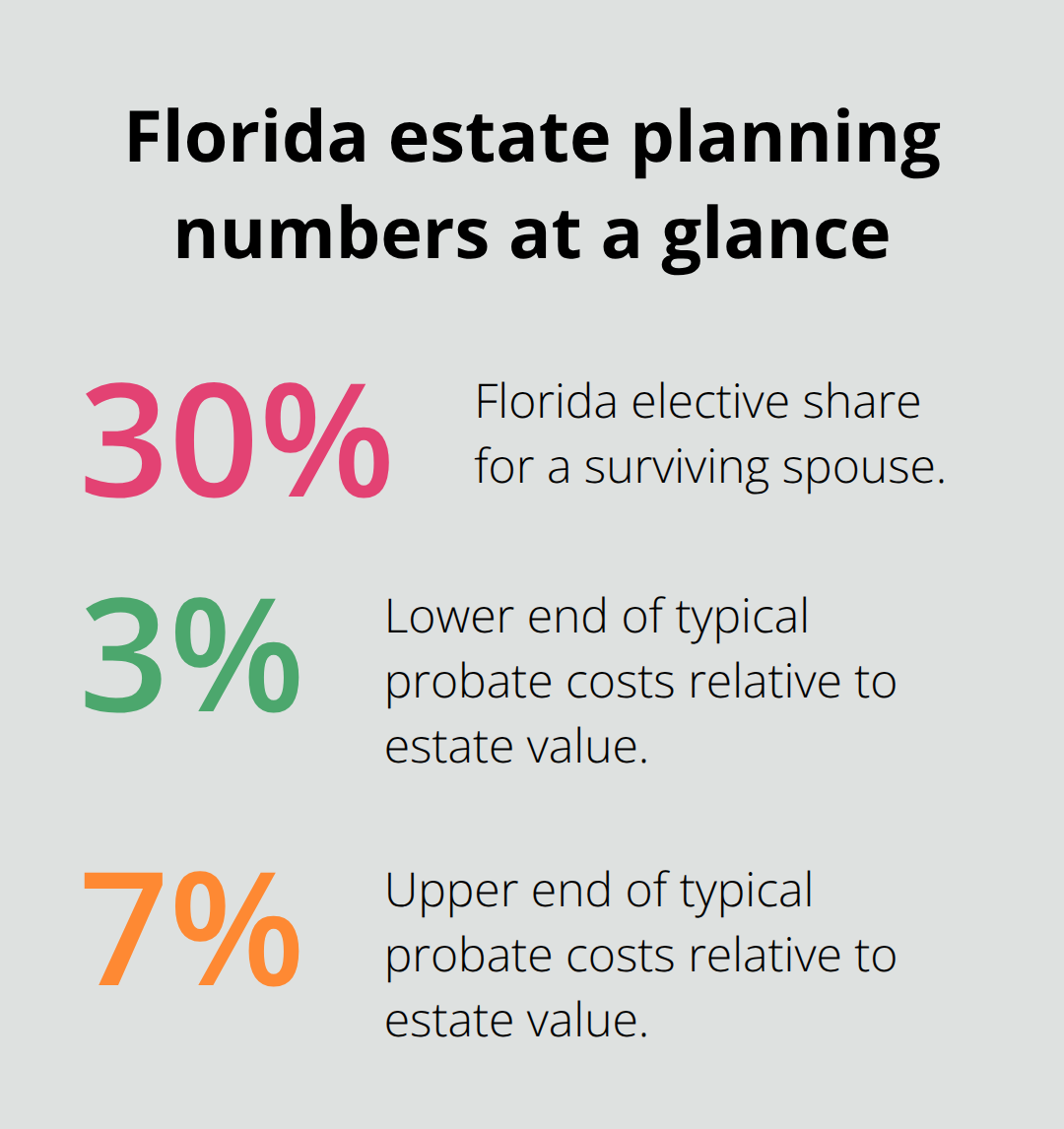
If your beneficiary designations don’t match your overall plan, you create conflict and waste. For example, if your will says your children inherit equally but your life insurance names only one child as beneficiary, that child receives the insurance payout outside probate while your estate assets get divided differently through the will. Florida law allows your surviving spouse to claim an elective share of 30 percent of your estate, which complicates planning if you’ve remarried or have children from previous relationships.
Match Your Plan Structure to Your Family Situation
Your family situation determines whether you need a simple will-and-power-of-attorney setup or a more complex trust structure with spendthrift provisions and staggered distributions. Families with blended marriages, minor children, special needs beneficiaries, or significant assets need trusts. Families with modest assets and straightforward situations might use a will paired with beneficiary designations and joint ownership, though this approach offers less control and privacy than a trust. The combination that works depends on your specific circumstances, and this is where professional guidance matters.
Assess Costs Against Probate Risks
The cost of a complete trust-based plan typically ranges from $1,500 to $3,000, and this investment protects your family from probate costs that can reach 3 to 7 percent of your estate value. If your estate is worth $250,000, probate costs could exceed $7,500 to $17,500, making a trust a clear financial choice. An attorney reviews your assets, family structure, and goals, then recommends whether a revocable living trust, a pour-over will, durable powers of attorney for finances and healthcare, and advance directives make sense for you.
Plan for Incapacity Before Death Occurs
Your plan also needs to address what happens if you become incapacitated before death. Without a durable power of attorney naming someone to manage your finances and a healthcare power of attorney naming someone to make medical decisions, your family may need to pursue guardianship through the courts-a process that costs money, takes months, and removes your control over decisions. Once your documents are drafted, they must be signed properly and, for a trust, funded by transferring assets into it.
Many plans fail because documents sit unsigned or a trust exists but assets remain in your individual name.
Final Thoughts
Your estate plan protects your family when you need it most, whether during incapacity or after death. The wills and trusts guidance you’ve read here shows that the right combination of tools prevents probate delays, protects your privacy, and gives you control over how your assets transfer to the people you care about. Without a plan, Florida law decides for you, and your family pays the price in time, money, and stress.
Start by listing your assets and identifying your family situation-do you own real estate in multiple states, are you in a blended family, or do you have minor children or a beneficiary with special needs? These details determine whether you need a simple will or a comprehensive trust-based plan. Once you understand your situation, you can make an informed decision about which tools actually protect your legacy.
We at Family, Estate & Mediation Law help families across Northeast Florida build estate plans that work. Contact us at femlg.com to schedule a consultation, and we’ll review your situation, answer your questions, and show you exactly what a complete estate plan looks like for your family.