
Planning for your child’s future care is one of the most important decisions you’ll make as a parent. Preneed guardianship explained simply means naming a guardian now, before one becomes necessary, rather than leaving it to the courts later.
We at Family, Estate & Mediation Law help families in Northeast Florida understand this powerful planning tool and take control of their child’s future.
What Preneed Guardianship Actually Is
Preneed guardianship is a Florida legal mechanism that lets you name a guardian for your child or an incapacitated adult before a court needs to appoint one. Under Florida Statutes 744.3045 and 744.3046, you create a written declaration naming your chosen guardian while you’re still competent and file it with your county clerk. This declaration gives your guardian no power immediately-it only activates if a court later determines you’re incapacitated or, for children, if you die or become incapacitated. Your named guardian then manages both personal care decisions and financial matters unless you specify otherwise. Unlike a standard power of attorney that ends when incapacity occurs, preneed guardianship actually begins at that point, creating continuity when you need it most. Florida law gives your named guardian a rebuttable presumption of entitlement to serve, meaning the court must seriously consider your choice and can only override it if the person is unqualified under strict standards.
How Preneed Guardianship Differs from Traditional Guardianship
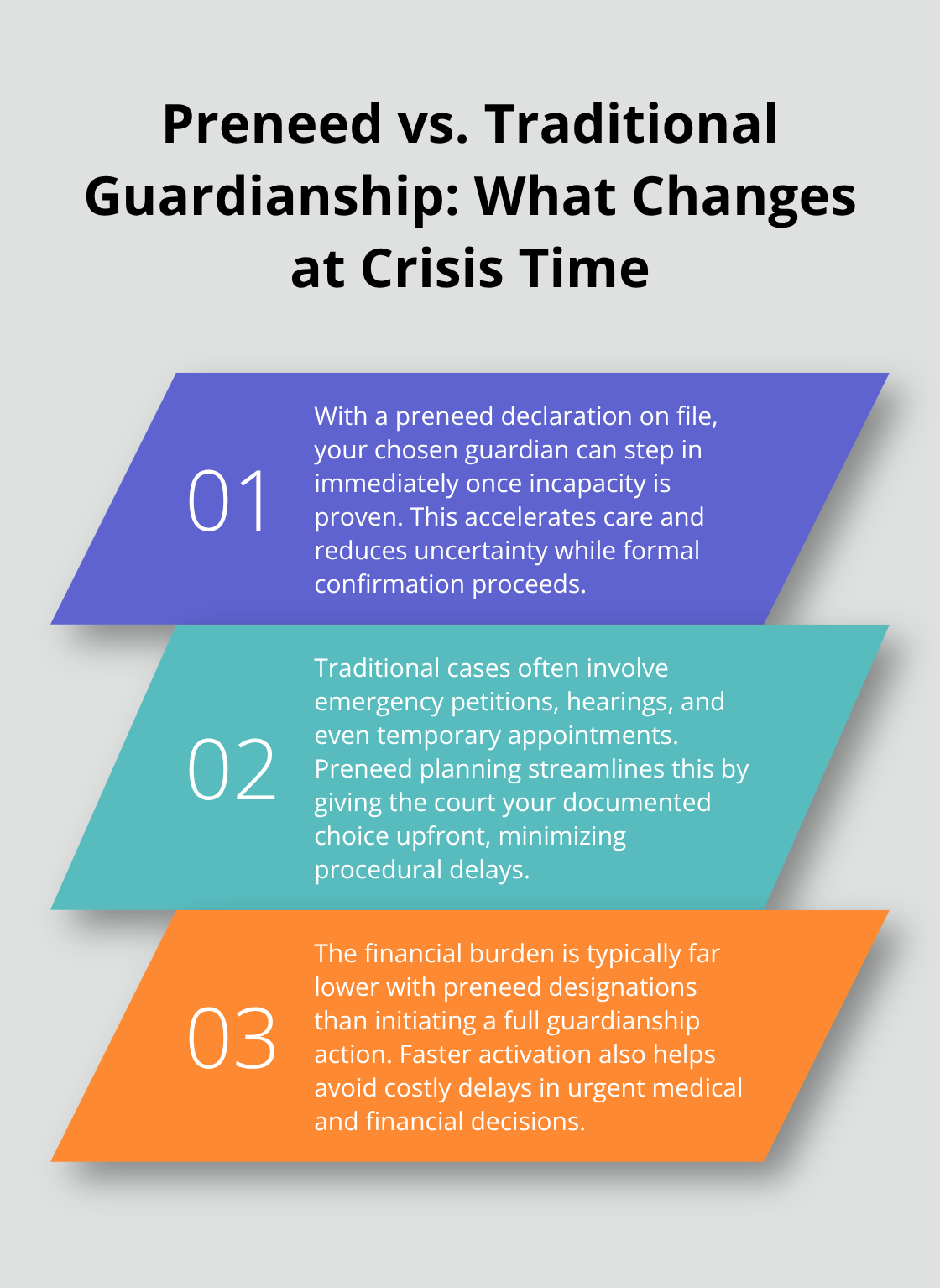
Traditional guardianship forces your family into court when crisis hits. Someone files an emergency petition, the court holds hearings, possibly appoints a temporary guardian for up to 90 days, and only then appoints a permanent one-a process that costs thousands and creates delays when decisions are urgent. Preneed guardianship eliminates this chaos because your choice is already on file and known to the court. When incapacity is proven, the clerk produces your declaration immediately, and your named guardian assumes duties right away. The guardian must petition for confirmation within 20 days, but the court has already seen your wishes and your guardian’s qualifications. This difference matters financially too: preneed designations cost a fraction of initiating a full guardianship action.
Why Control Matters for Your Family
Families choose preneed guardianship for one reason above all others: control. Parents with minor children fear leaving guardianship decisions to judges who don’t know their family values. Aging adults designating guardians for themselves fear losing autonomy to whoever the court appoints. Preneed guardianship gives you that control while you’re capable of exercising it. It prevents disputes between family members about who should serve. It protects your children or yourself from having an unsuitable person appointed simply because no one nominated anyone better. The WHO reports 47.5 million people globally affected by dementia and Alzheimer’s disease with 7.7 million new cases annually, yet most families never plan for incapacity. Those who act through preneed guardianship sleep better knowing exactly who will make decisions if capacity fades. Understanding how to establish this protection requires knowing who qualifies as a guardian and what steps you must take to make your designation legally binding.
Making Your Preneed Guardian Selection Stick
Selecting the Right Guardian for Your Family
Choosing the right guardian ranks among your most consequential decisions, yet many parents rush through it or default to whoever seems available. The person you name will make medical decisions, manage finances, and shape your child’s daily life if incapacity strikes. Florida law requires your guardian to be at least 18 years old and either a Florida resident or your relative, which immediately narrows the field. Beyond these legal minimums, you need someone who shares your parenting philosophy, can handle financial responsibility, and won’t crumble under stress. This matters because Florida Statutes 744.309 and 744.312 require the court to confirm your guardian is qualified to serve, and an unsuitable choice creates friction during the confirmation process.
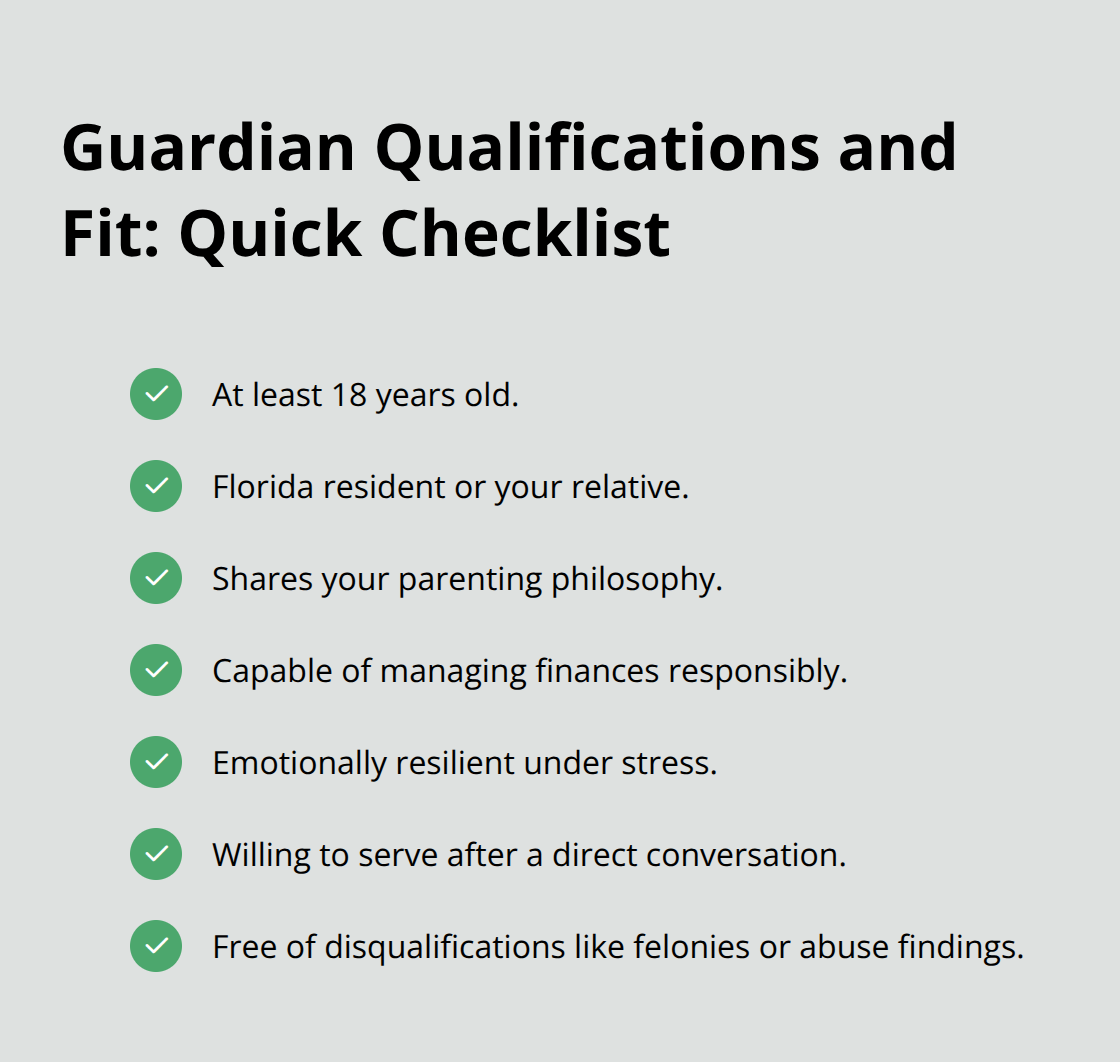
Talk directly with anyone you’re considering for this role-not someone you’re guessing might accept. Ask them whether they’ll serve, what concerns they have, and how they’d handle specific scenarios like religious education or special medical needs. Your alternate guardian matters just as much; if your first choice refuses to serve or becomes unable, Florida law creates a rebuttable presumption that your alternate is entitled to serve, so name someone equally reliable. Disqualifications exist for people with felony convictions, those with child abuse or neglect findings, creditors of your child, and anyone with an improper conflict of interest.
Documenting Your Guardian Choices
When you’ve settled on your choices, document them in writing with specificity. Include your child’s full name, date of birth, and social security number if available, along with your guardian’s complete contact information and qualifications. This level of detail prevents courts from dismissing your declaration due to ambiguity. The precision you invest now pays dividends later when the court reviews your selection.
Filing Your Declaration Correctly
Filing your declaration with the county clerk is straightforward but requires precision. You must sign the document in the presence of at least two attesting witnesses who are present at the same time, and both witnesses must sign as well. Florida law doesn’t require notarization, though many families add it for extra security. Once signed and witnessed, file the original with your county clerk of the circuit court-in Northeast Florida, that means the St. Johns County Clerk if you live in St. Augustine or Bradford County Clerk if you’re in Palatka. Keep a certified copy for your records and provide copies to your designated guardian and alternate.
What Happens During Court Review
The court review process begins only when incapacity is established through a separate legal proceeding; your preneed declaration doesn’t trigger court action on its own. When incapacity is proven, the clerk produces your declaration immediately, giving the court your expressed wishes before any guardianship hearing occurs. The designated guardian then assumes duties right away and must petition for confirmation within 20 days. At that confirmation hearing, the court examines whether your guardian meets qualifications under Florida law and whether they’re suitable to serve. A clearly written declaration with specific reasons for your choices strengthens the court’s confidence in your guardian. The process typically concludes within weeks rather than months, allowing your guardian to make urgent medical and financial decisions without the delays that plague families who never planned ahead.
Once your guardian receives confirmation and takes the oath required by Florida law, they transition into active management of your affairs. The next critical step involves understanding what responsibilities your guardian actually assumes and how they must handle your finances and personal decisions.
What Preneed Guardianship Actually Changes and Doesn’t Change
Your Rights Stay Intact Until Incapacity Occurs
The most dangerous myth about preneed guardianship is that naming a guardian strips you of parental rights immediately or permanently. This is false. Your preneed declaration sits dormant until a court determines incapacity through a formal legal proceeding-nothing happens before that moment. You retain full parental authority, decision-making power, and control over your child’s upbringing while you’re competent. The declaration is purely preventive, a safeguard that activates only if you die or become incapacitated. Once incapacity ends or your child reaches adulthood, the guardianship terminates automatically. If you regain capacity after being declared incapacitated, you can petition the court to restore your rights.
Many families worry that filing a preneed declaration opens them to unwanted court scrutiny or invites challenges to their parenting. It doesn’t. The document sits quietly in the clerk’s office, noticed only when incapacity proceedings actually begin. You maintain complete discretion over day-to-day parenting decisions, medical choices, educational direction, and financial management for your child until incapacity is proven.
Preneed Guardianship Isn’t Just for the Wealthy
Another widespread misconception is that preneed guardianship planning is only for wealthy families protecting large estates. This misunderstanding costs middle and working-class families real security. A single parent working as a nurse, teacher, or tradesperson faces the same risk as a business owner-incapacity or death could leave their child without a named guardian. If you die without a preneed designation, Florida courts appoint a guardian based on statutory hierarchy, which often means a relative you wouldn’t have chosen or a stranger.
The cost to establish preneed guardianship is minimal compared to the alternative: a full guardianship proceeding costs thousands in attorney fees, court costs, and temporary guardian arrangements. Estate planning for seniors and guardianship decisions are non-negotiable for families of all financial backgrounds seeking to protect their children’s care.
You Can Change Your Declaration Anytime
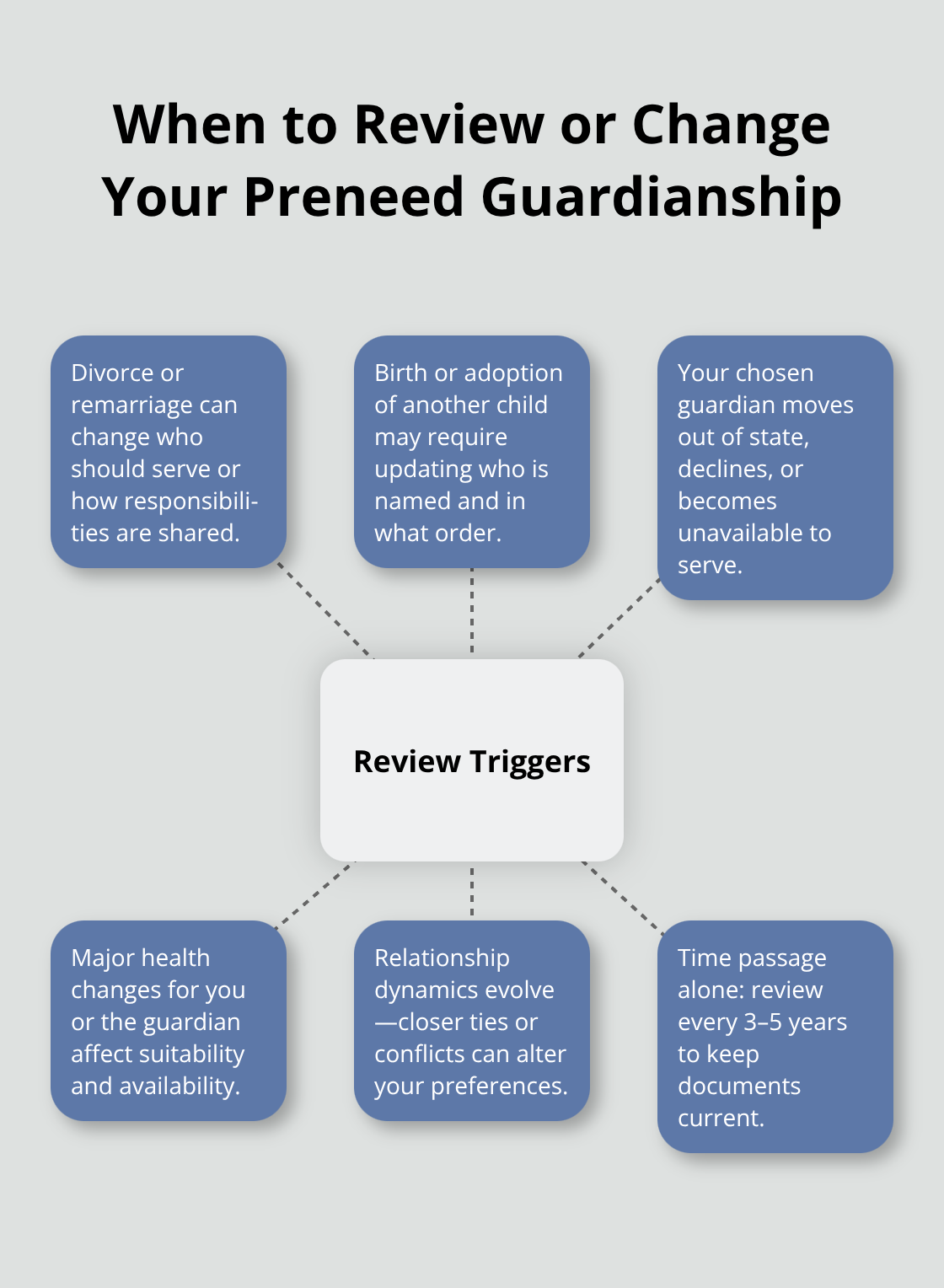
Many people believe that once a preneed declaration is filed, it’s set in stone forever. This is incorrect. You can revoke, amend, or update your declaration at any time while competent by filing a new document with the clerk. If your initially chosen guardian becomes unavailable, develops a serious health condition, or moves out of state, you file an amended declaration naming someone else.
Life circumstances change-marriages end, relationships deepen or deteriorate, people relocate, and preferences shift. Your preneed guardianship should evolve with your life. Try reviewing your designation every three to five years after major life events like divorce, remarriage, the birth of additional children, or significant changes in your chosen guardian’s circumstances. Updating takes minimal time and cost but ensures your declaration reflects your actual wishes when it matters most.
Final Thoughts
Preneed guardianship explained in its simplest form means taking control of your family’s future before crisis forces the courts to decide for you. You choose who manages your child’s care and finances, you avoid costly emergency guardianship proceedings, and you eliminate uncertainty during the most vulnerable moments of your family’s life. Preneed guardianship costs far less than traditional guardianship litigation and activates immediately when needed, without delays that leave your child unprotected.
Parents with minor children, adults with aging parents they might need to care for, and anyone concerned about their own future capacity should act now rather than hoping family members will figure things out later. The process takes weeks, not months, and the cost remains minimal compared to what your family avoids through planning ahead. Adults who designate guardians for themselves gain peace of mind knowing their preferences are documented and legally binding.
We at Family, Estate & Mediation Law help families across Northeast Florida establish preneed guardianship as part of comprehensive estate planning. Contact Family, Estate & Mediation Law to discuss your family’s specific situation, whether you’re in St. Augustine, Palatka, or elsewhere in Northeast Florida. We handle the documentation, witness coordination, court filing, and integration with your other planning tools so nothing falls through the cracks.