
Most people in St. Augustine and Palatka put off making medical decisions until a health crisis forces their hand. By then, it’s too late to have your voice heard.
An advance directive gives you control over your medical care when you can’t speak for yourself. We at Family, Estate & Mediation Law help local families understand their advance directive options and put plans in place that actually reflect their values.
What an Advance Directive Actually Does
An advance directive is a legal document that tells doctors and hospitals what medical care you want if you can’t communicate your wishes yourself. Florida law gives every competent adult the right to decide their own health care, including whether to accept or refuse life-prolonging treatment under Florida Statutes Chapter 765. Without this document in place, hospitals and your family members lack clear instructions to follow during a medical crisis. They’ll have to guess what you’d want, and those guesses often don’t match your actual values. Medical decisions made without your input can contradict everything you believe about quality of life and dignity.
Why Florida Families Need This Now
In Florida, there’s no legal requirement to have an advance directive, but that doesn’t mean you should skip it. When someone lacks a directive, Florida law creates a default hierarchy for decision-making: guardians first, then spouses, then adult children, then parents, then siblings, and finally close friends. This order might not match who you trust most with your medical decisions. More critically, without a directive in place, your family members often face confusion and stress during emergencies. They may disagree about what you would have wanted, which can fracture relationships when emotions are already high. Families in St. Augustine and Palatka experience these conflicts when clear guidance was never documented.
How Your Wishes Get Protected in Writing
An advance directive protects your wishes by putting them in writing before any crisis occurs. Florida recognizes three main options: a living will that specifies which life-prolonging treatments you want or don’t want, a health care surrogate designation that names a trusted person to make decisions for you, and an anatomical donation form if you want to donate organs or tissues after death. You can complete one or more depending on your needs. The document must be signed by you and witnessed by two adult witnesses, with at least one witness not being your spouse or blood relative. This formality ensures the document holds legal weight when hospitals need to act.
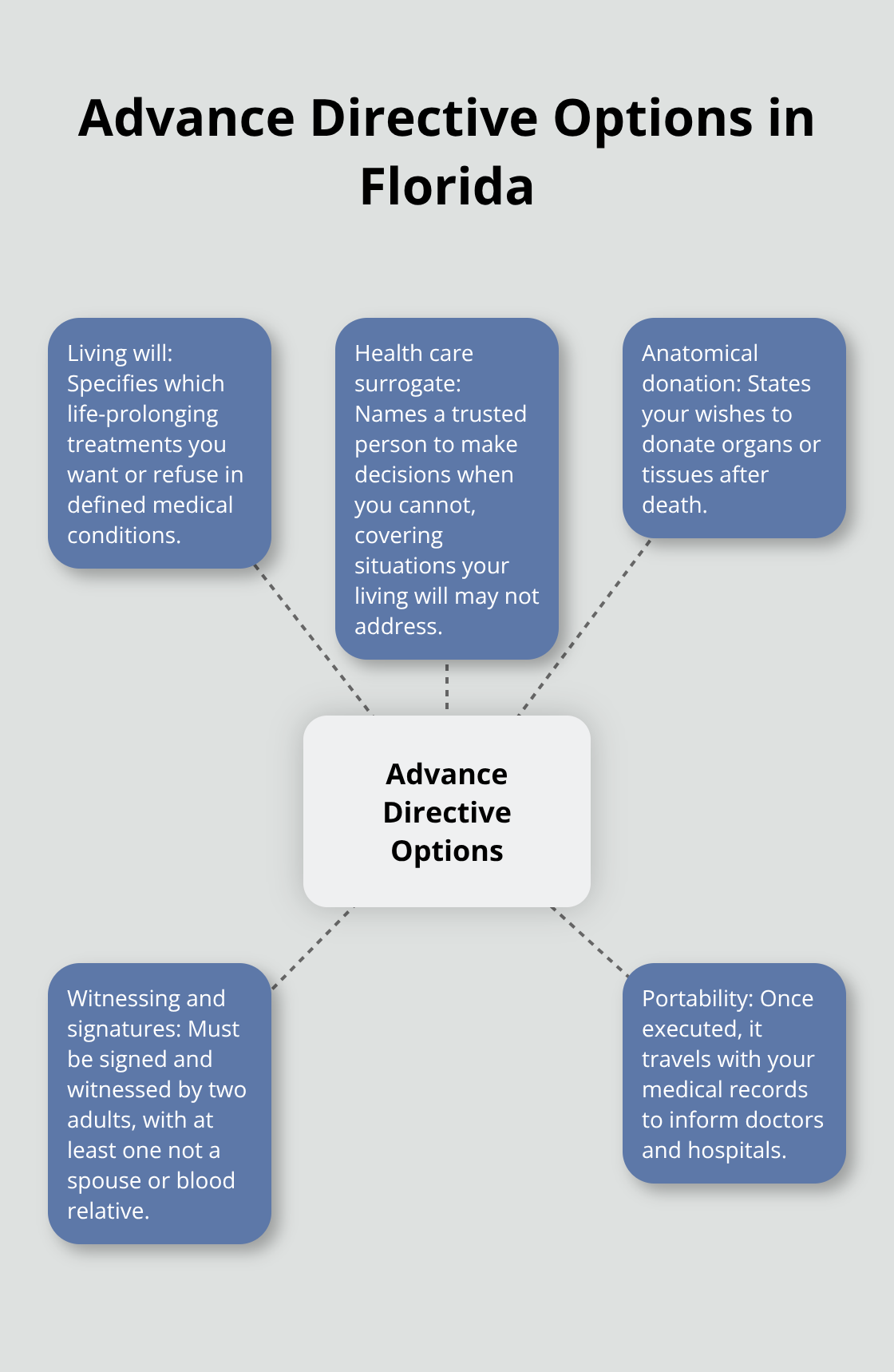
Once executed properly, your advance directive travels with you as part of your medical records and directly informs doctors and hospitals about your preferences regarding treatments like CPR, ventilators, and feeding tubes.
What Happens When You Don’t Have One
Without an advance directive in place, hospitals and your family members must navigate Florida’s default decision-making process. The state’s hierarchy (spouse, adult children, parents, siblings, close friends) may not reflect your actual wishes or your preferred decision-maker. Family members often experience guilt, confusion, and disagreement about what you would have wanted during these high-stress moments. The absence of written instructions forces loved ones to make life-and-death choices without your voice in the room. This uncertainty can delay critical medical decisions and create lasting tension among family members who should be focused on your care, not on resolving disputes about your values.
Understanding these three core elements-what an advance directive does, why Florida families need one, and how it protects your wishes-sets the foundation for choosing the right provisions for your situation. The next chapter explores the specific types of advance directive options available to you and how each one addresses different aspects of your medical care and decision-making authority.
Types of Advance Directive Provisions
Living Wills: Your Treatment Preferences in Writing
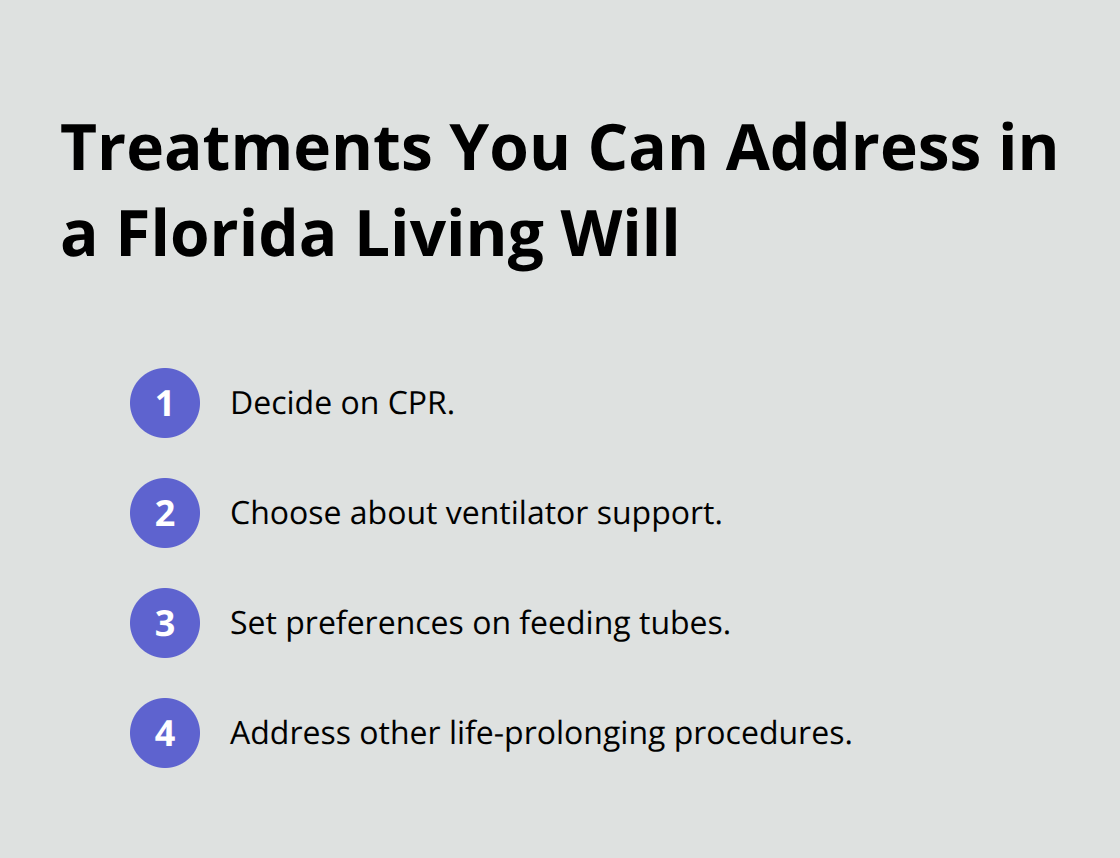
A living will tells hospitals exactly which treatments you want or refuse when you face end-of-life decisions. Florida law lets you specify whether you want CPR, ventilators, feeding tubes, or other life-prolonging procedures if you develop a terminal condition, end-stage condition, or persistent vegetative state.
The document must include specific statutory language and be properly witnessed to hold legal weight in a medical crisis. Many families in St. Augustine and Palatka assume hospitals will know their loved one’s values, but hospitals follow written directives, not assumptions. Your living will becomes part of your medical record and travels with you from emergency room to hospital bed.
Without it, doctors follow a default process that requires two physicians to determine your capacity and prognosis before withholding or withdrawing care-a process that delays decisions and shifts responsibility to medical professionals instead of keeping it with you.
Healthcare Surrogate Designation: Your Medical Voice
A healthcare surrogate designation names a specific person to make medical decisions on your behalf when you cannot communicate. This person acts as your medical voice and can make broader decisions than a living will allows, addressing situations the document doesn’t specifically cover. You can name an alternate surrogate who steps in if your first choice cannot serve. The surrogate must agree in advance to take on this responsibility, and you should discuss your values and treatment preferences with them directly.
Florida law requires the surrogate designation to be in writing, signed, and witnessed by two adults, following the same formality as a living will. Sharing this document with your doctors before a crisis occurs ensures they know who has authority to speak for you and accelerates decision-making during emergencies.
HIPAA Authorizations: Controlling Your Medical Information
HIPAA authorizations and medical information access form the third critical piece of advance care planning. A HIPAA authorization allows you to specify which family members, friends, or advisors can access your medical records and discuss your care with your healthcare providers. Without this authorization, hospitals cannot legally share information about your condition with anyone except your surrogate, which creates gaps when you want your spouse or adult children informed.
Florida recognizes this need as part of comprehensive advance care planning. The authorization should name specific individuals and clarify what information they can access and discuss. This prevents situations where your doctor cannot update your family about your condition because no legal authorization exists. Many families discover this problem only during a crisis when they cannot get basic information about a loved one’s medical status.
How These Three Documents Work Together
Combining a living will, healthcare surrogate designation, and HIPAA authorization creates a complete medical decision-making framework that covers treatment preferences, decision-making authority, and information access. Each document serves a distinct purpose, and together they eliminate guesswork for hospitals and your family. All three documents work best when executed together as part of your overall estate plan rather than as separate, disconnected choices.
With these three provisions in place, you’ve established what happens to your medical care and who controls the information. The next chapter addresses the mistakes that undermine these documents and how to avoid them.
Common Mistakes When Creating Advance Directives
Silence Undermines Your Entire Plan
Most families in St. Augustine and Palatka create an advance directive and then never mention it to anyone. The document sits in a drawer while the people who need to know about it-your family, your doctors, your surrogate-remain completely unaware. This silence turns your carefully drafted instructions into paperwork that hospitals cannot find or act on when a crisis hits. According to the National Institute on Aging, advance care planning reduces emotional burden on loved ones during medical crises, yet families skip the most critical step: actually telling people the directive exists.
Your surrogate cannot make decisions aligned with your wishes if you never discuss your values with them. Your doctor cannot follow your living will if your medical record lacks a copy. Your family cannot respect your choices if they don’t know what those choices are. The moment a health emergency occurs, hospitals need immediate access to your directive and clear confirmation that your named surrogate understands their role. Silence destroys this process completely.
Families who communicate their advance directives beforehand experience far smoother medical decision-making and significantly less conflict among relatives who otherwise might disagree about treatment choices. The conversation itself-sitting down with your surrogate, explaining why you chose them, walking through specific scenarios like CPR or feeding tubes-transforms an abstract legal document into a shared understanding that actually guides decisions when emotions run high.
Outdated Documents Leave You Unprotected
Life changes constantly: you divorce and your surrogate is now someone you no longer trust, you move from St. Augustine to another state and your Florida healthcare directive essentials may not travel well, your health status shifts and your treatment preferences evolve, or family circumstances change and your alternate surrogate is no longer available. The National Institute on Aging recommends reviewing your advance directive at least annually and updating it after major life changes like marriage, divorce, or significant health events.
Many people execute a directive in their 50s and never touch it again, leaving outdated instructions in place for decades. Hospitals must follow the most current version on file, so an old directive naming an ex-spouse as surrogate creates immediate confusion and potential conflict during emergencies. An outdated document fails to reflect who you trust today or what matters to you now.
Incomplete Documentation Creates Gaps
Some families complete only a living will without naming a surrogate, leaving no one authorized to make decisions about situations the living will doesn’t address. Others name a surrogate but never provide HIPAA authorization, which means hospitals cannot legally share your medical information with the person you’ve chosen to speak for you. Still others skip anatomical donation preferences entirely, leaving families to guess whether you wanted to donate organs or tissues.
A complete advance directive package includes a living will, surrogate designation, and HIPAA authorization-all executed together, all current, and all communicated to the people who matter most. Each document serves a distinct purpose, and together they eliminate guesswork for hospitals and your family. Incomplete documentation leaves critical gaps that surface exactly when you need protection most.
Keeping Your Directive Accessible
Store copies of your directive with your healthcare provider, your surrogate, and trusted family members. Keep the original in a safe place (such as a bank safety deposit box) and carry a wallet card noting you have an advance directive and where it is located. This accessibility matters tremendously when hospitals need to act fast during emergencies.
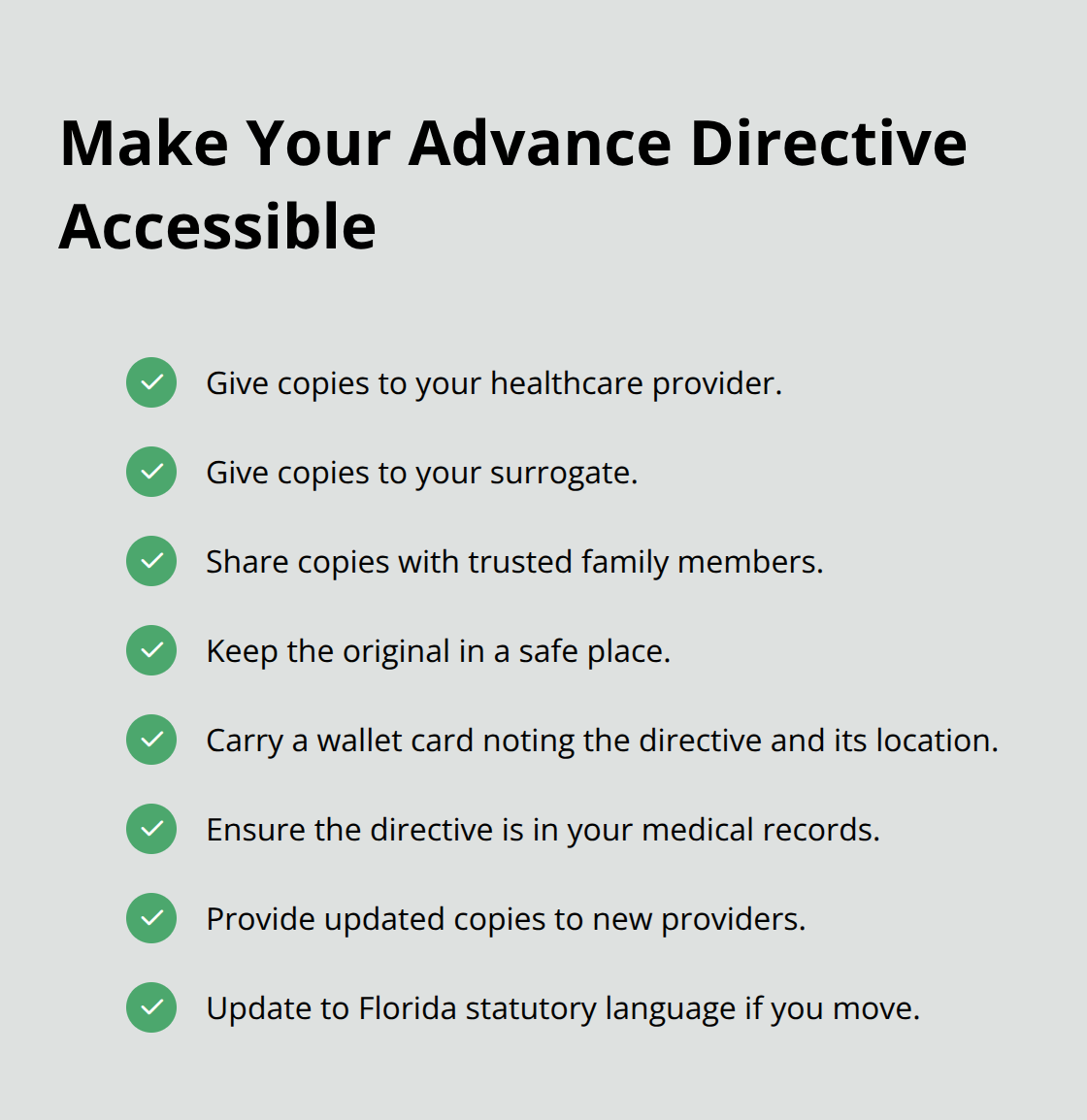
Your directive should travel with you as part of your medical records. When you change doctors or move to a new healthcare facility, provide updated copies to your new providers. If you created an advance directive in another state, Florida will honor it, but updating your documents to reflect Florida statutory language (if you now reside here) strengthens their enforceability with local hospitals and providers.
When to Update Your Directive
Major life events demand immediate attention to your advance directive. A significant health diagnosis, marriage, divorce, birth of children or grandchildren, relocation, or change in your surrogate’s availability all warrant a review and potential update. Don’t wait for a crisis to discover your directive no longer reflects your current situation or your current wishes.
Final Thoughts
Your advance directive options give you control over your medical future, but only if you act now. The three core documents-a living will, healthcare surrogate designation, and HIPAA authorization-work together to protect your wishes and guide your family through medical crises. Without them, hospitals and loved ones face impossible decisions based on guesswork rather than your actual values.
Start by reflecting on what matters most to you regarding end-of-life care, then choose someone you trust completely to serve as your healthcare surrogate. Execute all three documents with proper witnesses, share copies with your surrogate and doctors, and review your directives annually whenever major life changes occur. We at Family, Estate & Mediation Law help families across St. Augustine and Palatka navigate advance directive planning as part of comprehensive estate planning, handling the legal details so your family can focus on your care and your values.
Contact us at femlg.com to schedule a consultation and put your advance directives in place today.