Most people think a will is all they need for estate planning. That’s not always true, especially for families in St. Augustine and Palatka, FL with multiple assets or complex situations.
At Family, Estate & Mediation Law, we help clients understand their will and trust options so they can build plans that actually work for their lives. The right combination of documents gives you flexibility, control, and peace of mind.
What a Will Actually Accomplishes in Florida
Assets Your Will Cannot Control
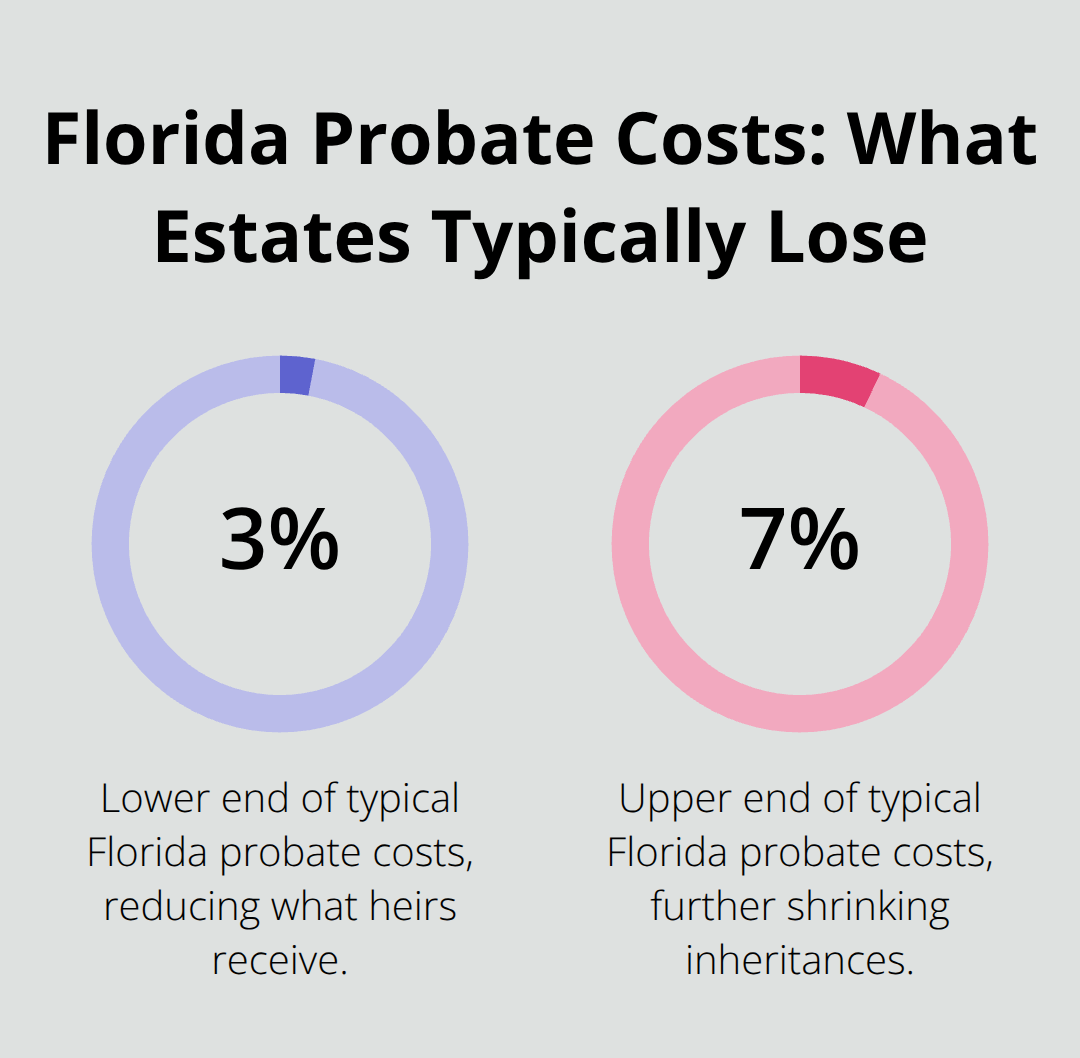
A will directs who receives your assets after you die, but it has significant limitations that many St. Augustine and Palatka families overlook. Your will cannot control assets held in joint ownership, retirement accounts with named beneficiaries, or life insurance policies-those pass directly to whoever you named as beneficiary, regardless of what your will says. It also cannot avoid probate, the court process that validates your will and distributes your estate. In Florida, probate takes anywhere from six months to over a year, and it remains a public process, meaning your financial details become part of the court record. Court fees, attorney fees, and executor compensation typically consume 3 to 7 percent of your estate’s value, according to data from the American College of Trust and Estate Counsel.
Probate Complications Across Multiple States
If you own real estate in multiple states, probate becomes significantly more complicated because you must file ancillary probate proceedings in each state where property is located. This multiplies costs and extends timelines for your beneficiaries. A will also cannot provide management of your assets if you become incapacitated-it only takes effect after death. If you face hospitalization or cannot manage your finances, your family must petition the court for guardianship, a costly and invasive process that strips you of control over your own affairs.
When a Will Falls Short for Your Family
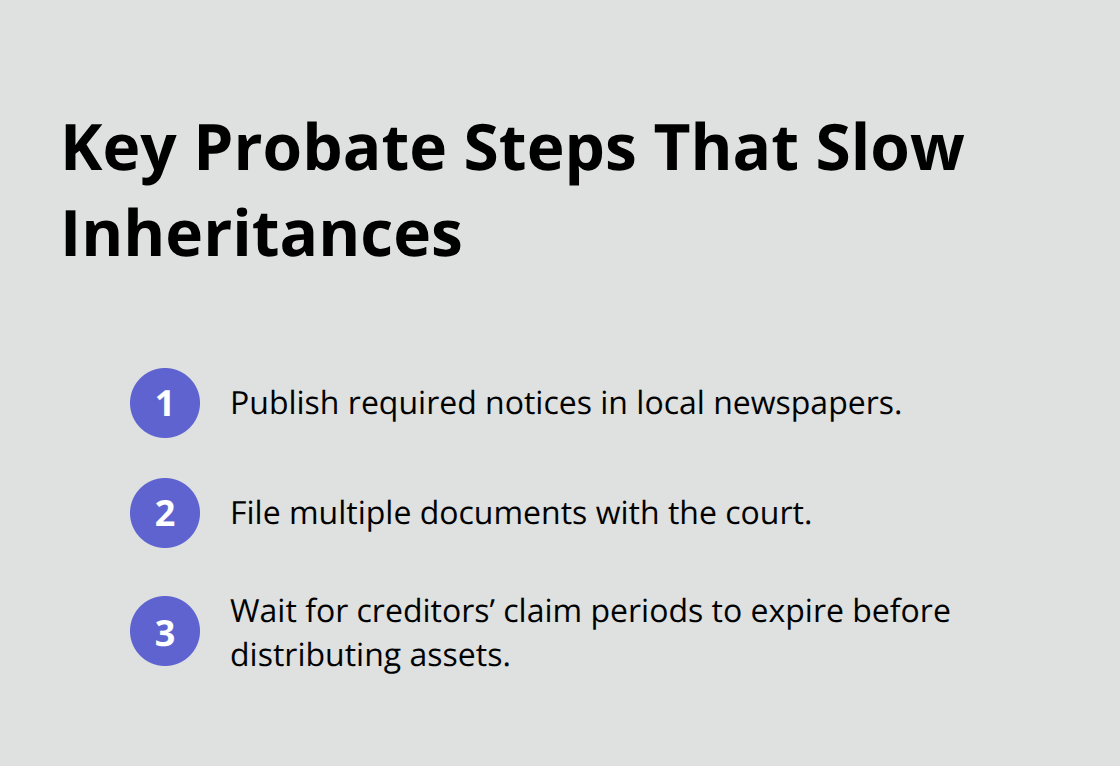
For families with modest estates and straightforward situations, a will may suffice. However, if you own property in multiple states, hold significant assets, have minor children, or want to keep your financial matters private, a will alone creates unnecessary delays and expenses for your loved ones. The probate process in Florida requires your executor to publish notices in newspapers, file documents with the court, and wait for creditors’ claims periods to expire before distributing assets. This transparency means your beneficiaries’ inheritances become a matter of public record. Additionally, if you have blended family situations or want to protect assets for a beneficiary who isn’t ready to manage money responsibly, a will cannot impose the kind of conditions and controls that a trust can.
A will also cannot reduce estate taxes or shield assets from creditors-it simply transfers what you own to whoever you designate.
Why Trusts Offer What Wills Cannot
For St. Augustine and Palatka families seeking faster distributions, greater privacy, and more control over how and when beneficiaries receive their inheritances, combining a will with other estate planning tools becomes necessary. Trusts operate differently than wills and address many of the gaps that wills leave behind.
How Trusts Give You Control That Wills Cannot Provide
Revocable Living Trusts: Flexibility During Life and After
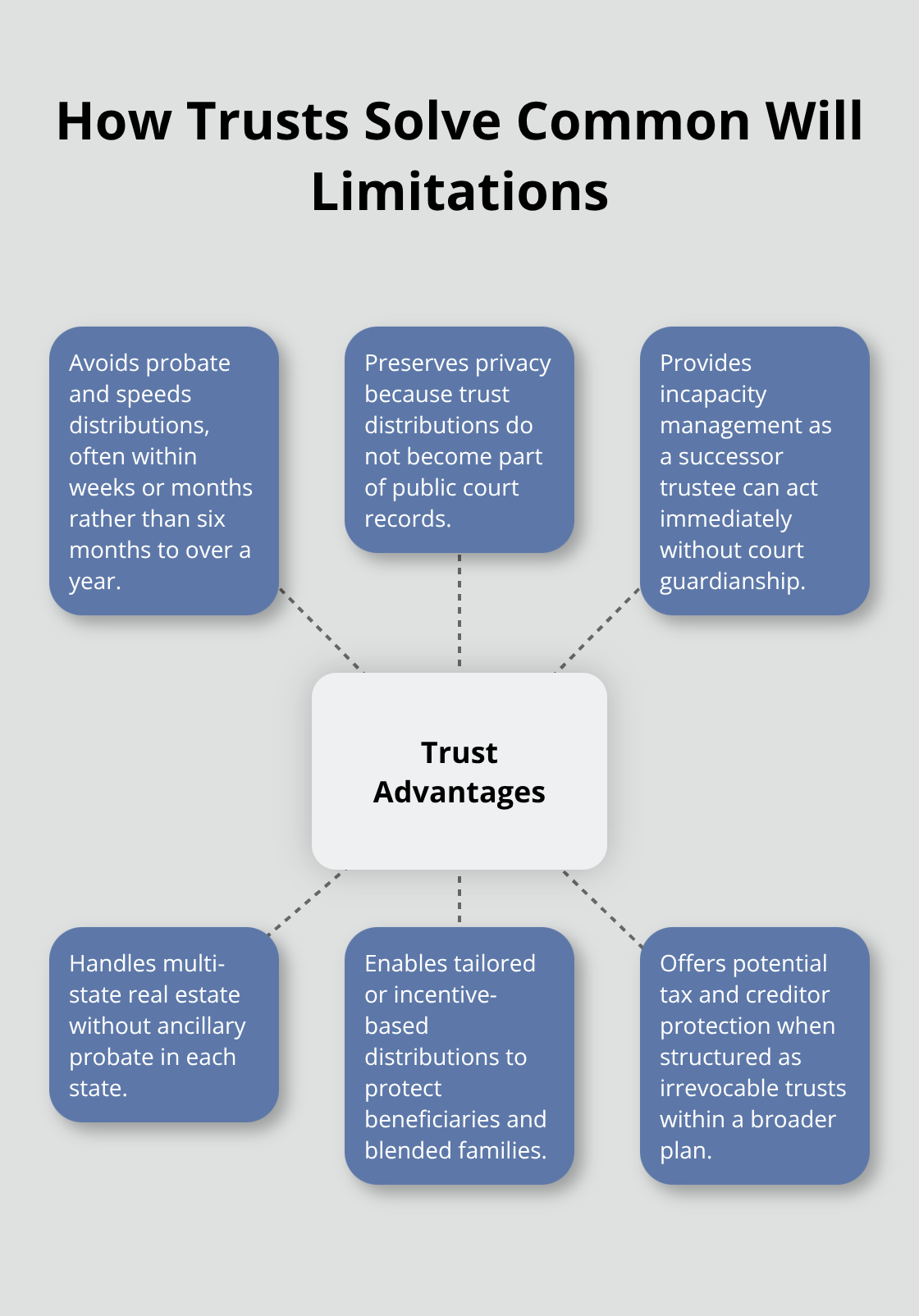
A revocable living trust operates during your lifetime and after your death, giving you flexibility that a will simply cannot match. You create the trust, fund it with your assets, and serve as trustee while you manage your affairs. If you become incapacitated, your successor trustee steps in immediately without court involvement, avoiding the guardianship process entirely. After you die, your successor trustee distributes assets directly to beneficiaries without probate, typically completing distributions within weeks or months rather than the six months to over a year that Florida probate requires.
The American College of Trust and Estate Counsel reports that probate costs consume 3 to 7 percent of estate value-money your beneficiaries keep when you use a funded trust. A revocable trust also keeps your financial details private; unlike wills, which become public court documents, trust distributions never appear in public records. For St. Augustine and Palatka families with real estate in multiple states, a revocable trust eliminates the need for ancillary probate proceedings in each jurisdiction, saving thousands in additional court fees and attorney costs.
Irrevocable Trusts: Removing Assets from Your Taxable Estate
Irrevocable trusts serve different purposes and require more careful planning because you cannot easily change them after creation. An irrevocable trust removes assets from your taxable estate, potentially reducing estate taxes for larger estates, and shields assets from creditors because you no longer own them legally. The IRS allows you to gift up to $19,000 annually per person in 2025 without gift tax consequences, and payments made directly to medical providers for a parent’s care don’t count against those limits.
Specialized Trusts for Specific Situations
Specialized trusts address particular circumstances that standard documents cannot handle. A special needs trust preserves public benefits for a beneficiary with disabilities while providing financial support. A GRAT (grantor retained annuity trust) transfers appreciating assets to heirs with reduced gift taxes while you retain income during the trust term. A see-through trust preserves tax deferral for retirement accounts under the SECURE Act. These tools require professional guidance because irrevocable trusts lack flexibility if your circumstances change, and a GRAT only works if you survive the trust term and assets appreciate above the IRS hurdle rate.
Tailored Distributions for Blended Families and Protection
For blended families or situations where beneficiaries need protection from poor financial decisions, a trust with staggered distributions or incentive-based provisions gives you control over how and when money reaches each person-something a will cannot accomplish. You might structure distributions to release funds at specific ages, upon reaching educational milestones, or when a beneficiary demonstrates financial responsibility. This level of control protects vulnerable beneficiaries and ensures your wealth aligns with your values across generations.
The right trust structure depends on your family situation, asset complexity, and long-term goals. Understanding which trust type fits your needs sets the foundation for building a plan that actually protects what matters most to you and your family.
Building a Plan That Actually Works for St. Augustine and Palatka Families
The Pour-Over Will and Living Trust Partnership
Most families treat wills and trusts as either-or decisions, but they work best together. A pour-over will paired with a revocable living trust creates the backbone of a functional estate plan because it catches assets you forgot to fund into the trust and directs them there after death. Life gets messy-you inherit property, receive stock options, or open new accounts. Without a pour-over will, those assets bypass your trust entirely and trigger probate anyway, defeating the whole purpose of having a trust. The pour-over will acts as a safety net, and it costs almost nothing to add when you’re already drafting your trust documents.
For St. Augustine and Palatka families, this combination typically runs between $2,000 and $10,000 depending on complexity, according to pricing data from estate planning firms across Northeast Florida. That upfront investment saves thousands in probate costs later and keeps distributions moving to your beneficiaries in weeks rather than months.
Aligning Beneficiary Designations with Your Overall Strategy
Beneficiary designations are where most plans fall apart. Your retirement accounts, life insurance, and transfer-on-death accounts bypass your will and trust entirely and go straight to whoever you named as beneficiary, regardless of what your other documents say. If you named your ex-spouse as beneficiary on a life insurance policy and forgot to update it after divorce, your ex receives the death benefit, not your current spouse or children.
Audit every single beneficiary designation annually and after any major life change because outdated designations create family conflicts that your estate plan cannot fix. Coordinate these designations with your overall strategy: if your trust is your primary beneficiary on retirement accounts, it can manage distributions according to your wishes rather than dumping a lump sum into the hands of a young or financially inexperienced heir. Similarly, if you’ve designated guardians for minor children in your will, make sure your life insurance and other liquid assets flow to a trust that funds their care rather than to an individual guardian who may not want that responsibility. Your plan only works when every document points in the same direction.
Responding to Life Changes and Tax Law Shifts
Marriage, divorce, the birth of children or grandchildren, acquiring real estate in another state, significant increases in net worth, or changes in tax law all require you to revisit your documents. The IRS raised annual gift tax exclusions to $19,000 per person in 2025, and if you’re supporting aging parents, this number directly affects your planning strategy. You can gift $19,000 per year to each parent without gift tax consequences, and payments made directly to medical providers for their care don’t count against that limit at all.
A stale estate plan misses these opportunities entirely. Schedule a review every three to five years at minimum, and immediately after major life transitions. A plan drafted ten years ago almost certainly doesn’t reflect your current situation, your family’s current needs, or current tax law. Flexibility built into your plan from the start makes updates easier and less expensive later.
Final Thoughts
Wills and trusts serve fundamentally different purposes, and understanding those differences shapes whether your St. Augustine and Palatka family stays trapped in probate or moves forward smoothly. A will distributes assets after death but cannot avoid the public probate process, which consumes 3 to 7 percent of your estate’s value and takes six months to over a year. A revocable living trust operates during your lifetime and after death, bypassing probate entirely, keeping your financial details private, and allowing your successor trustee to distribute assets in weeks rather than months.
The real power lies in combining these tools. A pour-over will paired with a funded revocable trust catches assets you forgot to transfer and directs them into your trust structure after death. Coordinating beneficiary designations across retirement accounts, life insurance, and transfer-on-death accounts ensures every document points toward your actual wishes rather than working against them, and your will and trust options work together to adapt as your family and tax laws change.
Life doesn’t stand still, and neither should your plan. The birth of grandchildren, marriage or divorce, acquiring property in another state, or changes in the annual gift tax exclusion all demand that you revisit your documents every three to five years. Contact us to schedule a consultation and start building a customized strategy that protects what matters most to you.