
Without a guardianship plan in place, Florida courts decide who cares for your children or aging parents if something happens to you. That’s a risk most families don’t want to take.
At Family, Estate & Mediation Law, we help Florida families establish guardianship plans that reflect their values and protect their loved ones. This guide walks you through what guardianship planning Florida involves, why it matters, and how to get started.
What Guardianship Actually Means in Florida
The Legal Foundation of Guardianship
In Florida, guardianship is a court-supervised relationship where a judge appoints someone to make decisions for another person who cannot care for themselves. Florida Statute Chapter 744 governs the entire process, and courts must prove by clear and convincing evidence that the person lacks capacity to manage property, person, or both before any appointment happens. Once appointed, a guardian gains authority to make medical decisions, manage finances, decide where the ward lives, and oversee education for minors-but only the powers the court grants. This legal structure exists because incapacity can strike anyone: a parent in a car accident, a grandparent with dementia, or a young adult with a disability. The court doesn’t appoint guardians arbitrarily; it requires a three-person examining committee and formal adjudication on incapacity before moving forward.
Types of Guardianship in Florida
Florida offers several guardianship types, and selecting the right one matters enormously. Full guardianship gives a guardian complete control over the ward’s person and property. Limited guardianship preserves more autonomy for the ward and is often overlooked, even though it can work better for someone who retains some decision-making capacity. A Guardian Advocate handles specific decisions without full guardianship powers. Temporary guardianship steps in during emergencies while the court processes a permanent appointment.
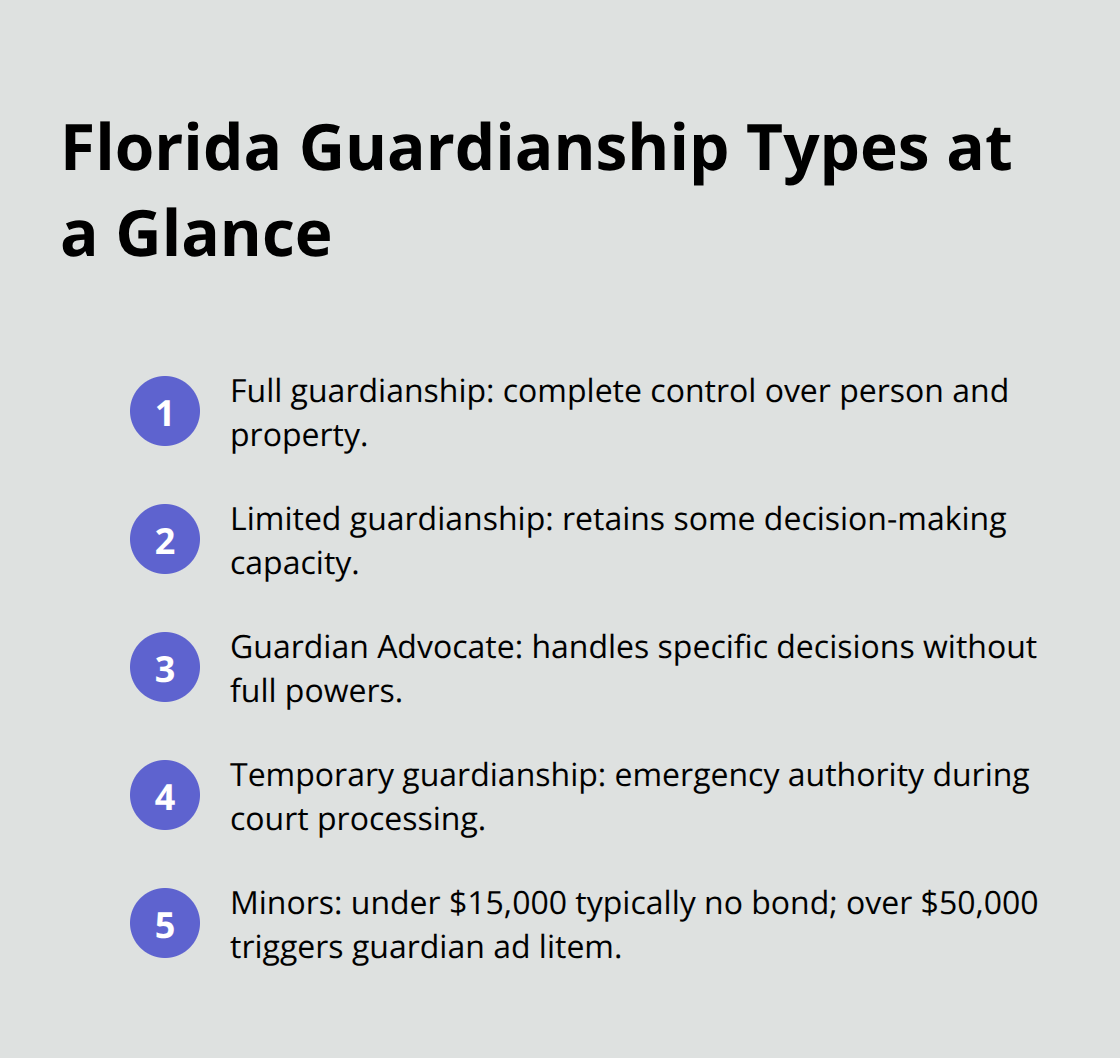
For minors, guardianship arises when parents are unfit or unavailable, and natural guardians can handle minor affairs up to certain thresholds without court involvement-settlements under $15,000 typically require no bond, while larger settlements over $50,000 trigger guardian ad litem appointments.
How Guardianship Differs from Other Legal Tools
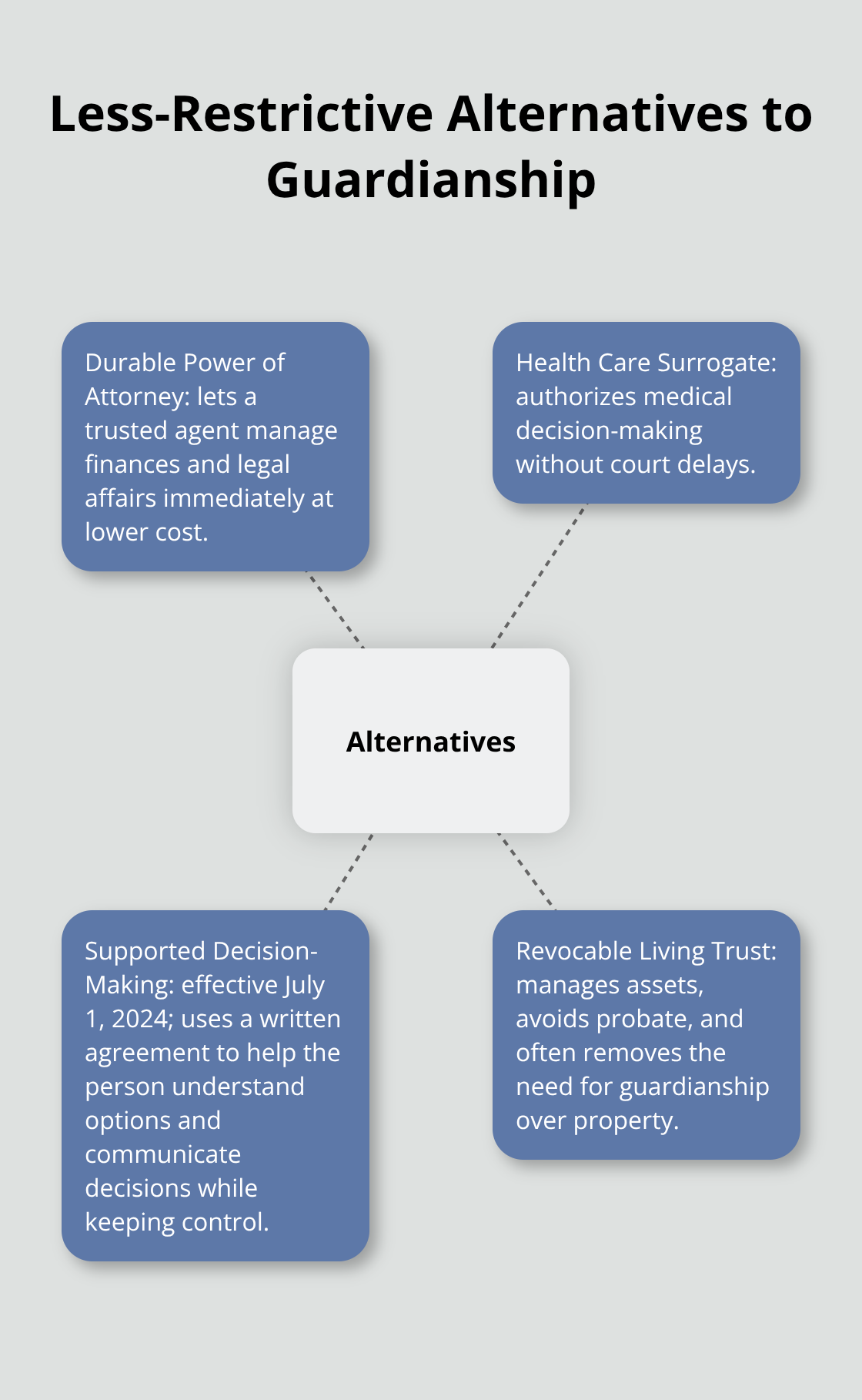
Here’s the critical distinction: guardianship is not the same as a durable power of attorney, health care surrogate, or living will. Those alternatives cost far less (often under $500 versus $250–$400 in filing fees alone for guardianship) and take effect immediately without court delays. Florida law now recognizes Supported Decision-Making as a formal option, effective July 1, 2024, which uses a written agreement to help someone understand options and communicate decisions while retaining control. A revocable living trust avoids probate and can manage assets without guardianship involvement.
Why Less Restrictive Alternatives Matter
We at Family, Estate & Mediation Law recommend exploring these less restrictive alternatives first, because they preserve dignity and autonomy while avoiding the expense and court supervision guardianship demands. Contested guardianship can cost families $3,000–$10,000 or more in attorney fees and court costs, in addition to capacity evaluations running $500–$1,500. That’s why planning ahead with the right legal documents often prevents guardianship altogether and protects your family’s financial and emotional well-being. Understanding these distinctions helps you move forward with confidence as you consider what protection your loved ones actually need.
Why Guardianship Planning Matters Now
Court Decisions Replace Your Preferences Without a Plan
Florida courts appointed guardians in over 30,000 active cases as of recent judicial records, and many of those appointments happened because families never planned ahead. Without a written guardianship plan, the state decides who raises your children or manages your parents’ care if tragedy strikes. When you don’t specify your preferences in writing, judges rely on statutory hierarchy and available evidence-which often means distant relatives, professionals you’ve never met, or state-appointed guardians step in. The court doesn’t know your values unless you document them first.
The Real Cost of Unplanned Guardianship
Contested guardianship runs $3,000–$10,000 or more in attorney fees and court costs, while capacity evaluations add another $500–$1,500. That money vanishes fast, draining resources meant to care for your loved one. Beyond dollars, there’s the emotional toll. Court proceedings are public, your family’s private health and financial information becomes part of the record, and the process can take weeks or months-time your incapacitated relative doesn’t have if they need immediate medical decisions or financial management. Planning ahead costs far less and protects your family’s privacy.
Your Written Plan Controls the Outcome
Planning ahead means your values actually guide decisions instead of a stranger’s interpretation of Florida law. If you believe your child should grow up with your sibling rather than your ex-spouse’s family, write it down and establish guardianship now. If you want your aging parent to stay in their home as long as safely possible instead of moving to institutional care, document that preference and arrange a trusted guardian who shares your vision. Florida Statute Chapter 744 requires courts to explore less restrictive alternatives before appointing full guardianship, but courts don’t know your preferences unless you tell them. Your written plan transforms guardianship from something done to your family into something you control.
Less Restrictive Alternatives Preserve Autonomy and Savings
Supported Decision-Making, durable powers of attorney, and health care surrogates all accomplish protection with less court involvement and lower costs-often under $500 total. These tools take effect immediately without court delays and preserve your loved one’s dignity and decision-making capacity. Florida law now recognizes Supported Decision-Making as a formal option (effective July 1, 2024), which uses a written agreement to help someone understand options and communicate decisions while retaining control. A revocable living trust avoids probate and can manage assets without guardianship involvement. Families who plan early often avoid guardianship altogether, keep their loved ones’ autonomy intact, and spend their resources on actual care instead of legal battles.
Moving Forward with the Right Strategy
The path forward depends on your specific situation and your loved one’s actual capacity. Some families need full guardianship; others accomplish their goals with simpler, less restrictive tools. Understanding what each option requires and costs helps you make the right choice for your family’s circumstances. The next section walks you through the actual steps to establish guardianship in Florida, so you can move forward with confidence.
How to Establish Guardianship in Florida
Filing Your Petition with the Court
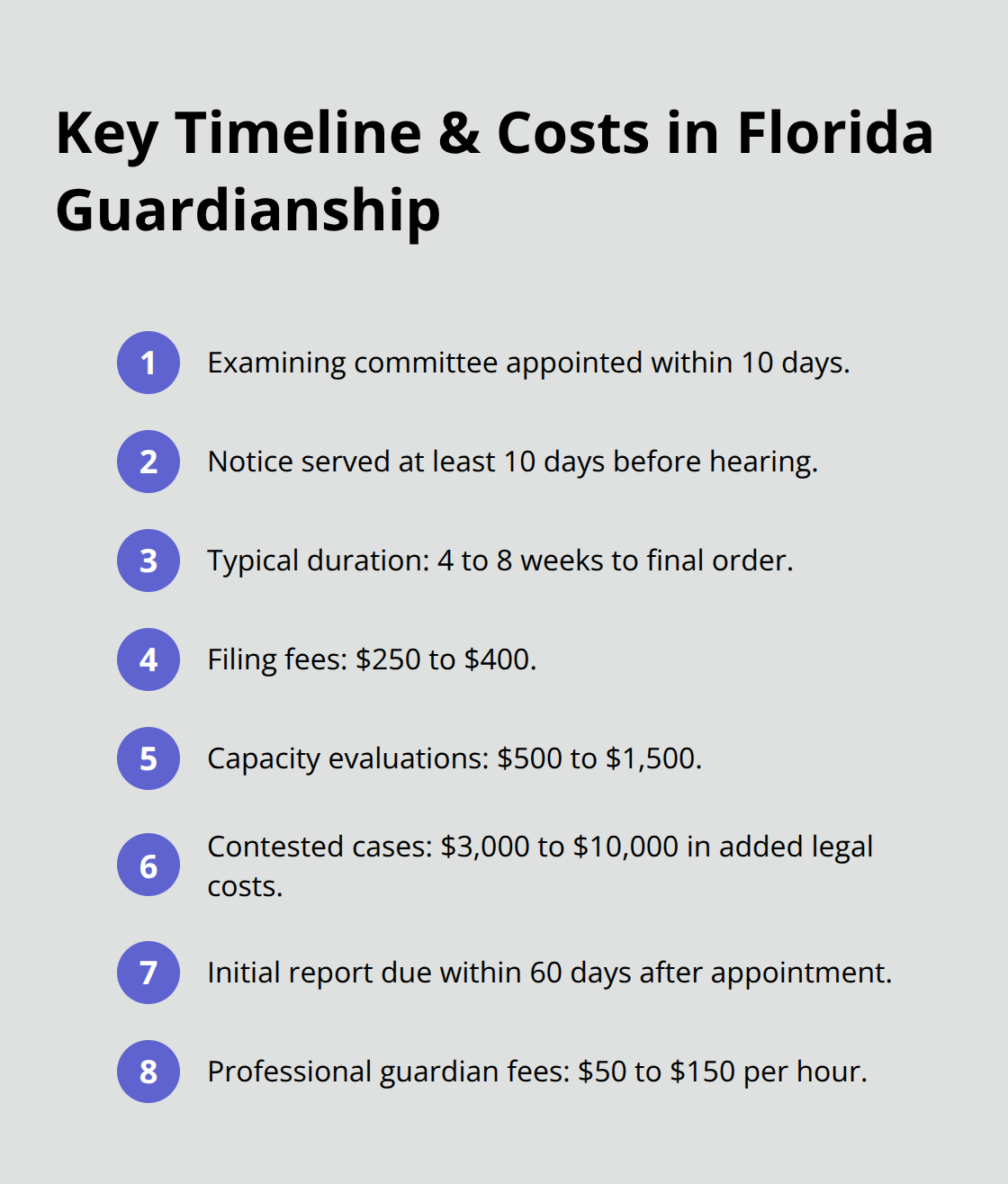
Establishing guardianship in Florida requires following a precise court process that starts with filing a petition. You must file a petition for guardianship with the circuit court in the county where the incapacitated person lives, which costs between $250 and $400 in filing fees according to current Florida court schedules. Your petition must include detailed information about the proposed ward’s incapacity, including medical history, current functional limitations, and specific reasons why guardianship is necessary rather than a less restrictive alternative. Florida Statute Chapter 744 requires you to attach an Affidavit of Physician or Advanced Practice Registered Nurse stating the proposed ward cannot manage property, person, or both, along with documentation of any prior capacity evaluations.
The Examining Committee and Evaluation Process
Once you file, the court appoints a three-person examining committee within 10 days, consisting of a physician, a psychologist or psychiatrist, and a third qualified examiner. Each committee member independently evaluates the proposed ward and files a report; if two or more find incapacity, the case proceeds to an adjudication hearing. The court must prove incapacity by clear and convincing evidence, which is a high legal standard designed to protect individuals from unnecessary guardianship. Capacity evaluations themselves cost $500 to $1,500 depending on complexity and the evaluator’s credentials, so budget accordingly when planning your case.
Notice, Hearing, and Court Procedures
You must serve notice on the proposed ward, their attorney (if appointed), family members, and other interested parties at least 10 days before the hearing. Throughout the proceedings, Florida courts must consider whether less restrictive alternatives like Supported Decision-Making, a durable power of attorney, or a health care surrogate would adequately protect the person before appointing a guardian. The entire process typically takes 4 to 8 weeks from filing to final order, though contested cases can stretch to several months and accumulate $3,000 to $10,000 in additional attorney fees and court costs.
Guardian Appointment and Initial Reporting Requirements
If the court finds incapacity and appoints a guardian, the guardian must file an initial guardianship report within 60 days detailing the ward’s residence, medical care, and financial status, followed by annual plans and accountings for as long as guardianship continues. Professional guardians in Florida must be registered, post bonds, complete required education hours, and pass a competency examination according to rules set by the Office of Public and Professional Guardians, which ensures a baseline of competence if you choose that route. Guardian fees vary but typically run $50 to $150 per hour or a percentage of estate assets, paid from the ward’s resources.
Final Thoughts
Guardianship planning Florida protects your family from court decisions that don’t reflect your values and avoids the expense of contested guardianship, which can drain $3,000 to $10,000 or more from resources meant for actual care. When you plan ahead, you control who cares for your children or aging parents if something happens to you, and you preserve your loved one’s dignity through less restrictive alternatives like Supported Decision-Making, durable powers of attorney, or health care surrogates. Most importantly, you give your family stability and clarity during a crisis instead of leaving those decisions to a judge.
We at Family, Estate & Mediation Law help Northeast Florida families establish guardianship plans that work for their specific situations. Our team serves families in St. Augustine and Palatka with client-centered guidance on estate planning, family law, and the practical strategies that protect your loved ones while preserving relationships and legacies. Whether you need full guardianship, a limited arrangement, or a simpler alternative, we walk you through the process and help you make decisions that align with your family’s needs.
Contact us to discuss your guardianship planning goals and review your family’s circumstances. We’ll explain your options and help you choose the right legal tools to secure your loved ones’ future, so visit our website to learn more about how we support Florida families or reach out directly to schedule a consultation. The time to plan is now, before a crisis forces the court to decide for you.