Estate planning for families isn’t something you should put off. Without a clear plan in place, your loved ones could face unnecessary stress, delays, and expenses when they need support most.
At Family, Estate & Mediation Law, we’ve seen firsthand how proper planning protects what matters most. The right documents and strategy give your family security and peace of mind.
Why Estate Planning Protects Your Family’s Future
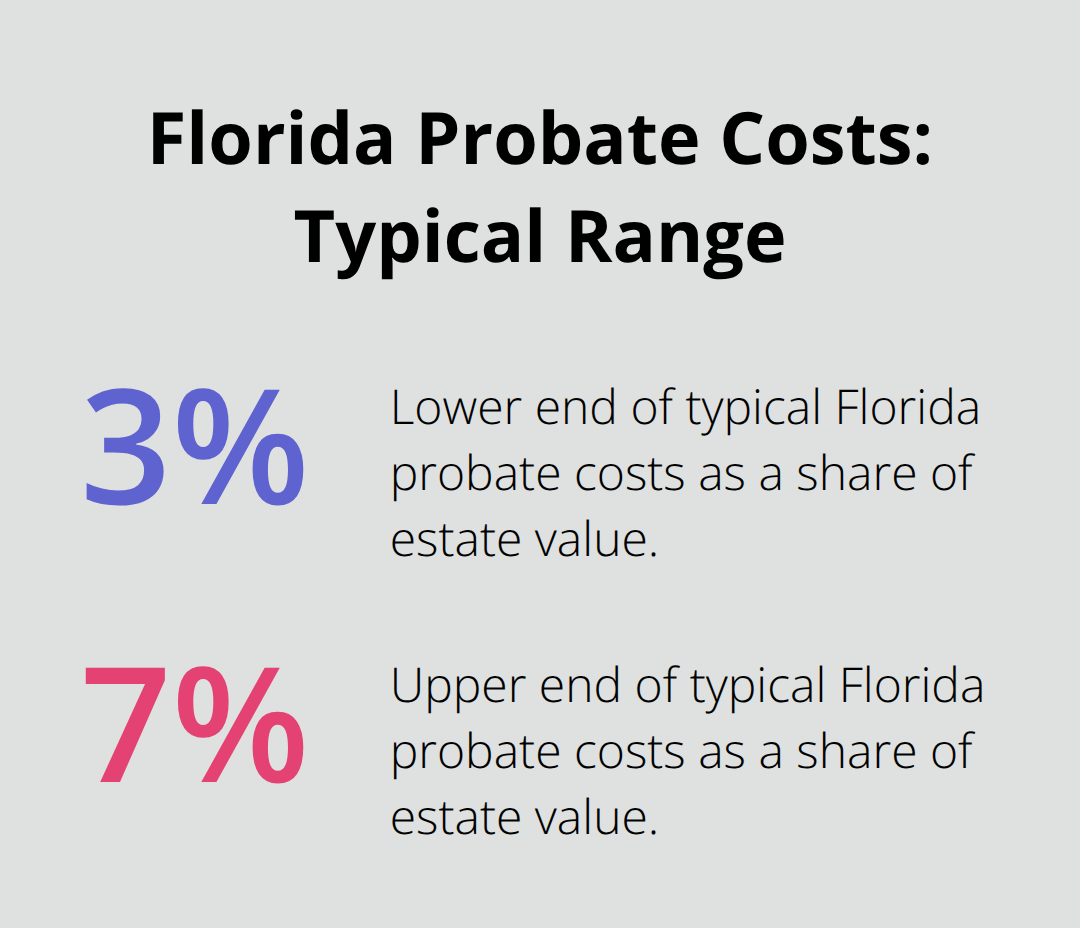
Without a clear estate plan, your family faces real financial and emotional consequences. According to the American Bar Association, families without proper planning often encounter probate delays that stretch 6 to 12 months or longer, during which assets remain frozen and legal fees accumulate. In Florida, probate costs typically range from 3 to 7 percent of your estate’s value-meaning a $500,000 estate could lose $15,000 to $35,000 in unnecessary expenses. More critically, without designated guardians in your will, Florida courts decide who raises your minor children if you pass away. This happens because Florida law requires guardianship appointments when no will names a guardian, forcing your family into court proceedings that cost thousands and create prolonged uncertainty during an already difficult time.
Court decisions replace your parental wishes
The guardianship issue alone should motivate immediate action. If you don’t name guardians for your children in a valid will or trust, Florida courts apply a best-interest standard that may not align with your values or family dynamics. You might want your sister to raise your kids, but if she’s not formally named and another relative contests the appointment, the court makes the final call. A durable power of attorney for healthcare and a healthcare surrogate designation empower your chosen person to make medical decisions for your children without court involvement. A revocable living trust lets you name a trustee to manage assets for your children’s benefit, avoiding probate entirely and keeping distributions private. The Mayo Clinic emphasizes that healthcare directives matter especially for families with minor children because medical emergencies can strike anyone at any age.
Strategic titling eliminates probate costs
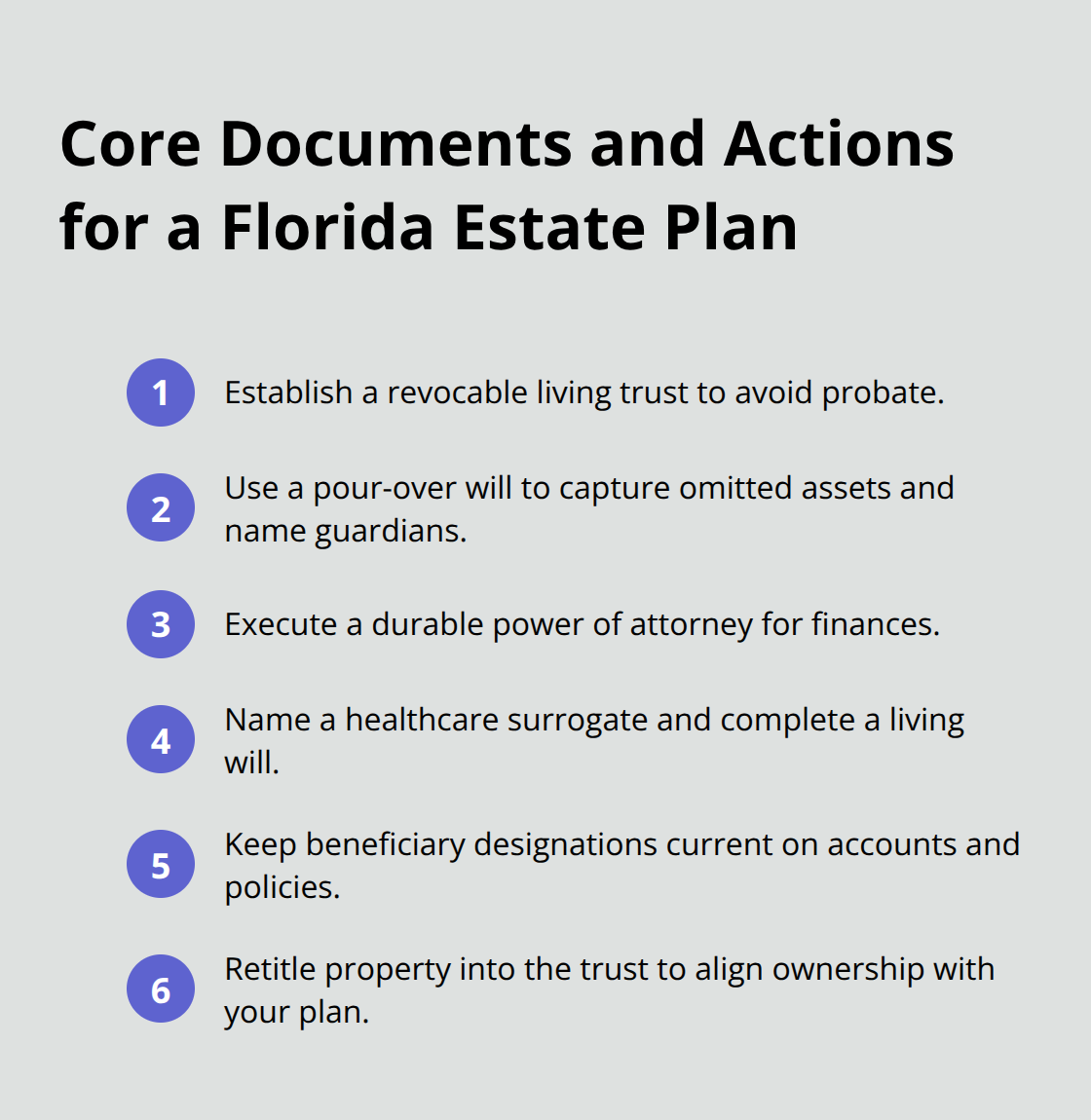
Florida has no state estate tax or inheritance tax (according to the National Conference of State Legislatures), which simplifies planning-but probate fees still drain family resources. The most effective strategy involves funding a revocable living trust and retitling property into the trust’s name during your lifetime. When you own real estate as an individual and pass away, that property enters probate. When the same property is owned by your trust, it transfers outside probate to your beneficiaries immediately upon your death. For payable-on-death accounts and life insurance, keeping beneficiary designations current proves equally essential. The Internal Revenue Service notes these designations typically override your will, meaning outdated beneficiary information can redirect thousands or even hundreds of thousands of dollars away from your intended heirs. Review these designations after divorce, remarriage, or the birth of children to prevent unintended consequences.
Asset coordination creates seamless transfers
Proper coordination of your documents and asset titles transforms your estate plan from a collection of separate pieces into a unified strategy. Your will, trust, power of attorney, and healthcare directive work together to cover every scenario-whether you face incapacity during your lifetime or pass away. When assets sit outside your trust or carry outdated beneficiary designations, they create gaps that force probate or lead to unintended distributions. Families across Northeast Florida benefit from structuring their assets so probate becomes unnecessary and your wishes transfer seamlessly to the people you choose. The next section explores the specific documents you need to build this protection.
What Documents Do You Actually Need
A revocable living trust forms your estate plan’s foundation
A revocable living trust sits at the center of effective estate planning for Florida families. Unlike a will, which only takes effect after you die and must go through probate, a revocable living trust operates during your lifetime and transfers assets to beneficiaries immediately upon your death without court involvement. You fund the trust by retitling property into its name-your home, investment accounts, rental properties-and serve as trustee during your lifetime. When you pass away, a successor trustee you’ve named steps in and distributes assets according to your instructions, all privately and outside probate.
The American Bar Association confirms that a revocable living trust paired with a pour-over will creates seamless protection: the trust handles major assets while the pour-over will catches anything accidentally left out and names guardians for minor children. For Florida real estate specifically, the Florida Bar emphasizes that a living trust offers stronger probate avoidance than alternatives like Lady Bird deeds, particularly when your estate includes multiple properties or significant assets.
Powers of attorney and healthcare directives guide decisions during incapacity
A durable power of attorney for finances gives a trusted person authority to manage your bank accounts, investments, and property if you become incapacitated-and this document must comply with Florida’s specific requirements to be valid. The Mayo Clinic stresses that a healthcare surrogate designation and living will work together to guide medical decisions: your surrogate makes treatment choices based on your values, while your living will documents specific wishes like whether you want life support. These healthcare documents prevent family conflict and ensure doctors understand your medical preferences without court orders.
Beneficiary designations and property titles require constant attention
Keep beneficiary designations current on life insurance policies, retirement accounts like IRAs and 401(k)s, and payable-on-death accounts because the Internal Revenue Service confirms these designations override your will entirely. A beneficiary designation made 15 years ago when you were single will still direct proceeds to an ex-spouse if you don’t update it after divorce-a costly mistake that happens regularly. Property titles matter equally: if you own real estate as an individual, it enters probate; if your trust owns it, it transfers privately to heirs.
Coordination transforms separate documents into unified protection
Coordinate all these pieces so your will, trust, power of attorney, and healthcare directives work as one unified system rather than separate documents with conflicting instructions. The documents themselves are not expensive compared to the probate costs and family conflict they prevent, yet many families delay because they underestimate how quickly life circumstances change. When you structure your documents and assets properly, you eliminate gaps that force probate or lead to unintended distributions. Understanding which documents you need represents only half the battle-the other half involves recognizing the mistakes families make when they fail to implement or maintain their plans.
Estate Planning Mistakes That Cost Families Thousands
Outdated documents create legal chaos
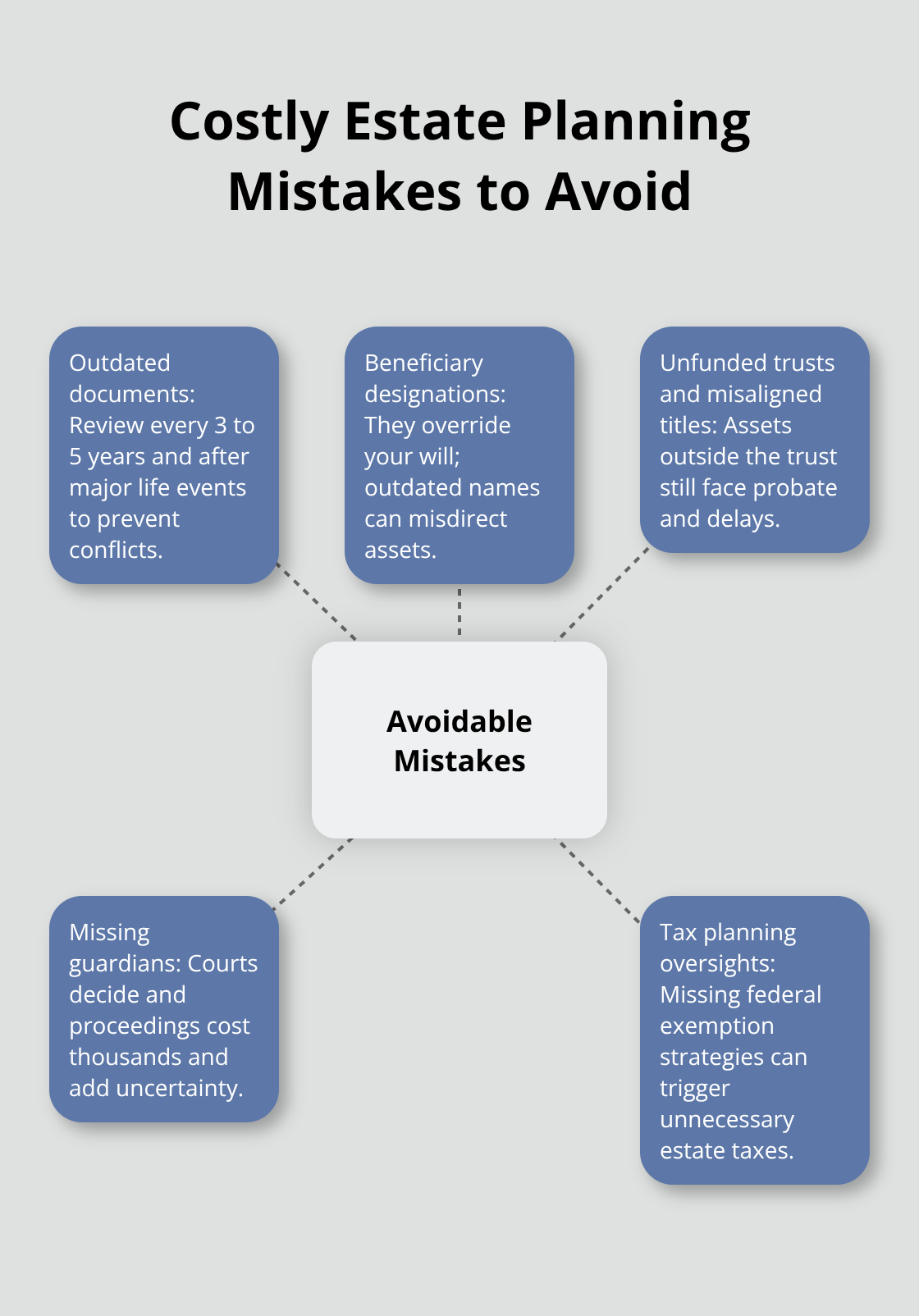
Outdated documents rank among the most expensive mistakes families make, yet updating takes less than an hour. Life changes rapidly-you marry, divorce, have children, relocate, or experience significant shifts in wealth-but your estate plan often sits untouched for years. The American Bar Association recommends reviewing your plan every 3 to 5 years and immediately after major events, yet most families ignore this guidance entirely. A will naming your ex-spouse as executor or designating an ex as guardian for your children creates immediate legal chaos when you pass away.
Beneficiary designations override your will
Beneficiary designations prove equally problematic: life insurance policies, retirement accounts, and payable-on-death accounts issued 10 or 15 years ago frequently still name former spouses or deceased individuals. The Internal Revenue Service confirms these designations override your current will, meaning your assets flow to the wrong people regardless of what your updated documents state. Florida courts cannot correct these errors retroactively, and your family cannot recover misdirected funds without expensive litigation that rarely succeeds.
Updating beneficiary designations costs nothing and takes minutes, yet this single task prevents more estate disputes than nearly any other action.
Property titles require constant attention
Property titles demand equal vigilance: if you retitled your home into a trust five years ago but failed to fund the trust with other assets, those assets still enter probate individually. This gap between your trust documents and your actual asset ownership defeats the entire purpose of probate avoidance and leaves your family facing the same court delays and expenses you sought to prevent.
Missing guardians force court decisions
Failing to name guardians for minor children forces Florida courts to make the most important parenting decision of your life if you and your spouse both die. The Florida Statutes require guardianship appointments when no valid will exists, triggering court proceedings that cost $3,000 to $5,000 and create months of uncertainty while judges determine who raises your children. A simple will or revocable living trust naming specific guardians eliminates this problem entirely and prevents court involvement.
Tax planning oversights drain estates
Tax planning oversights represent another major category of costly mistakes, particularly for families with estates exceeding $12 million per person-the current federal exemption threshold according to the Internal Revenue Service. Married couples can coordinate their plans to use both spouses’ exemptions, potentially protecting $24 million from federal estate taxes, yet many couples fail to structure their trusts to accomplish this coordination. Without proper planning, the first spouse to die wastes their exemption, forcing the surviving spouse’s estate to pay substantial federal taxes on assets that could have transferred tax-free. Families earning substantial income or owning businesses, real estate, or investment portfolios should consult with estate planning professionals who understand both Florida law and federal tax implications.
Final Thoughts
Estate planning for families requires more than templates or outdated documents sitting in a drawer. The mistakes outlined earlier-outdated beneficiary designations, missing guardians, unfunded trusts, and tax oversights-happen because families attempt planning without professional guidance or fail to maintain their plans after major life changes. Working with experienced estate planning attorneys transforms your plan into a coordinated strategy that actually protects your family and preserves your legacy.
At Family, Estate & Mediation Law, we help individuals and families across Northeast Florida build estate plans tailored to their specific circumstances and Florida law. Regular reviews catch changes you might overlook-a new grandchild, a significant inheritance, a business acquisition, or a shift in your financial situation. We recommend reviewing your plan every three to five years and immediately after major life events to prevent the costly gaps that force probate or lead to unintended distributions.
Coordinating your documents and asset titles creates seamless transfers that reflect your actual wishes. Your will, trust, power of attorney, and healthcare directives work together as one unified system rather than separate pieces with conflicting instructions. Contact Family, Estate & Mediation Law to schedule a consultation and take the first step toward protecting what matters most.