
Guardianship can feel like the only option when a loved one needs protection, but it’s often not. At Family, Estate & Mediation Law, we’ve seen families discover that guardianship alternative options exist and frequently work better for their situation.
Full guardianship involves court oversight, ongoing costs, and loss of personal autonomy. Many families find that powers of attorney, trusts, or representative payee arrangements accomplish the same goals with far less complexity and expense.
What Guardianship Actually Costs You
The Financial and Personal Price Tag
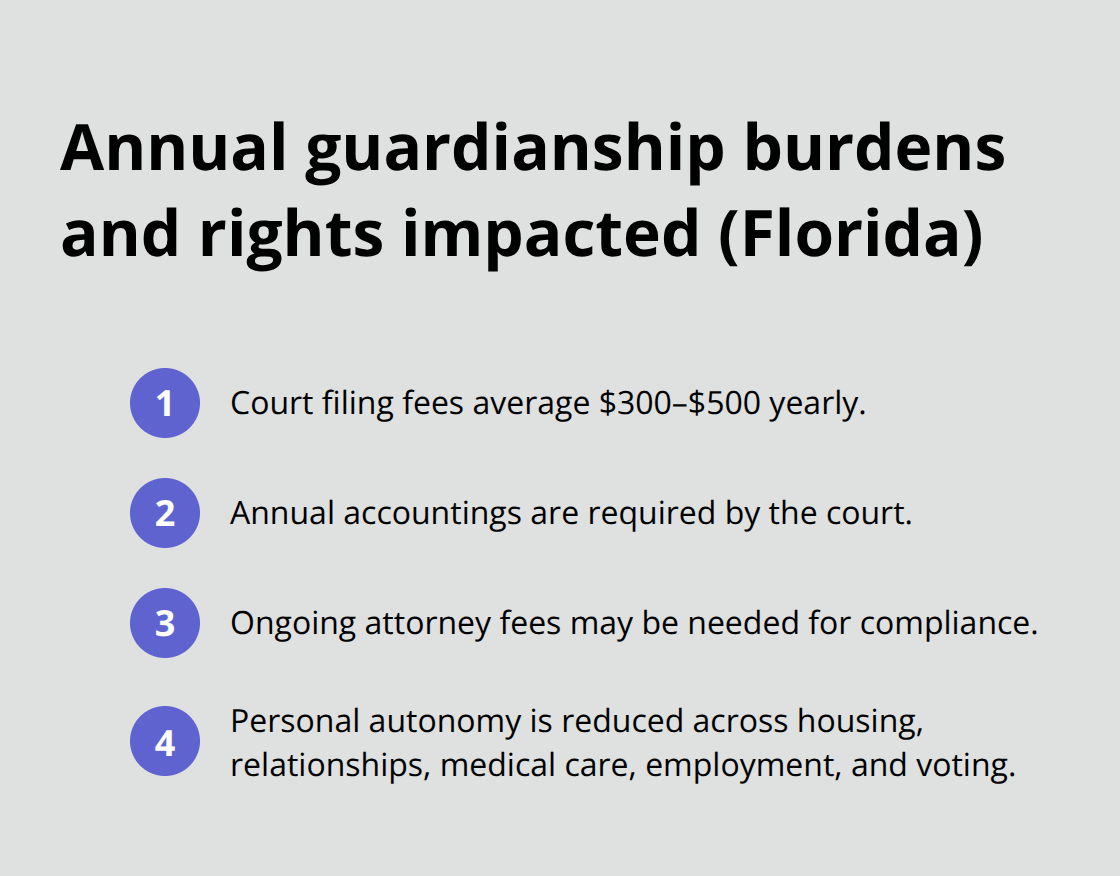
Guardianship in Florida requires a court petition, typically involving filing fees between $500 and $1,500, plus attorney costs that often reach $2,000 to $5,000 or more depending on complexity. Once appointed, guardians face annual accounting requirements, court filing fees averaging $300 to $500 yearly, and potential attorney fees for ongoing compliance. The real expense, though, extends far beyond dollars. A guardianship strips the individual of their legal right to make decisions about where they live, whom they associate with, medical care, employment, and voting rights.
Florida courts are supposed to consider less restrictive alternatives before appointing a guardian under state law, but many families report that courts move forward with guardianship without thoroughly exploring other options.
When Guardianship Becomes Necessary
Guardianship serves a specific purpose: it protects someone who genuinely cannot understand or communicate decisions about their care or finances. This typically applies to individuals with severe cognitive disabilities, advanced dementia, or conditions that prevent any meaningful decision-making capacity. Florida law recognizes both full guardianship and limited guardianship, where a court restricts the guardian’s authority to specific areas like healthcare or finances only. However, limited guardianship requires the same court process and ongoing costs as full guardianship. The distinction matters because many families pursue full guardianship without considering whether limited guardianship-or something far less restrictive-would accomplish their actual goals. Courts in Florida have increasingly questioned whether guardianship truly represents the least restrictive option, particularly for younger adults with intellectual and developmental disabilities who retain some capacity for supported decision-making.
Why Alternatives Often Make Better Sense
The Disability Rights Florida organization and the American Bar Association both emphasize that guardianship should be a last resort, not a default choice. Supported decision-making allows an individual to retain their legal rights while trusted supporters help them understand information and options. A durable power of attorney lets you make specific decisions without court involvement and costs far less to establish and maintain. Representative payee arrangements through the Social Security Administration give you control over benefit spending without guardianship. These alternatives preserve the person’s dignity, autonomy, and civil rights while still providing the protection families need. The shift toward these options reflects a growing consensus that unnecessary guardianship causes real harm-it removes people from decision-making about their own lives and can contribute to isolation and dependence.
Understanding these costs and limitations sets the stage for exploring the practical alternatives that actually work for most families. Powers of attorney and healthcare directives offer a straightforward path forward, one that many families find far more effective than the guardianship route.
Power of Attorney and Healthcare Directives
How Power of Attorney Works in Florida
A durable power of attorney is straightforward: you sign a document naming someone to handle financial and legal matters on your behalf, and that document remains valid even if you become incapacitated. In Florida, you create one by signing the document, having two witnesses sign it, and obtaining a notary’s seal-no court involvement, no ongoing fees beyond the initial setup cost of roughly $200 to $500 if you work with an attorney. The agent you name gains authority only over the specific areas you grant, whether that’s banking, real estate, investments, or all financial matters combined. Florida Statute Chapter 709 governs powers of attorney and allows you to be remarkably precise about what your agent can and cannot do.
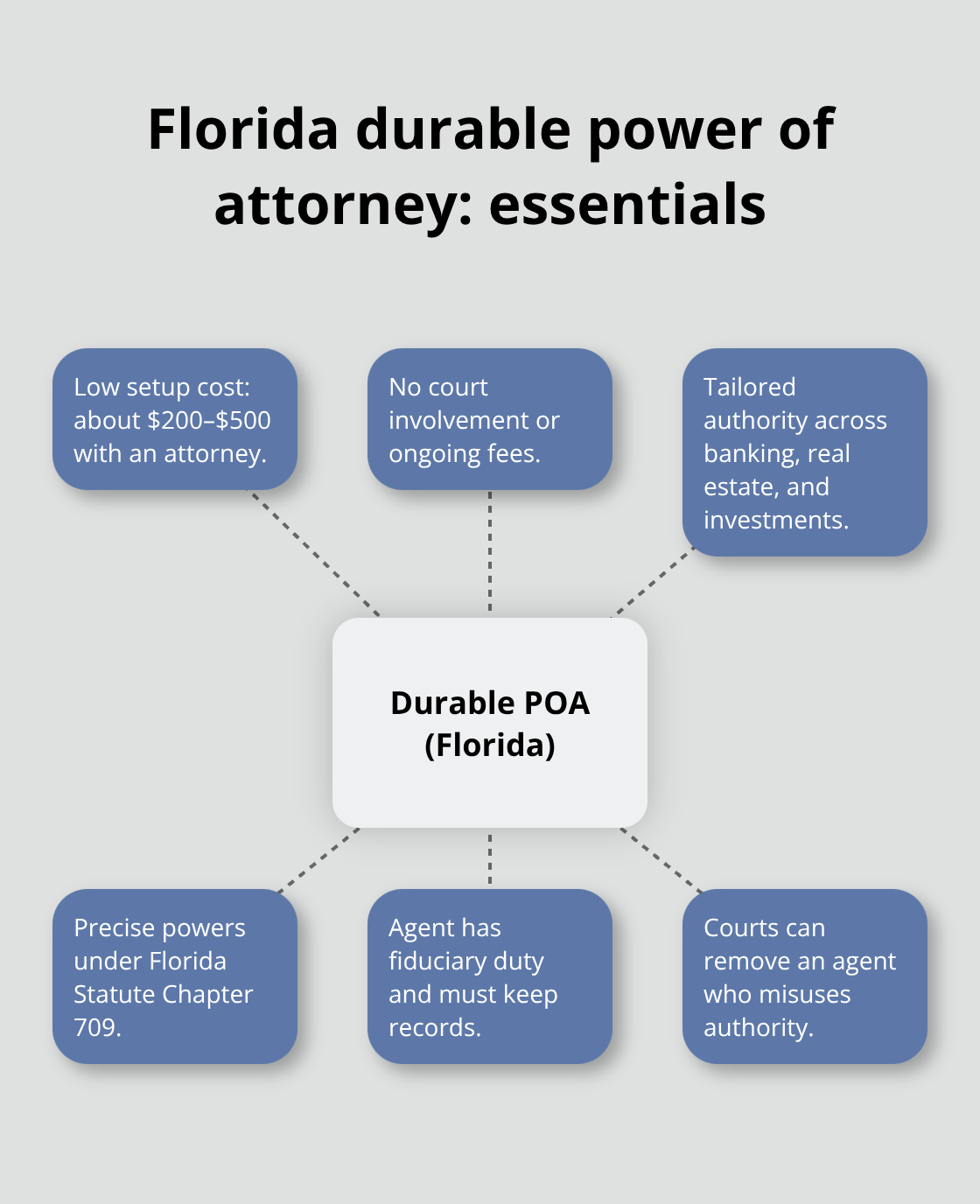
You can authorize them to manage a single bank account or grant sweeping authority over all assets. Your agent acts as a fiduciary, meaning they’re legally bound to act in your best interest and must keep records of transactions. If they misuse their authority, courts can remove them and hold them financially accountable.
Healthcare Directives and Medical Decision-Making
Healthcare directives operate similarly but focus on medical decisions. A healthcare surrogate designation under Florida Statute 765.401 lets you name someone to make medical decisions if you cannot, while a living will expresses your wishes about life-prolonging treatments in terminal conditions. These documents don’t require a lawyer to create and cost nothing to file. Unlike guardianship, they take effect only when needed and don’t strip you of decision-making authority while you retain capacity. You maintain control over your medical choices as long as you can make them, and your surrogate steps in only when necessary.
The Cost and Complexity Advantage
The practical difference between these tools and guardianship becomes obvious when you examine what families actually need. Most parents worried about their adult child’s finances don’t need to control every aspect of their life-they need to ensure bills get paid and assets are protected. A power of attorney accomplishes that without court hearings, annual accounting filings, or the expense guardians face yearly. The National Center on Law and Elder Rights reports that many families pursue guardianship simply because they don’t know alternatives exist, not because guardianship is truly necessary for their situation. A supported decision-making agreement paired with a power of attorney gives your loved one genuine input into major decisions while you retain legal authority to act. Healthcare directives solve the medical decision problem without removing someone’s right to make other choices. Florida courts increasingly recognize that these alternatives satisfy the state’s legal requirement to consider less restrictive options before appointing a guardian.
Financial Reality: Powers of Attorney vs. Guardianship
The combination of a durable power of attorney and healthcare directives typically costs $300 to $800 to establish with professional help and zero dollars annually to maintain. Guardianship, by contrast, costs $2,000 to $5,000 upfront and $300 to $500 yearly just to comply with court requirements. For families managing finances or healthcare decisions for someone with capacity to sign documents, the choice is not close. You avoid years of court filings, annual accounting requirements, and the substantial legal fees that accompany guardianship. Your loved one retains their civil rights and dignity while you gain the legal authority to act when they need you.
Moving Forward with Trusts and Benefit Management
Beyond powers of attorney and healthcare directives, other tools address specific situations that guardianship cannot solve more efficiently. Trusts and representative payee arrangements offer additional layers of protection for assets and benefits, each with distinct advantages depending on your family’s circumstances and the level of support your loved one requires.
Protecting Assets and Income Without Guardianship
How Revocable Living Trusts Protect Your Assets
Trusts and representative payee arrangements solve two problems that powers of attorney cannot fully address: protecting assets from mismanagement over decades and controlling how government benefits get spent. A revocable living trust holds your assets during your lifetime and transfers them to a trustee who manages them according to your instructions if you become incapacitated or pass away. Unlike a power of attorney, which requires someone to have legal capacity to sign the document, a trust can be established now and activated later without any additional paperwork or court involvement.
The trustee you name becomes legally bound to act in the beneficiary’s best interest, and Florida law holds them accountable for mismanagement. For families with significant assets, a revocable living trust costs $1,000 to $2,500 to establish with an attorney and avoids probate entirely when you pass-saving thousands in court fees and legal costs that guardianship or probate administration would require.
Controlling Discretion and Distribution
The flexibility of trusts matters significantly: you can specify exactly how funds get spent, whether the trustee has discretion to distribute money or must follow strict guidelines, and what happens if your primary trustee becomes unable to serve. This level of control extends across your lifetime and beyond, creating a comprehensive strategy that guardianship cannot match without ongoing court involvement and annual fees.
Representative Payee Arrangements for Government Benefits
Representative payee arrangements through the Social Security Administration work differently but solve a parallel problem for families receiving SSA or SSI benefits. The SSA designates a payee to manage benefits for someone who cannot handle finances independently, and that payee must spend funds only on the beneficiary’s current needs and reasonable expenses. The SSA monitors payee spending and can remove someone who mismanages funds, creating accountability without guardianship’s court costs or annual filing requirements.
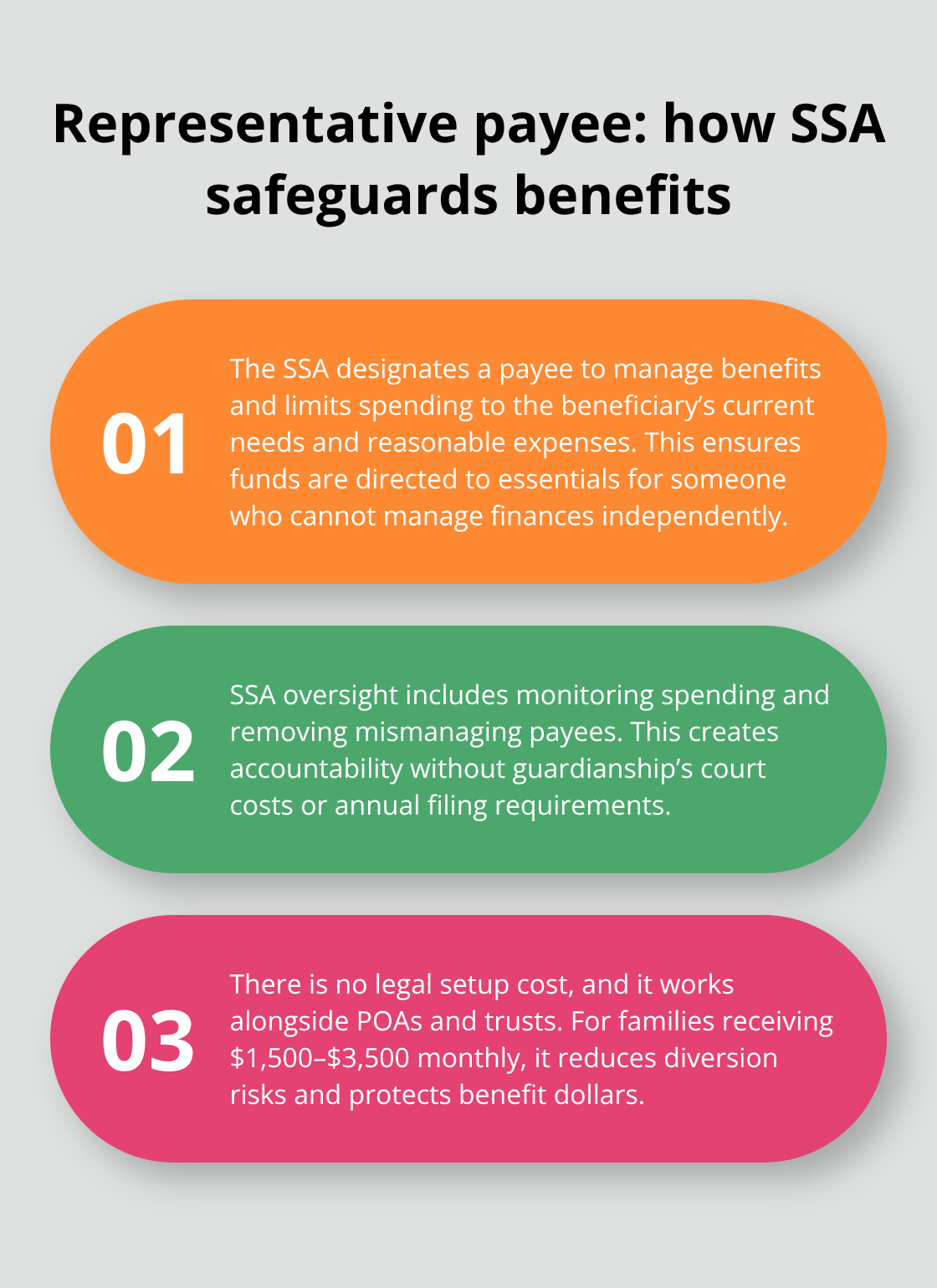
For families receiving $1,500 to $3,500 monthly in benefits, a representative payee arrangement eliminates the risk that funds get diverted to unnecessary purchases or predatory relationships. This arrangement requires no legal setup cost and operates independently of other estate planning tools.
Combining Tools for Maximum Protection
The choice between these tools depends on your family’s specific situation: trusts work best when you have assets to protect and want control over how they’re managed across your lifetime and beyond, while representative payee arrangements solve the immediate problem of benefit management without any legal setup cost. Combining a revocable living trust with a representative payee designation and a durable power of attorney creates a comprehensive protection strategy that costs far less than guardianship and preserves your loved one’s civil rights and dignity throughout their life.
Final Thoughts
Guardianship alternative options solve specific problems without stripping your loved one of civil rights or burdening your family with years of court filings and annual fees. Powers of attorney handle finances, healthcare directives address medical decisions, trusts protect assets across decades, and representative payee arrangements manage government benefits with built-in accountability. Most families find that combining two or three of these tools addresses their concerns far more effectively than guardianship.
The decision to pursue guardianship alternatives reflects a growing recognition that unnecessary guardianship causes real harm by removing people from decisions about their own lives and contributing to isolation and dependence. Florida courts increasingly expect families to explore less restrictive options before seeking guardianship, and state law supports this shift toward preserving autonomy. A power of attorney paired with a healthcare directive and a representative payee arrangement creates comprehensive protection while maintaining your loved one’s independence and dignity.
We at Family, Estate & Mediation Law help families across Northeast Florida navigate these decisions with practical strategies tailored to your specific situation. Contact us to discuss which guardianship alternative options work best for your family’s future.